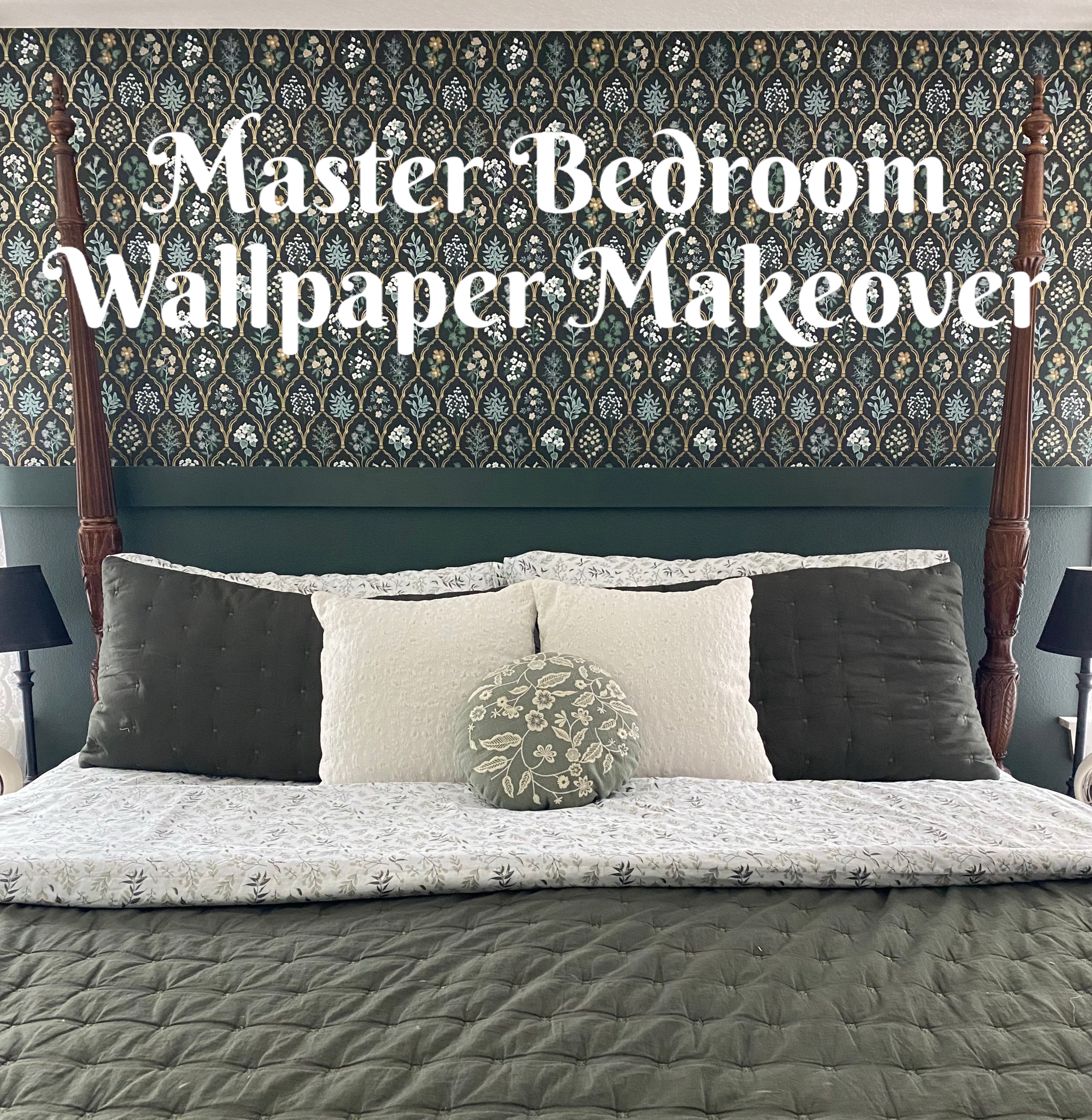

MASTER Bedroom wallpaper makeover

Believe it or not, not every DIY goes to plan. In fact, I find most do not. And even when you feel confident in your planning or taste or choices, sometimes they just don’t work out. This is such a tale.

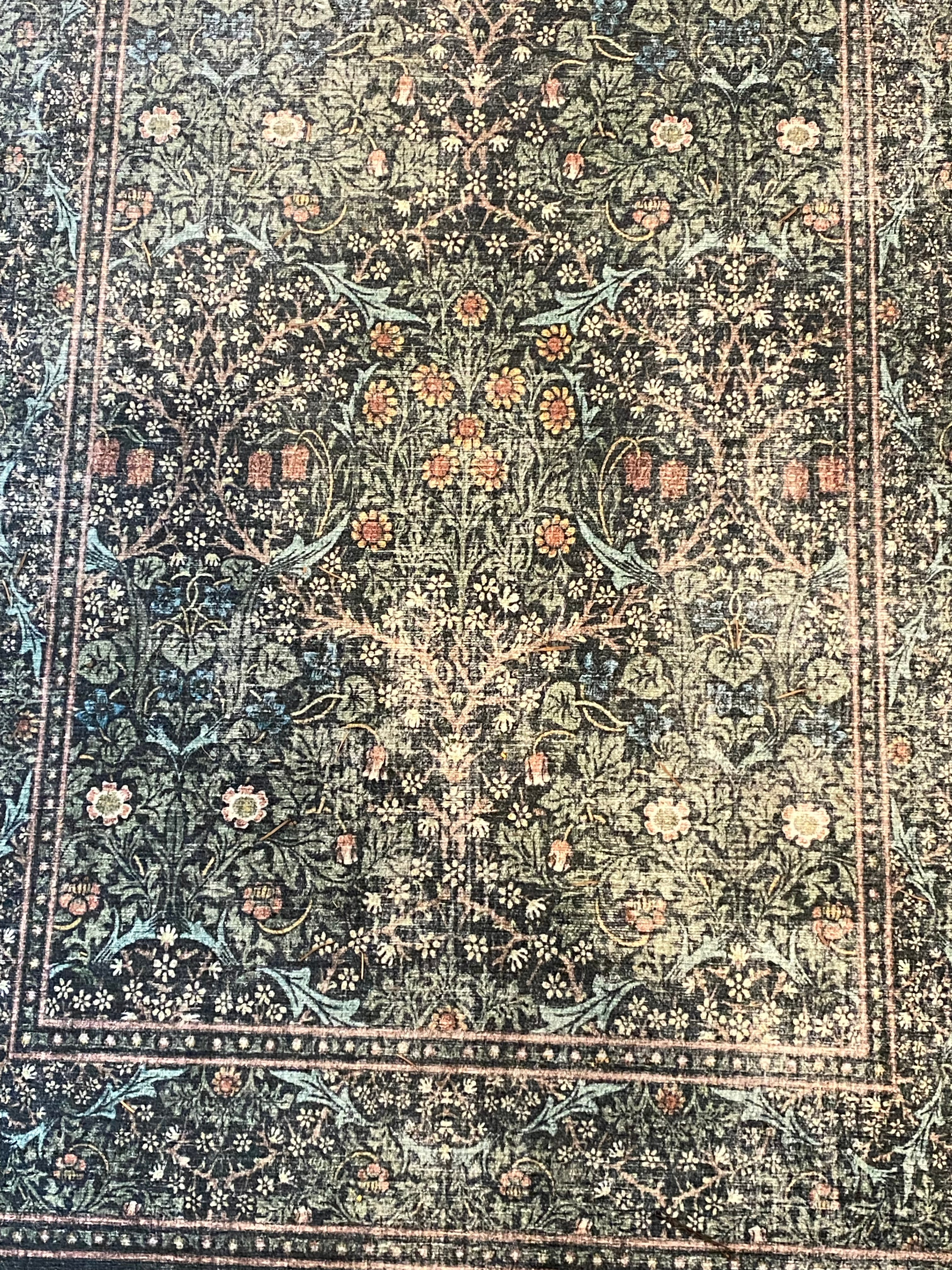
I bought this great Ruggable rug for my kitchen with a fantastic William Morris pattern, Blackthorn in Forest Green. I loved the pattern and immediately started thinking about what else we could do with it.

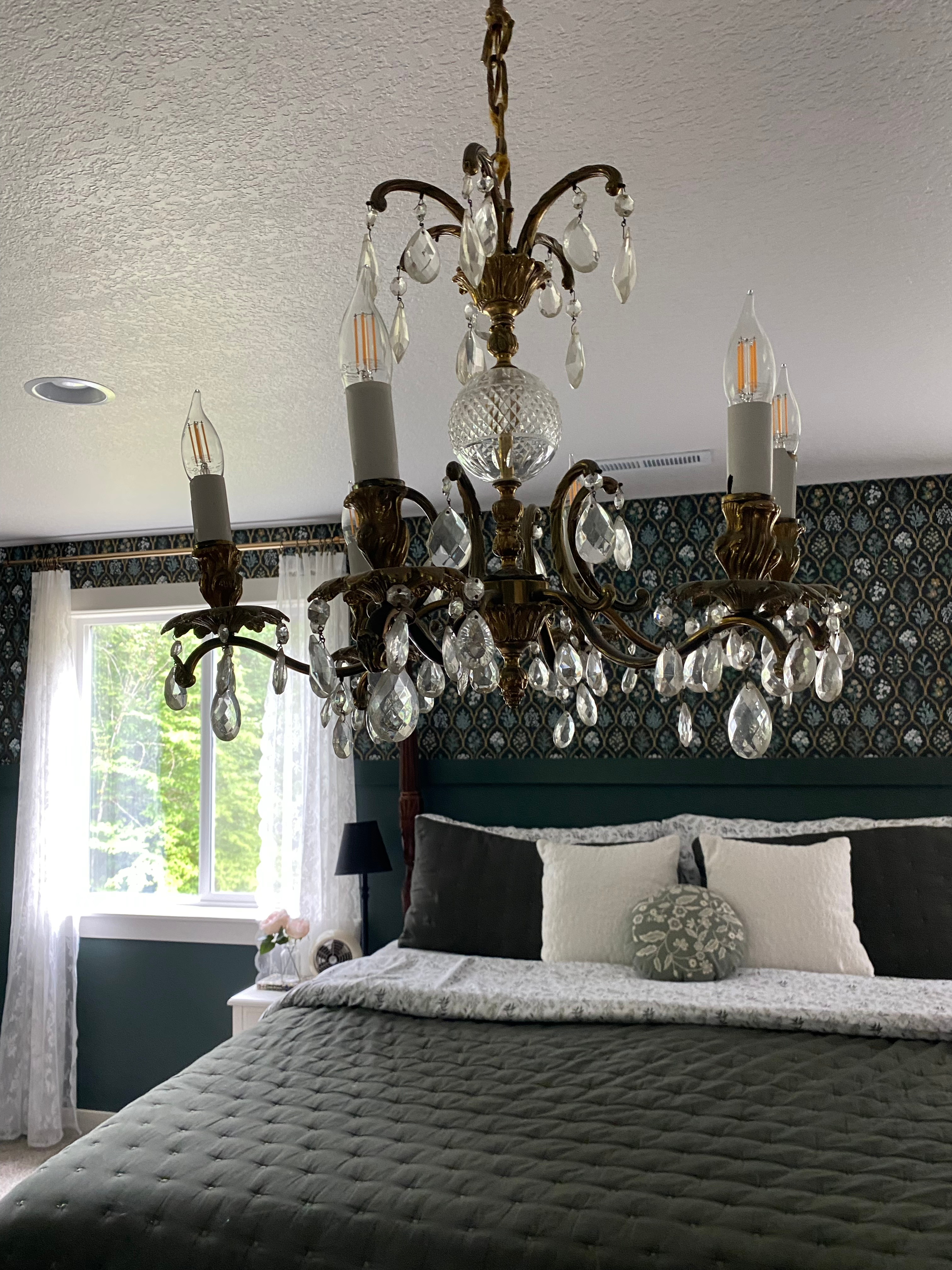
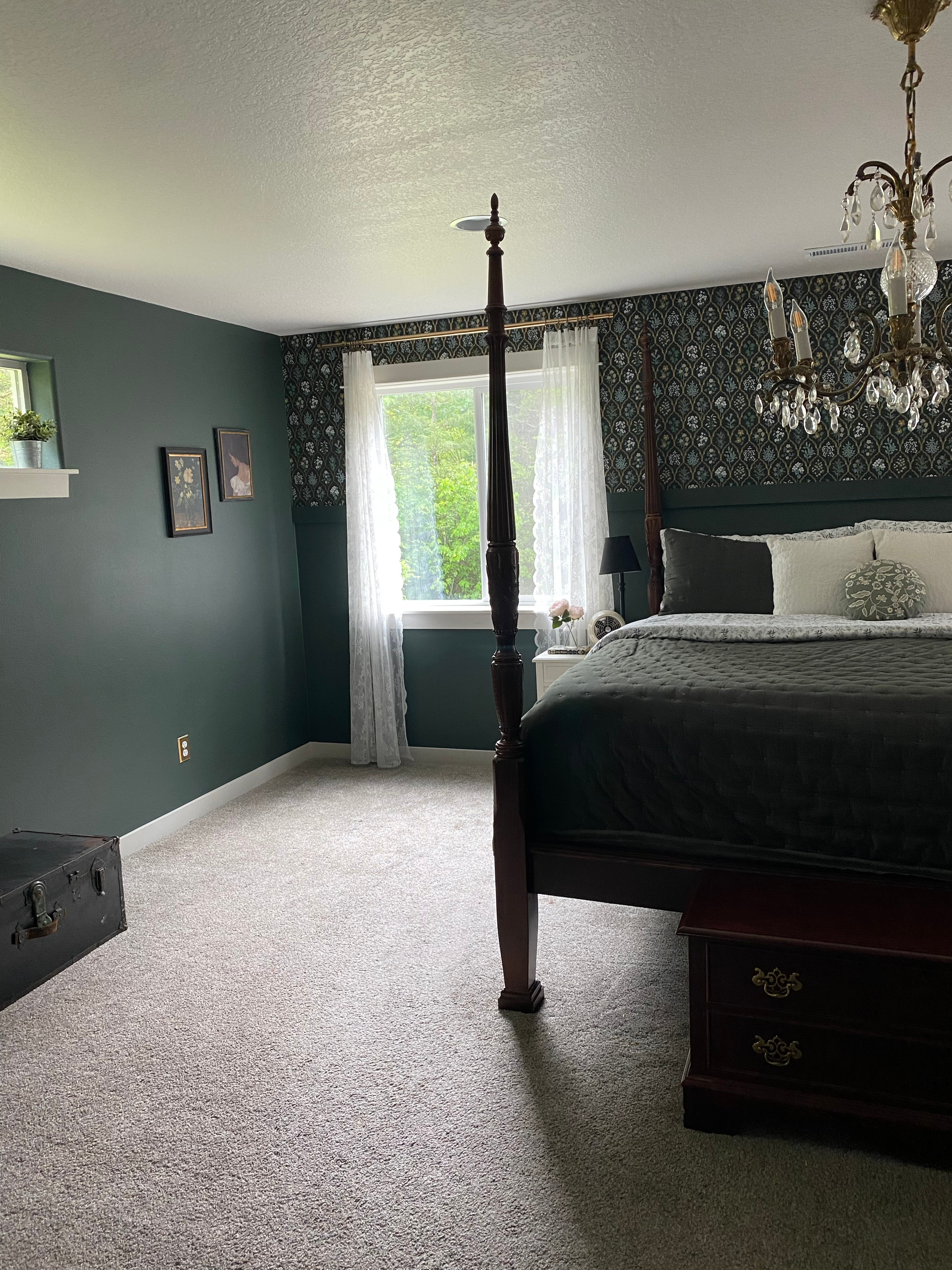
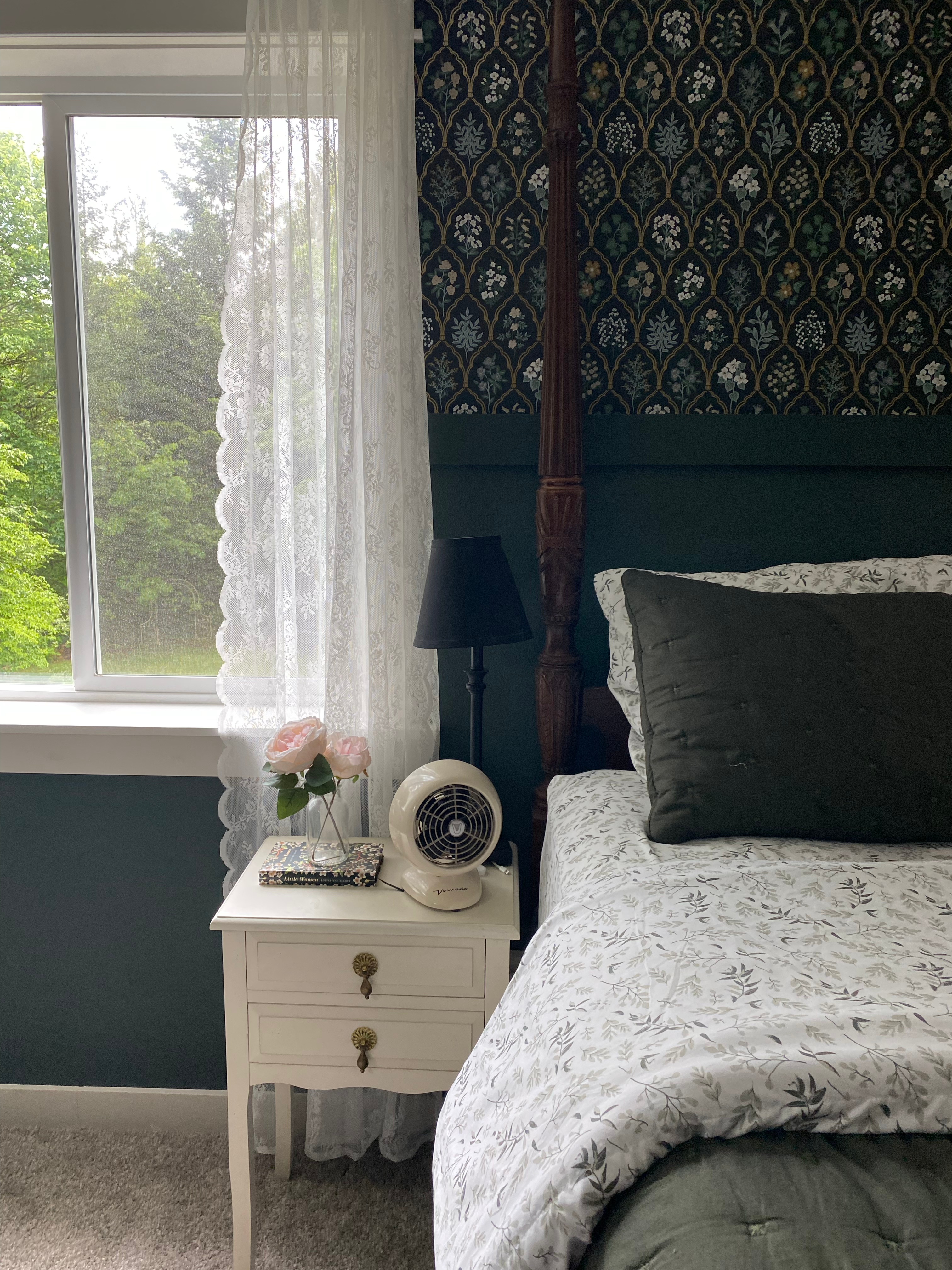
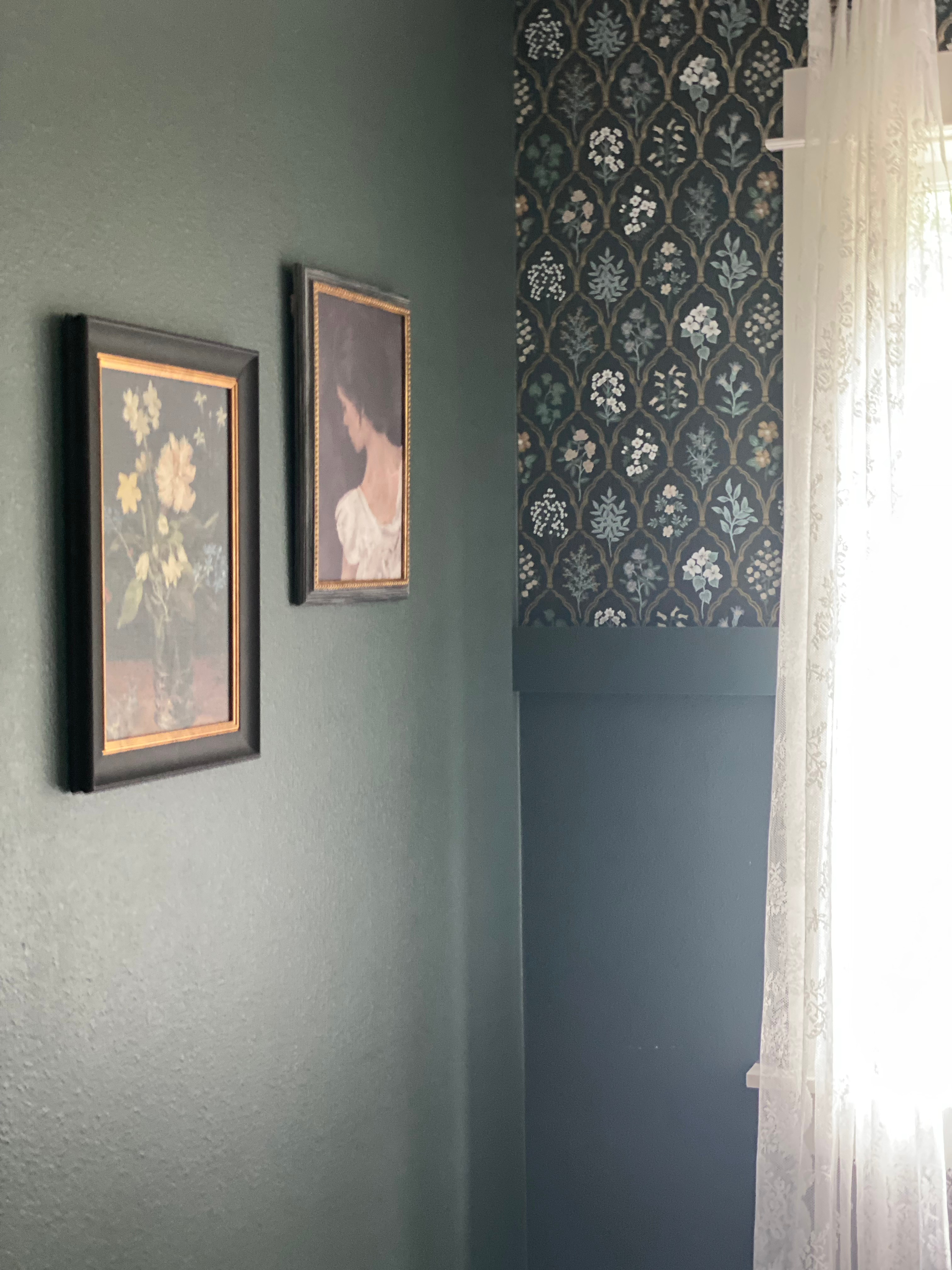
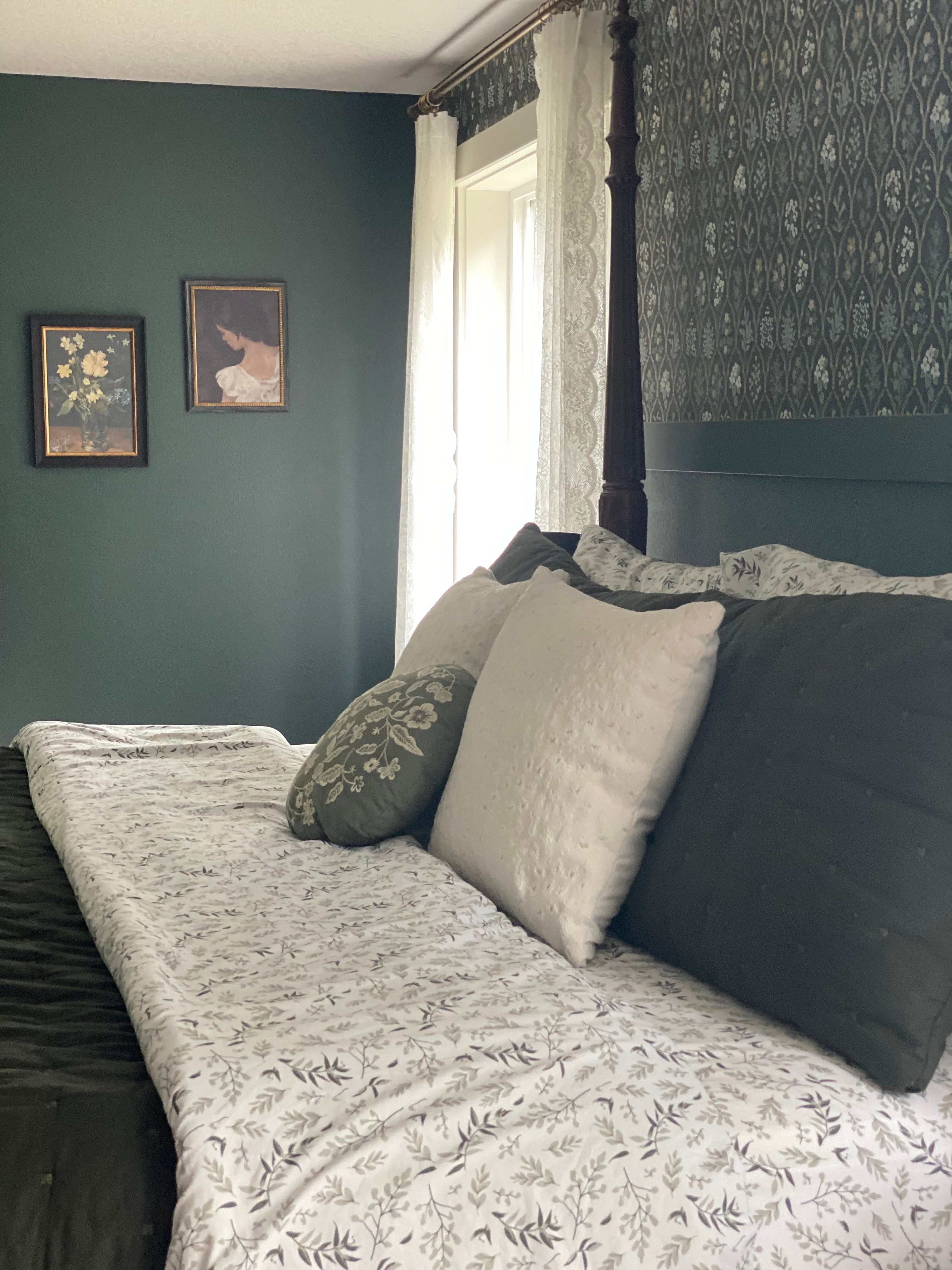
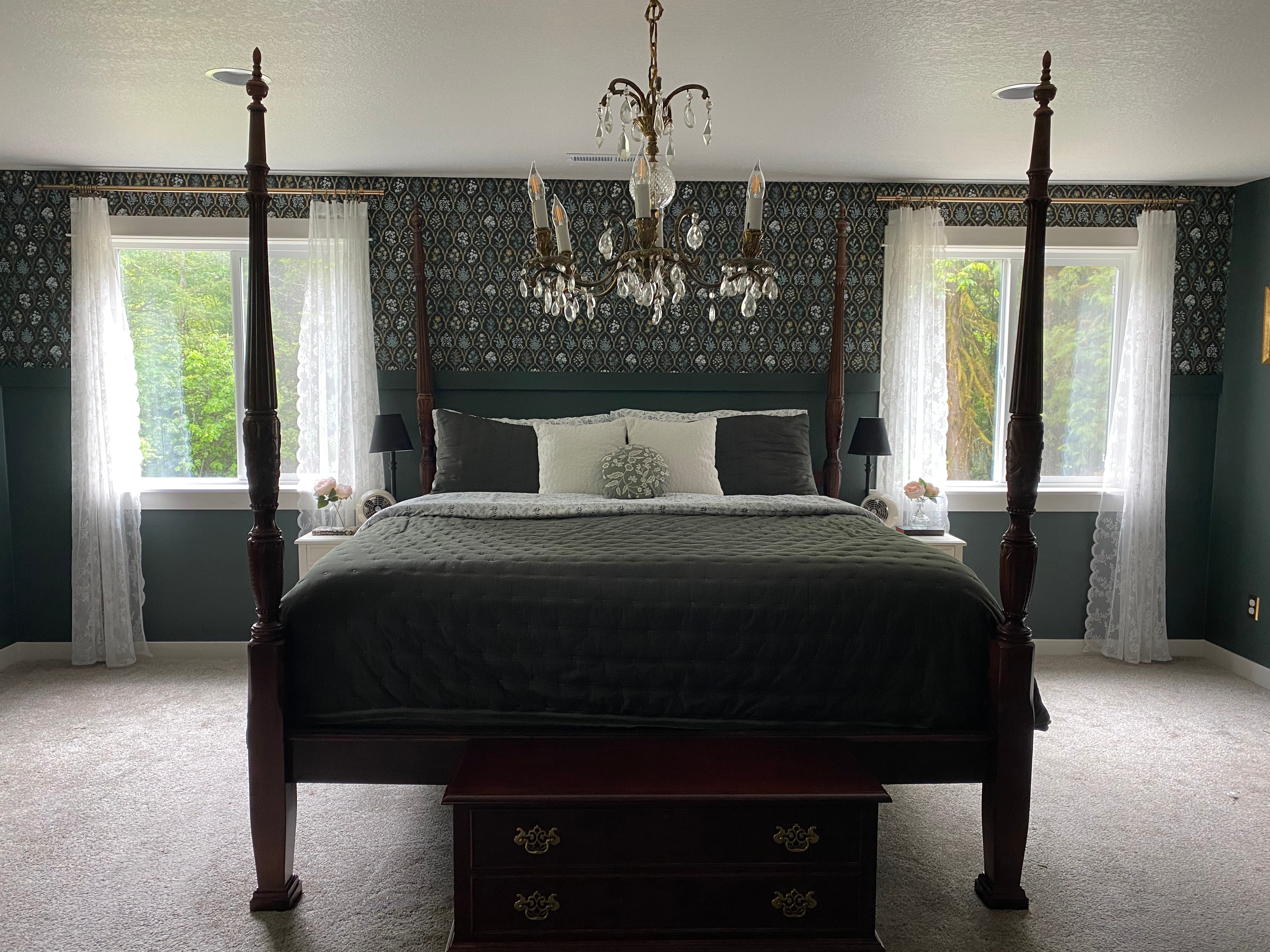
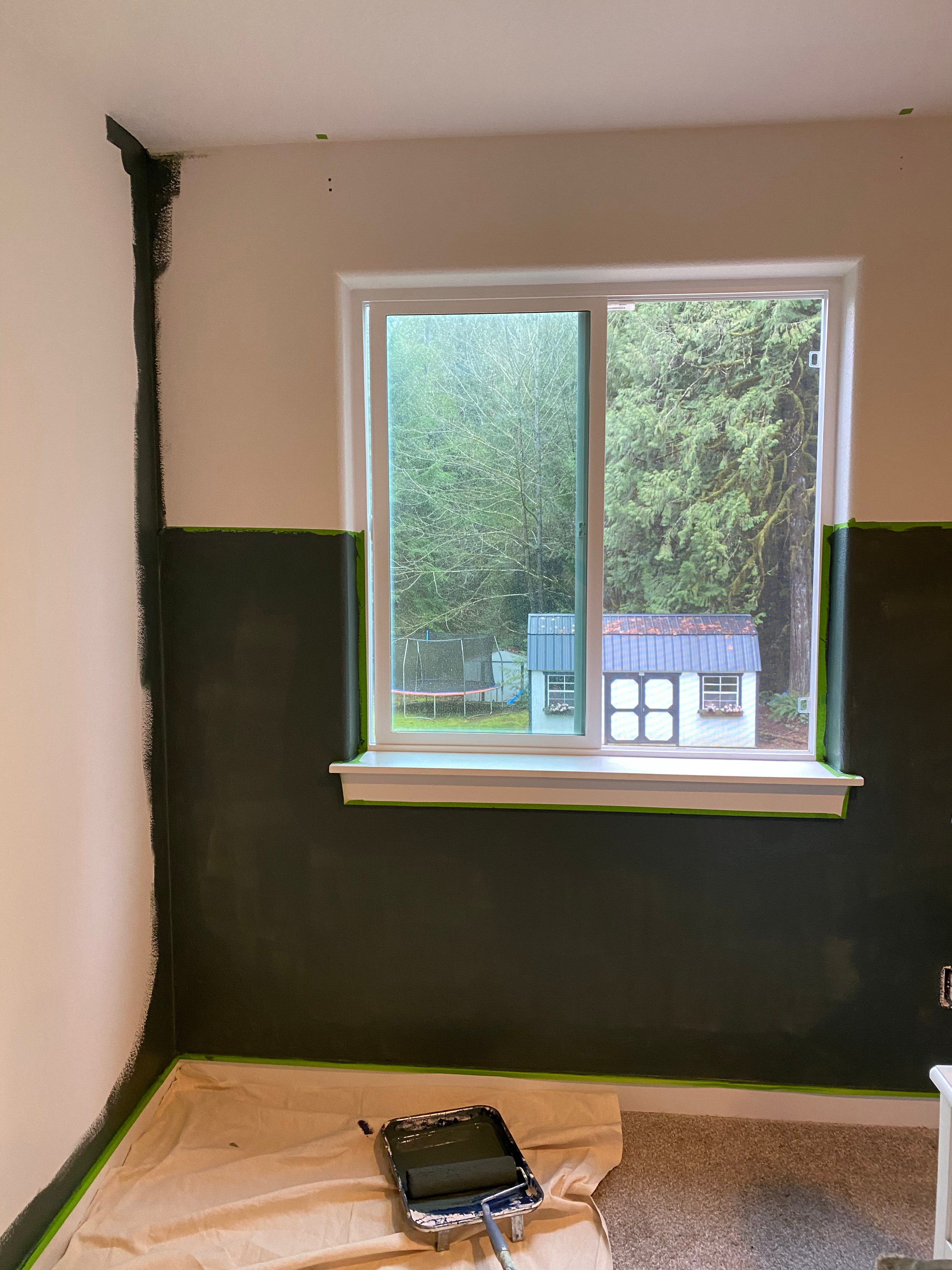
Meanwhilst, I was working on painting and planning decor for our master bedroom. In our last house, Ryan graciously allowed me to paint the walls a lovely cameo pink. And while I still love that color, I thought it might be his turn to have a favorite color, green, grace the walls. We chose a Magnolia color, 1905 Green. Their website describes it as “a slightly jeweled forest green.” I would say that is totally accurate. We both absolutely love the deep moody color. Our room gets a lot of natural light so the dark color works well. Home decor bloggers would tell you to pick your inspiration words for a space, mine were moody, romantic, and elegant. I tell you, waking up to this room drenched in sunlight, is just lovely.

Ok, so back to the rug pattern, I found the William Morris Blackthorn pattern available at Spoonflower and immediately started obsessing over just the right pattern and color to choose. (If you don’t know, Spoonflower has nearly an infinite number of patterns in just as many variations and options.) It’s dizzying to try to find just the right thing.

FULL STOP: This is where I should have ordered samples. But didn’t. Mistake. Always, always, always order samples of wallpaper. Did you hear me? Always order samples, no exceptions, no buts, no what ifs, always order samples. Please, learn from me.

I showed Ryan (who trusts me on these things) the wallpaper, and feeling slightly impulsive, ordered the wallpaper. It was impulsive and a mistake. I knew better, but just didn’t want to wait. It arrived and I didn’t love it. But I tried to convince myself I did love it. I tried so hard, I told myself if we put it on the wall I would love it more. Yes, just put it on the wall, that’s the solution.
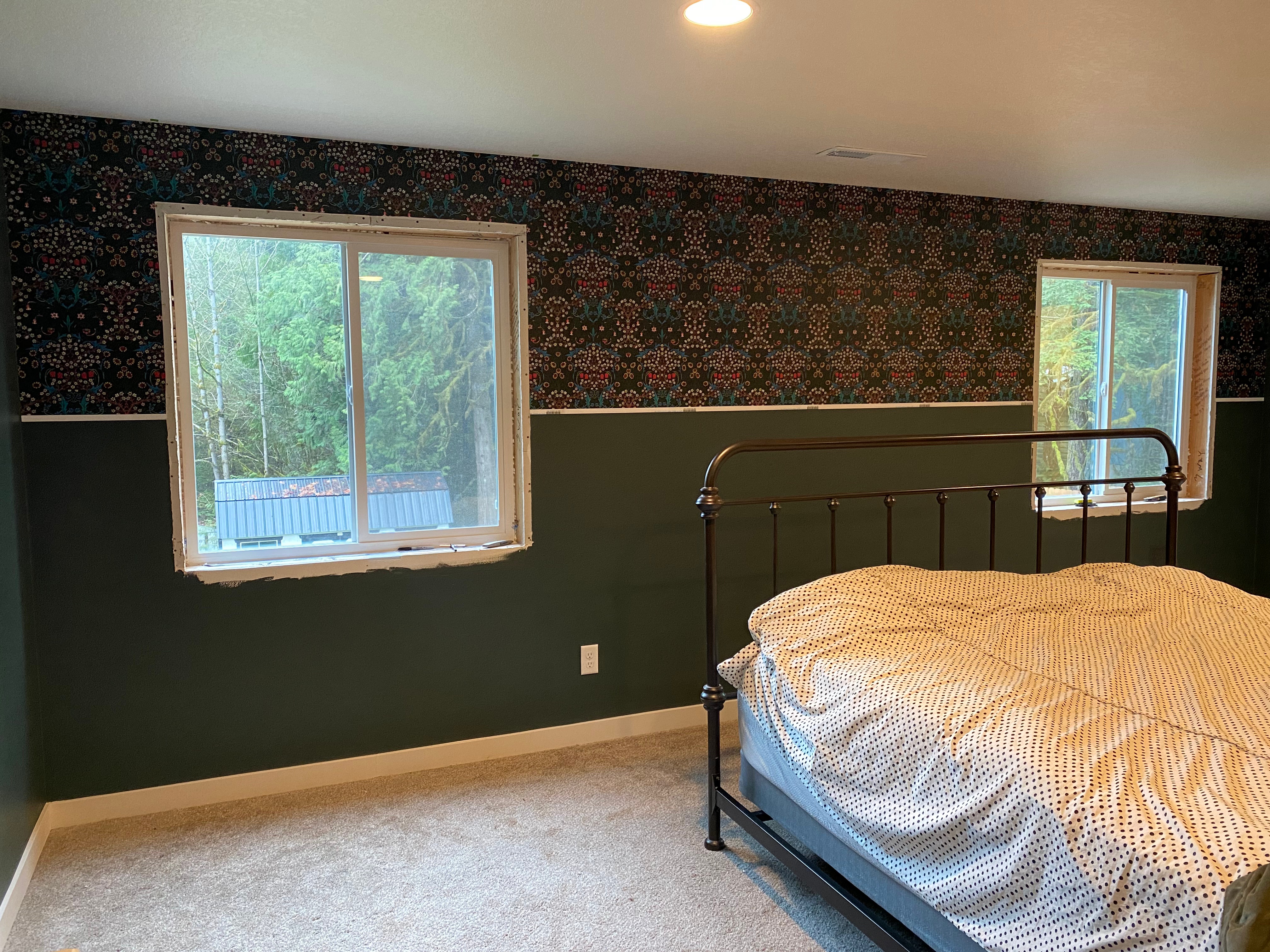
So, we put it up on the wall, the whole wall. I did not love it, the colors weren’t right, and the pattern felt too “cartoony” compared to the inspiration rug. I also did not love Spoonflower’s Peel-n-Stick. It was easy to put up, but started unsticking almost immediately. Weeks turned into months and I still did not love the wallpaper. And, it started coming up in several more places. I thought shamefully about the hasty, impulsive decision, completely my fault. And then, I remembered the wallpaper I originally wanted from Rifle Paper Co. I had decided it was too expensive, but it was the wallpaper I really loved.

ANOTHER STOP: It is worth it to wait for something you love, and invest a bit more money than to settle for something you don’t love and end up paying even more for it in the end. Which is what I did. Paid twice for wallpaper. Twice.

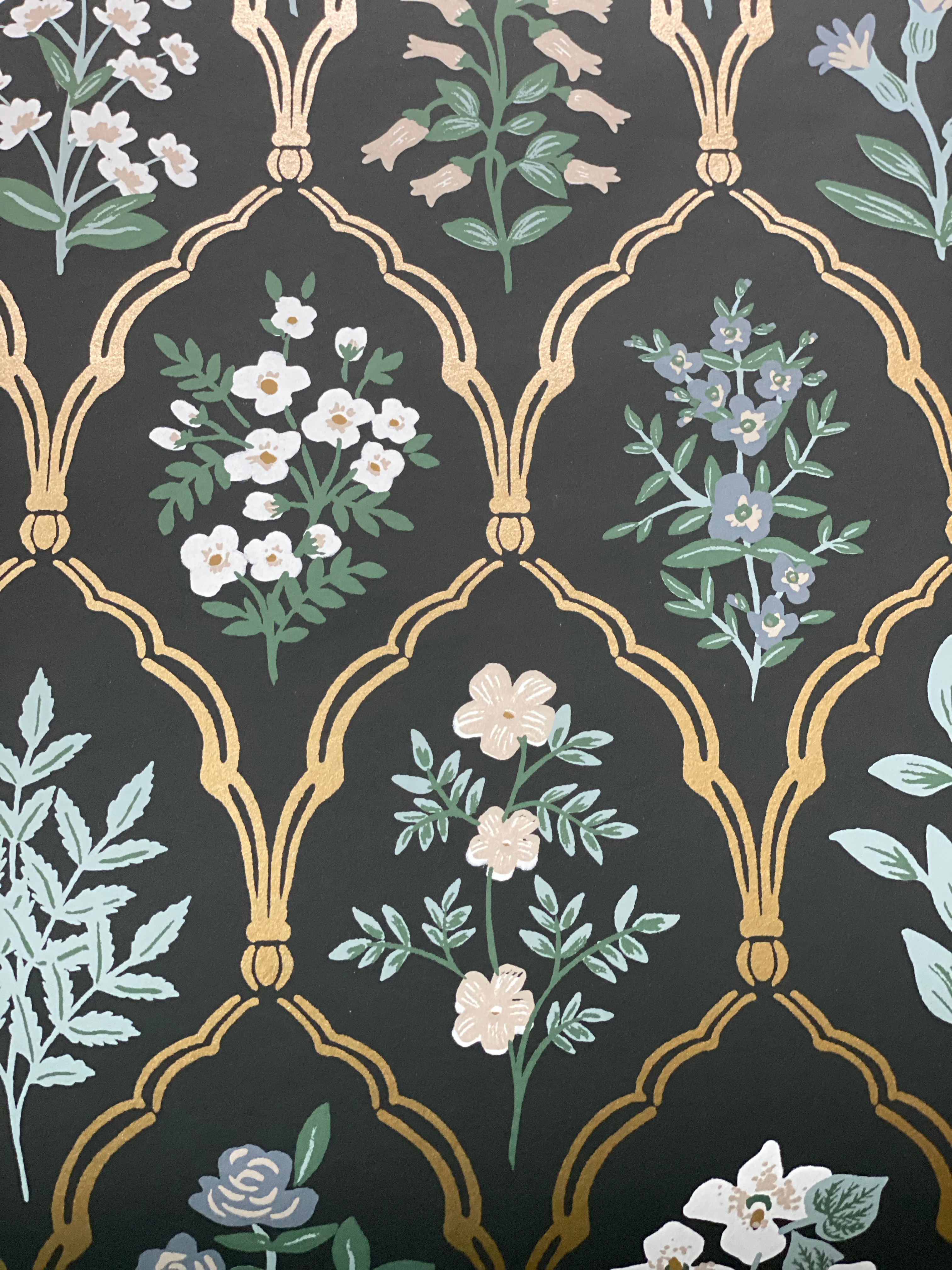
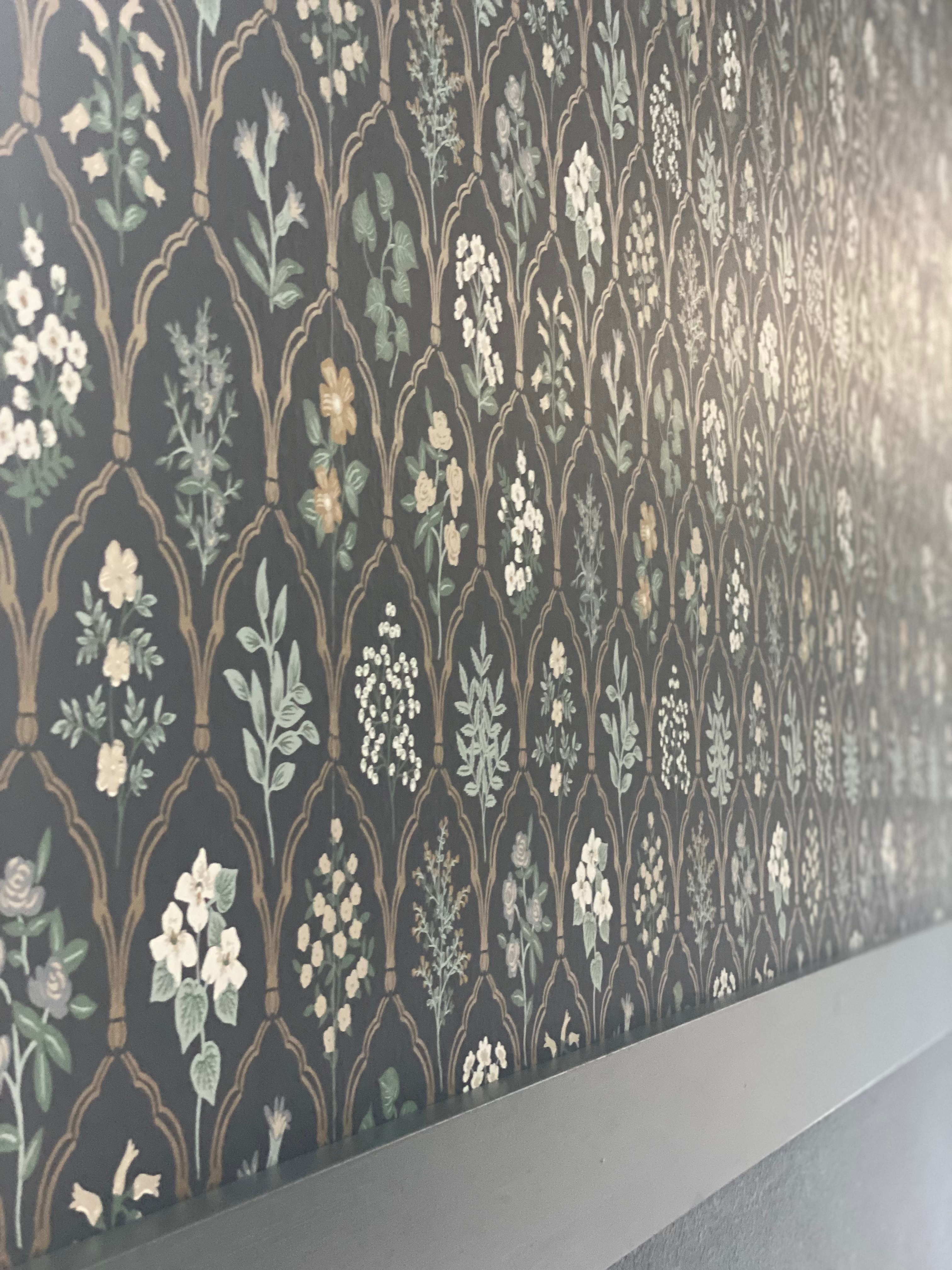
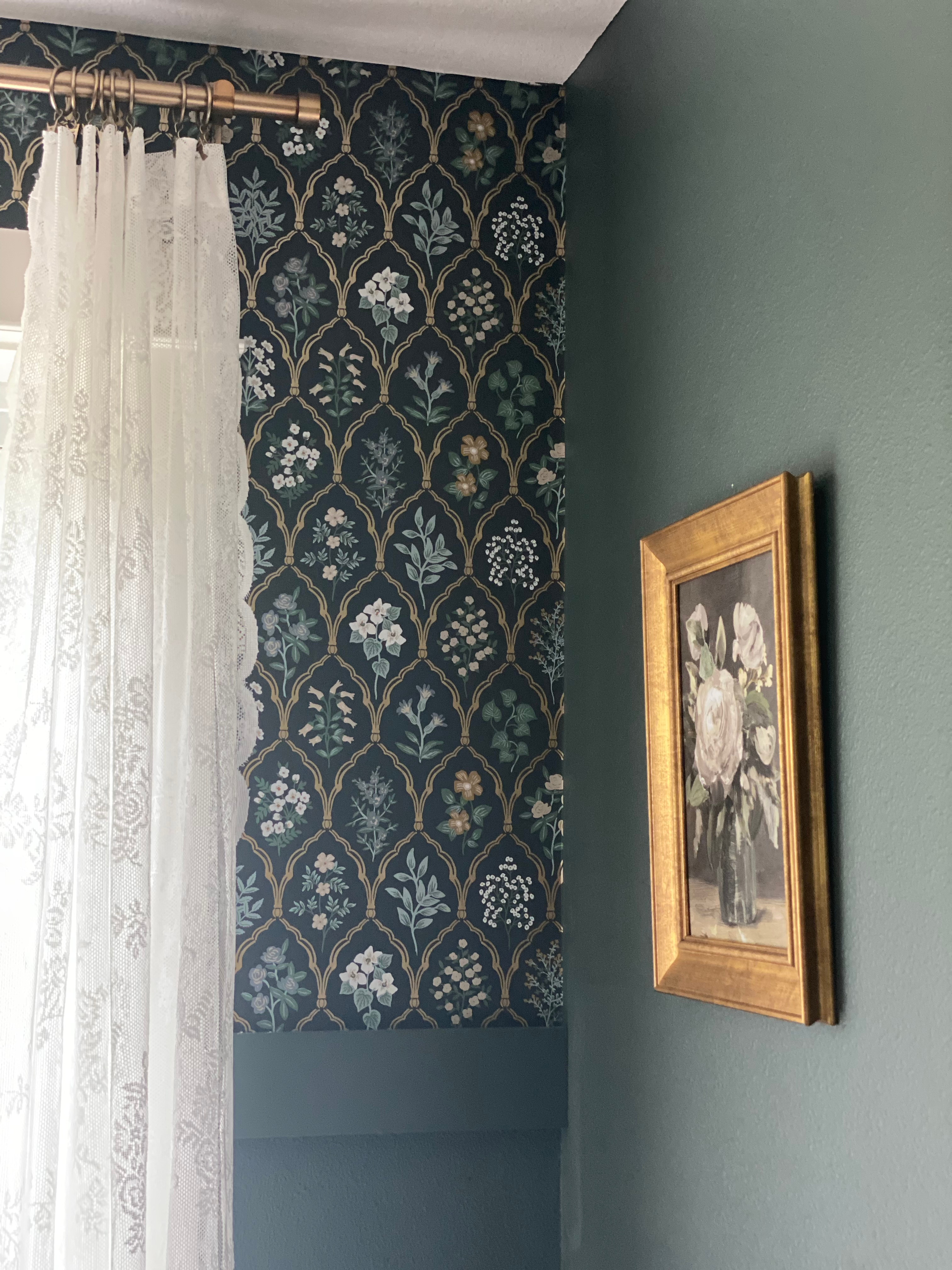
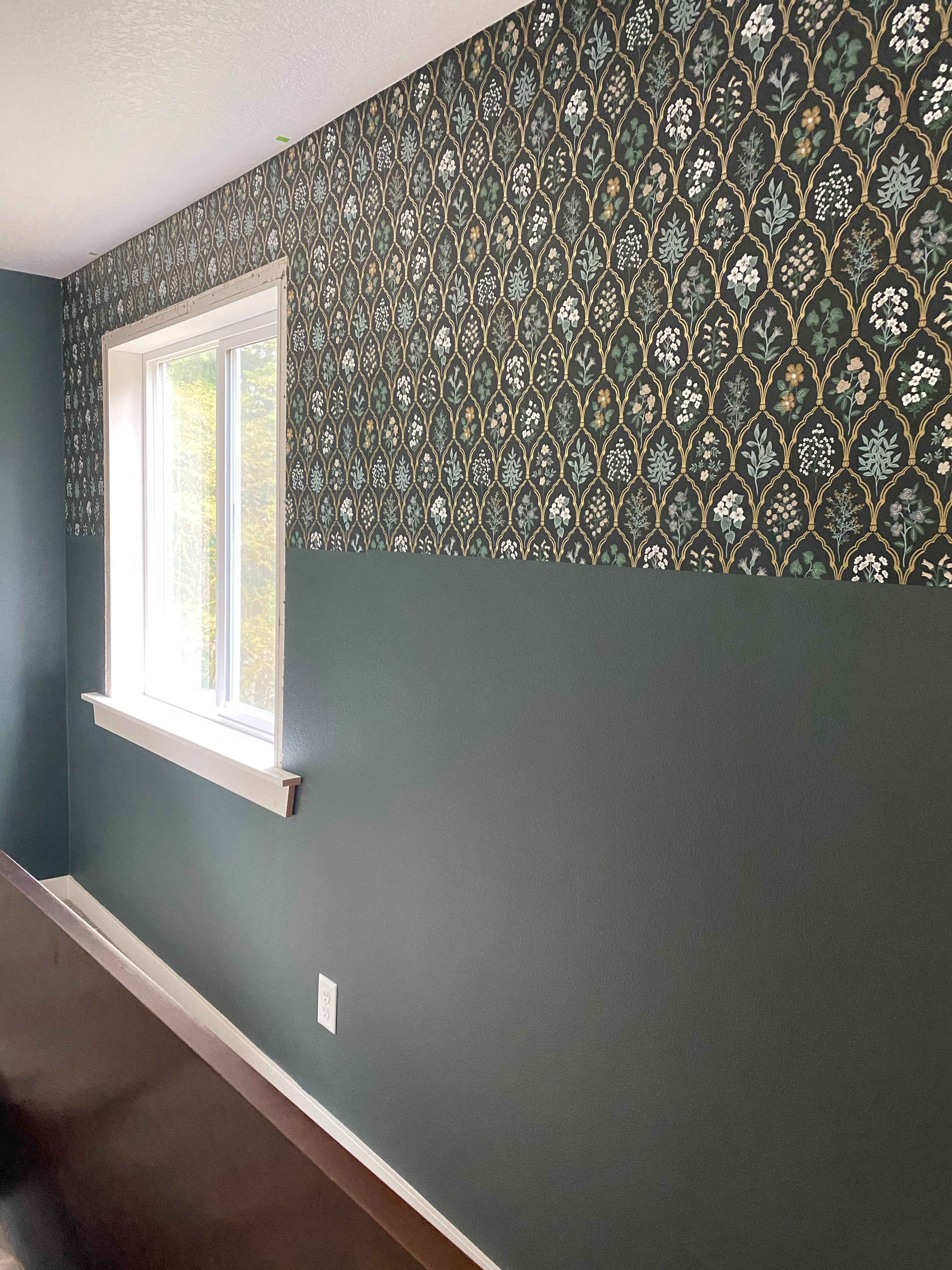
The more I looked at the wallpaper on the wall, the more certain I was that it wasn’t right and had to come down. I waited until Rifle Paper Co. was having a sale and splurged on the beautiful, dreamy, perfect wallpaper. AFTER I sampled several of their wallpapers in the room. The choice was unanimous, the Hawthorne wallpaper is gorgeous! Confusing right, Blackthorn vs. Hawthorne. Ha!!
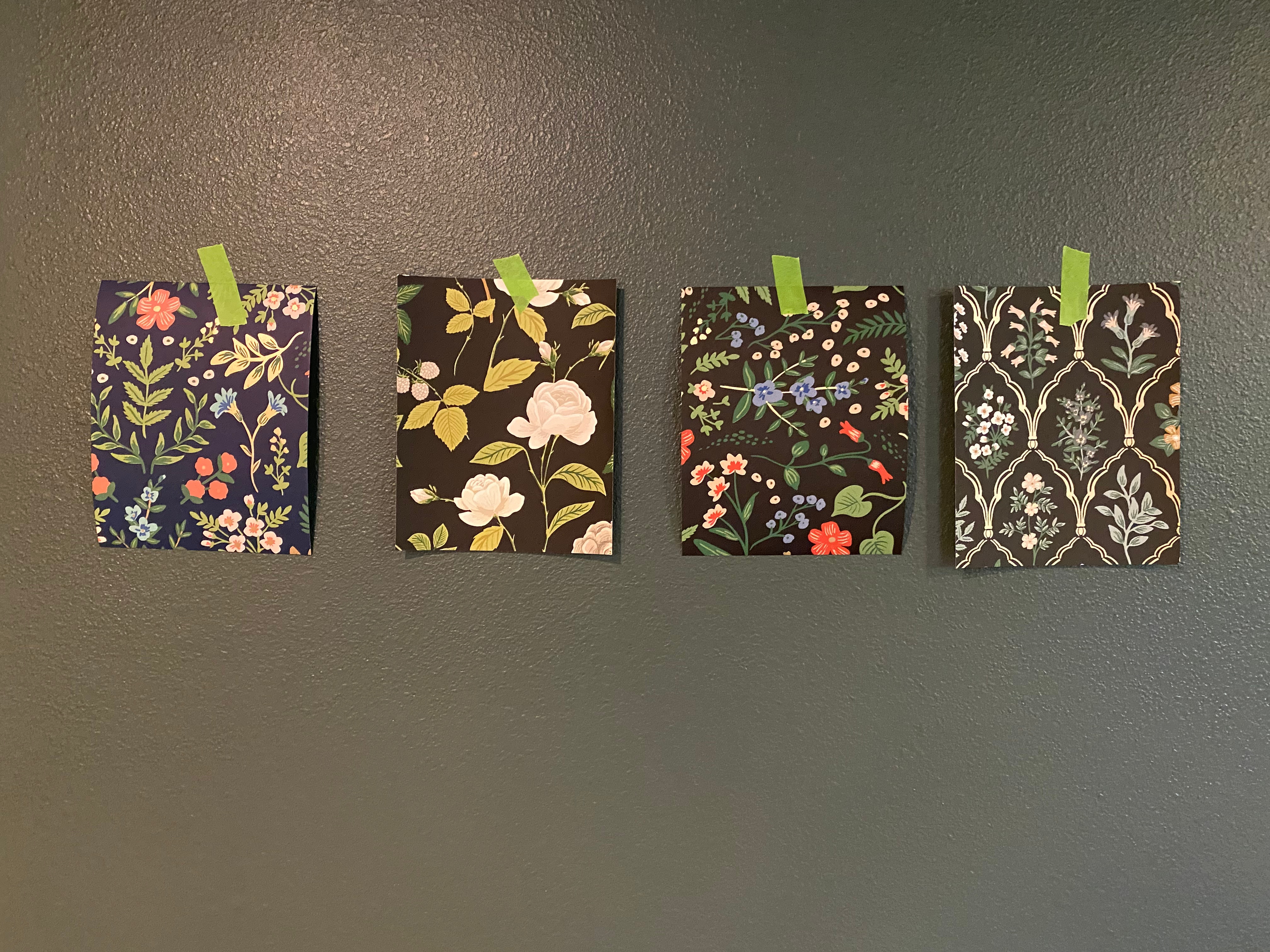
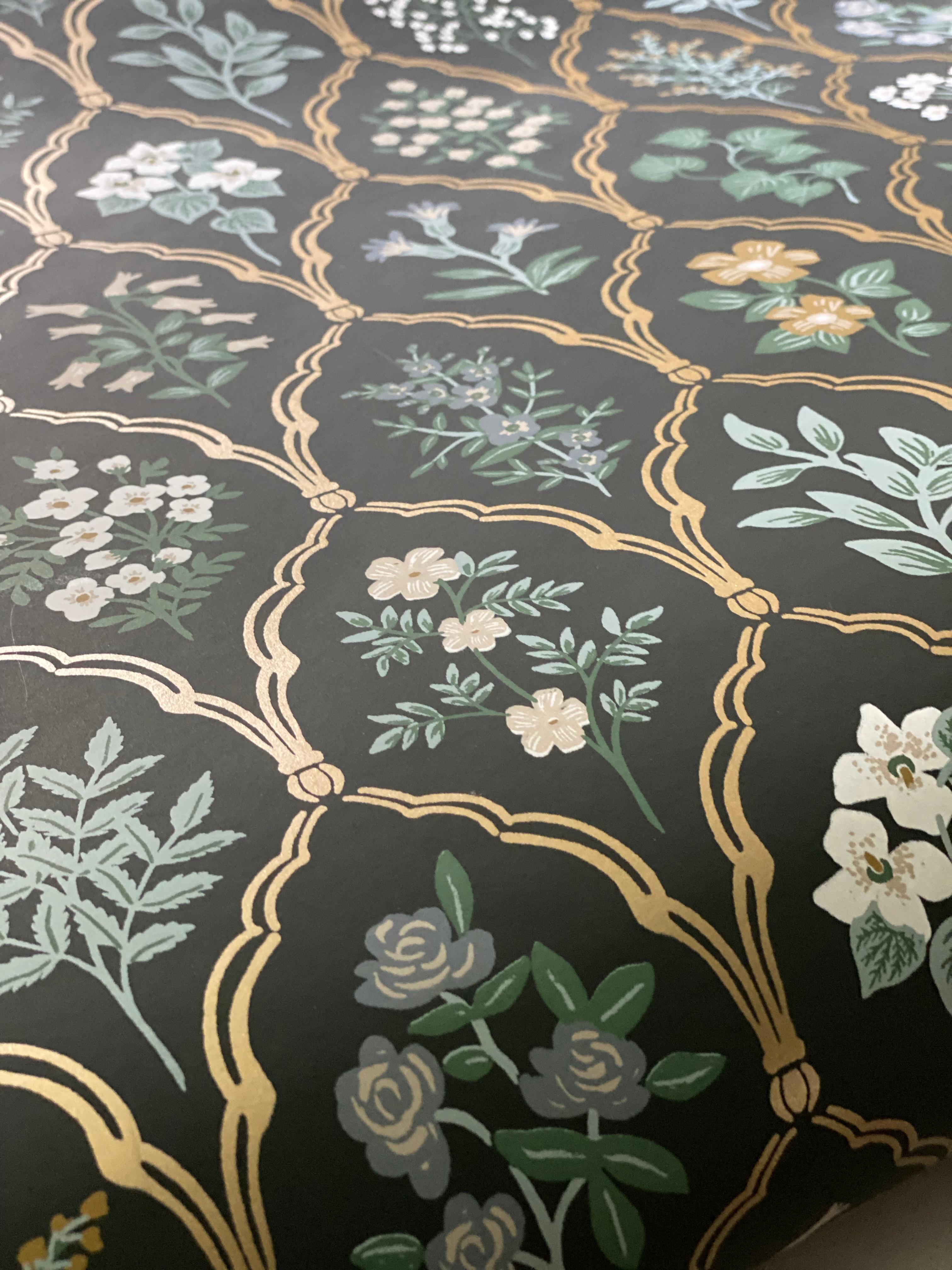
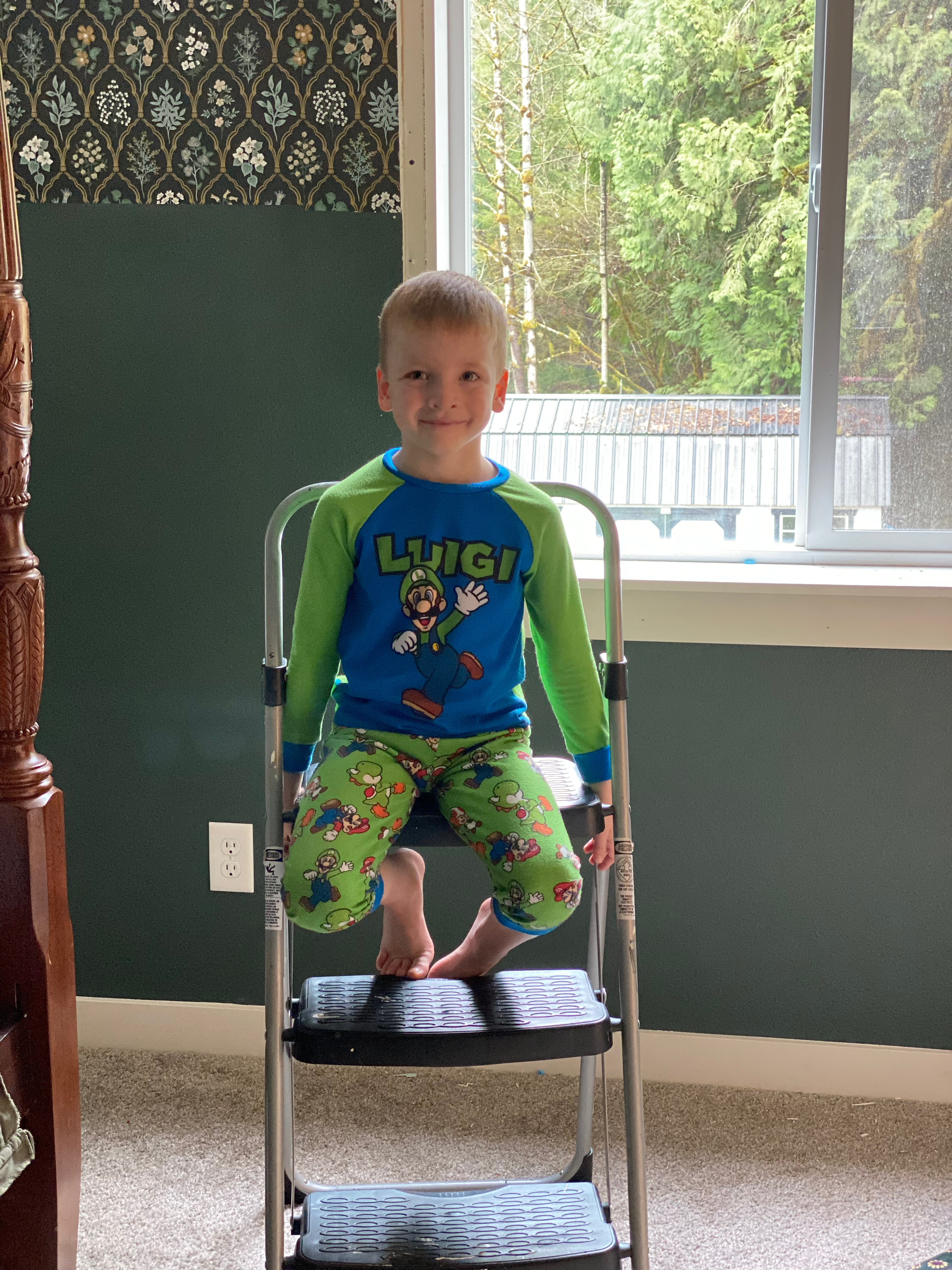
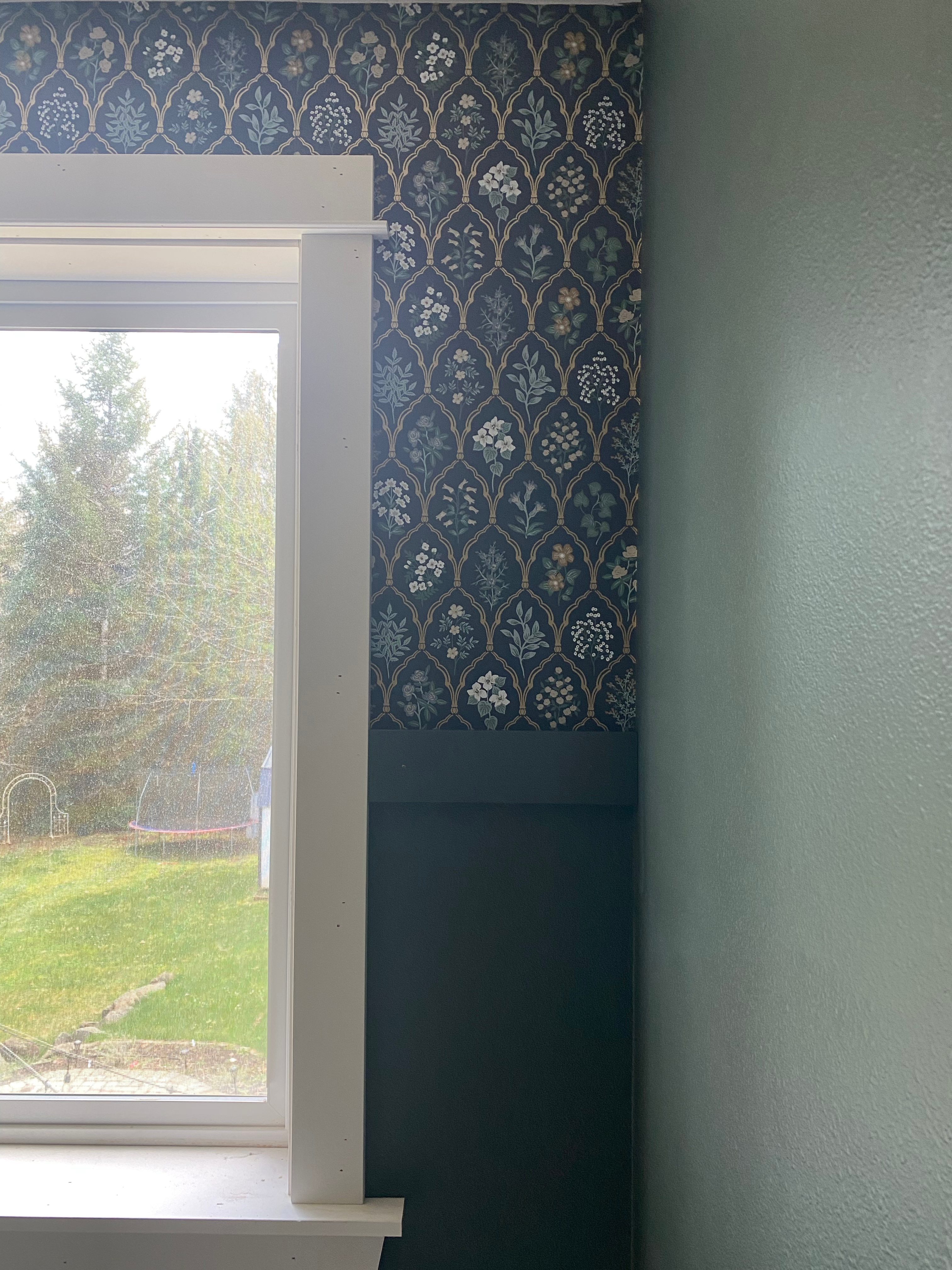
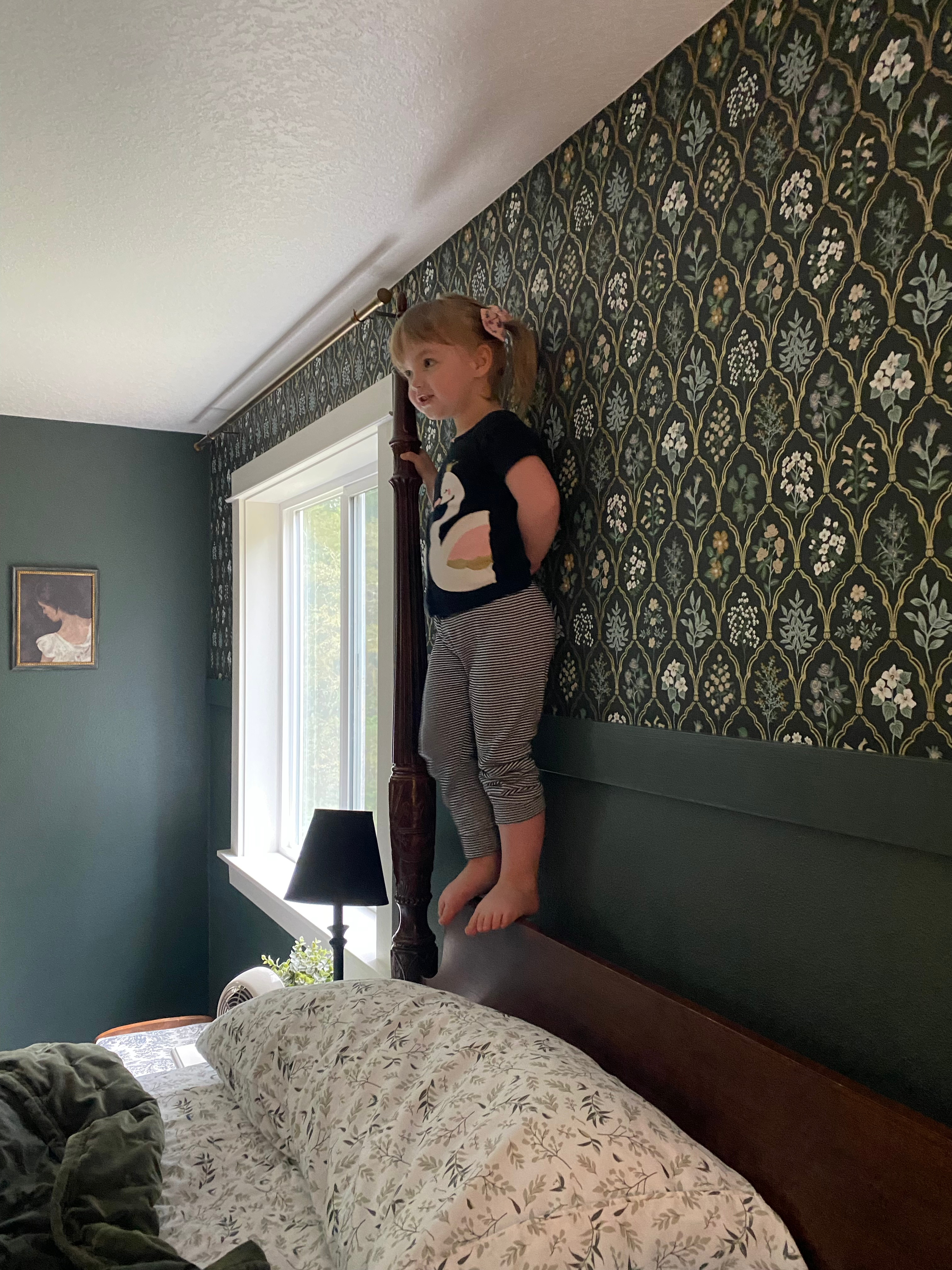
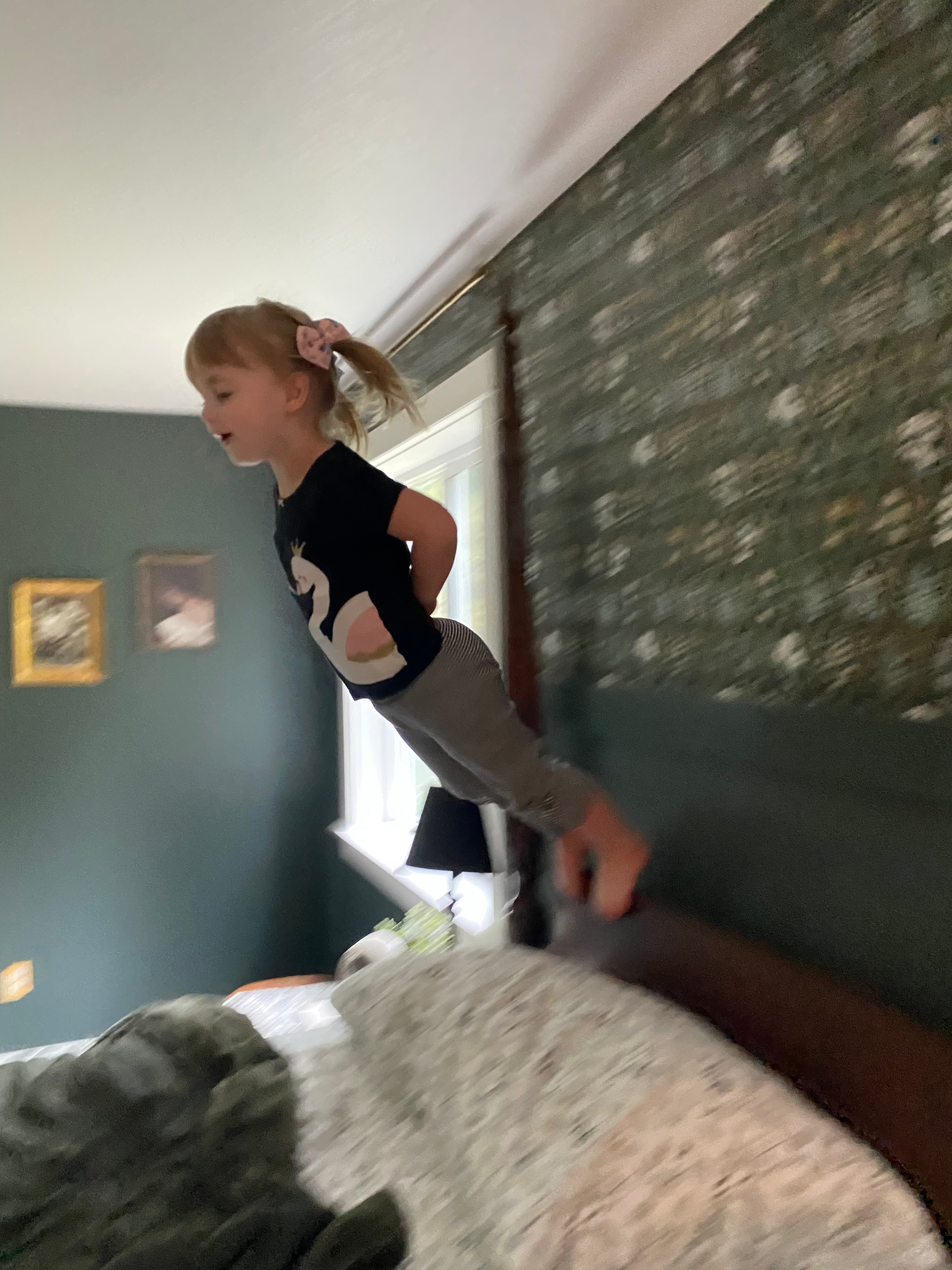
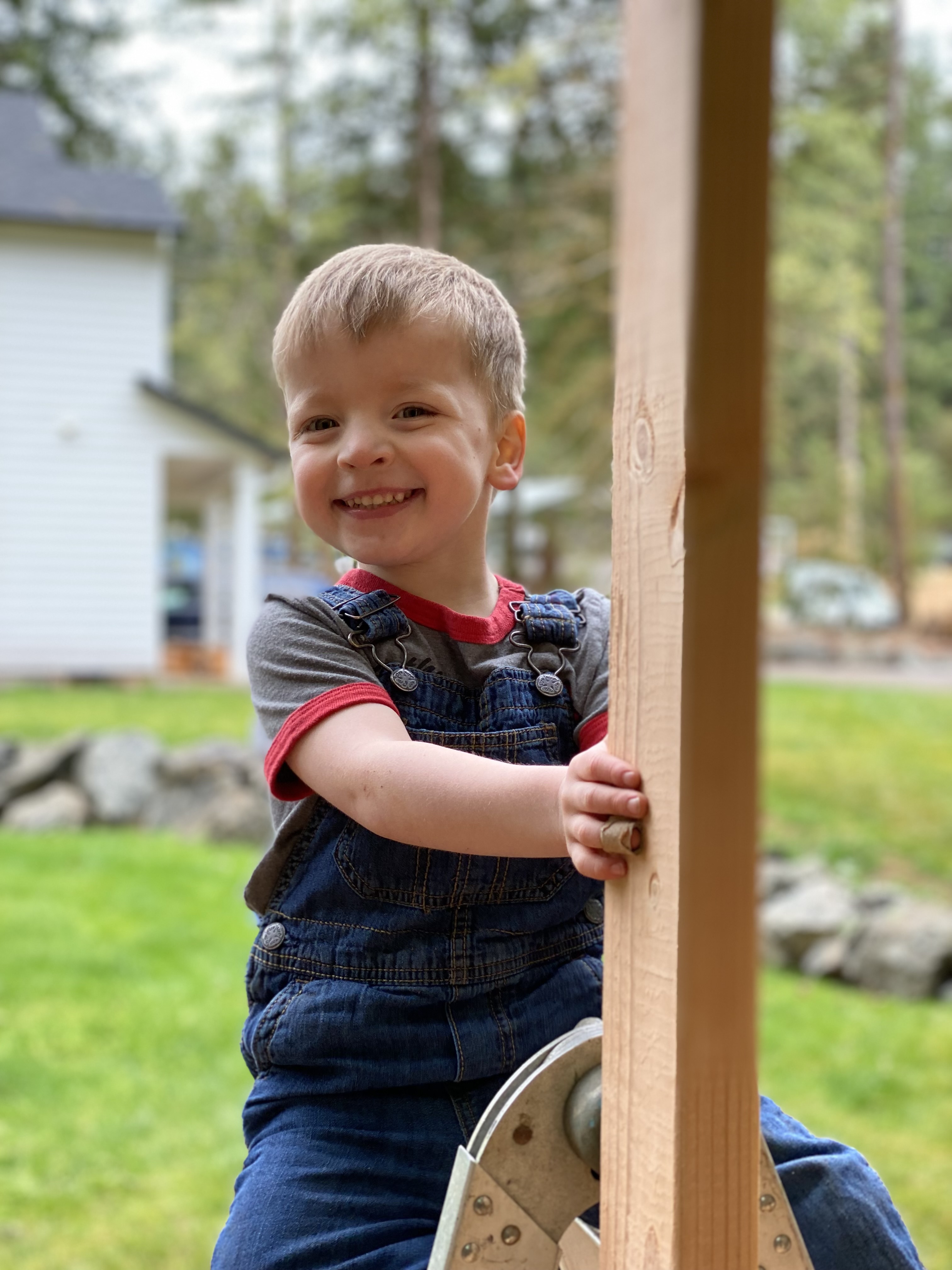
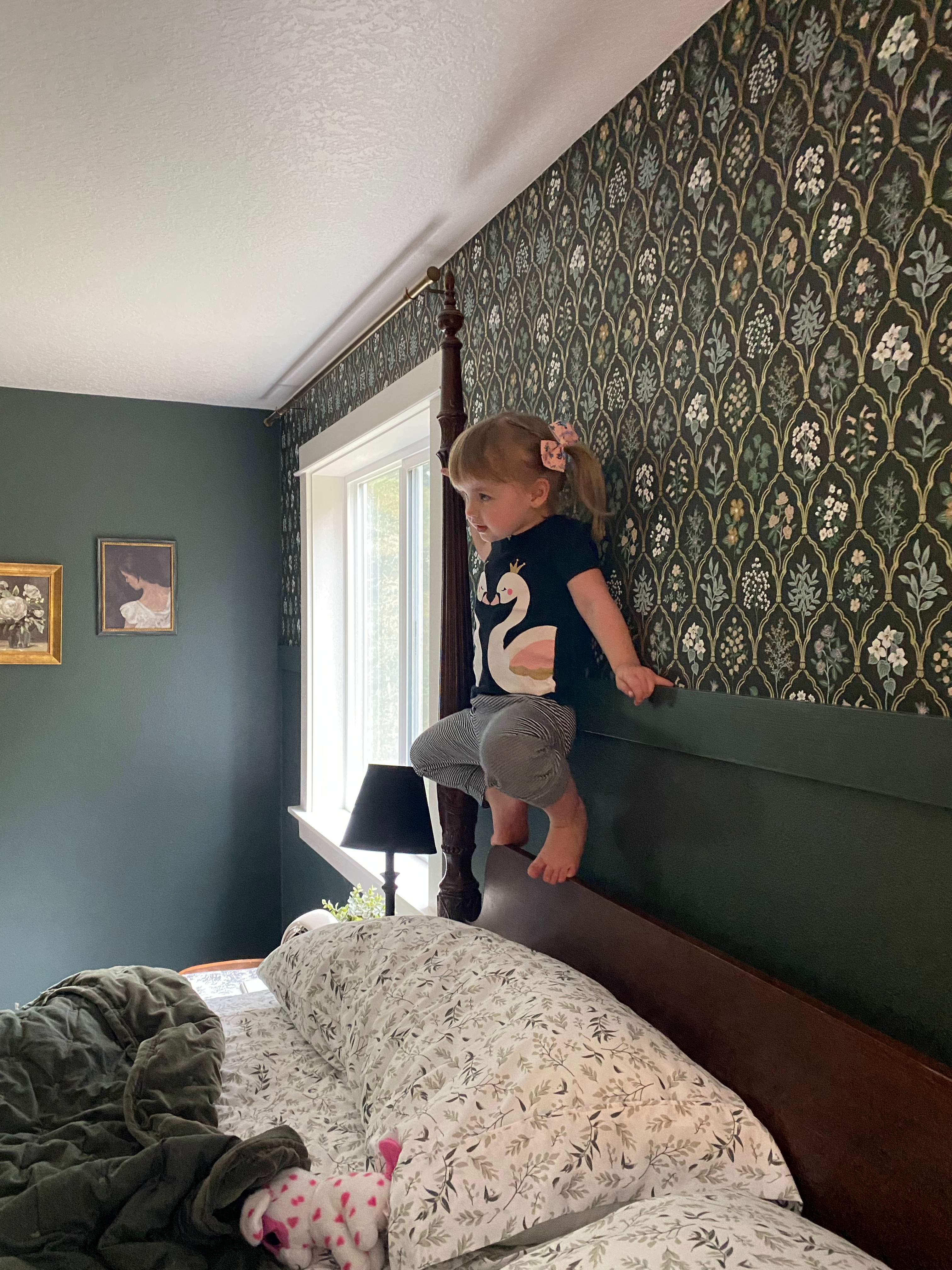
When I hung the right wallpaper, even though I had to add paste to it and it was much more challenging, it felt right. Every strip and every swipe of glue was worth the effort for this beautiful paper. When it’s right you know. And when it isn’t, the same is true. Trust your gut. Listen to it on creative projects (I can’t speak for it on bigger stakes, but on DIYs, yes ;-)). Ryan added trim to the windows, and we added trim along the bottom edge of the wallpaper for a finished look. (We always have little helpers hanging around, especially if there is a ladder involved, like a moth to the flame.)
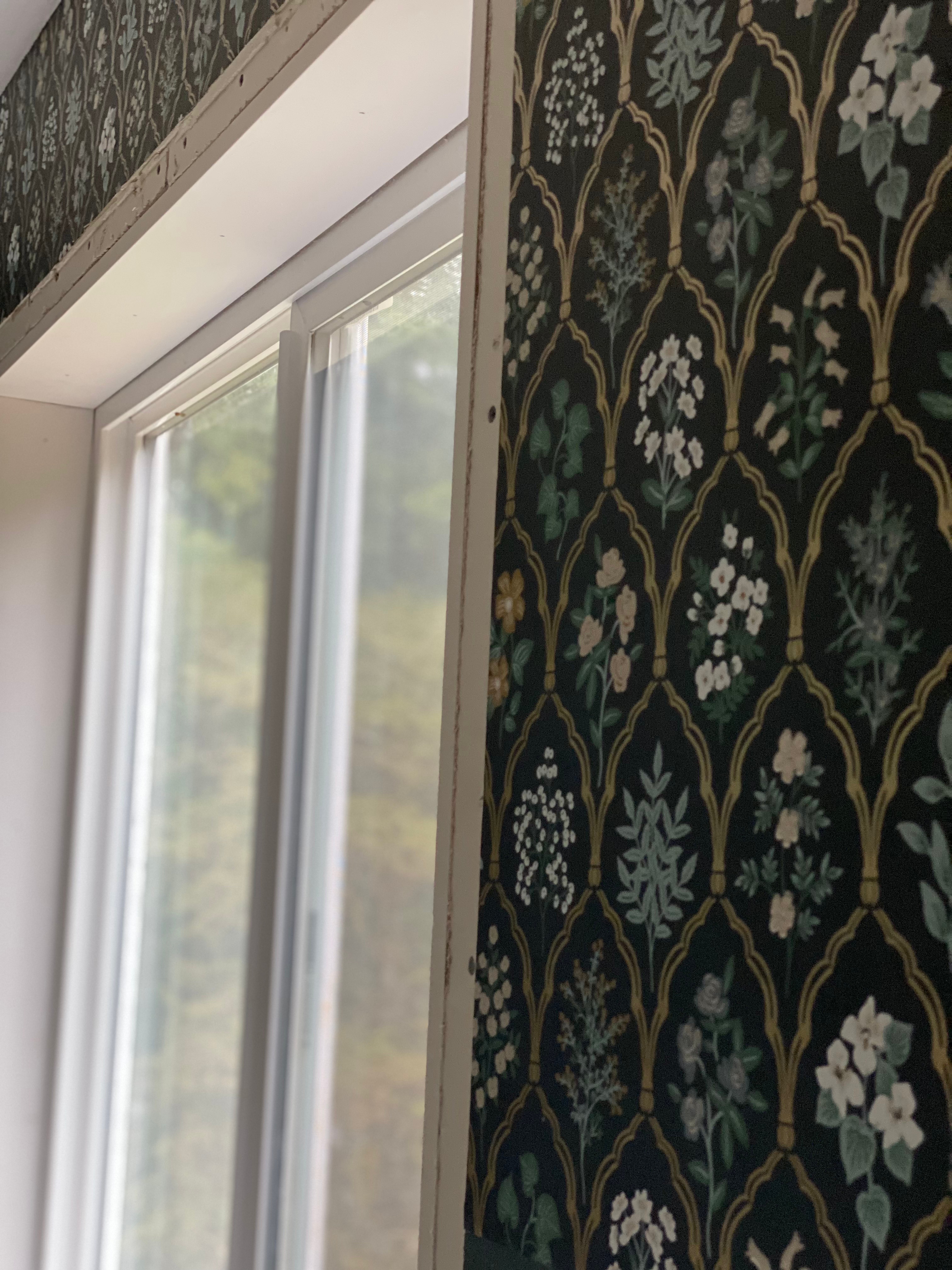
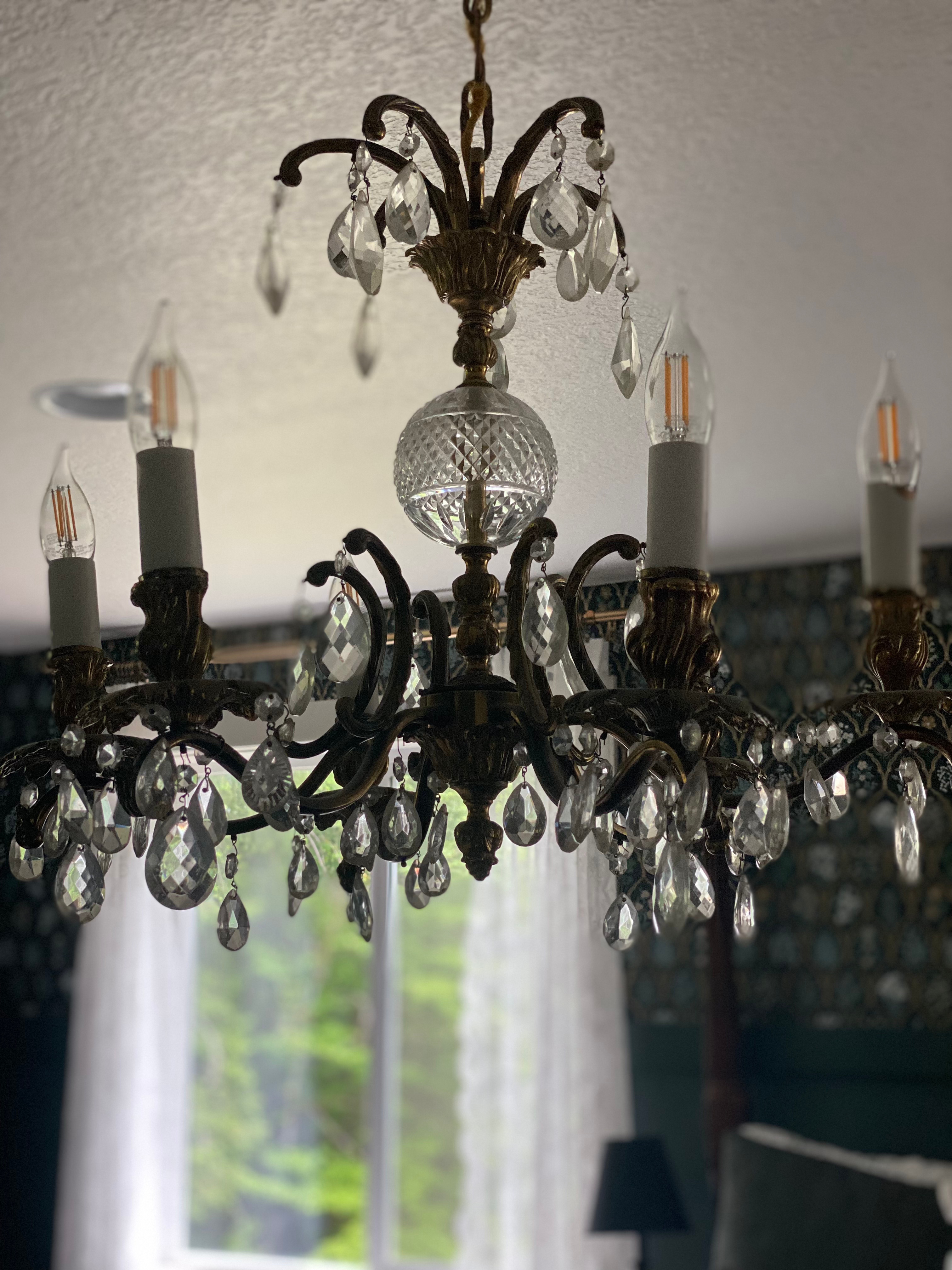
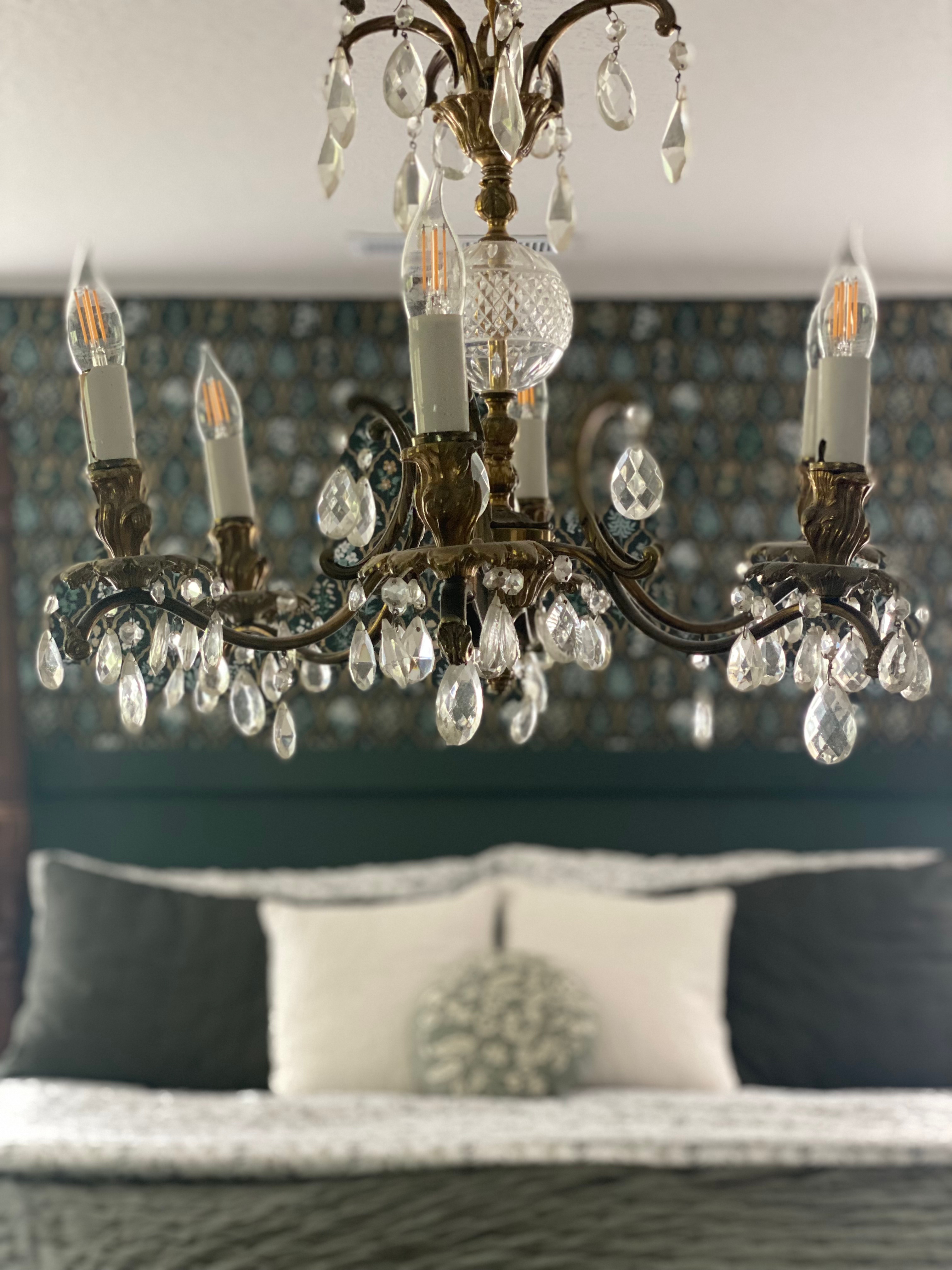
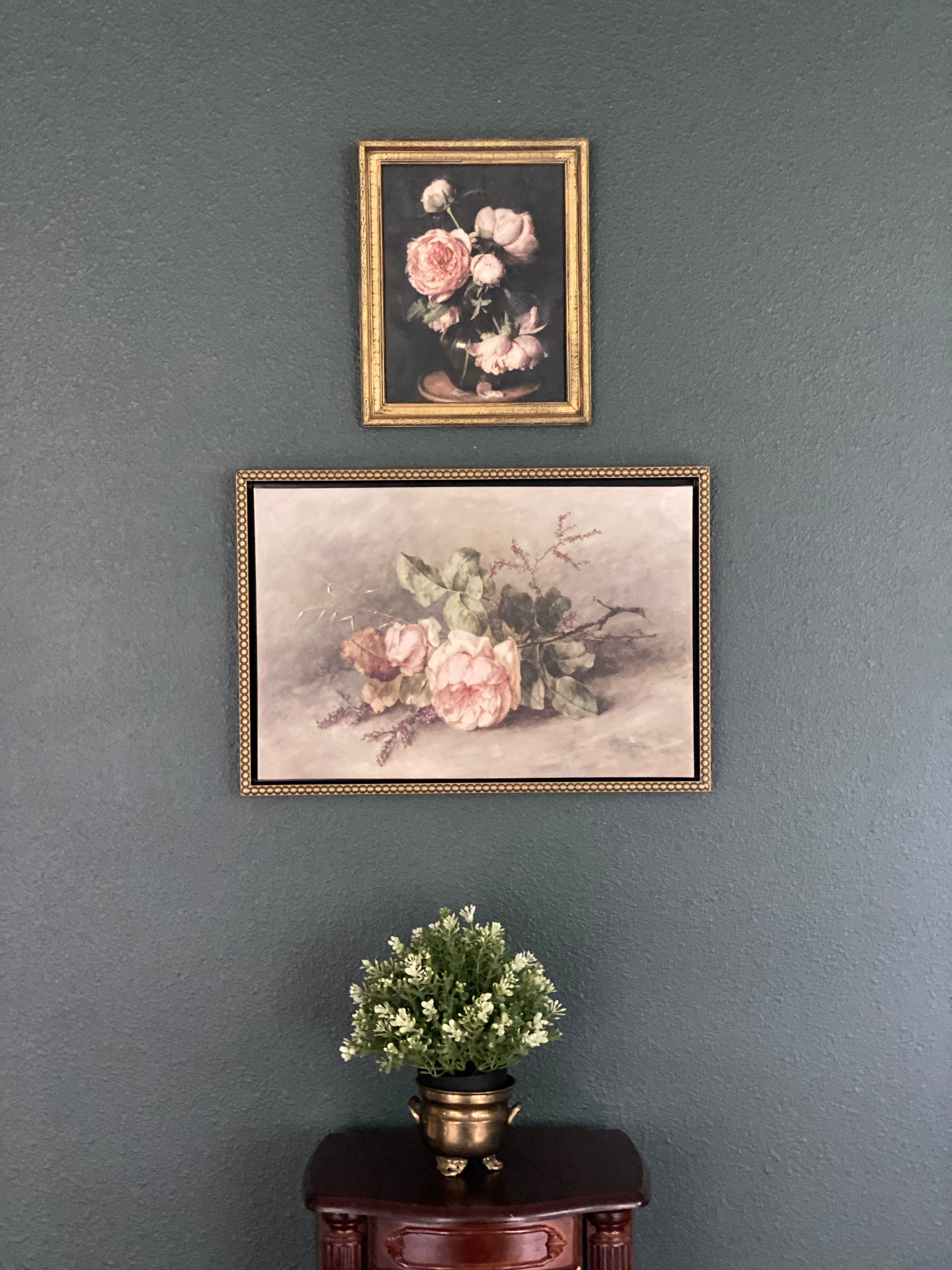
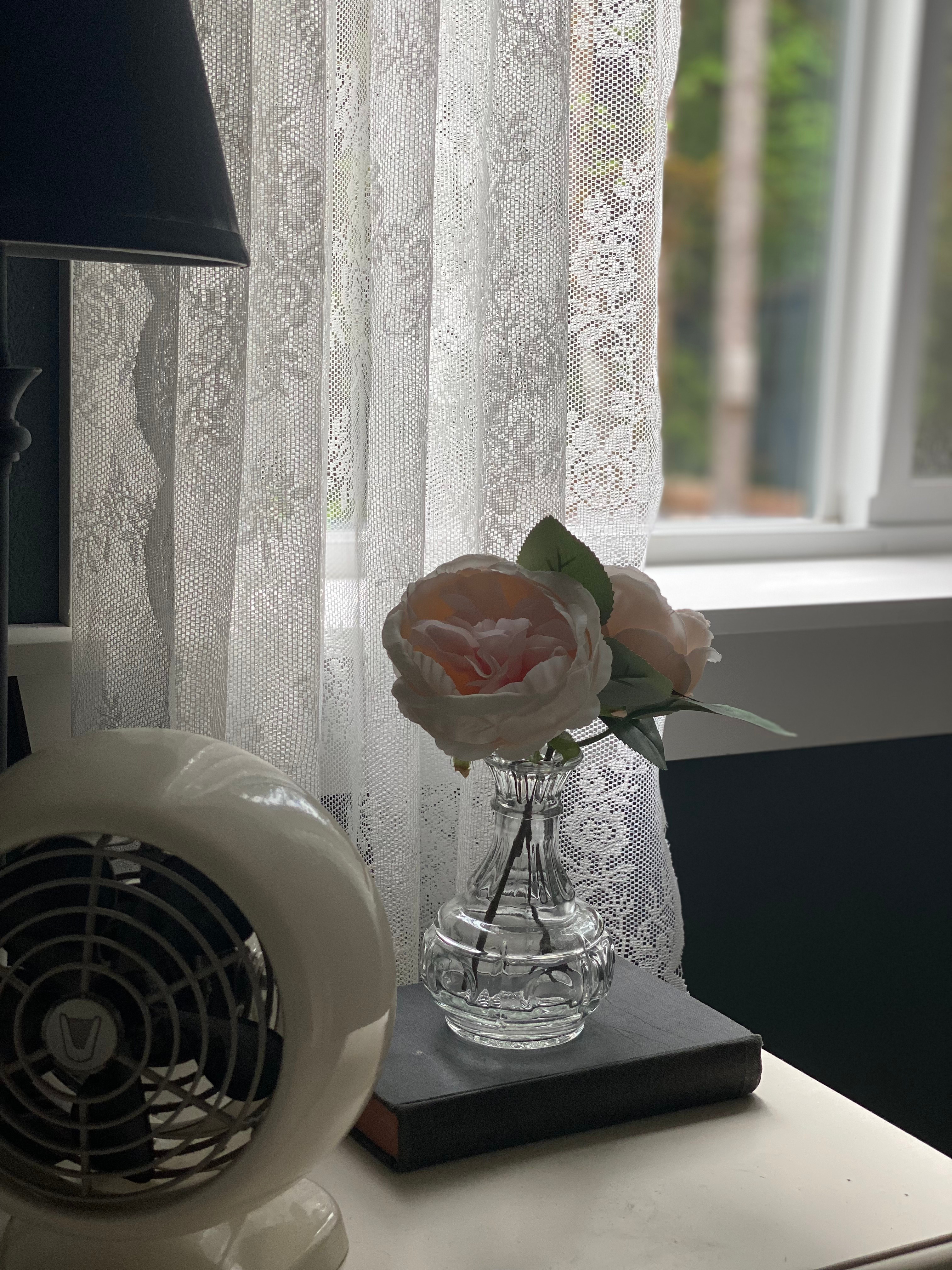
We are so very pleased with the outcome of our room makeover. We included some fun Facebook Marketplace finds along the way, like a four-poster bed and a brass chandelier. I found artwork that coordinated well at Target, Hobby Lobby, and Etsy. And of course, pillows and bedding (Pottery Barn, sadly, they don’t have this quilt anymore).
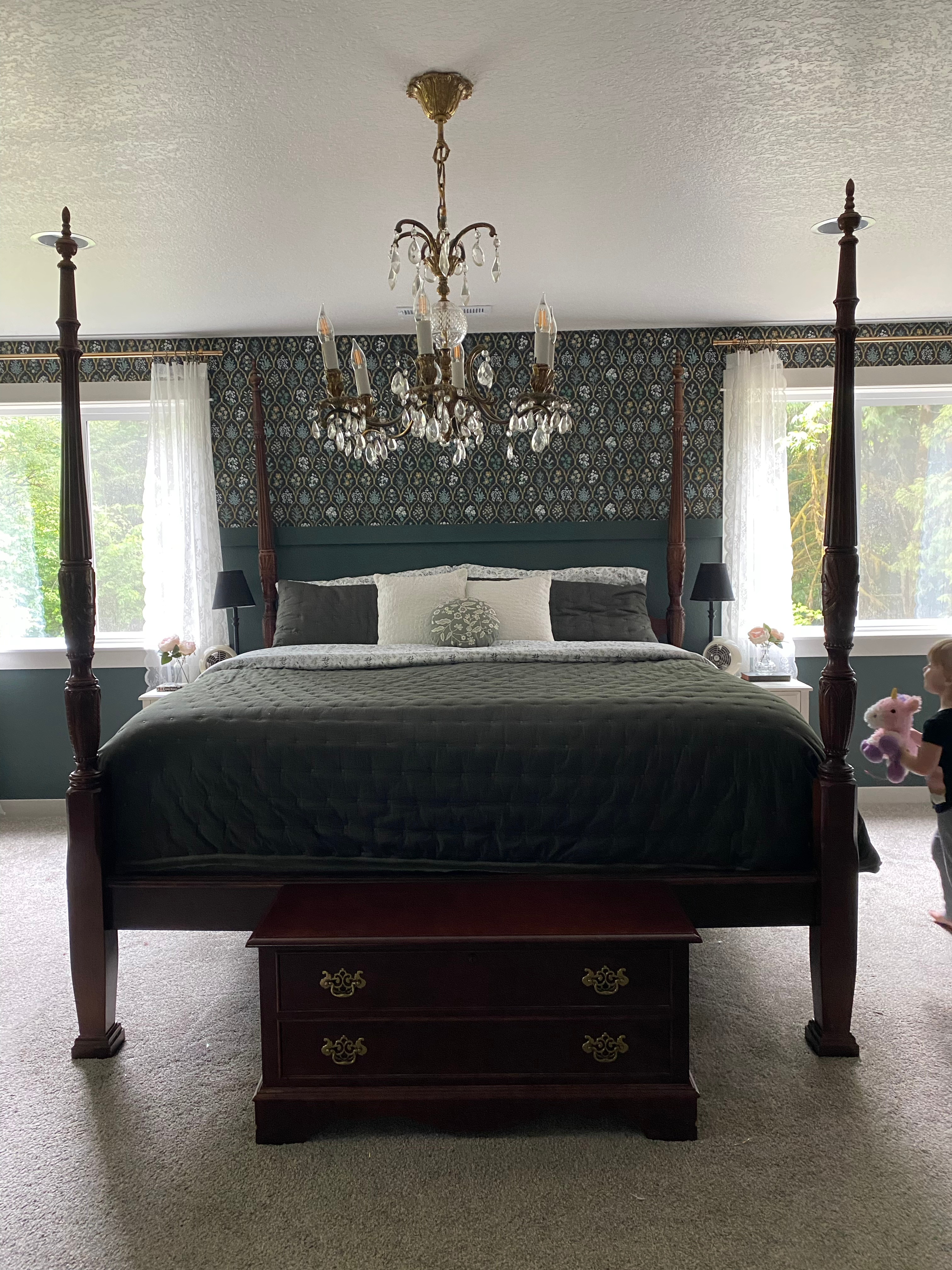
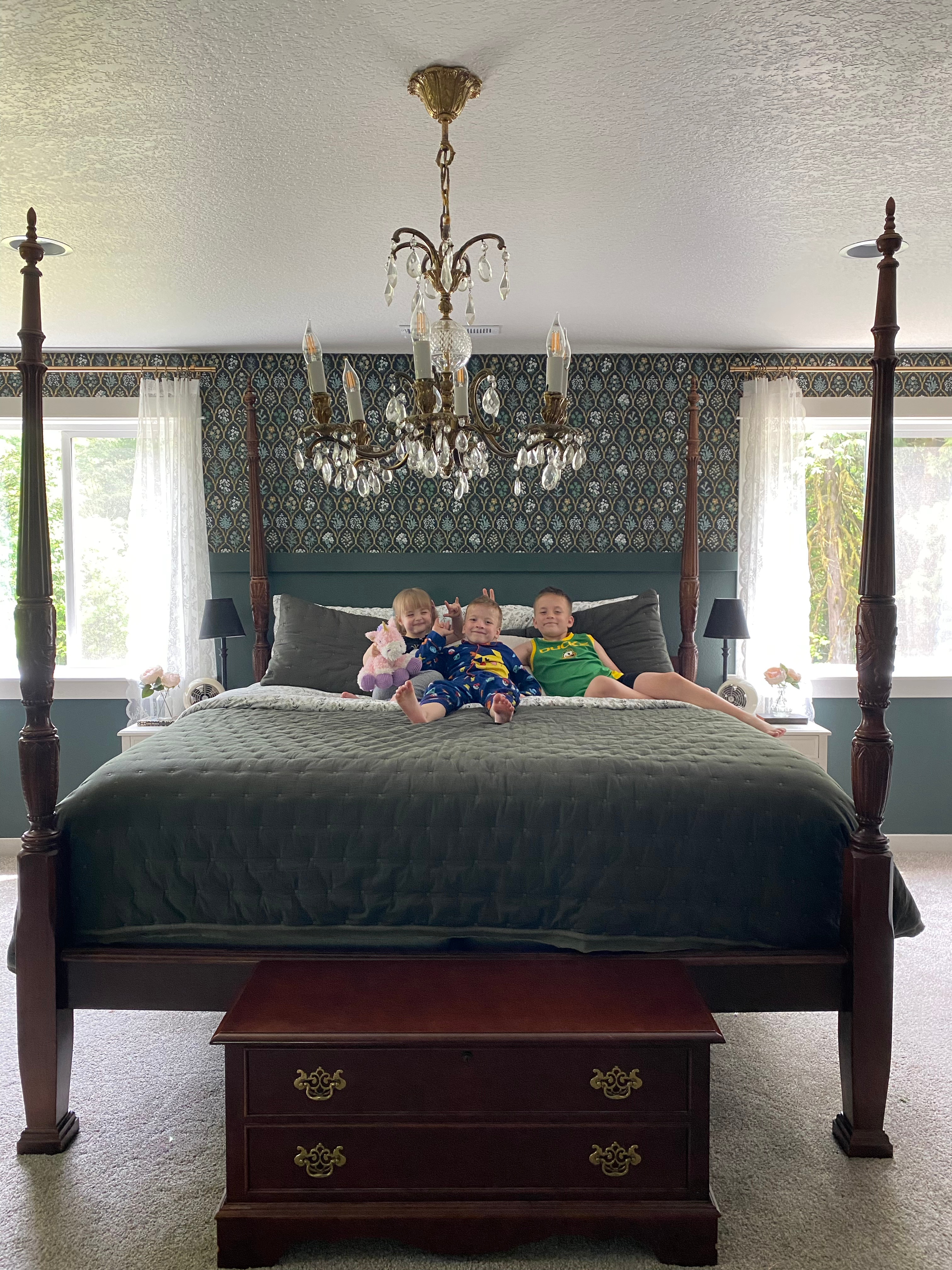
And for those who love good before and after:
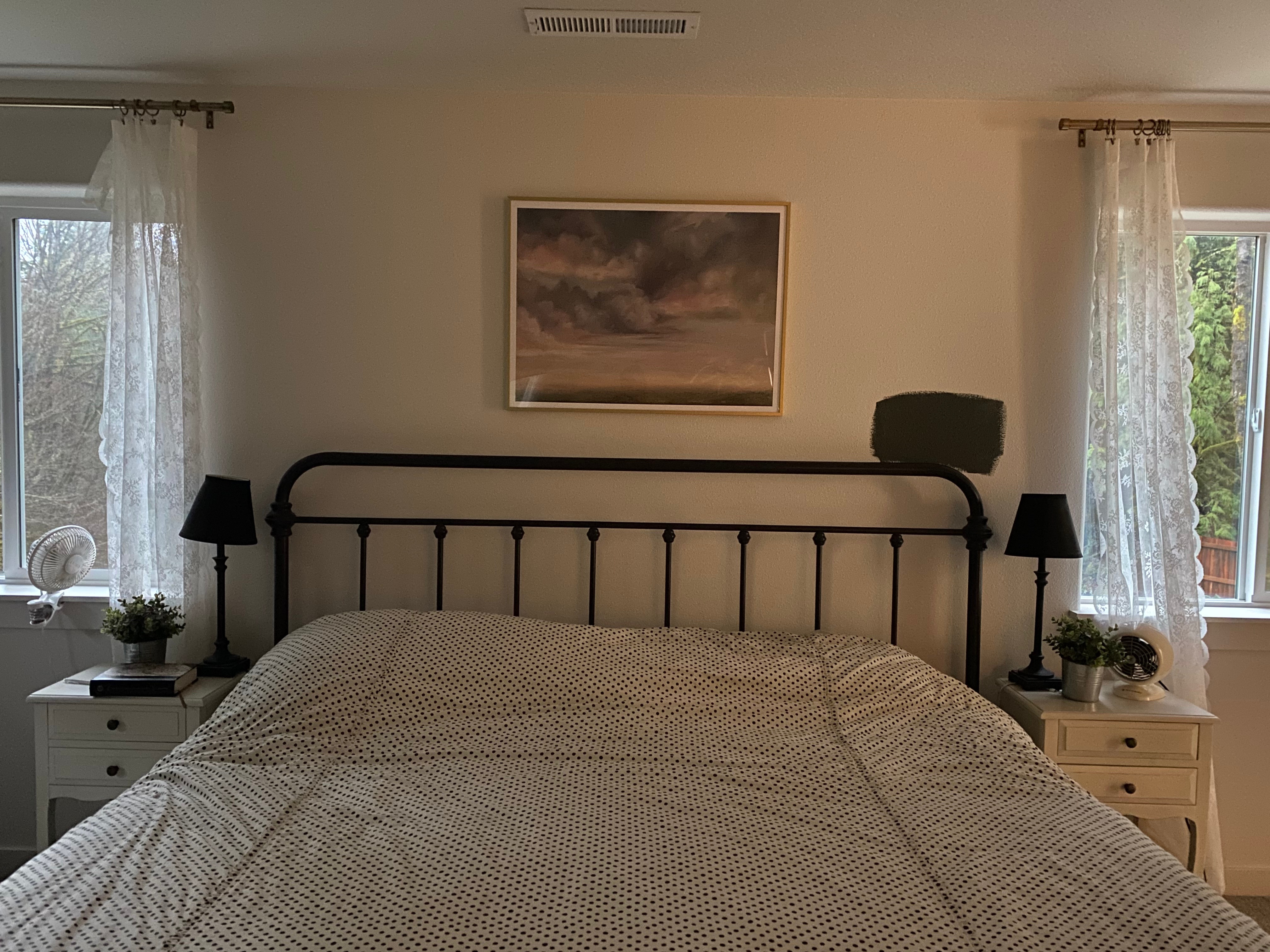
All this to say, not all DIYs go the way you want them to. In fact, in my experience, most do not. Maybe patience is the lesson? Maybe sometimes admitting defeat and starting over? Maybe you don’t have to be a DIY genius every time? Maybe always sample wallpaper? Or maybe just don’t get discouraged if it isn’t Pinterest-Perfect or Insta-worthy, trust what you love.

XO,
h

SOURCES:
Target
Portrait
Floral
Floral with gold frame
White leopard pillow
Green embroidered pillow (which gave me the idea for my next DIY, stay tuned…)
Sheets

Hobby Lobby artwork
Floral
Bow (actually in our bathroom, but too cute not to share)

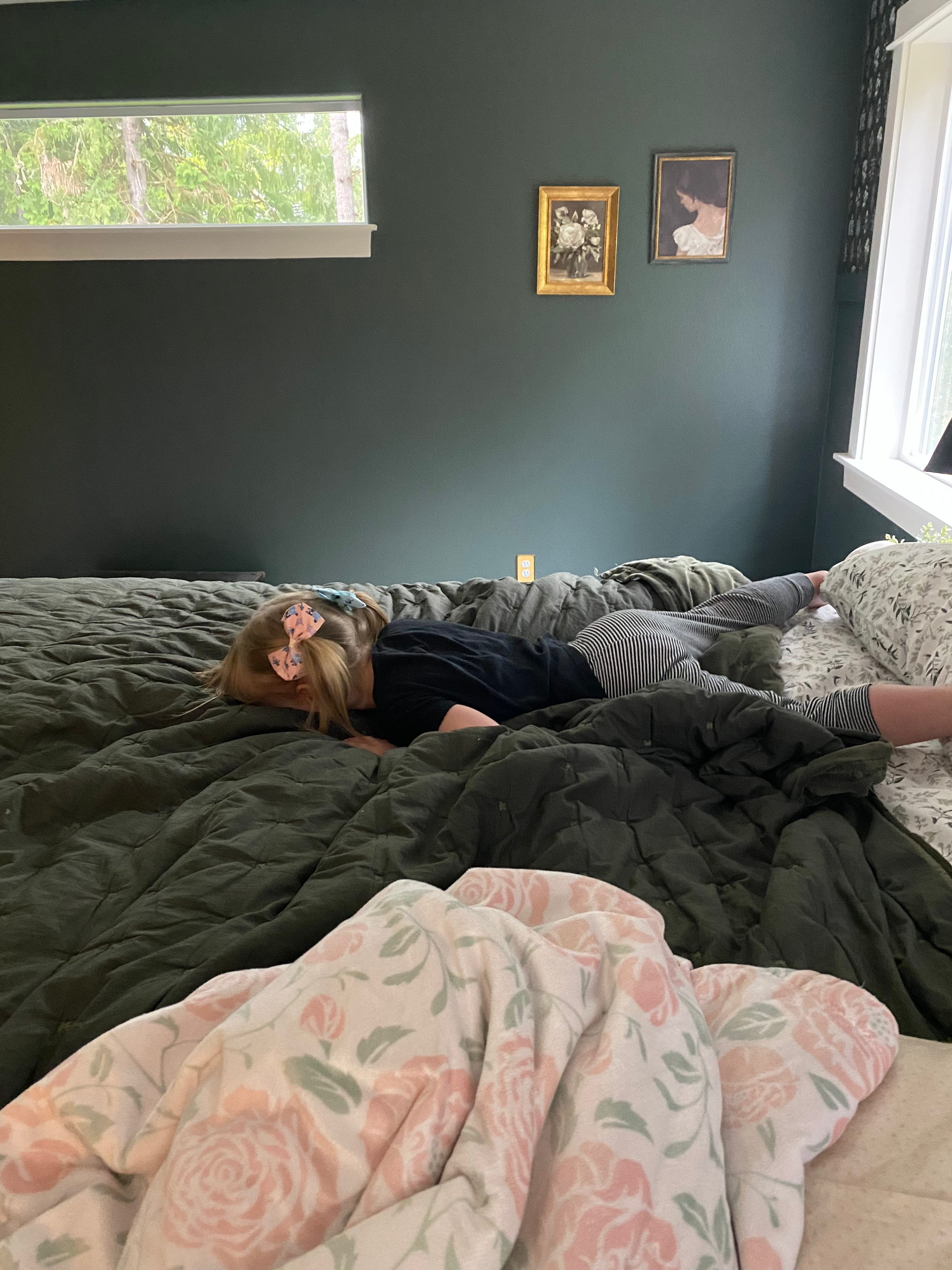
P.S. The kids may be loving this makeover too. 😉
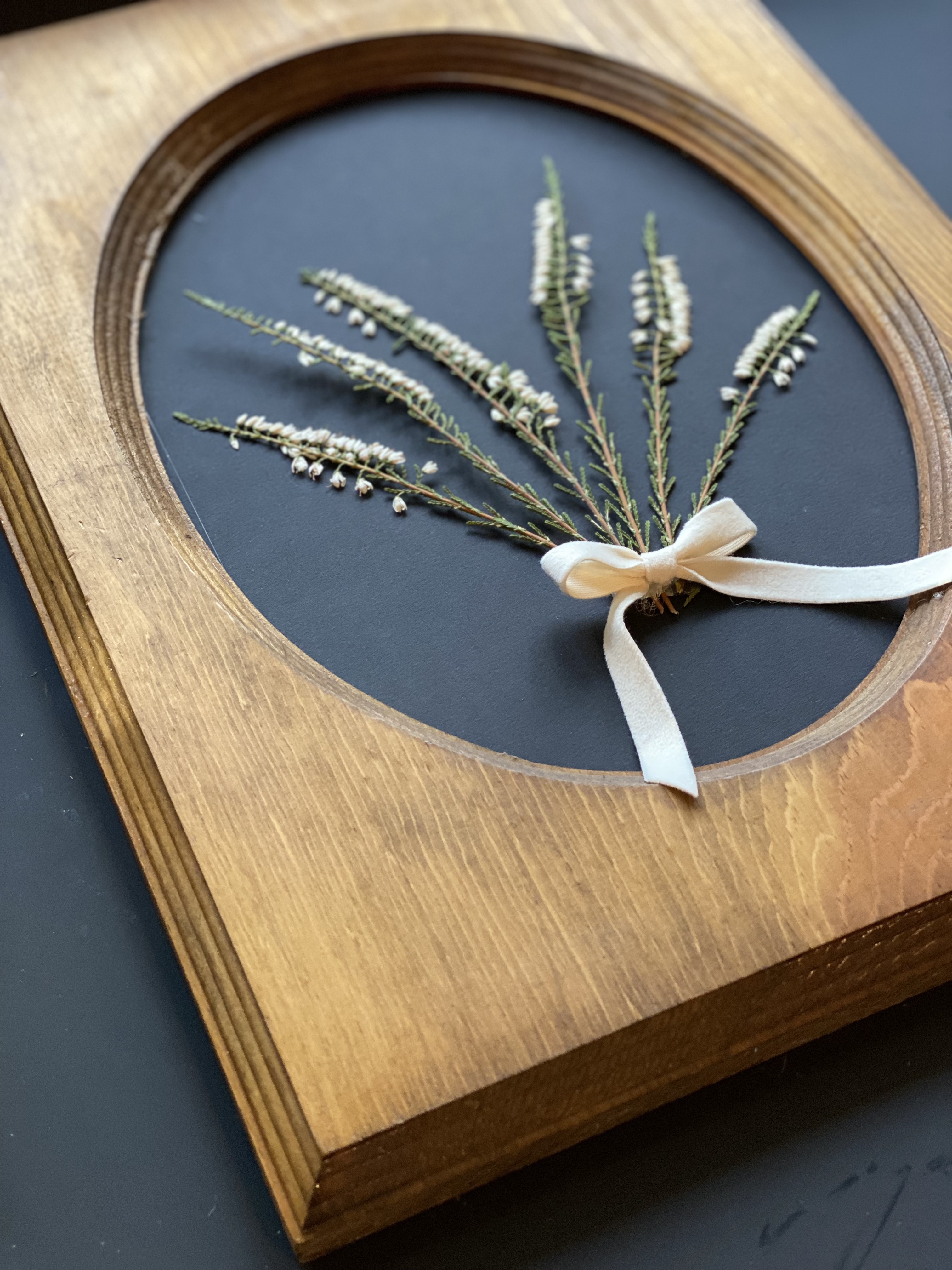
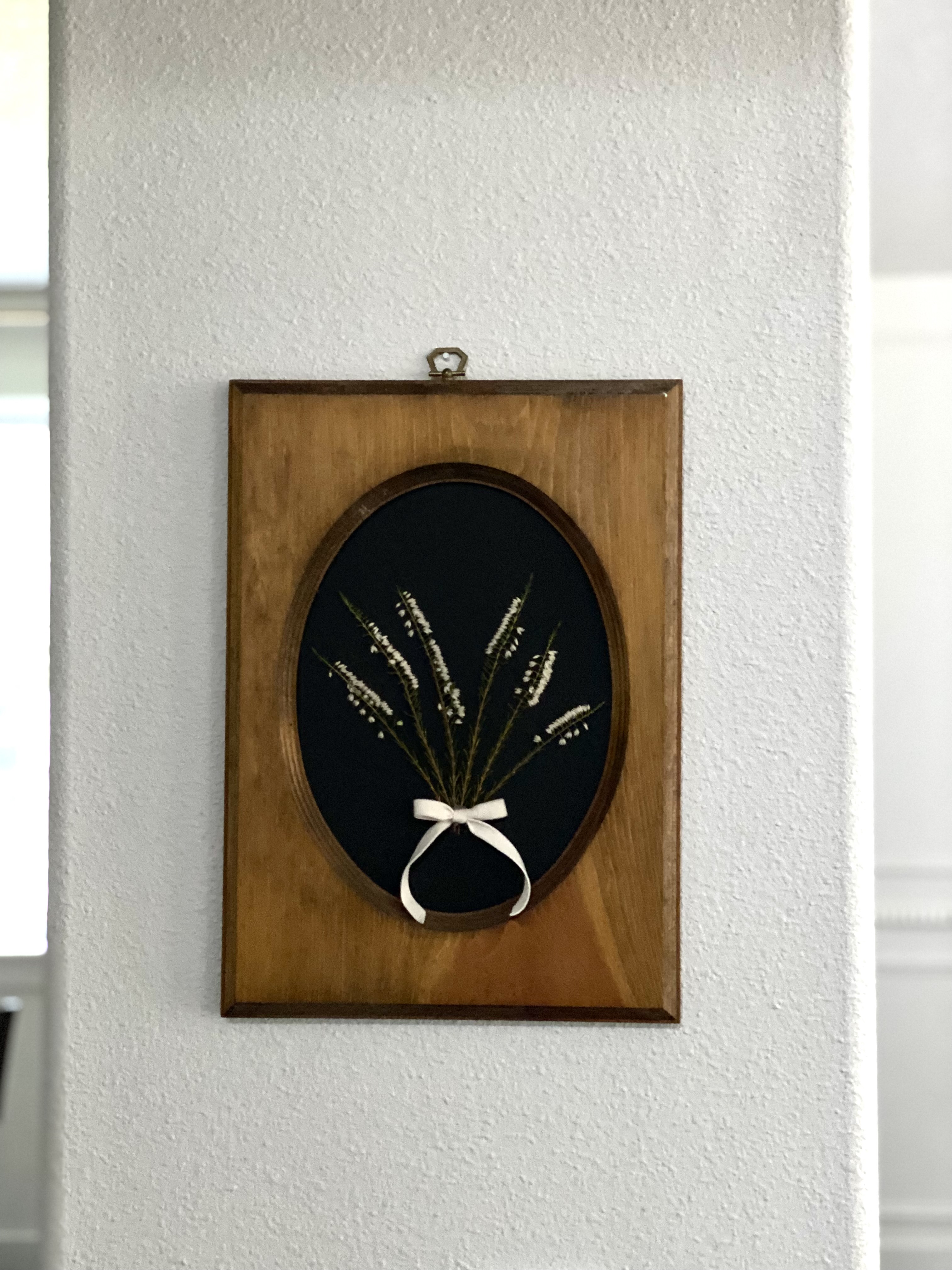
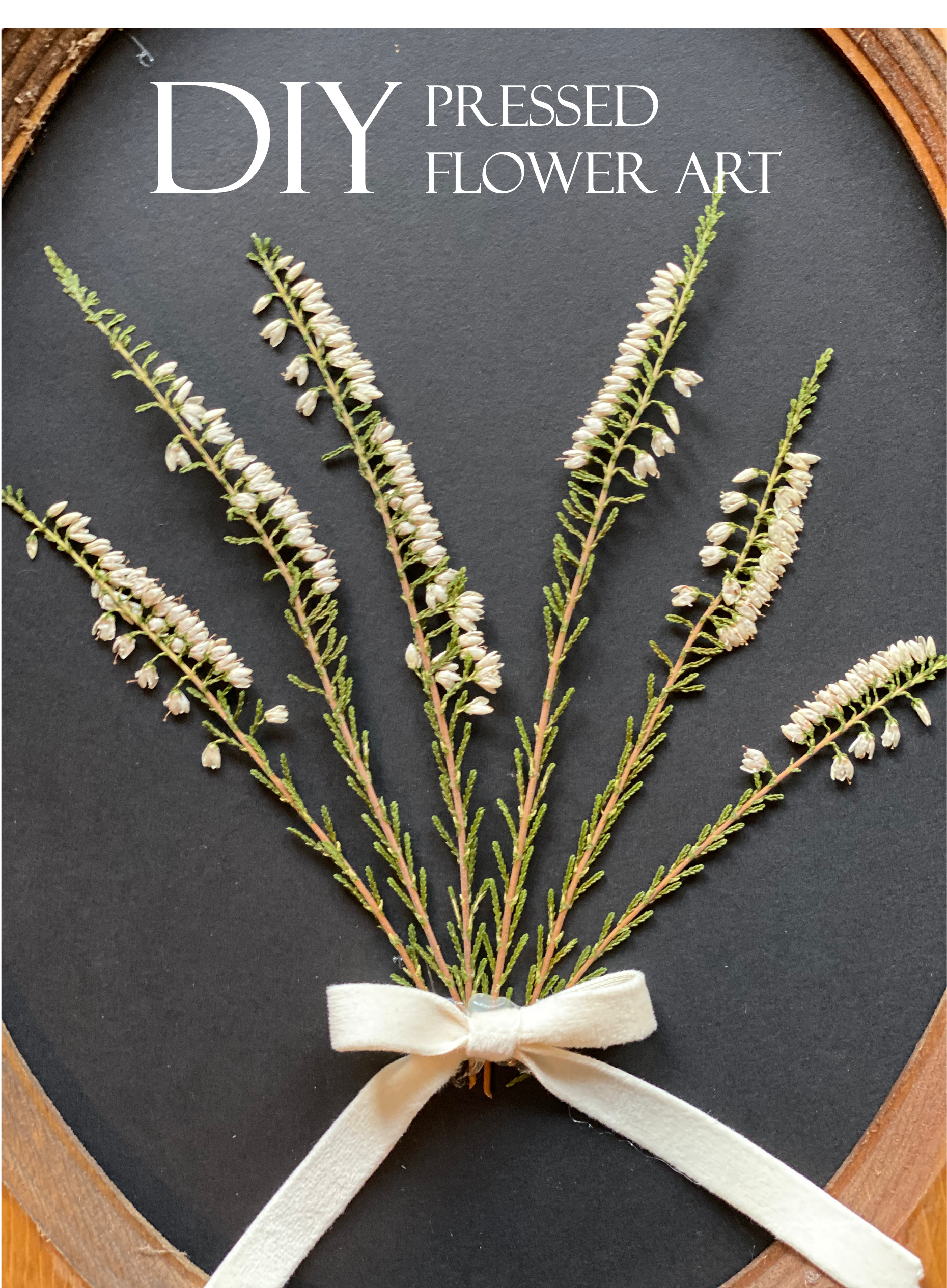
DIY Pressed flower art

Sometimes you just need a sweet project to break up all the major projects. Or maybe you just need something to do with all the dried flowers you pressed with your daughter, with zero plan but lots of possibilities.

Over the last two summers, Kyrie and I started picking and pressing some of the flowers we’ve been growing. She kept asking me, “Mom, what are we going to do with all of these?” I have grand illusions of about a million projects, including creating a gardening journal complete with pressed flowers inspired by @missmustardseed (but that’s for another day). Instead, we picked and pressed to our hearts’ content without a real goal. We used parchment paper tucked into stacks of the biggest, heaviest books we have. It only takes a couple of weeks, and they are dried and ready to use.


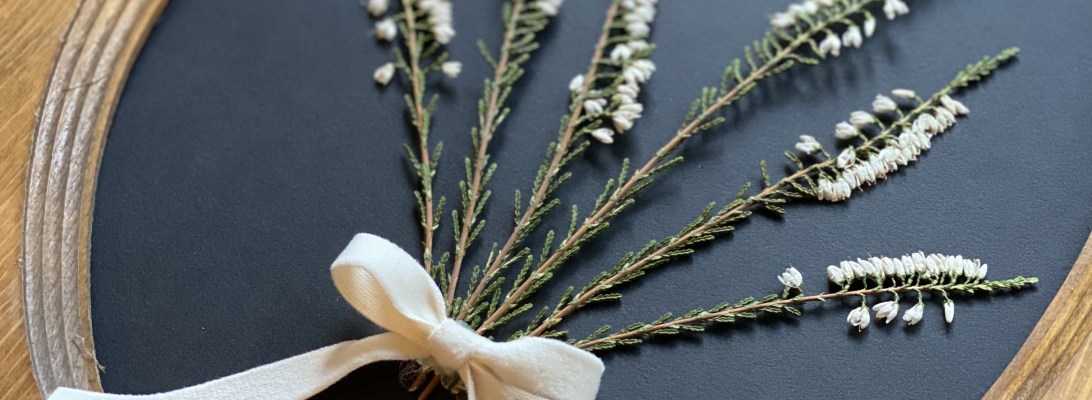
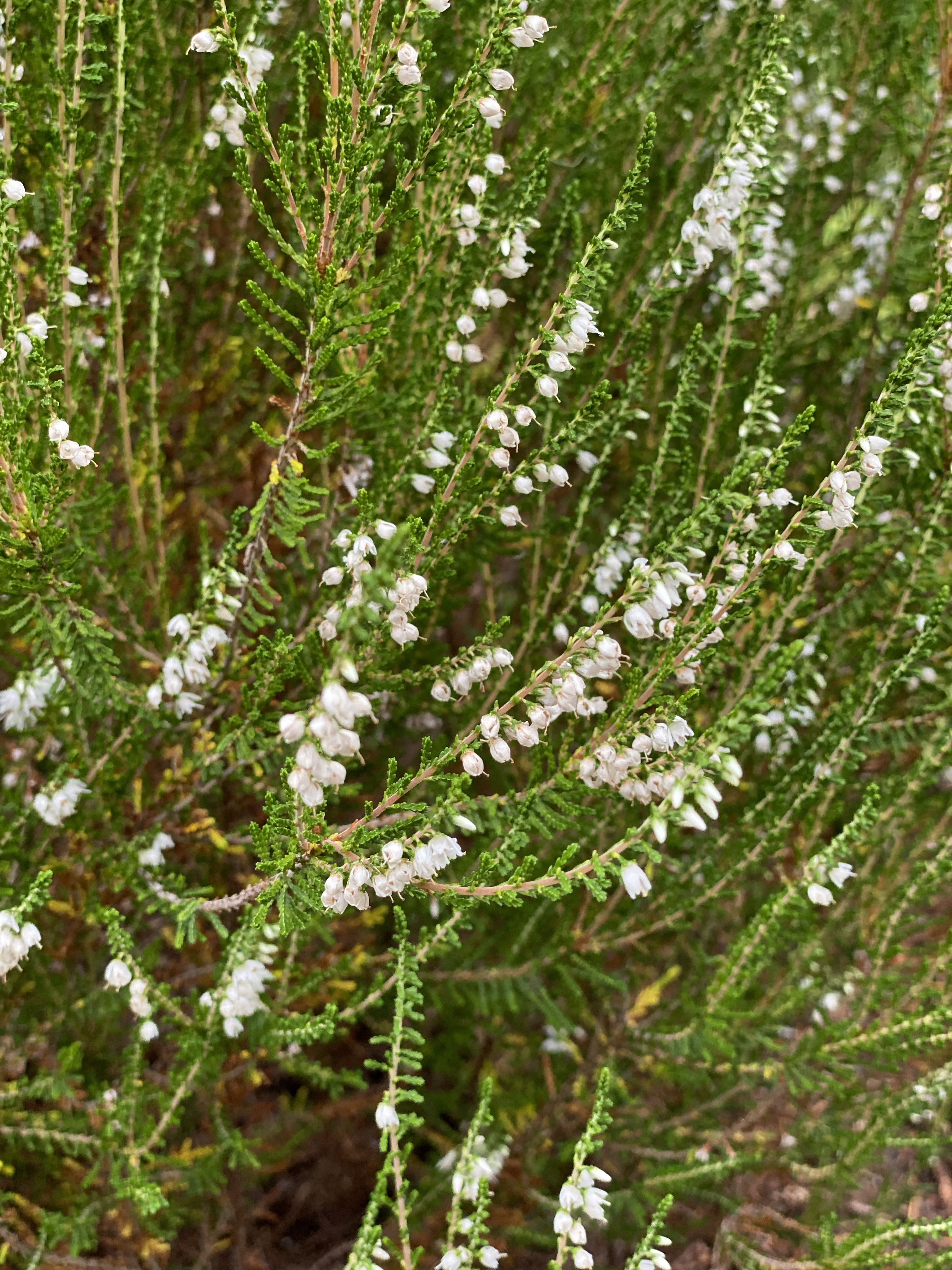
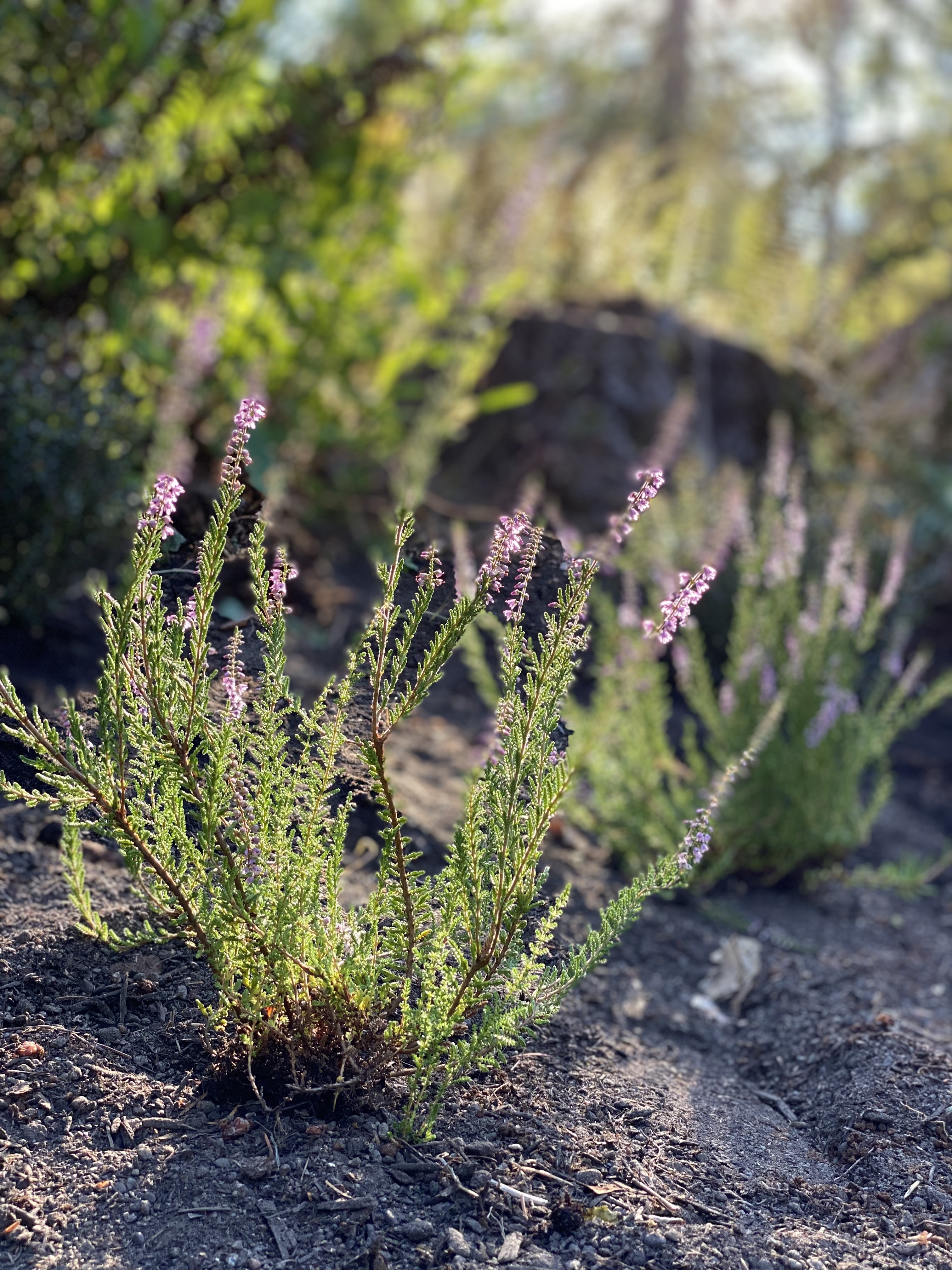
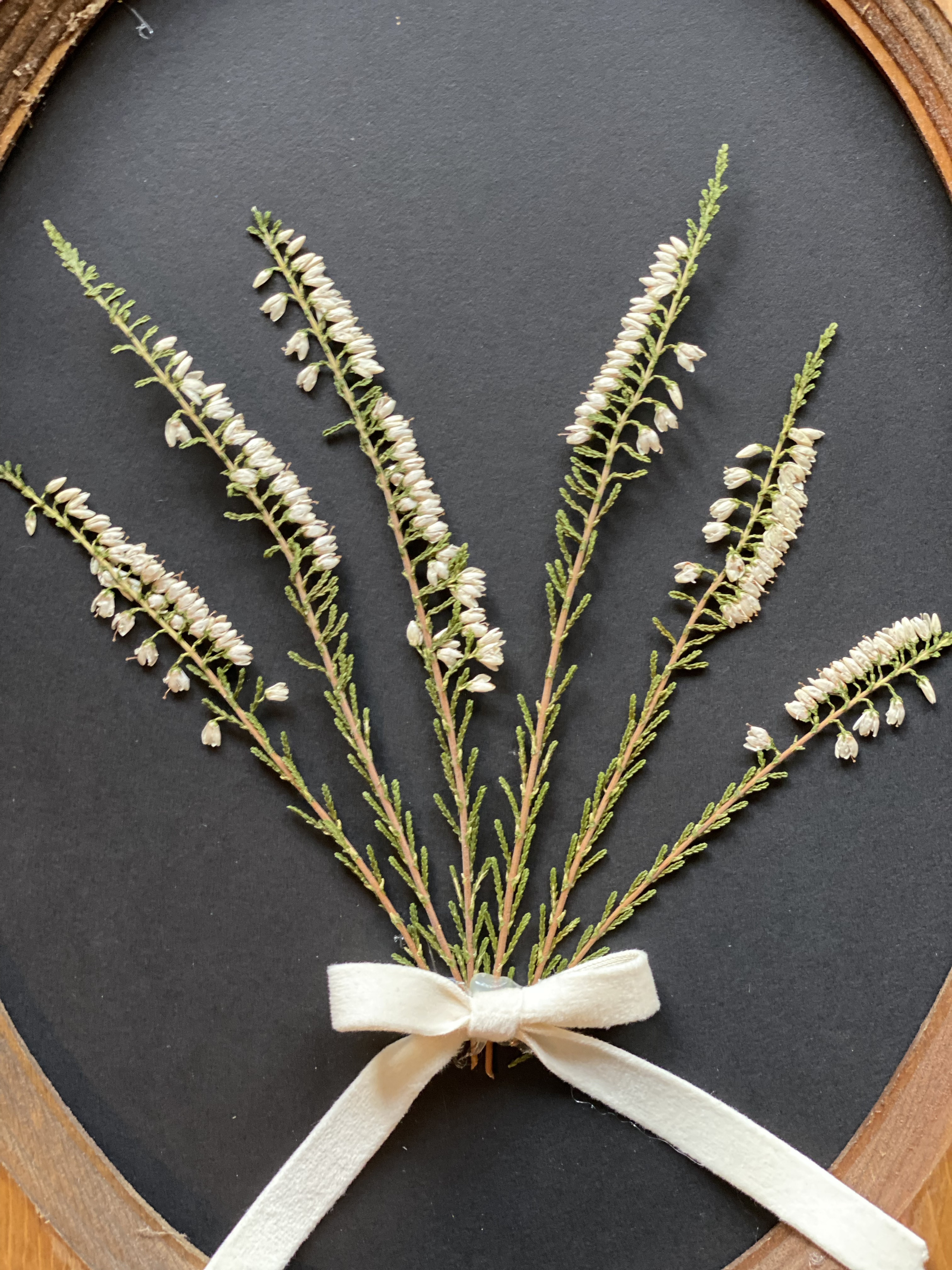
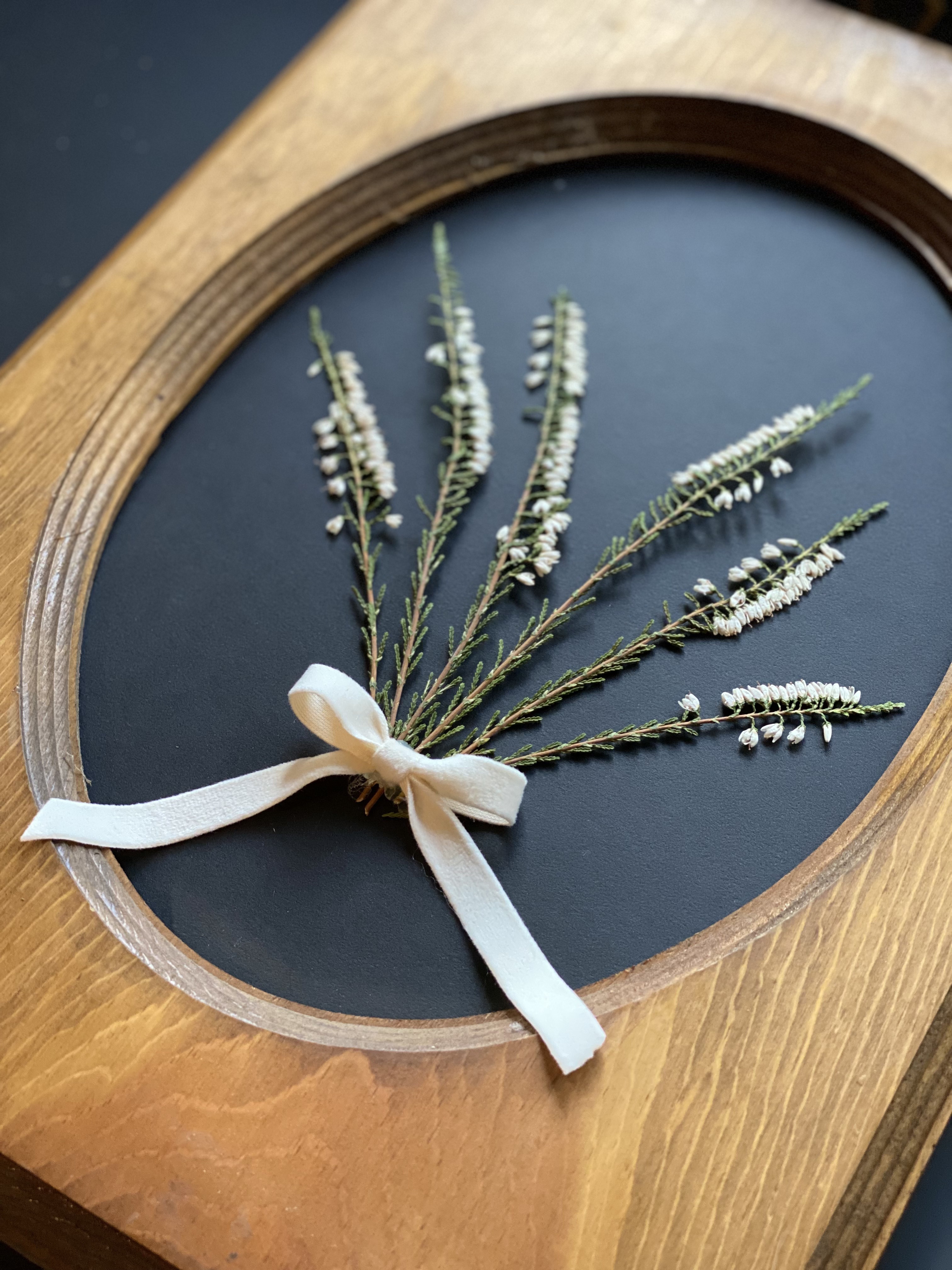
I find the best ideas come from happenstance. I was at an outdoor antique fair this fall and found a few vintage frames for about $4 – $5 apiece. Again, with no true plan, I bought them because they were cool and you never know when inspiration might hit. When I got the frames home, it hit me, we should frame some of the pressed flowers! And no ego involved, I promise, but I had to start with heather.

Supplies:
-vintage frame
-pressed, dried flowers (DIY or you can find some on Etsy)
-scrapbook paper
-hot glue
-velvet ribbon (via Amazon)

Directions:
1. I measured the scrapbook paper and cut it to match the size of the backing of the frame. I used black paper because I love the contrast.

2. I then played around with arrangement of the flowers until I found a pleasing look. Typically, you would arrange in odds, but this art piece was just begging for one more stem.

3. Once I was happy with the arrangement, I used hot glue to secure the ends of the flowers. The frames I bought did not have glass, so I had to do something to secure them. Hot glue, while treacherous, does the job well.

3. The ribbon comes next, and yes, it is 100% to hide the hot glue. Nothing but honesty on this blog. I also thought about creating a little tag or using some lace to hide the glue, but the velvet ribbon won this time!

4. I assembled the paper and frame, and voila, done! I even found a spot to hang it that already had a nail, win/win/win.

This project took all of 4 steps (5 if you add pressing the flowers), and maybe 15 minutes!

XO,
h

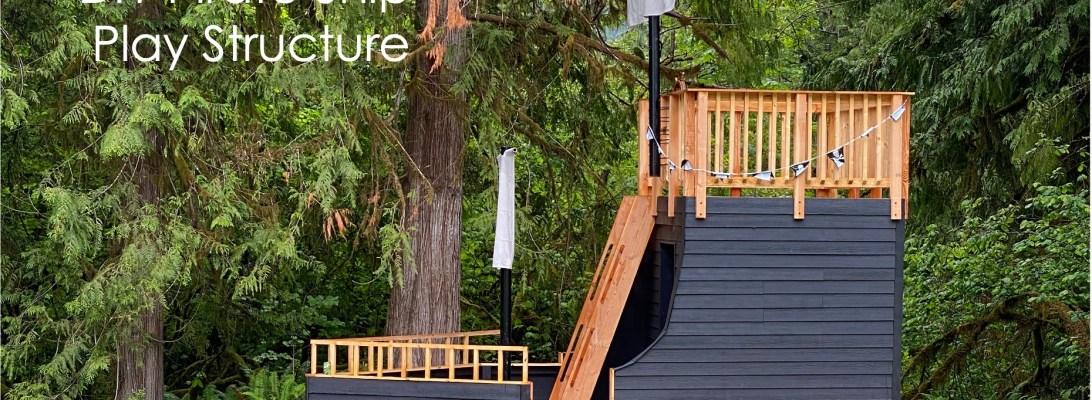
Building a Backyard Pirate Ship: Step-by-Step Guide

I guess I’m using this winter to blog about all the projects I’ve gotten behind on writing about.
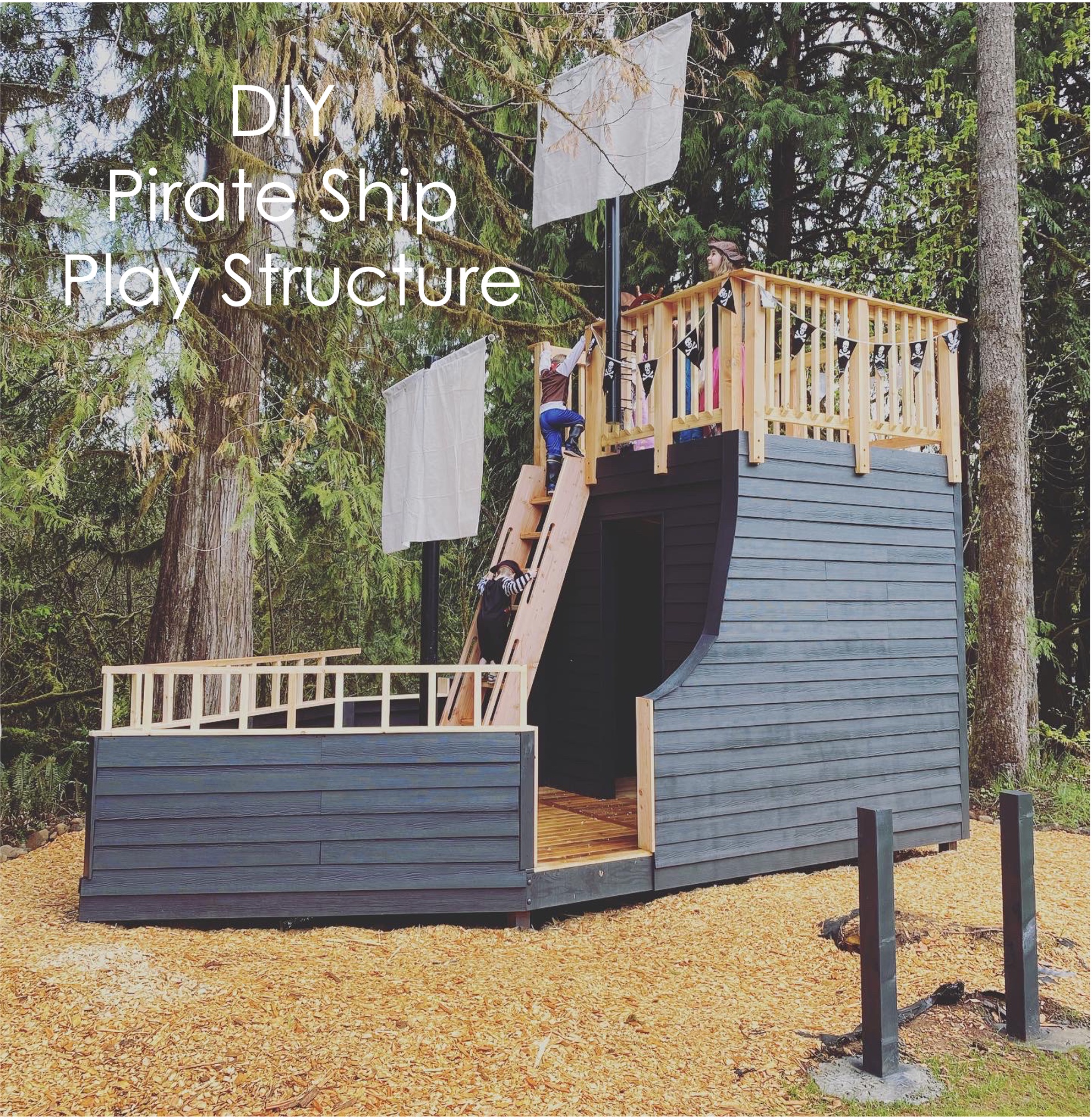
The garden and greenhouse took up so much of our extra time, I haven’t posted about one of the most awesome and most fun projects of all…THE PIRATE SHIP!

It all goes back to the giant cardboard pirate ship we made for Liam’s 1st Birthday. If you forgot about that beauty, you can read about it here. As Ryan and I were planning for that project, we both thought, someday we should build a real pirate ship. Because that would be the normal next step, right? Everyone thinks this way, right? Right? Well regardless, Ryan and I were thinking it and like so many other things that became possible when we moved to the Lost Wood, this was now possible.

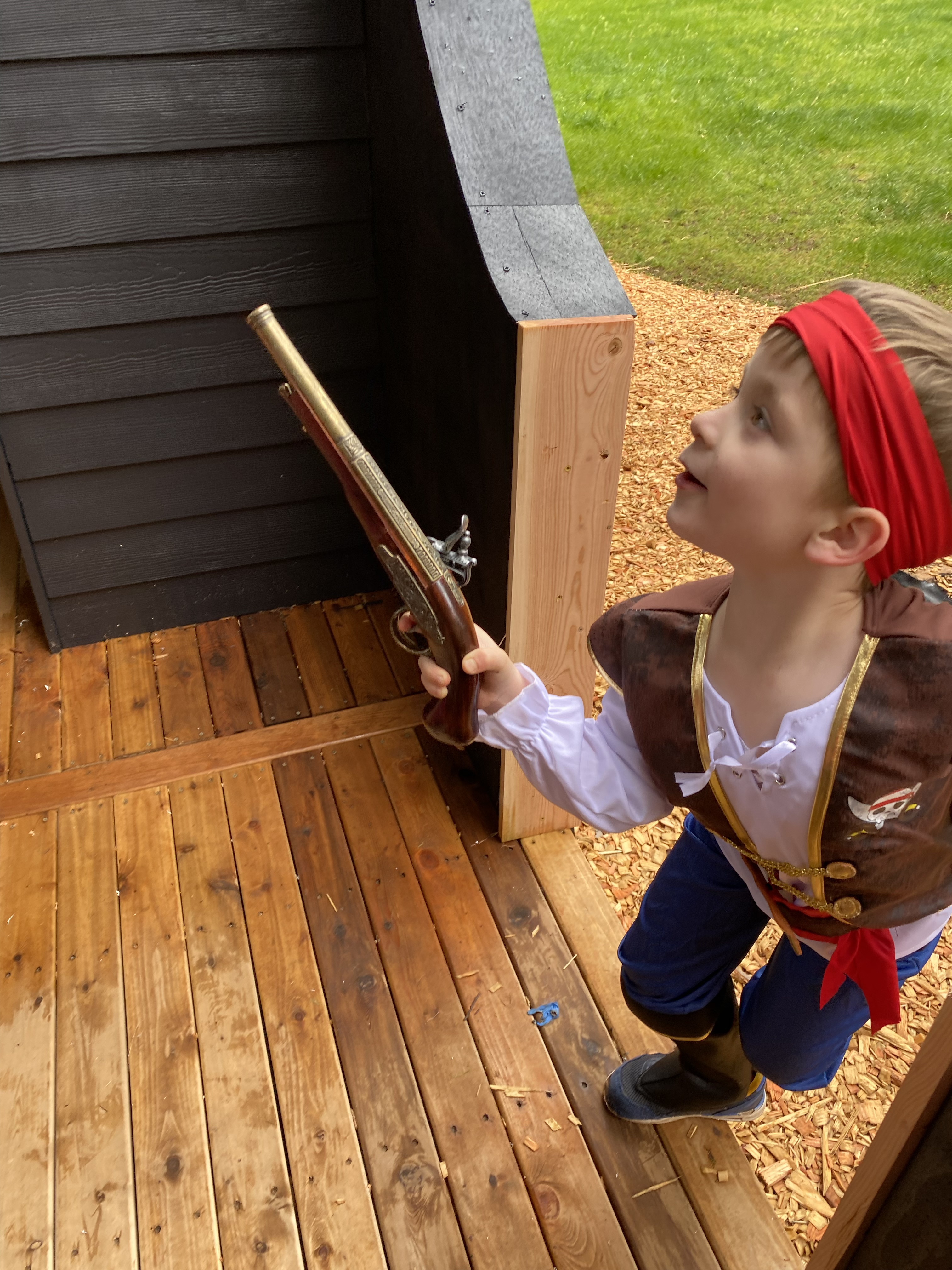
Also, our sweet kiddos have really gotten into the idea that every birthday needs an elaborate theme. I’m sure that is in no way my fault, like not even a little bit (wait, actually, don’t read about Liam’s 1st Birthday above). Anyway, Jackson announced that his 6th Birthday would be Pirates vs. Princesses and he needed us to make another cardboard pirate ship to make the theme work. Ryan and I were both 100% sure we didn’t want to make another cardboard edition, it was time to make THE pirate ship.

I would say many of the steps were similar…

1. We made our own plan to fit a few specific goals:

  • We wanted it to be two stories tall, with an upper deck and lower deck.
  • We needed it to be big enough for our kids and cousins and friends and any adults feeling the need for piracy.
  • We wanted to create a cabin so the kids could camp out when they are a little older, and have a door to close (cougars in the woods, friends). And said cabin needed to be big enough to fit an air mattress or hammocks or bunks or something.
  • We also wanted to be able to add onto the ship as the kids get older and more adventurous (zip line to a crow’s nest, anyone?).

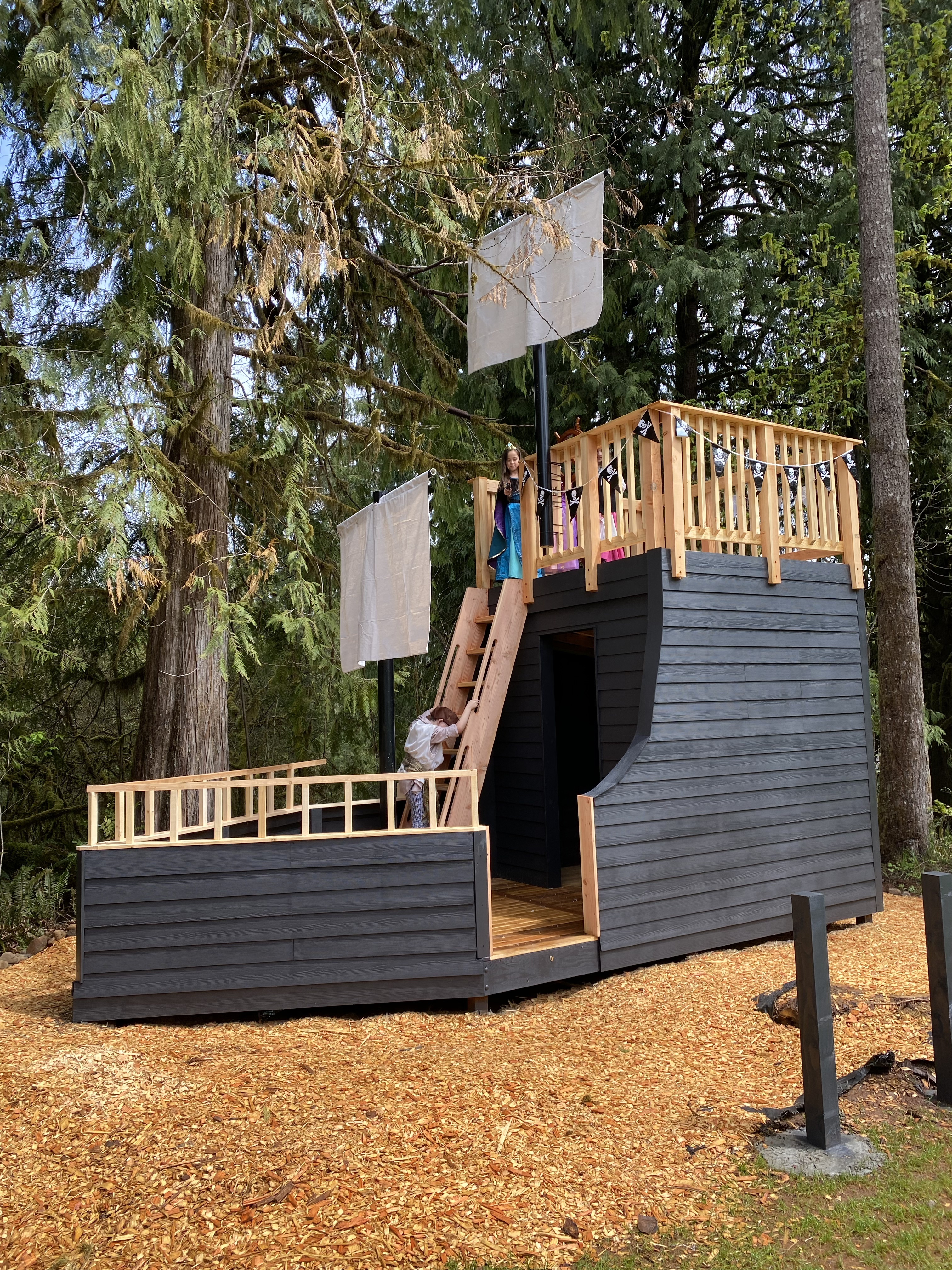
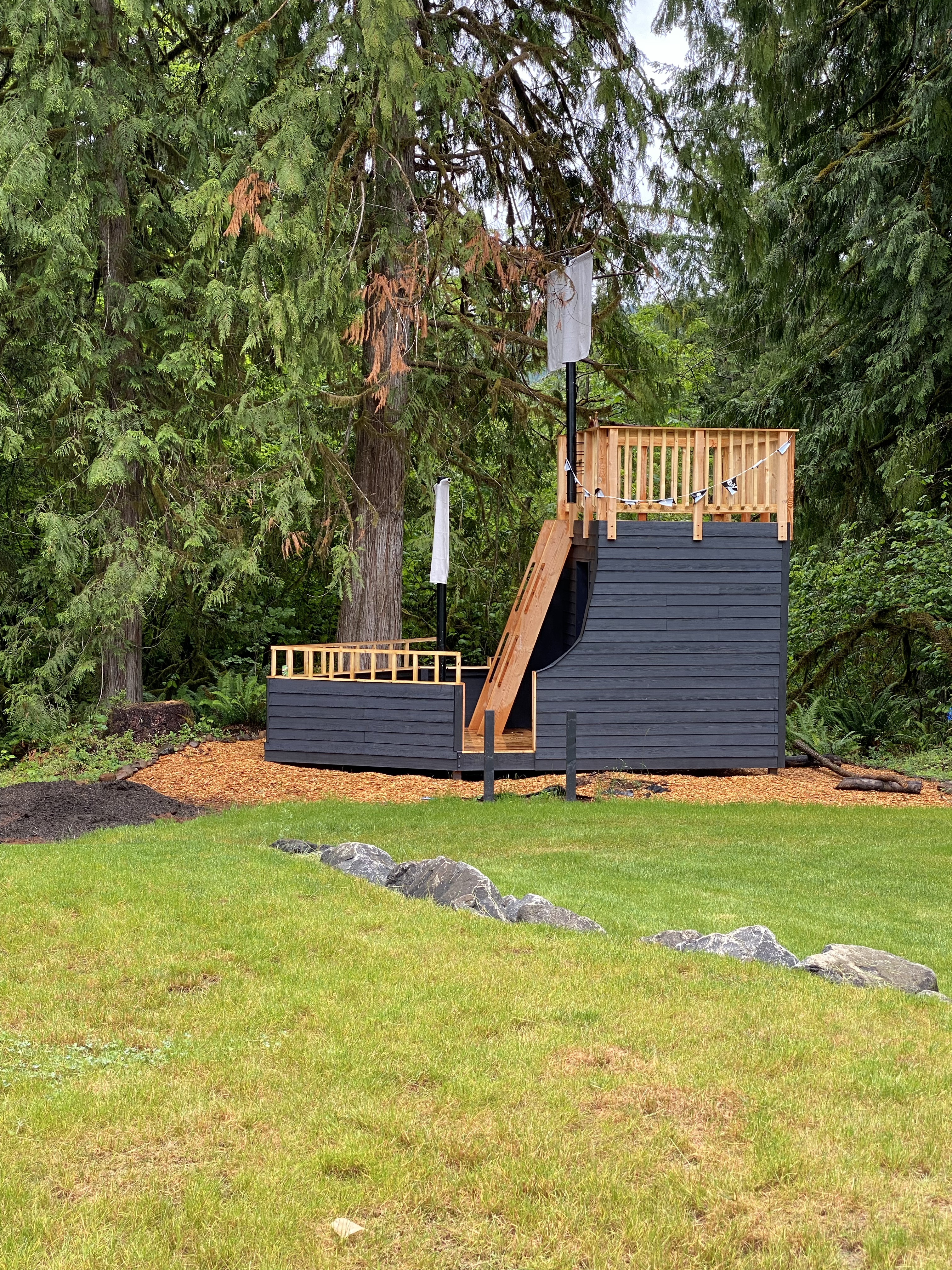
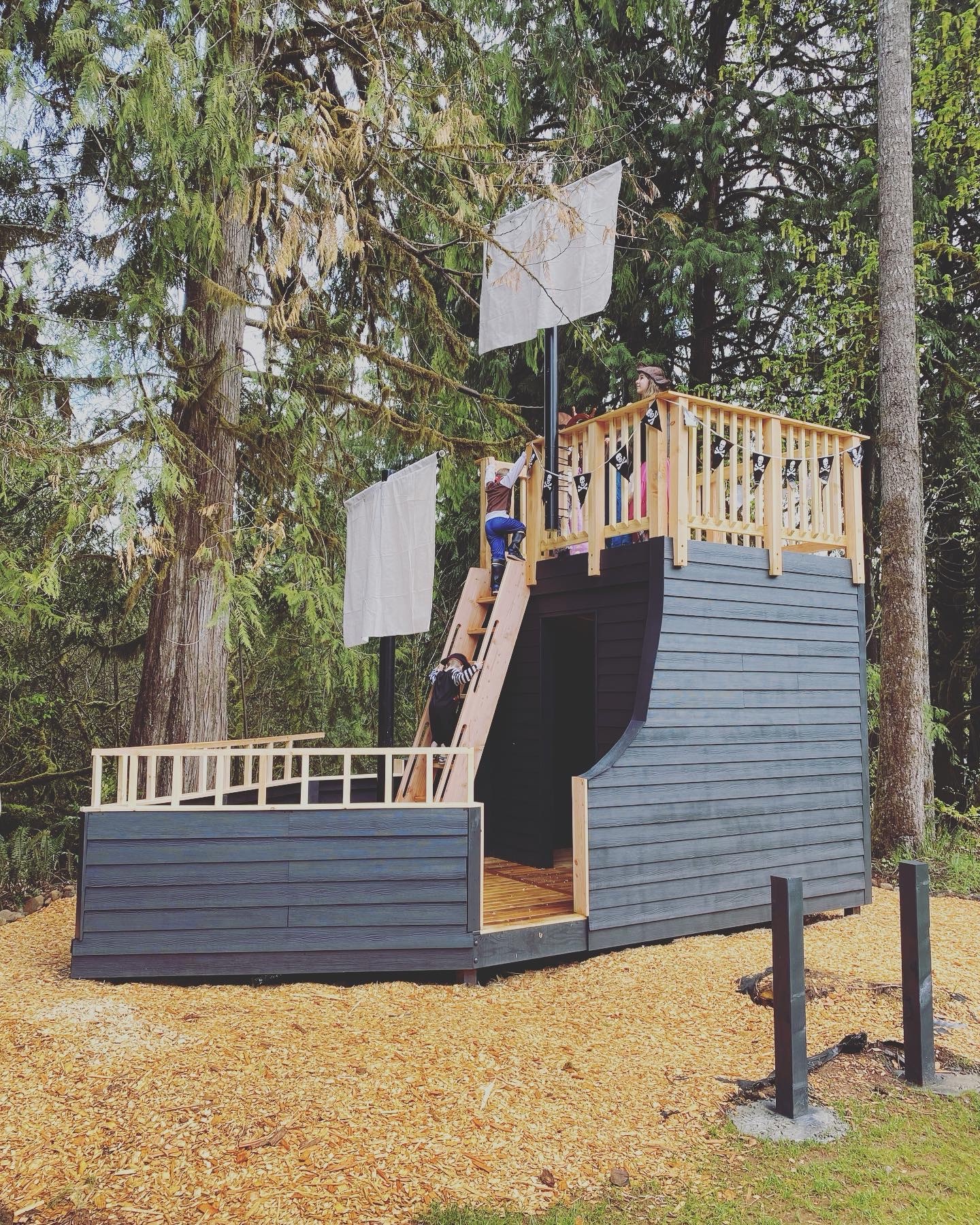
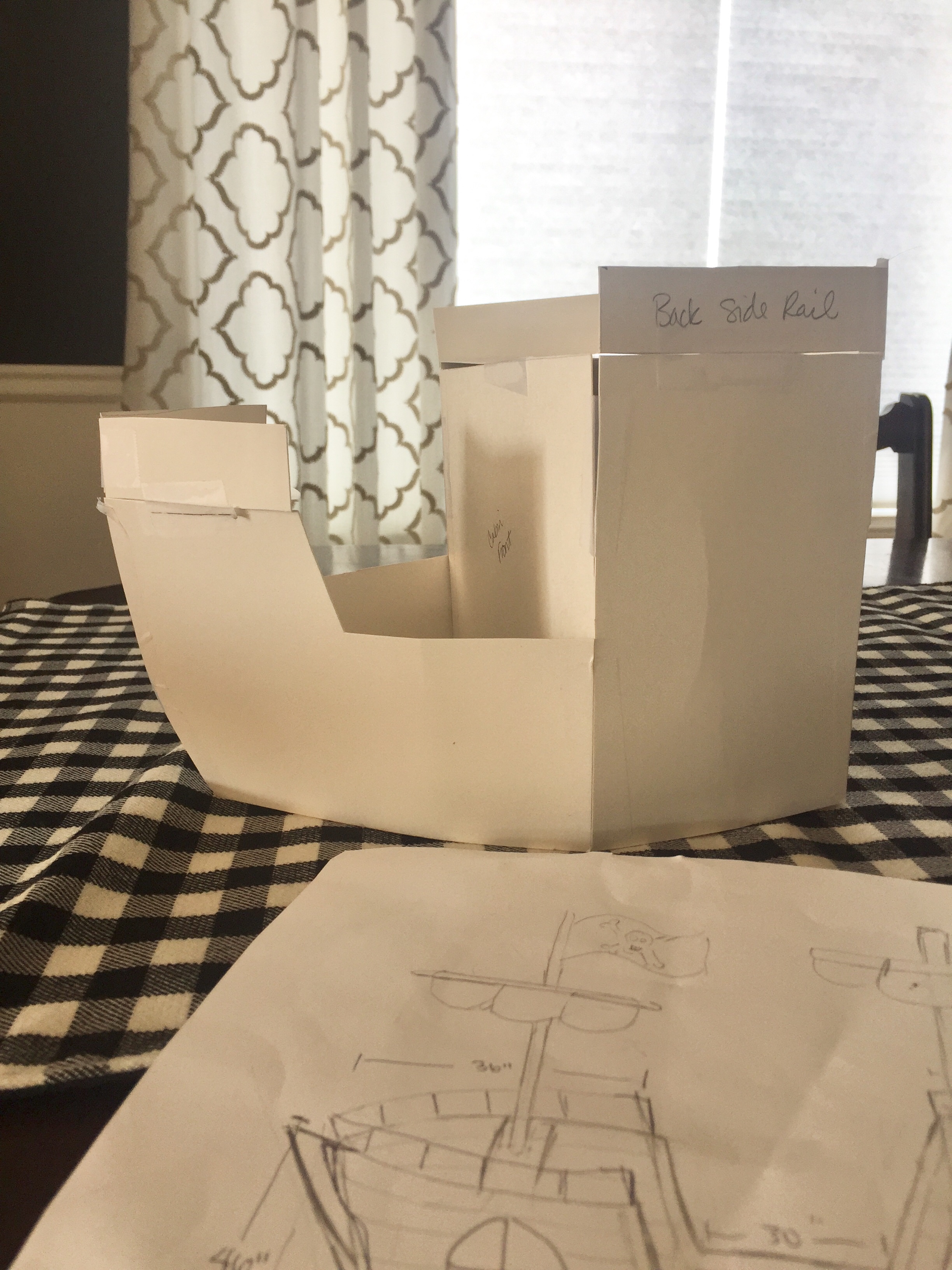
2. We made a couple of small, scaled cardboard models to see how our dimensions would work full size. We ended up with an overall size of 18′ long x 8′ wide. The finished cabin being about 8′ x 8′. Big enough for a queen-sized air mattress.

3. We bought supplies one step at a time. Because we weren’t using a set of plans, we wanted to be able to be flexible as we went. And we figured we would need to pivot at some point and didn’t want to buy materials we wouldn’t end up using. This ended up being a smart strategy, although we went to the local home improvement store a LOT!

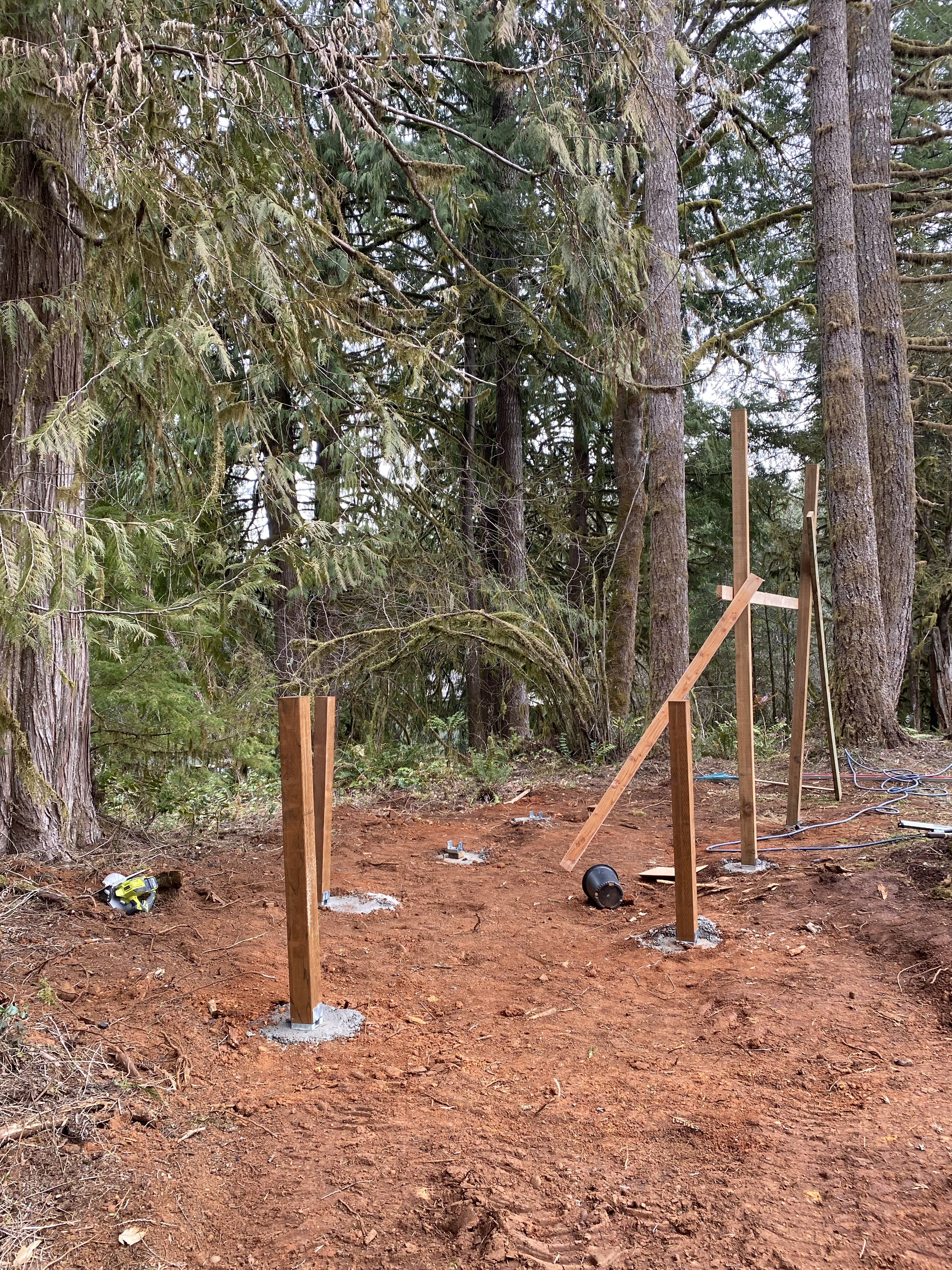
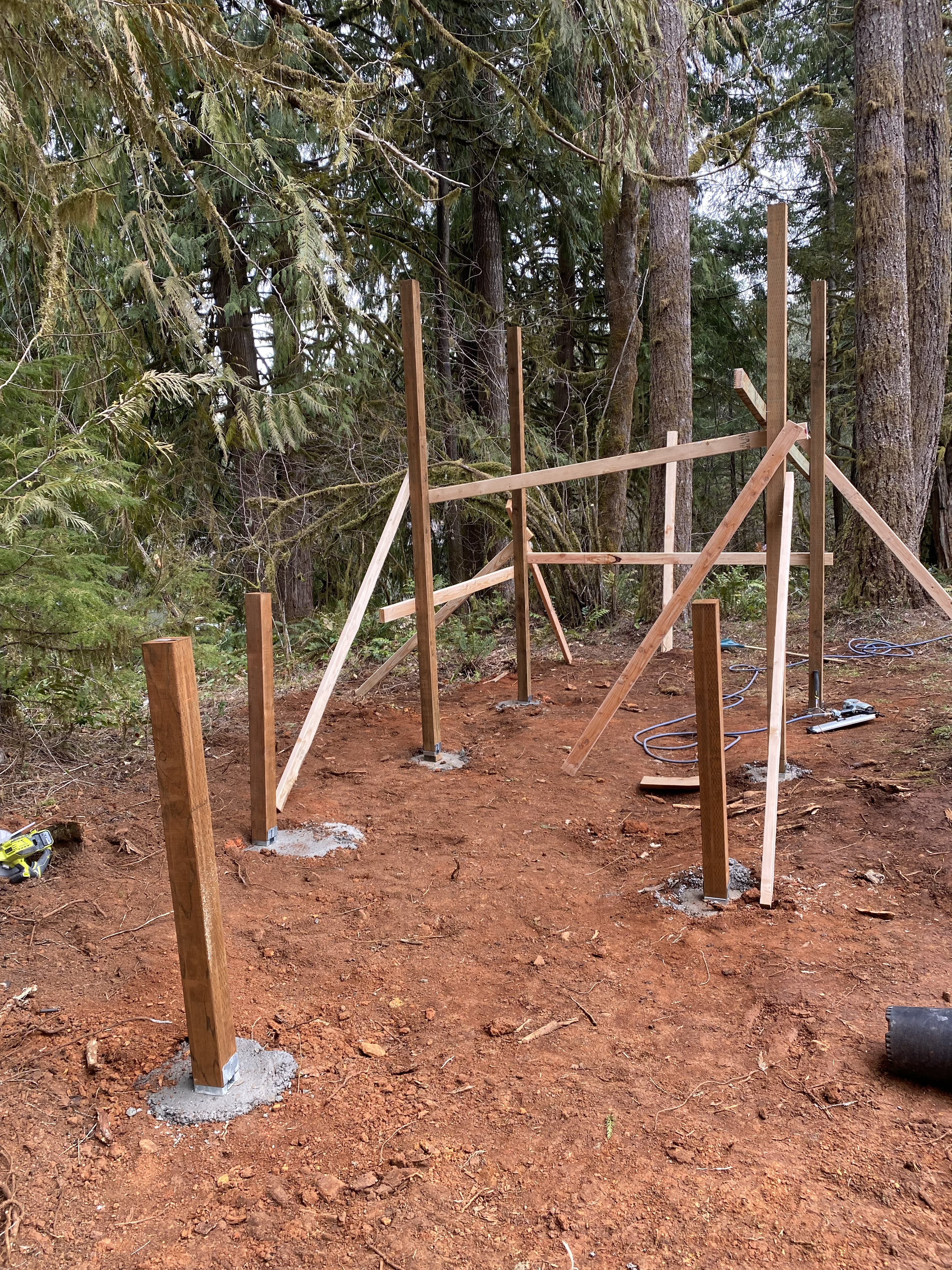
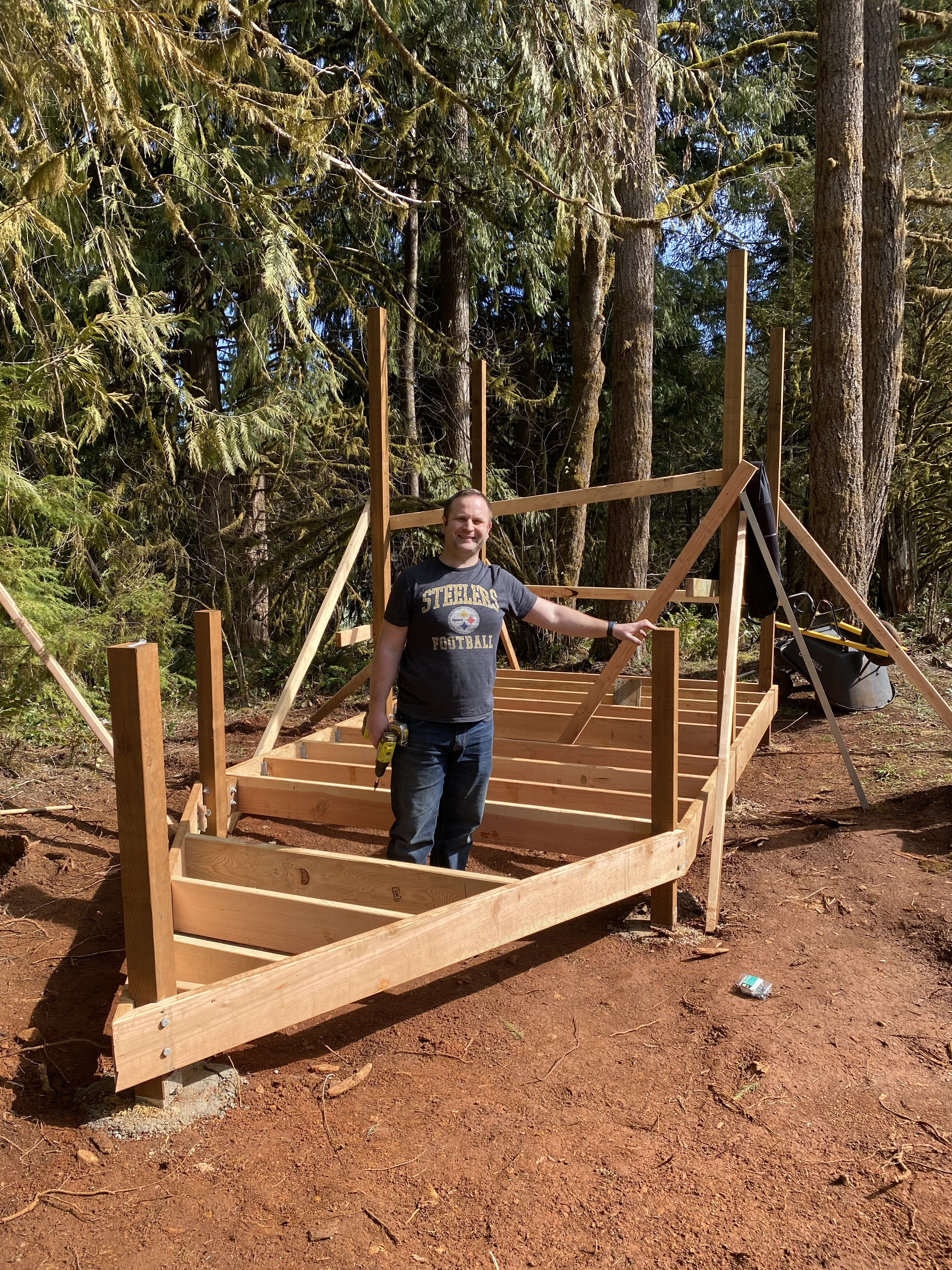
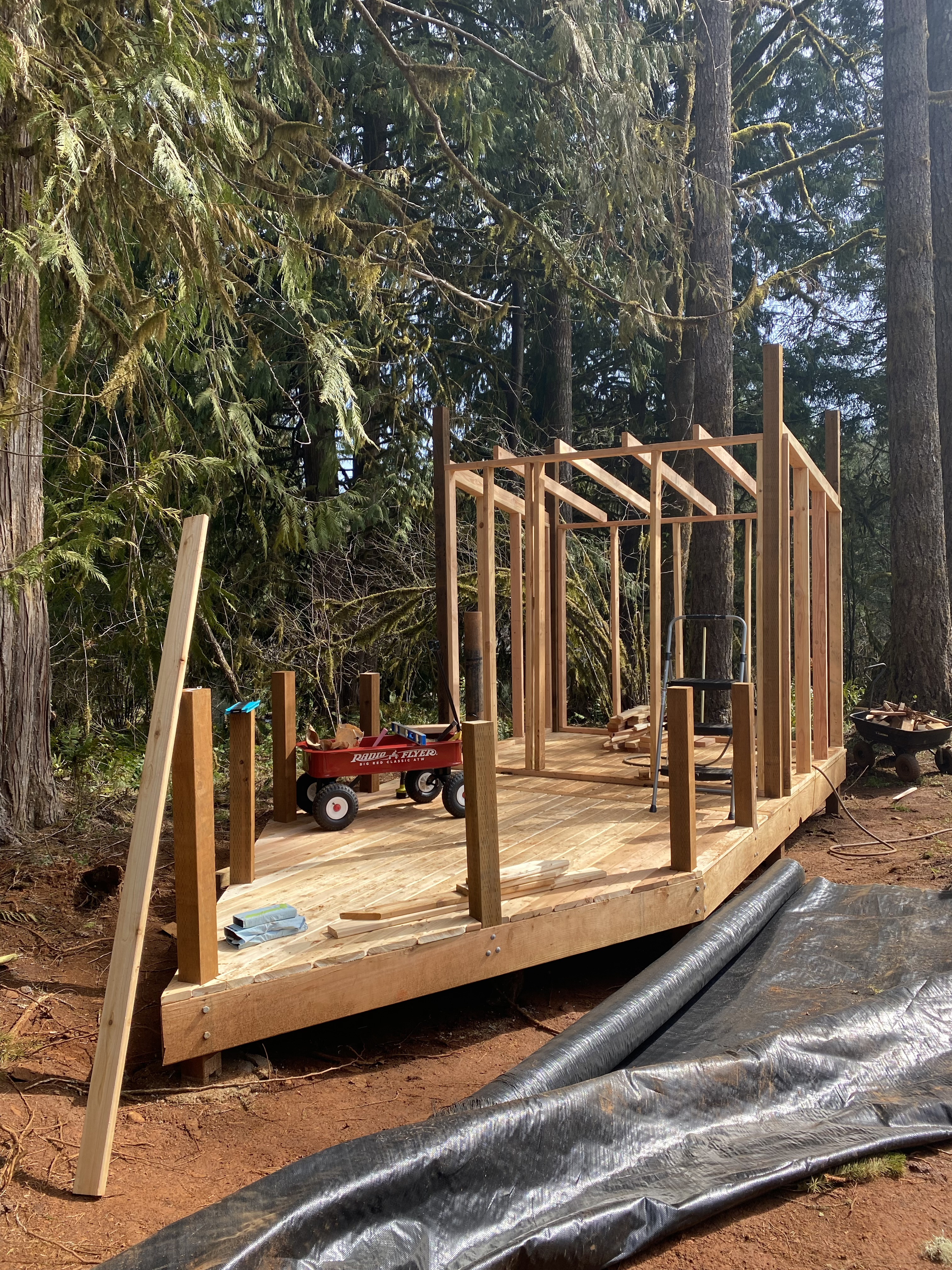
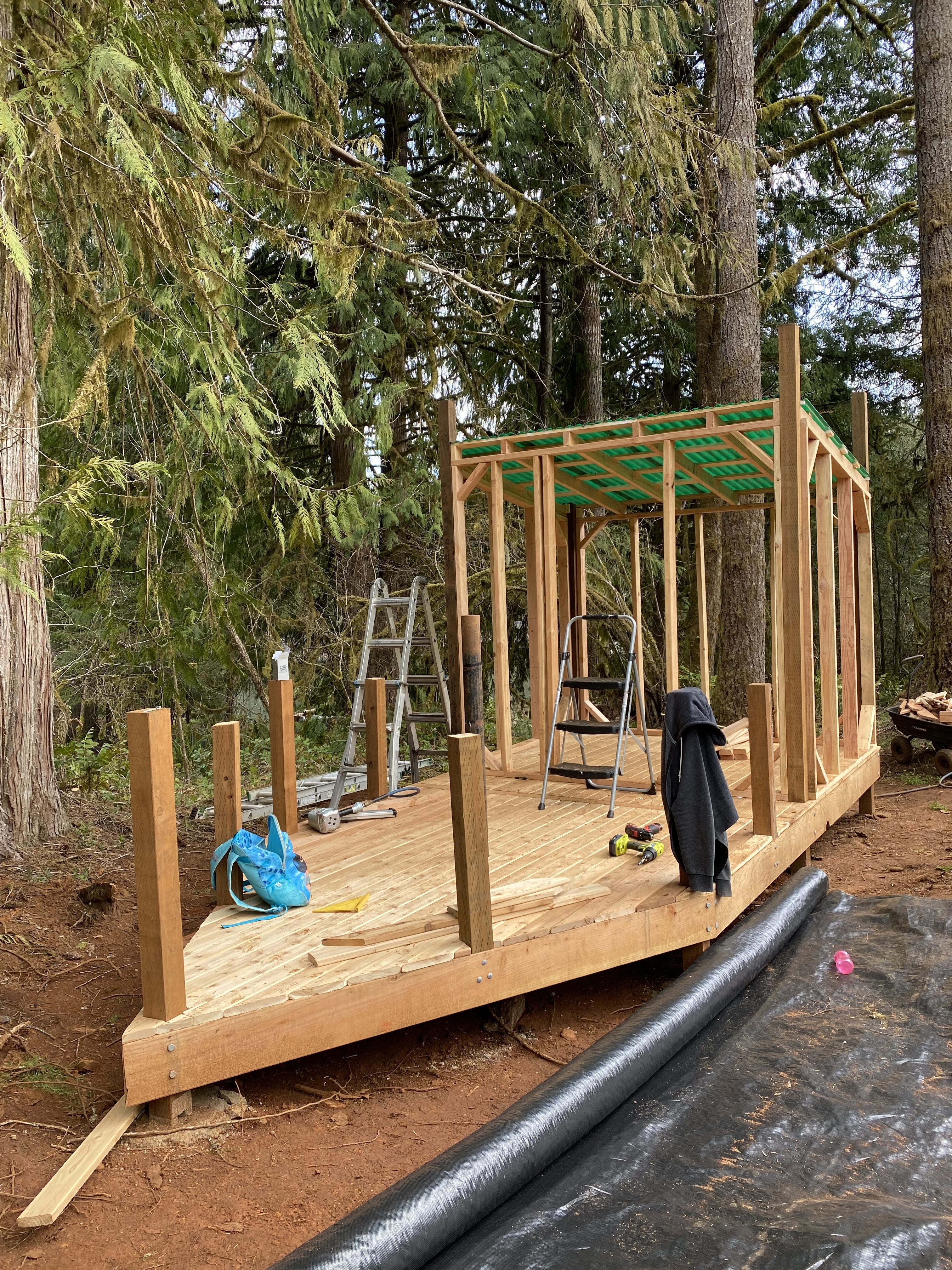
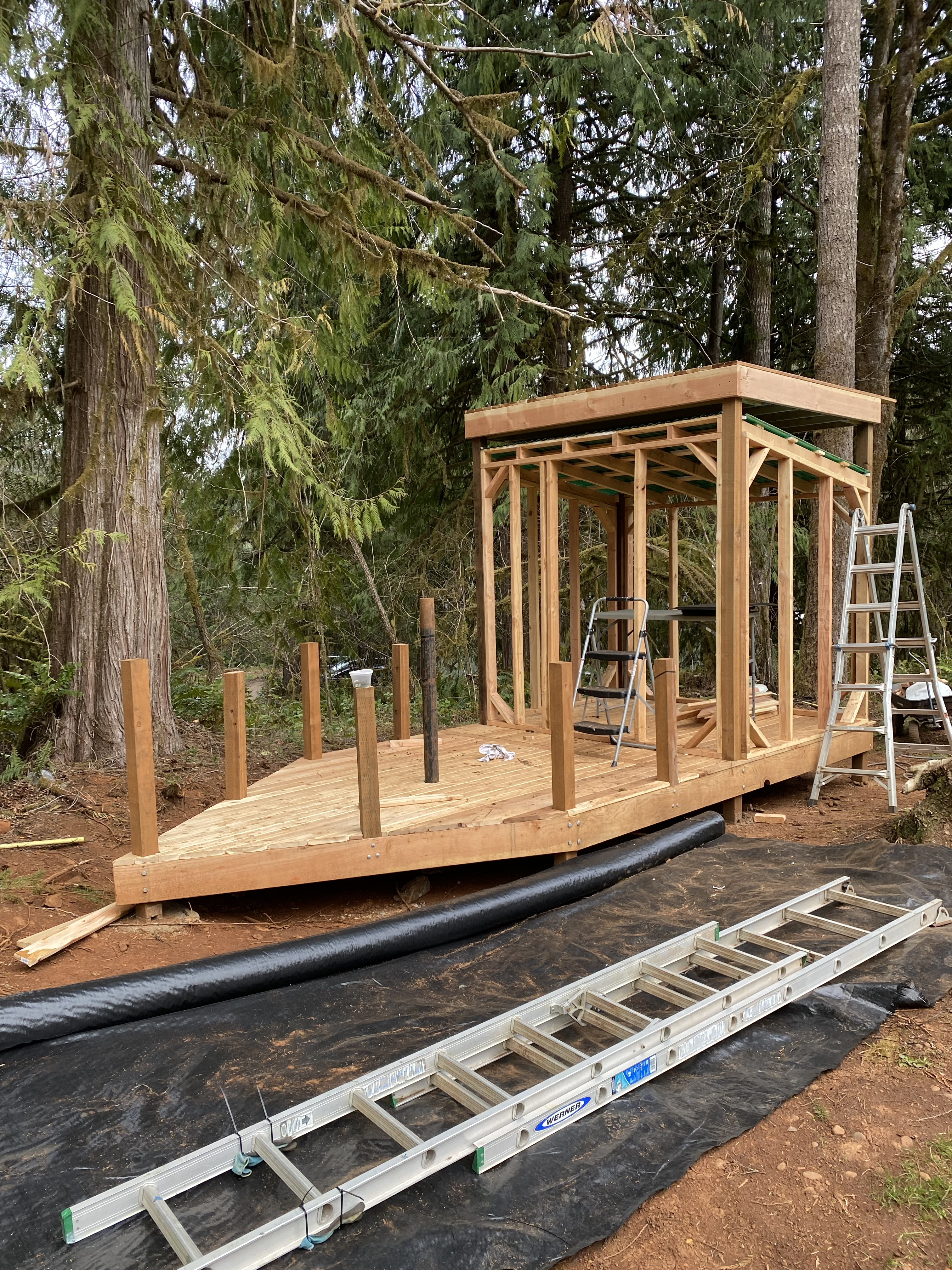
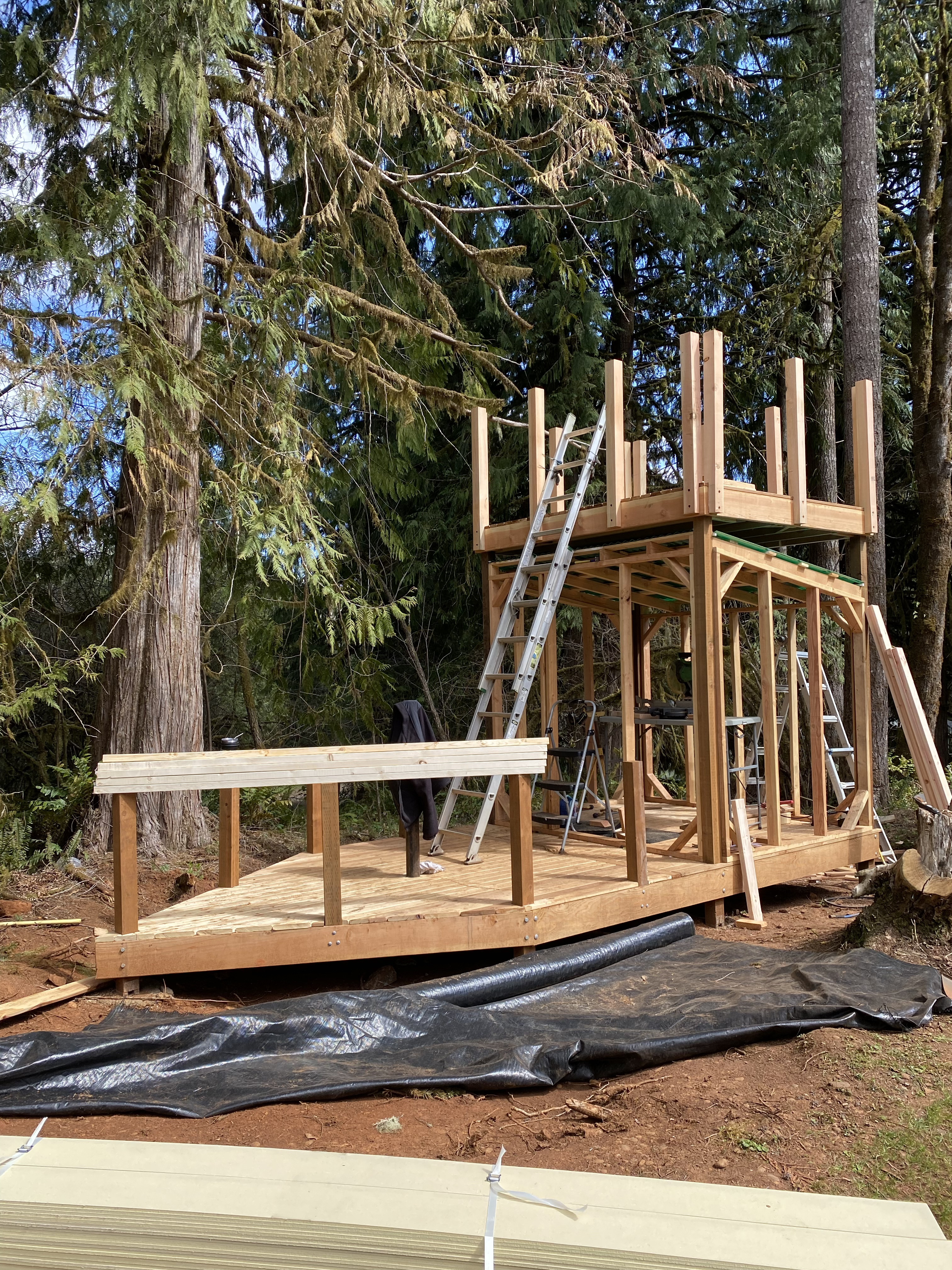
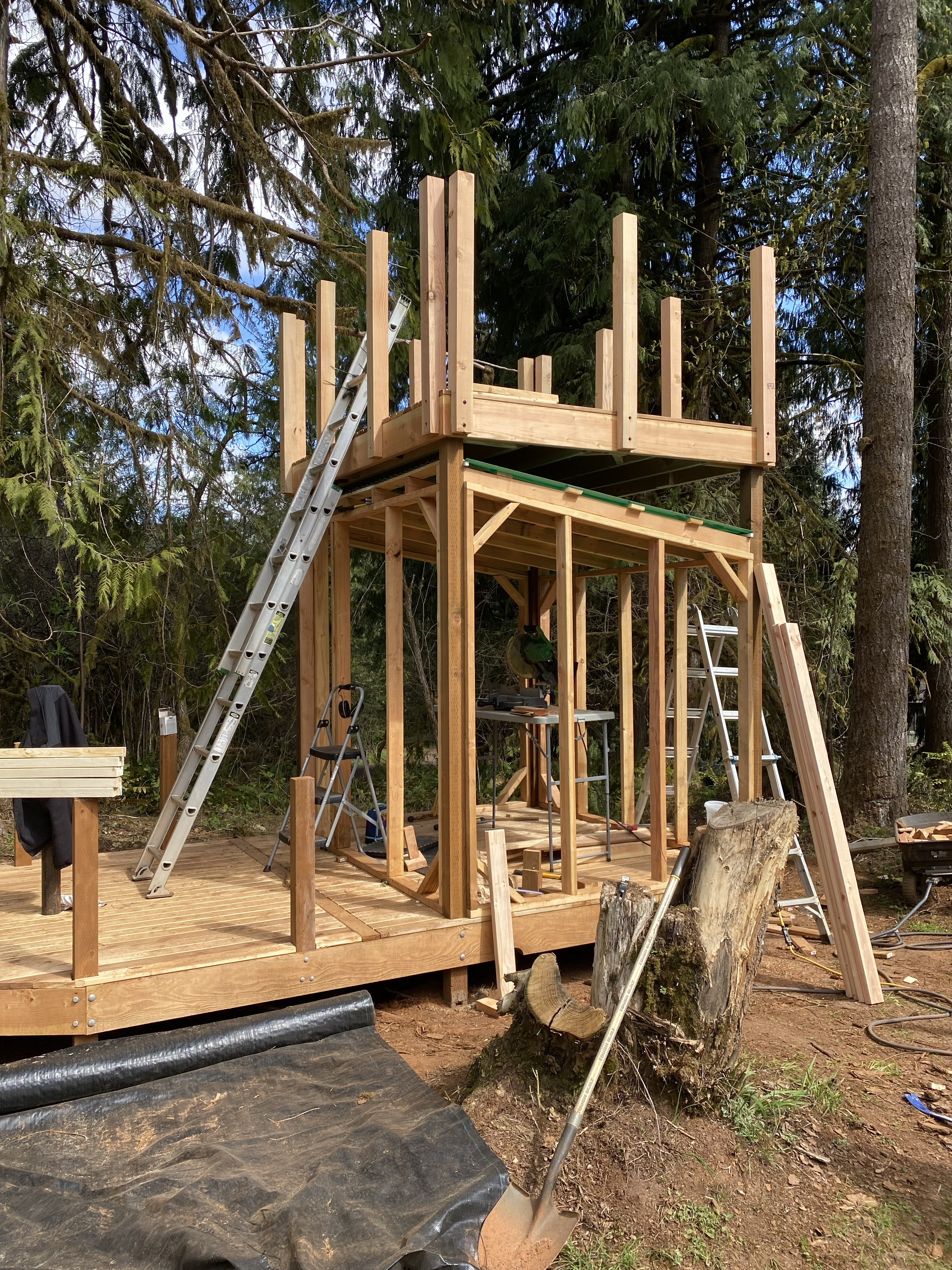
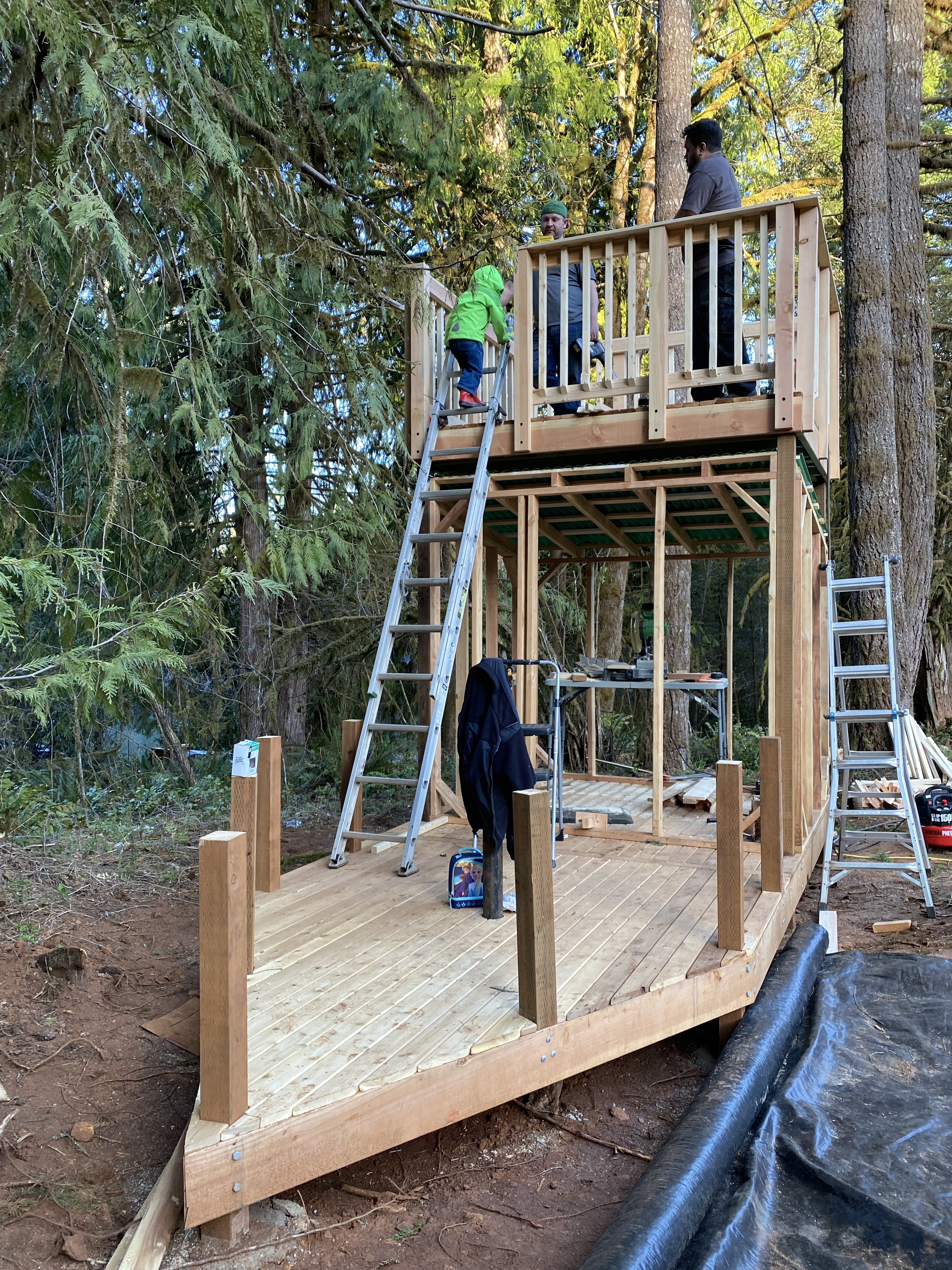
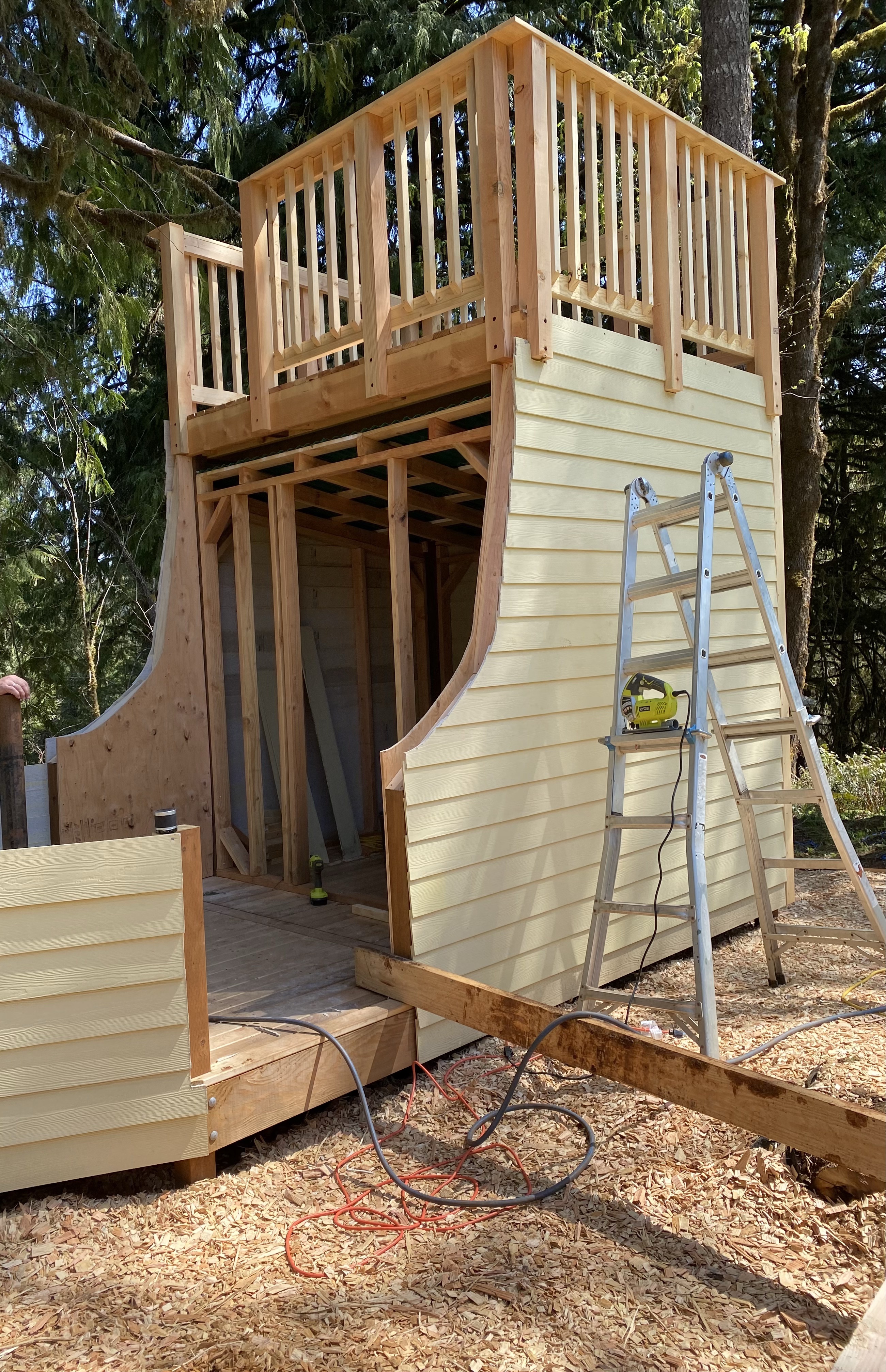
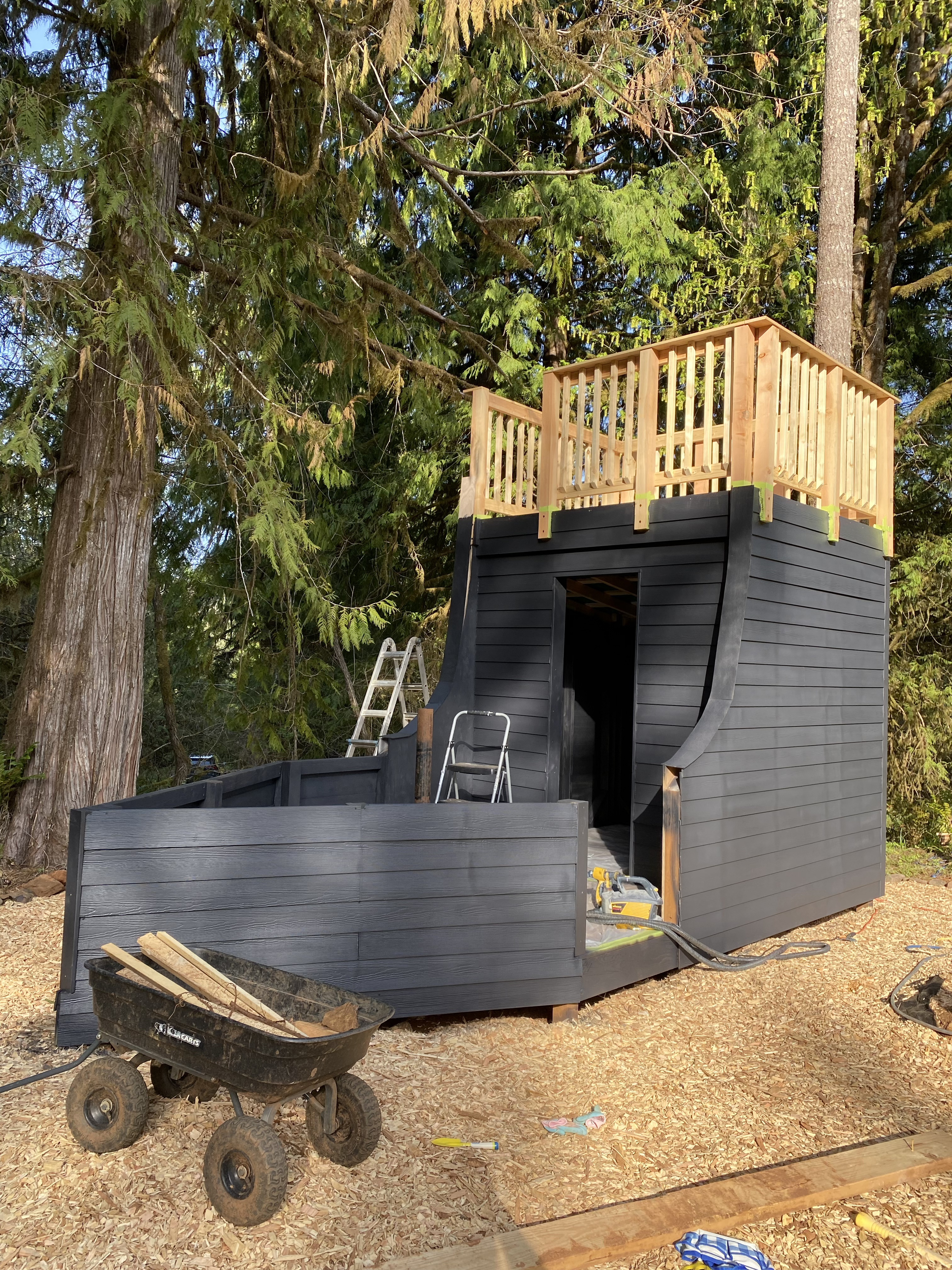
4. After so much measuring and plotting, we dug some post holes. (This was the global “we”, I did not dig the holes.) We used 4 x 4 posts and filled the holes with concrete. Then we framed up the outline of the ship and basically built a floating deck.

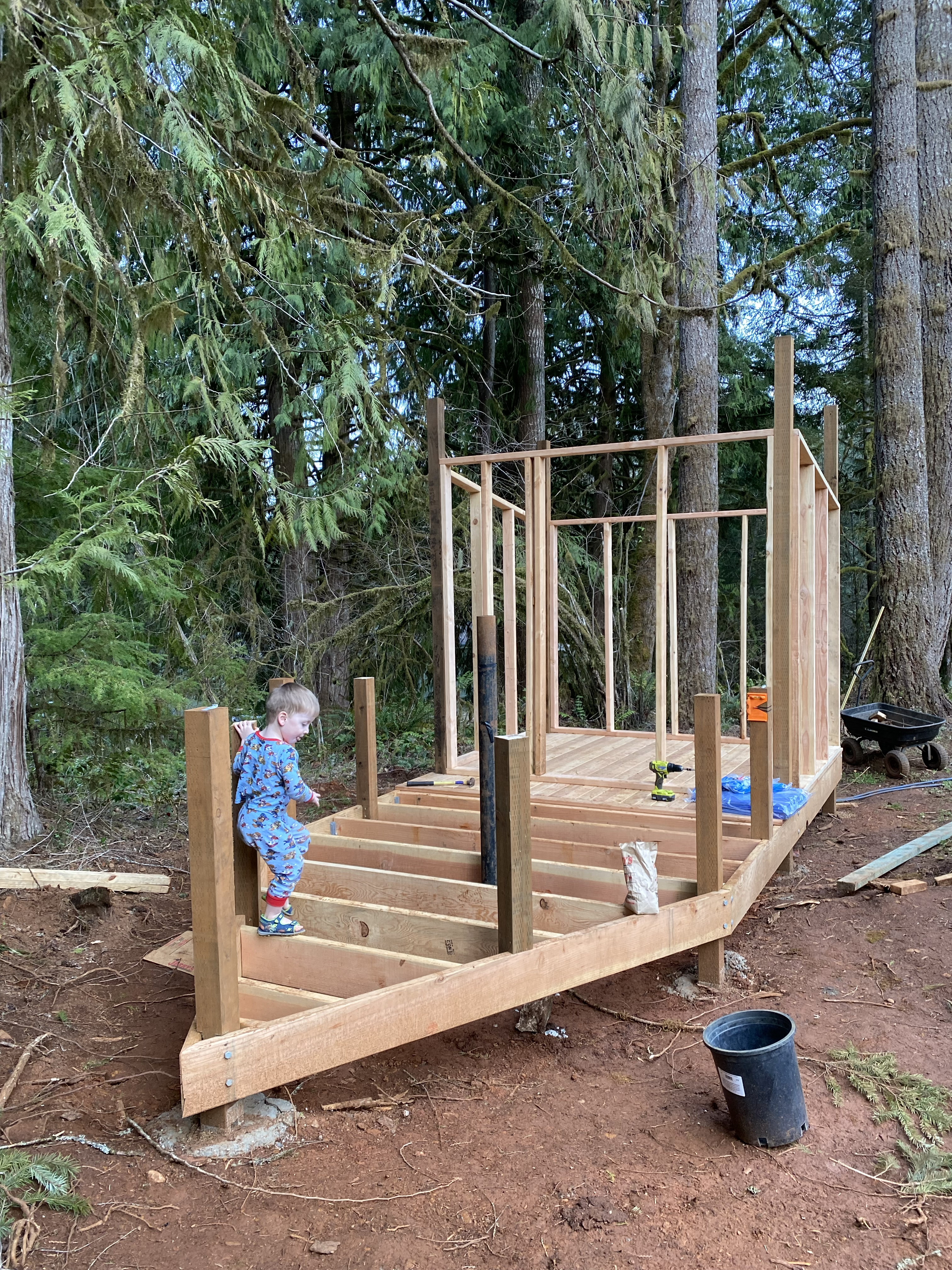
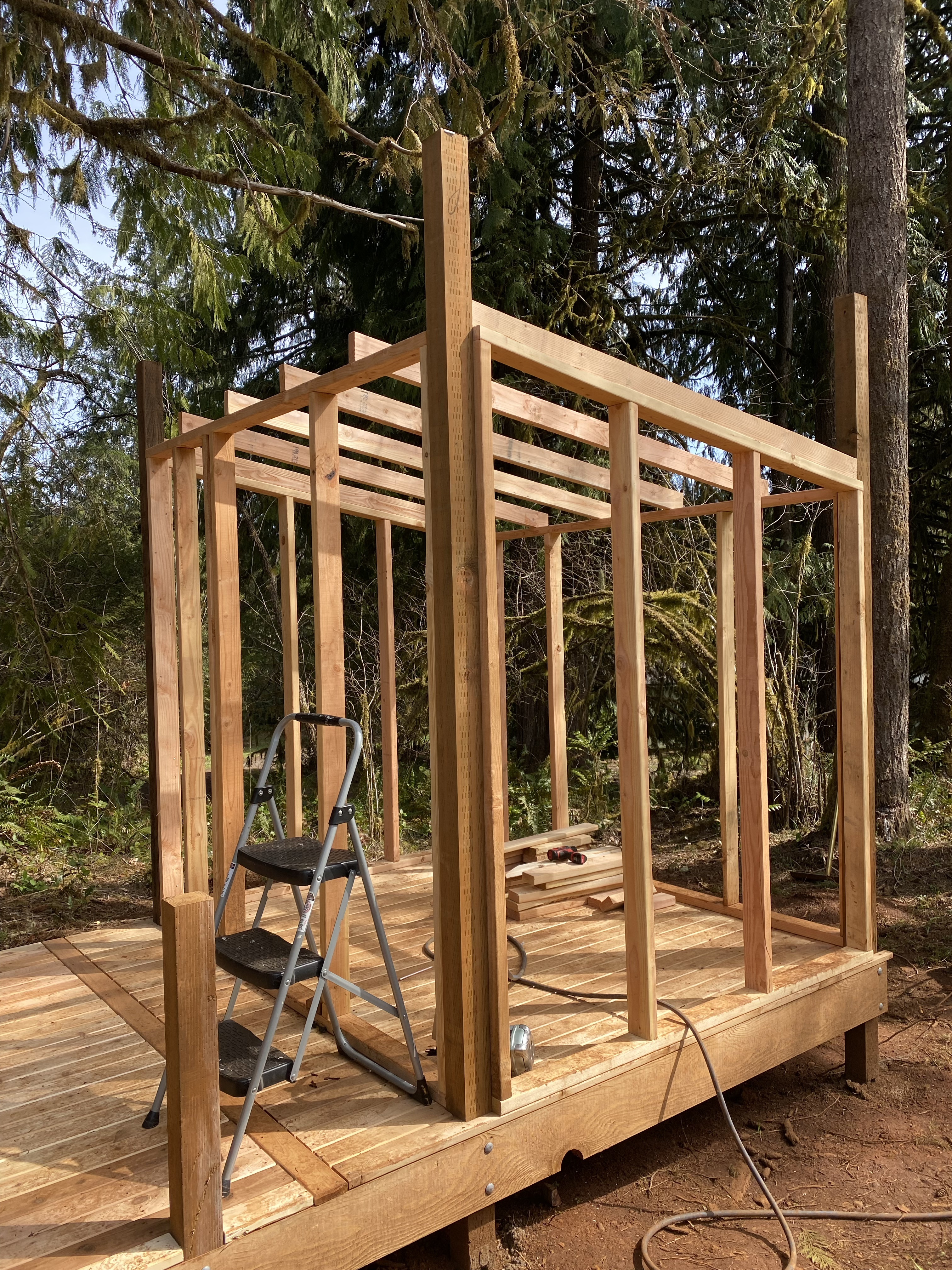
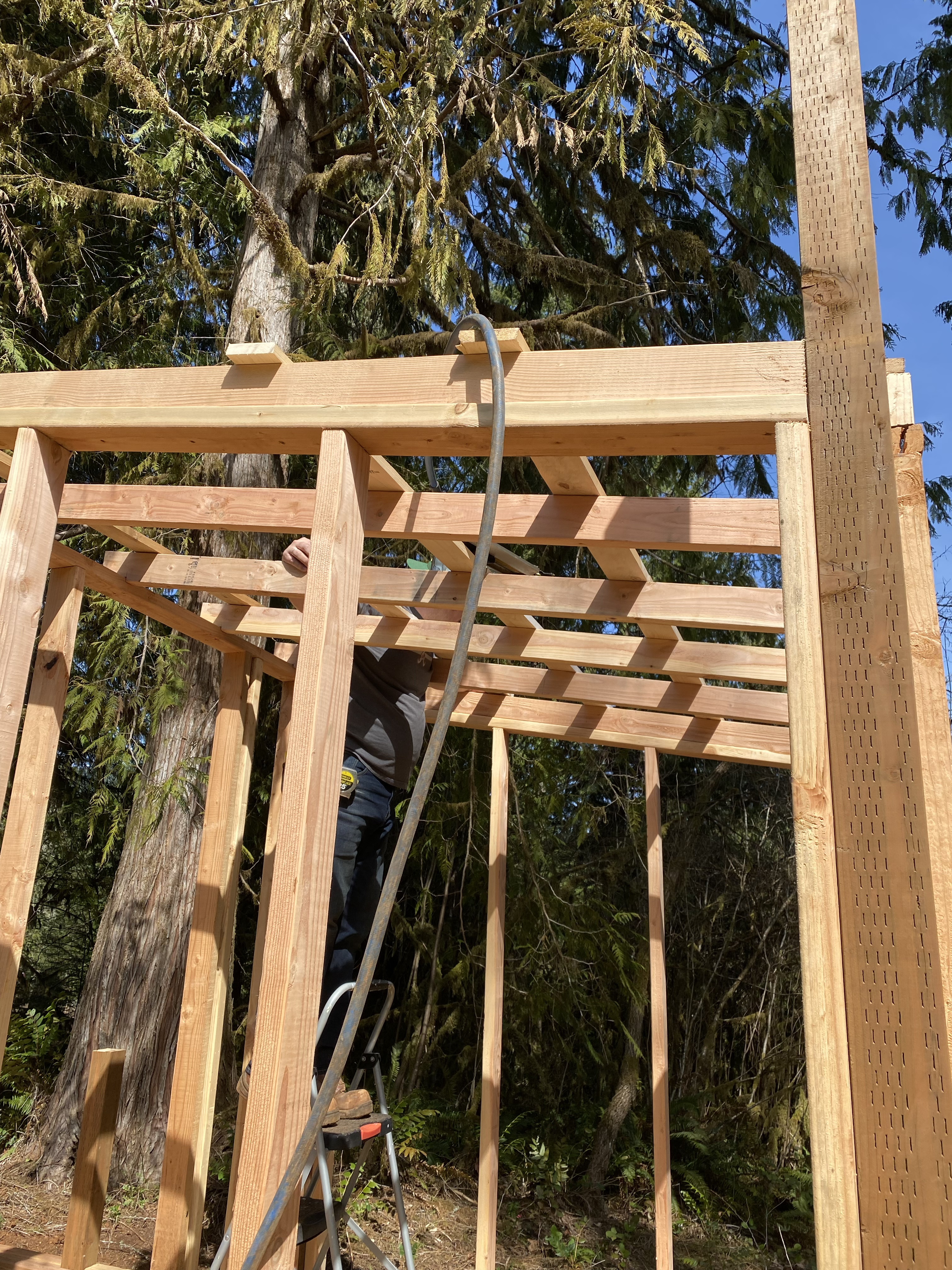
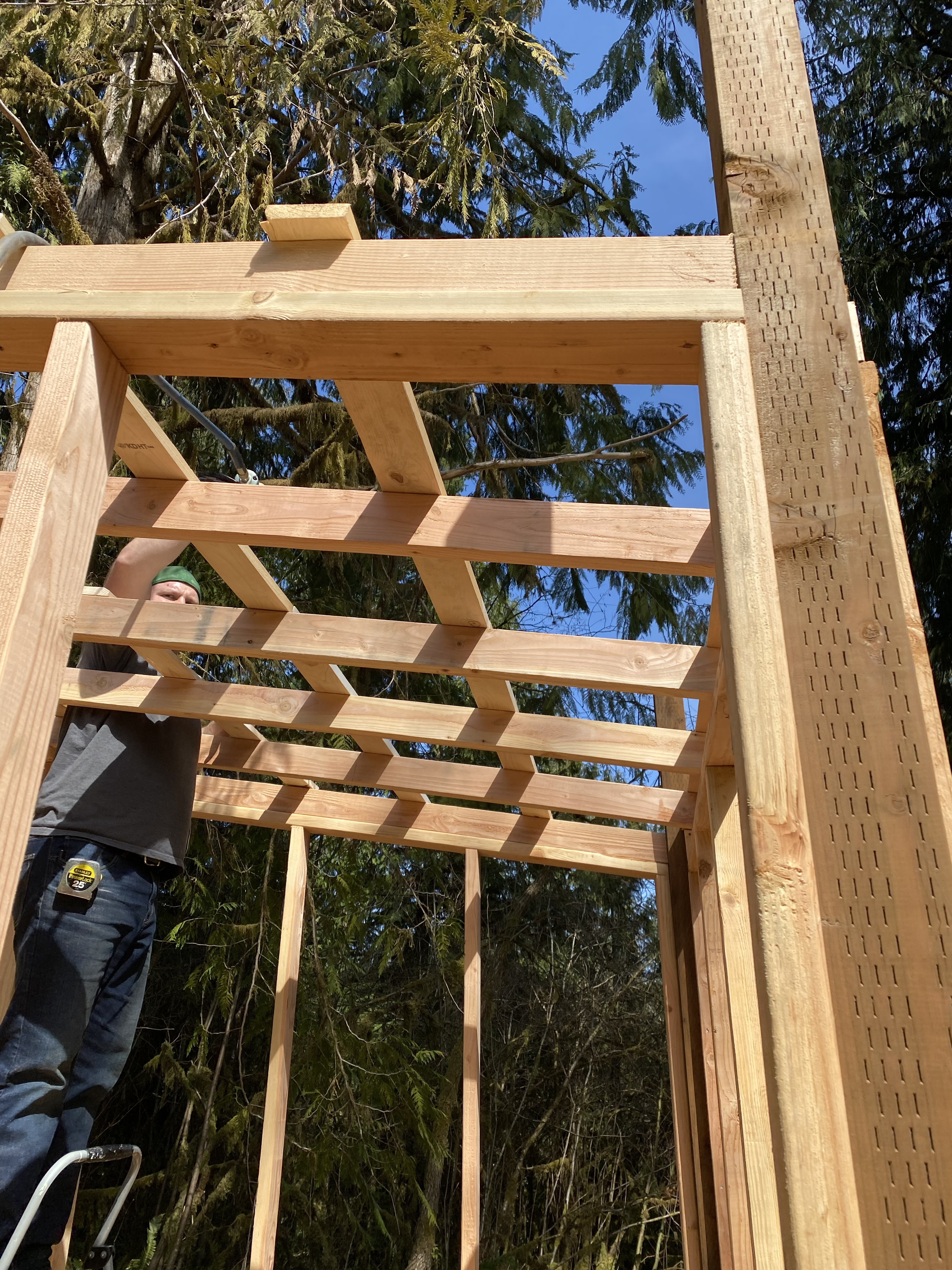
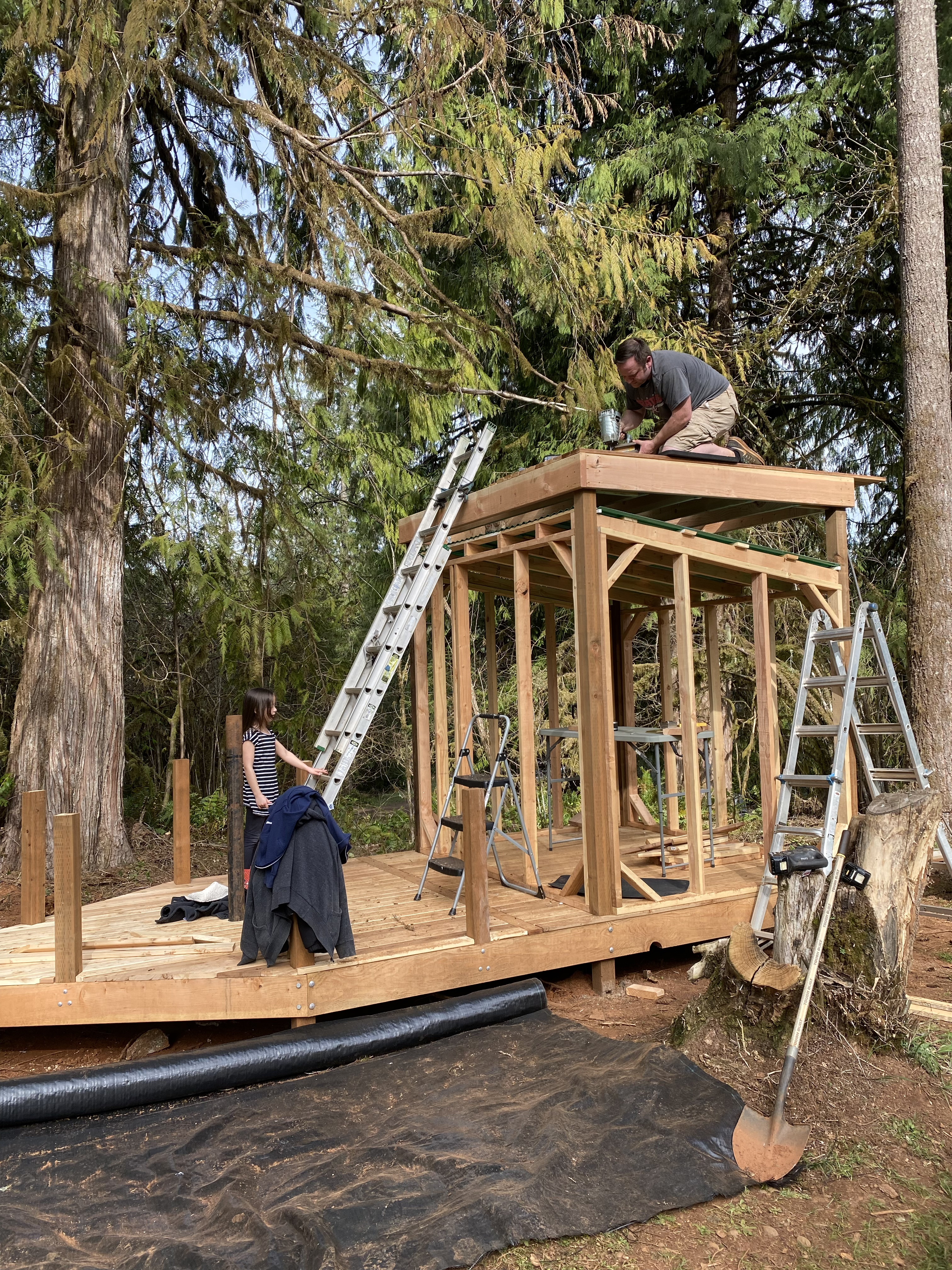
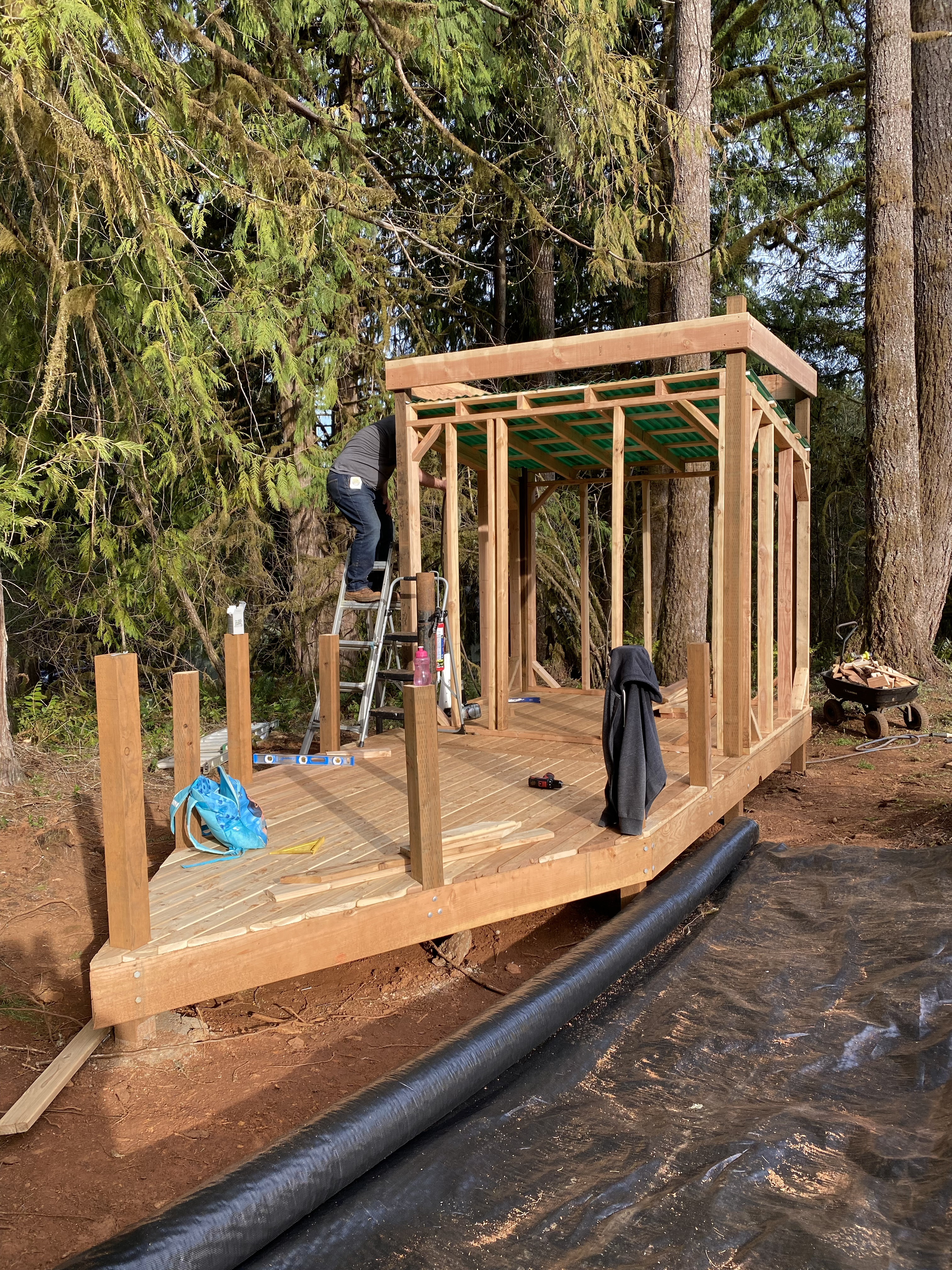
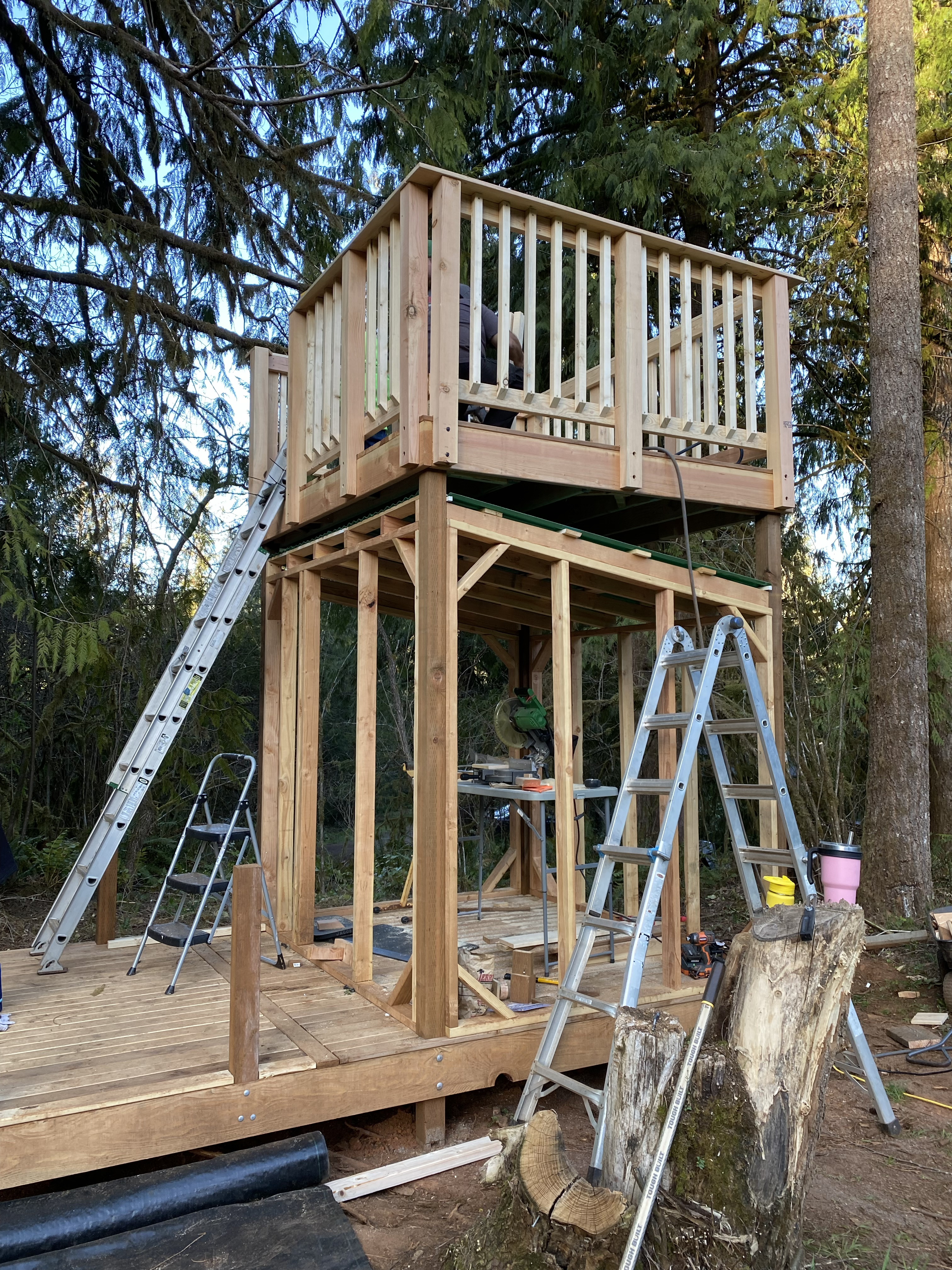
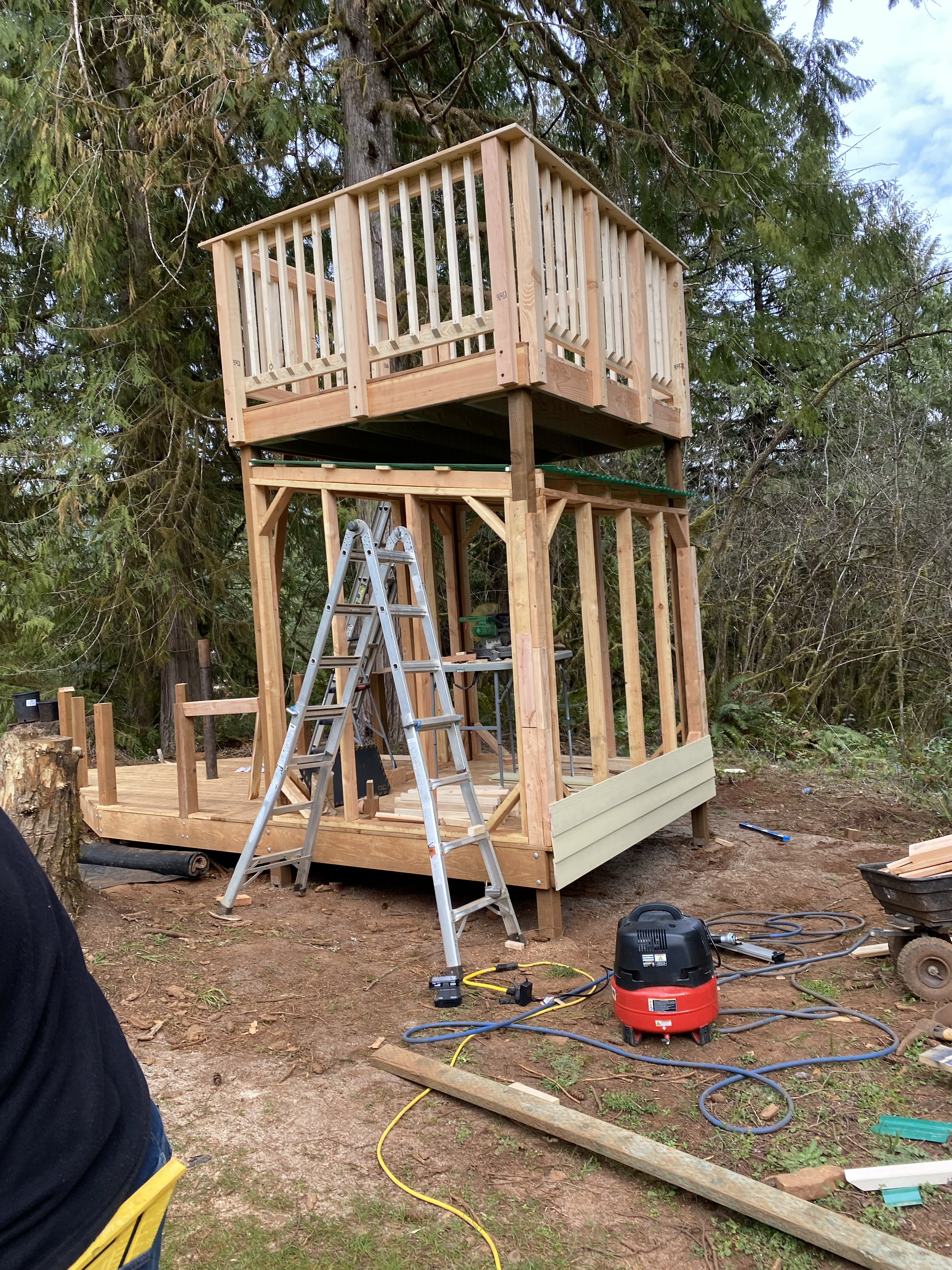
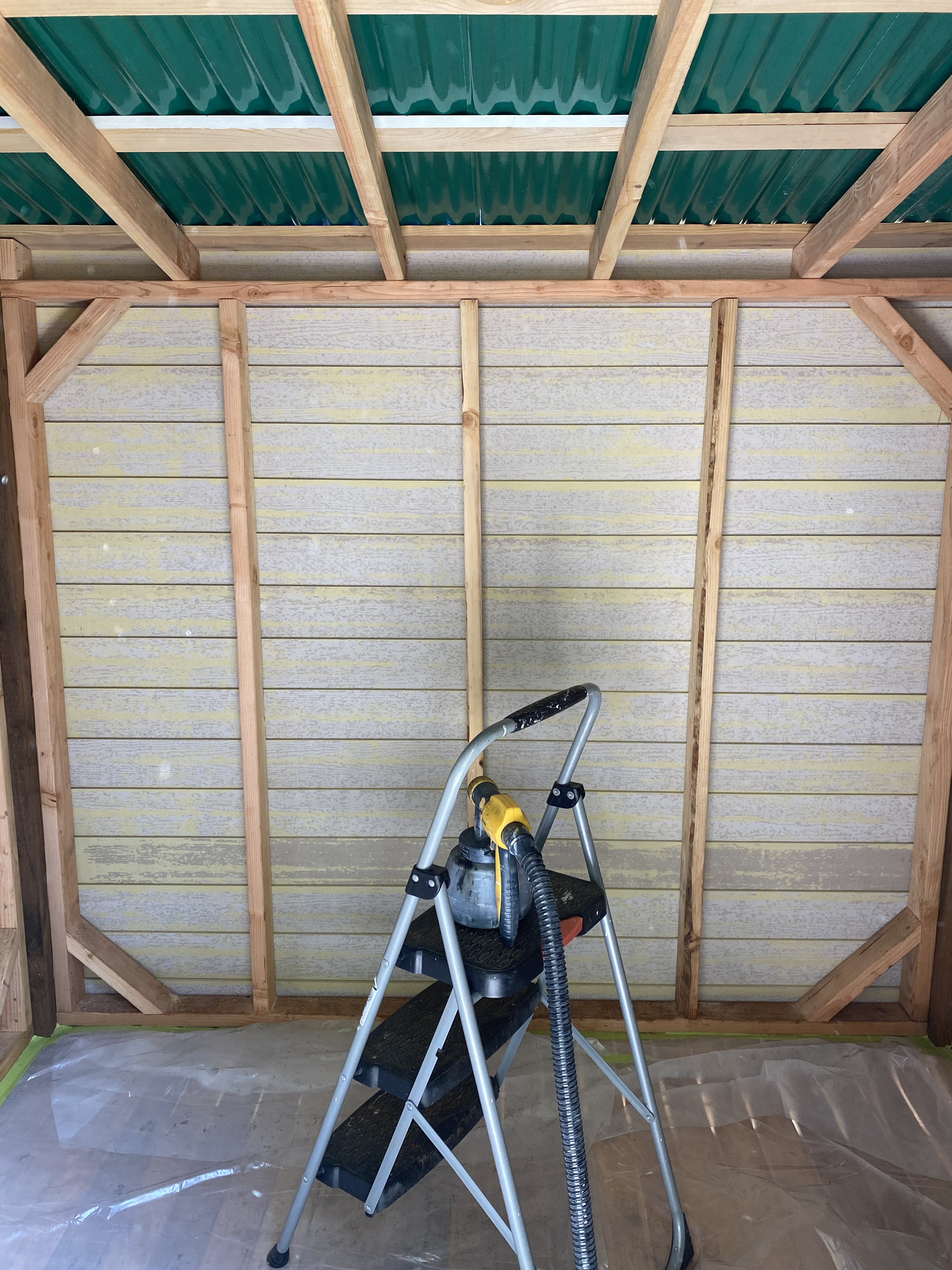
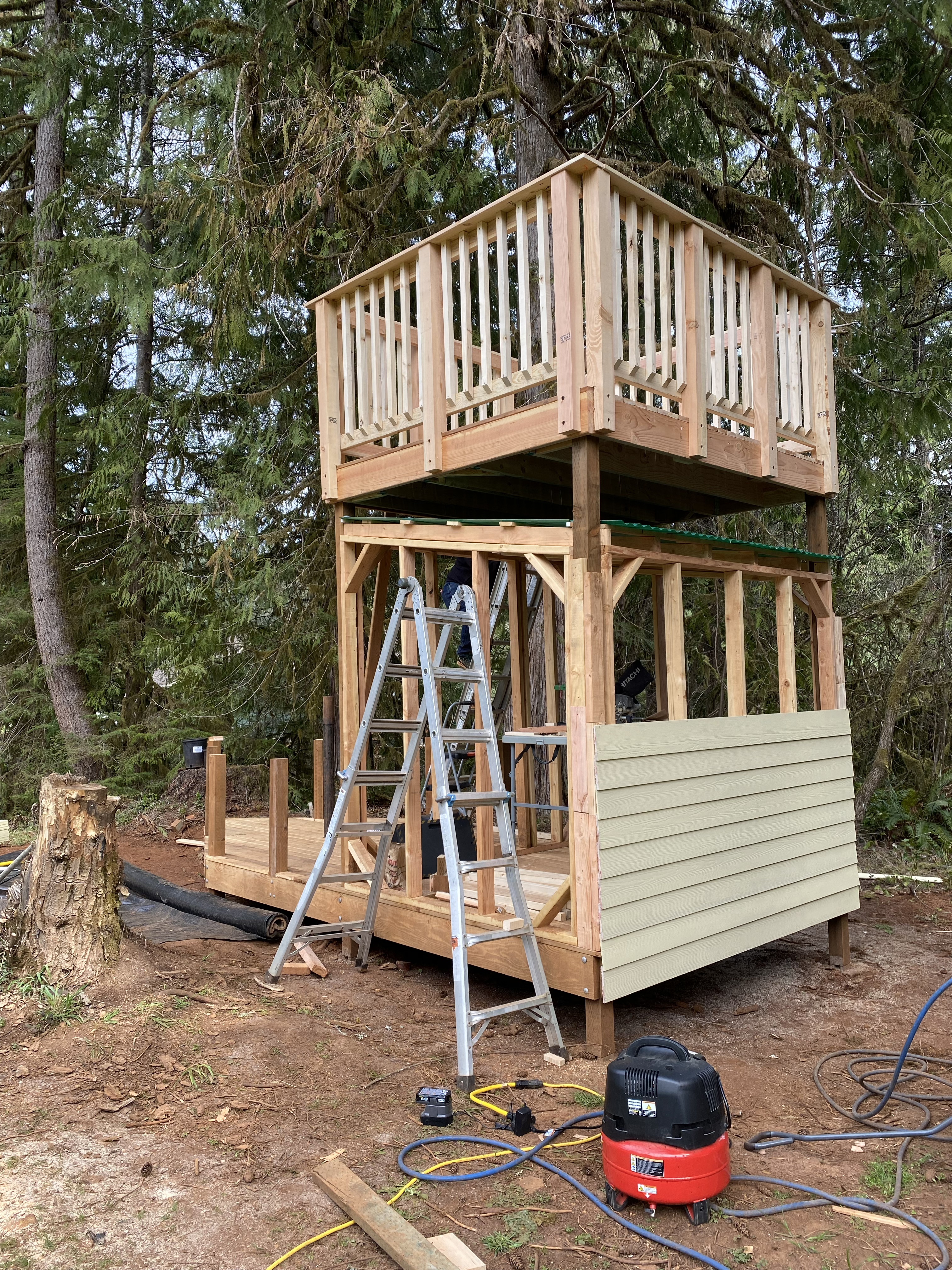
5. We then focused on framing the walls of the cabin. Ryan also opted to make an “invisible” slanted roof so that water could drain off the cabin roof. Goal here was to keep it nice and dry inside the cabin.

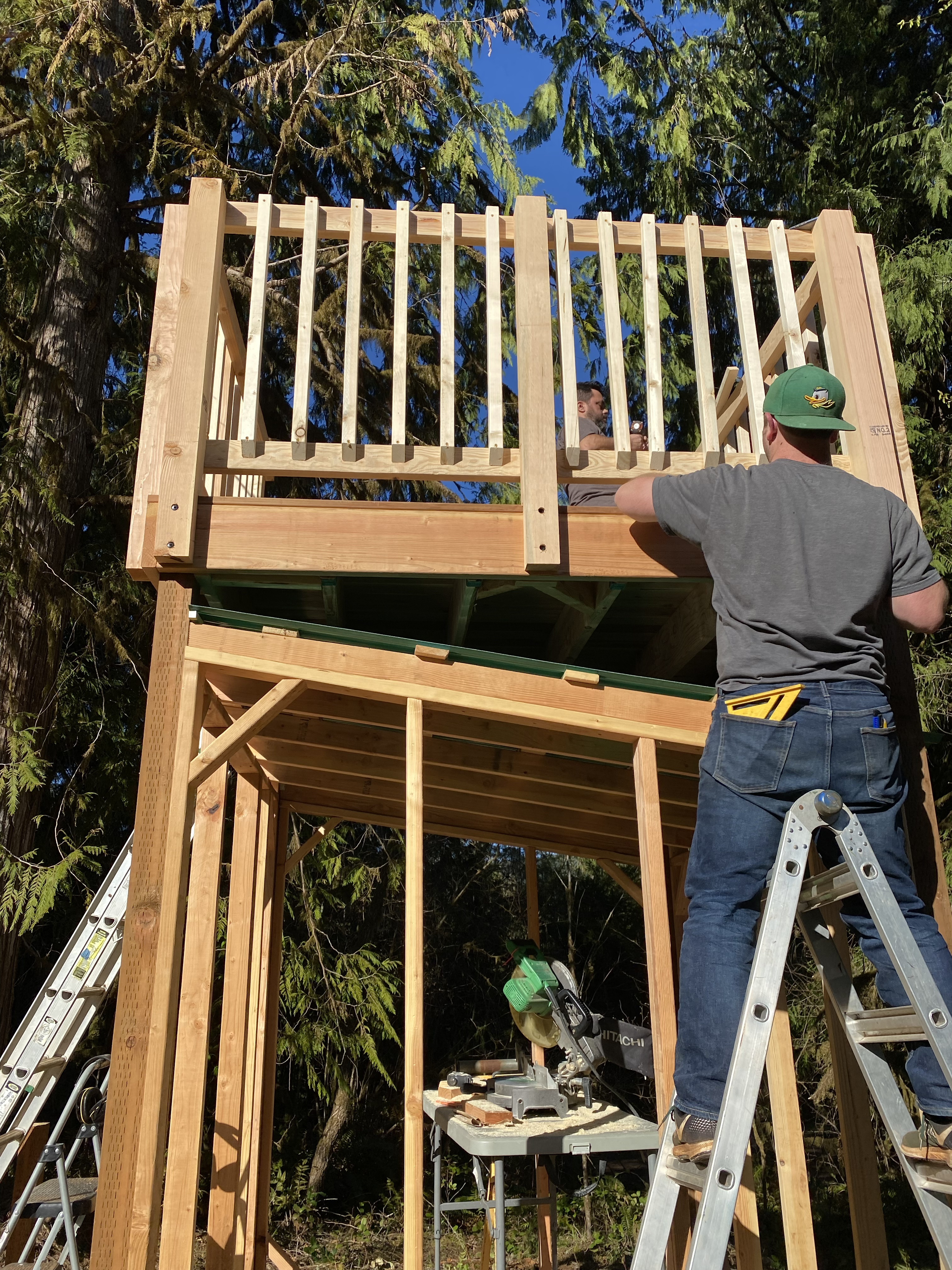
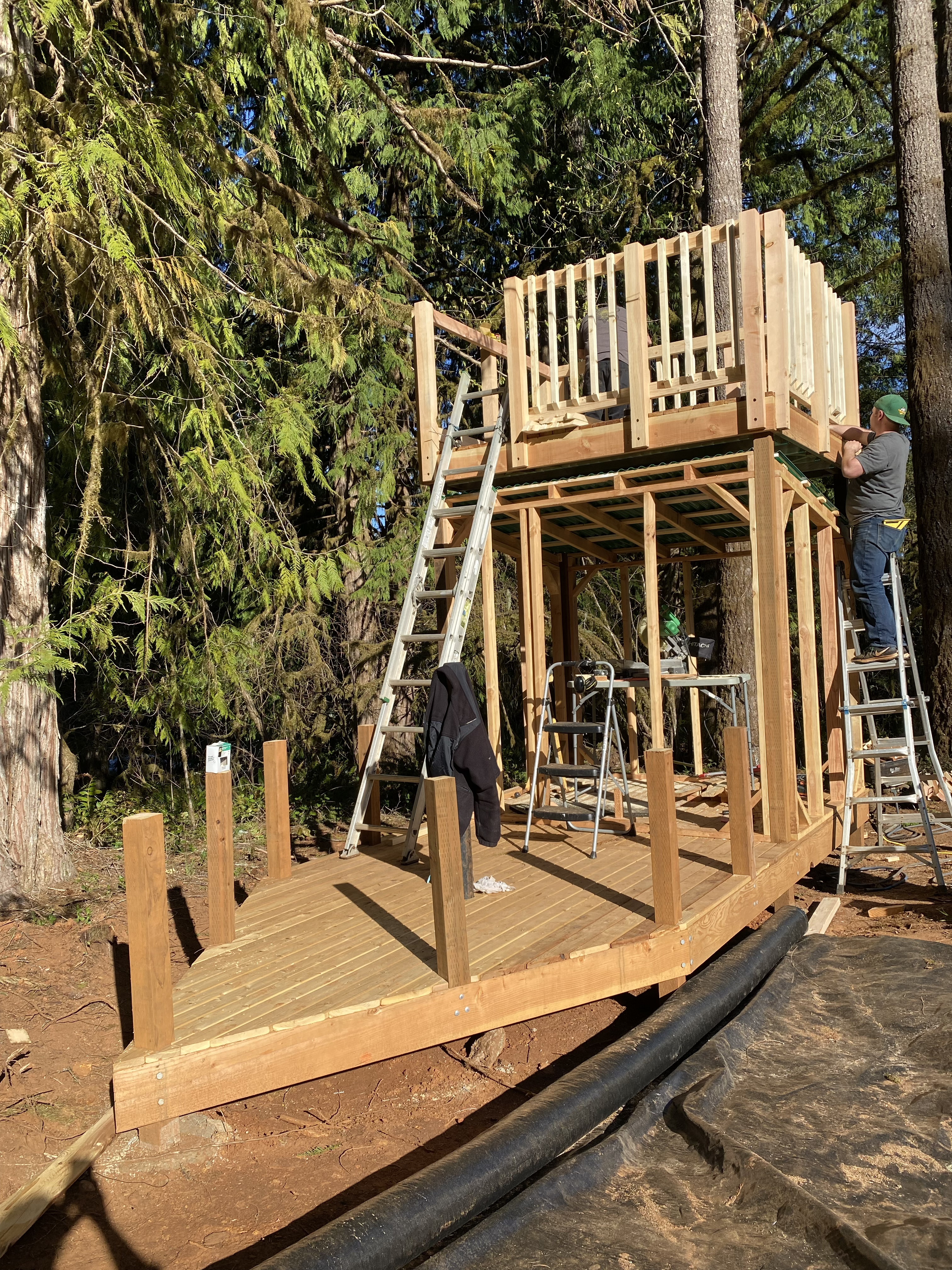
6. After adding the corrugated roofing to the cabin, we essentially built a second deck on top of the cabin for the upper deck. We then added posts for railing, and then, you guessed it, railing.

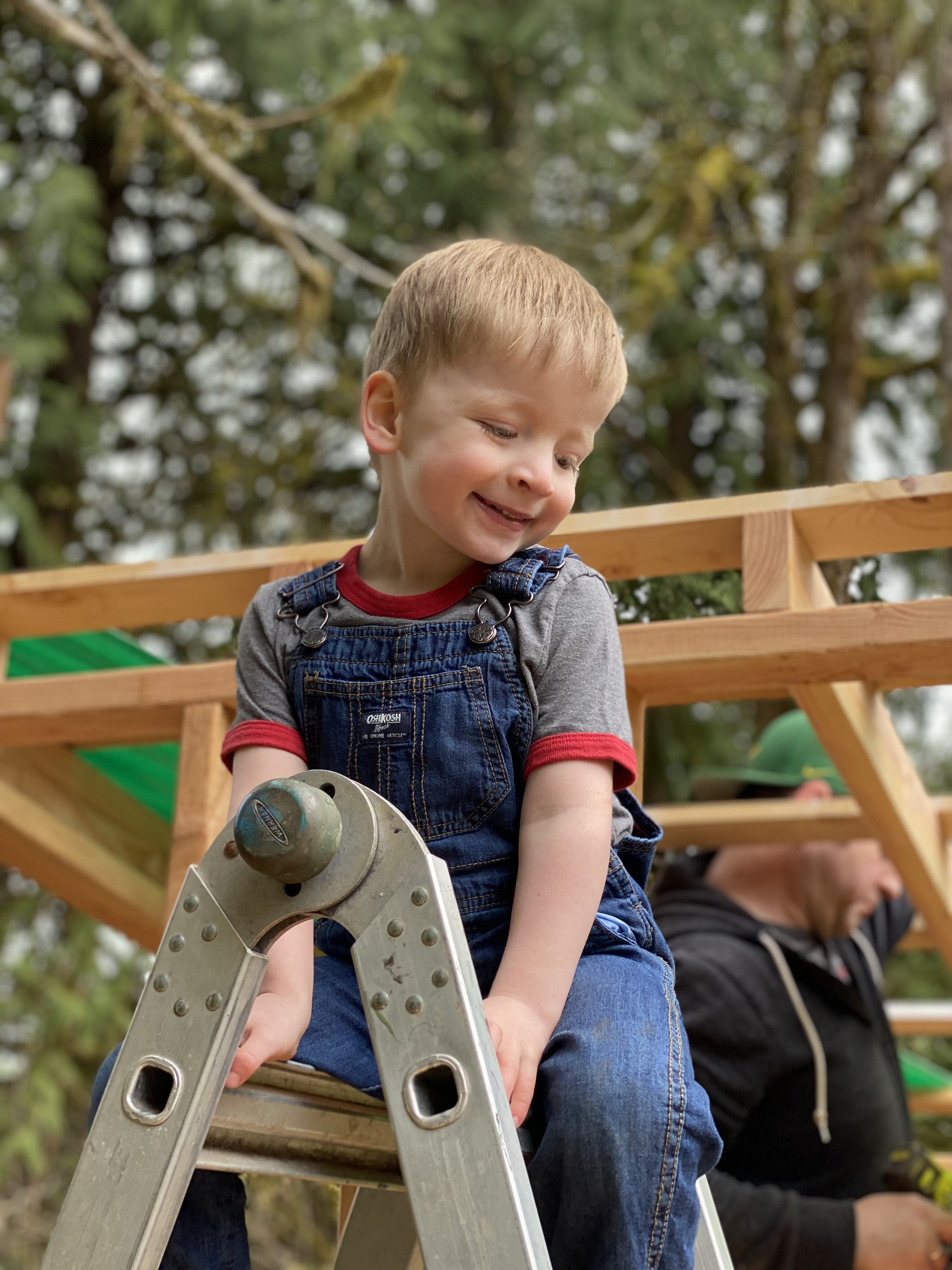
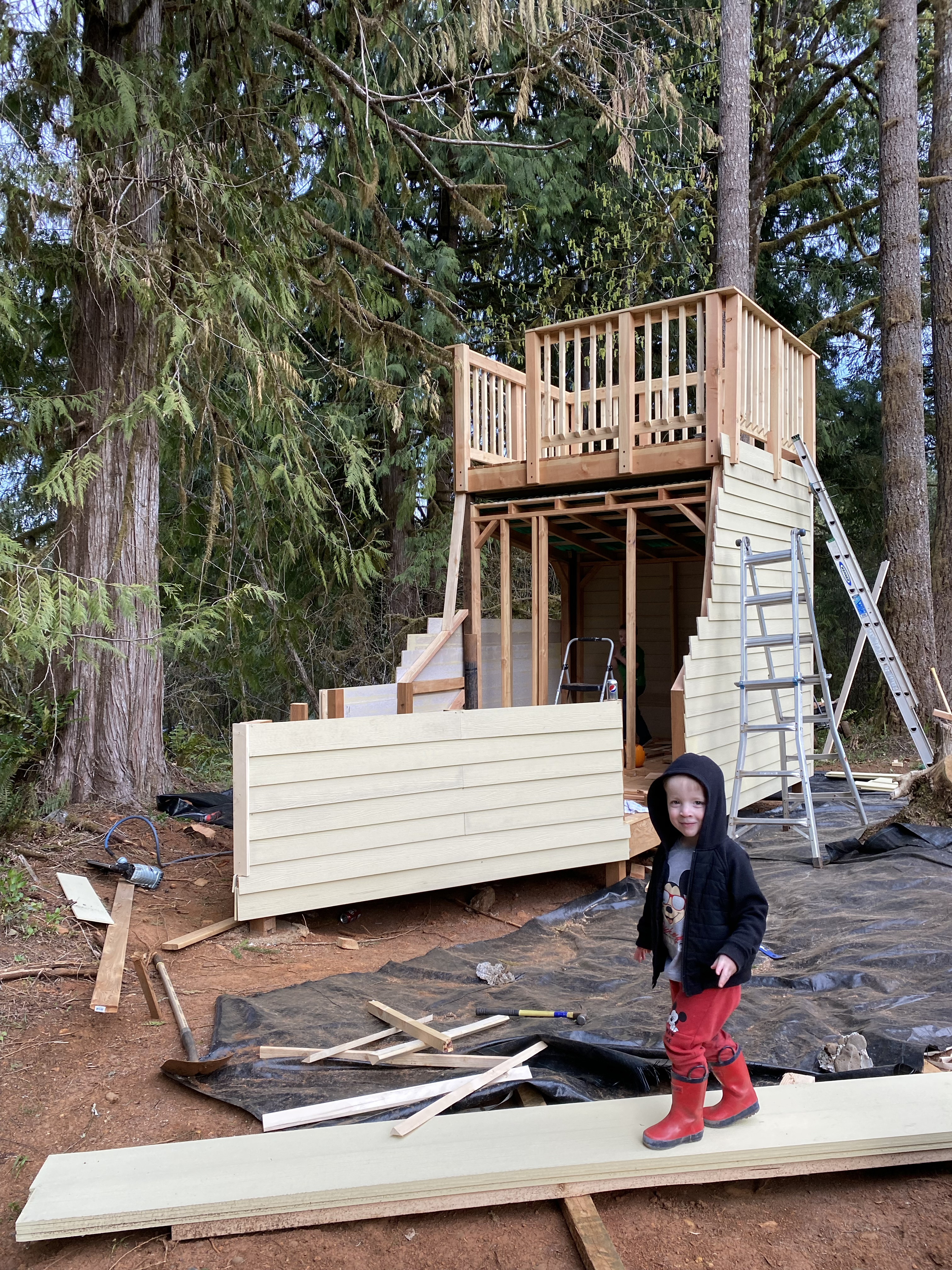
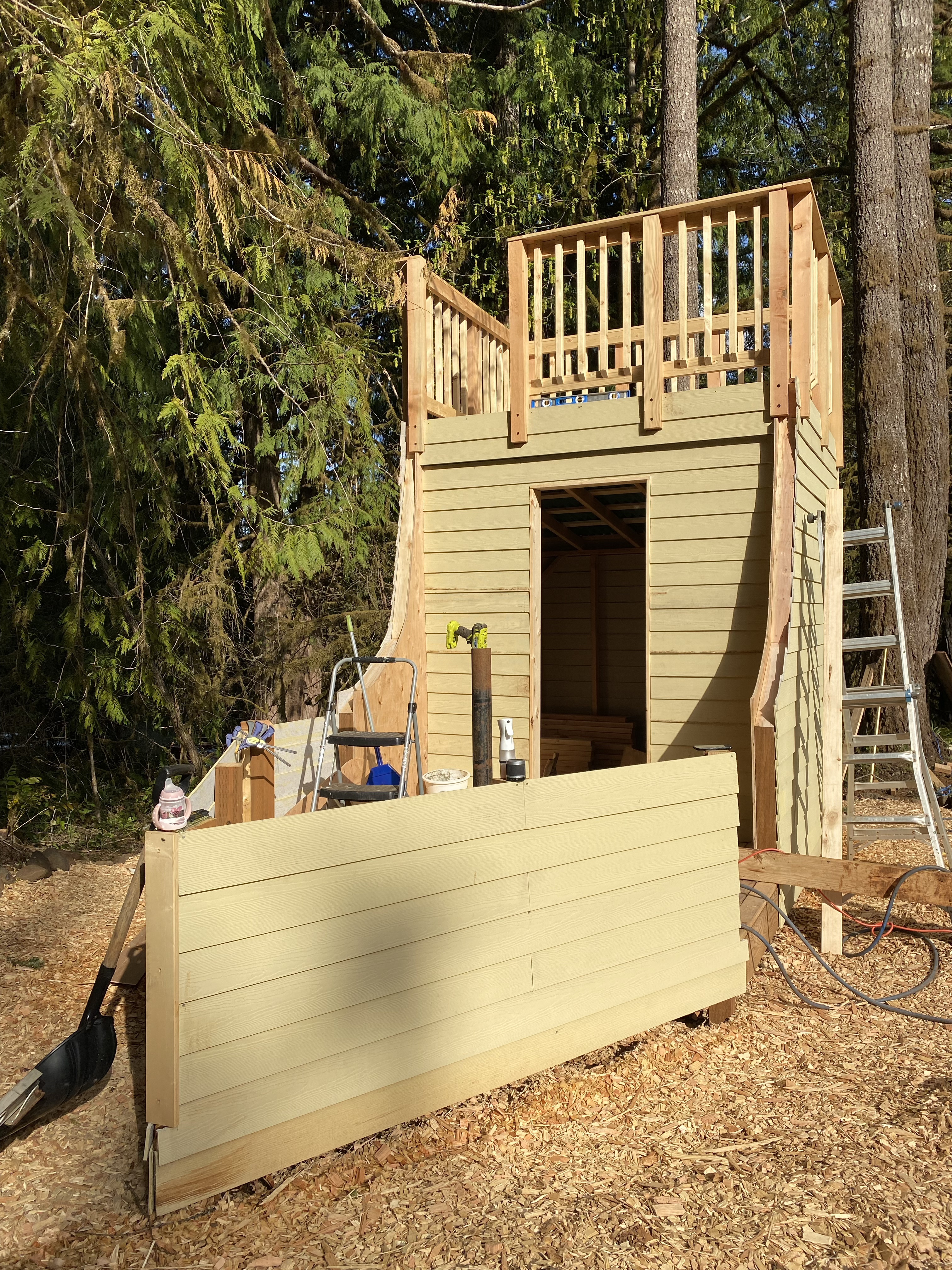
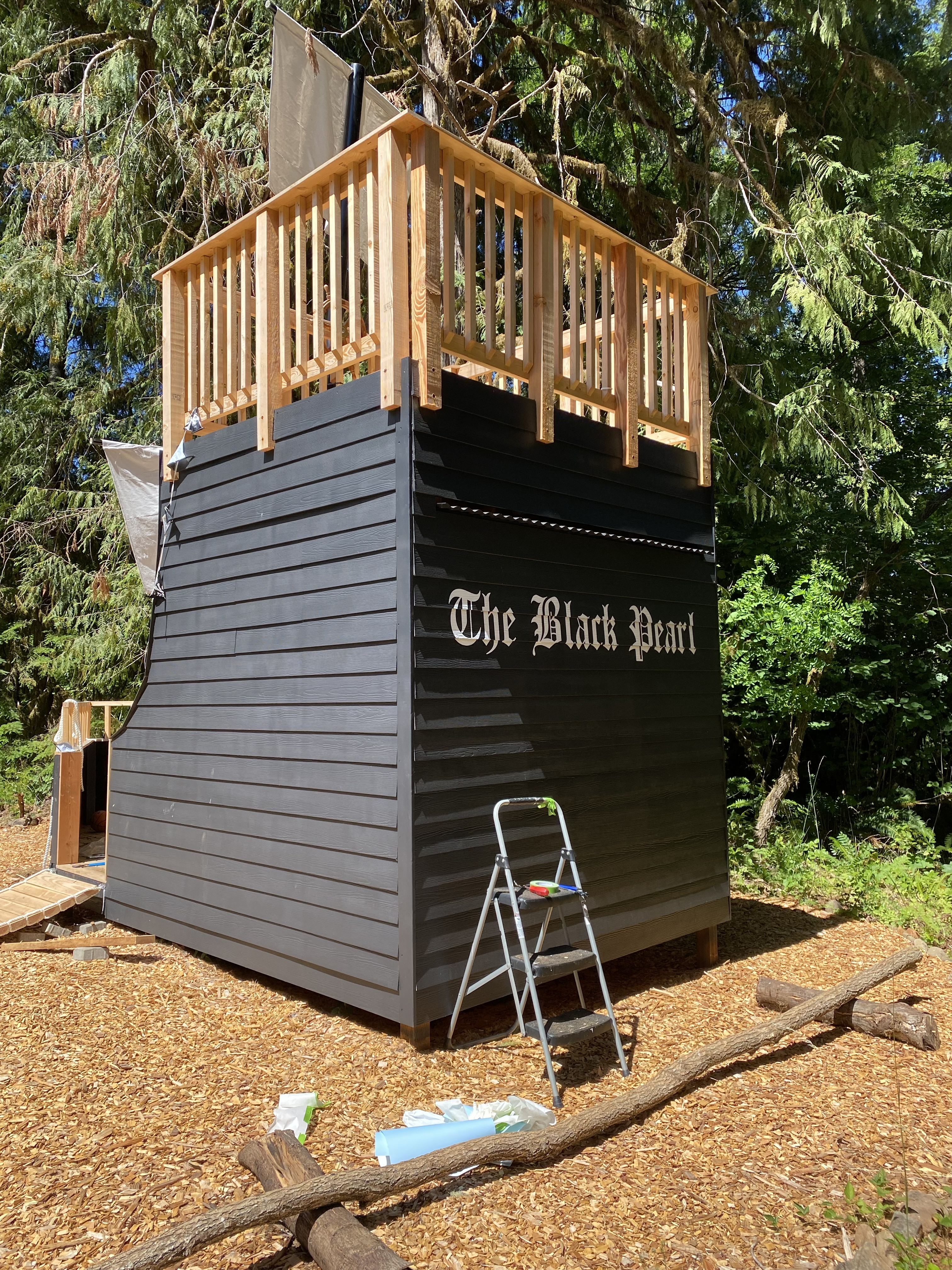
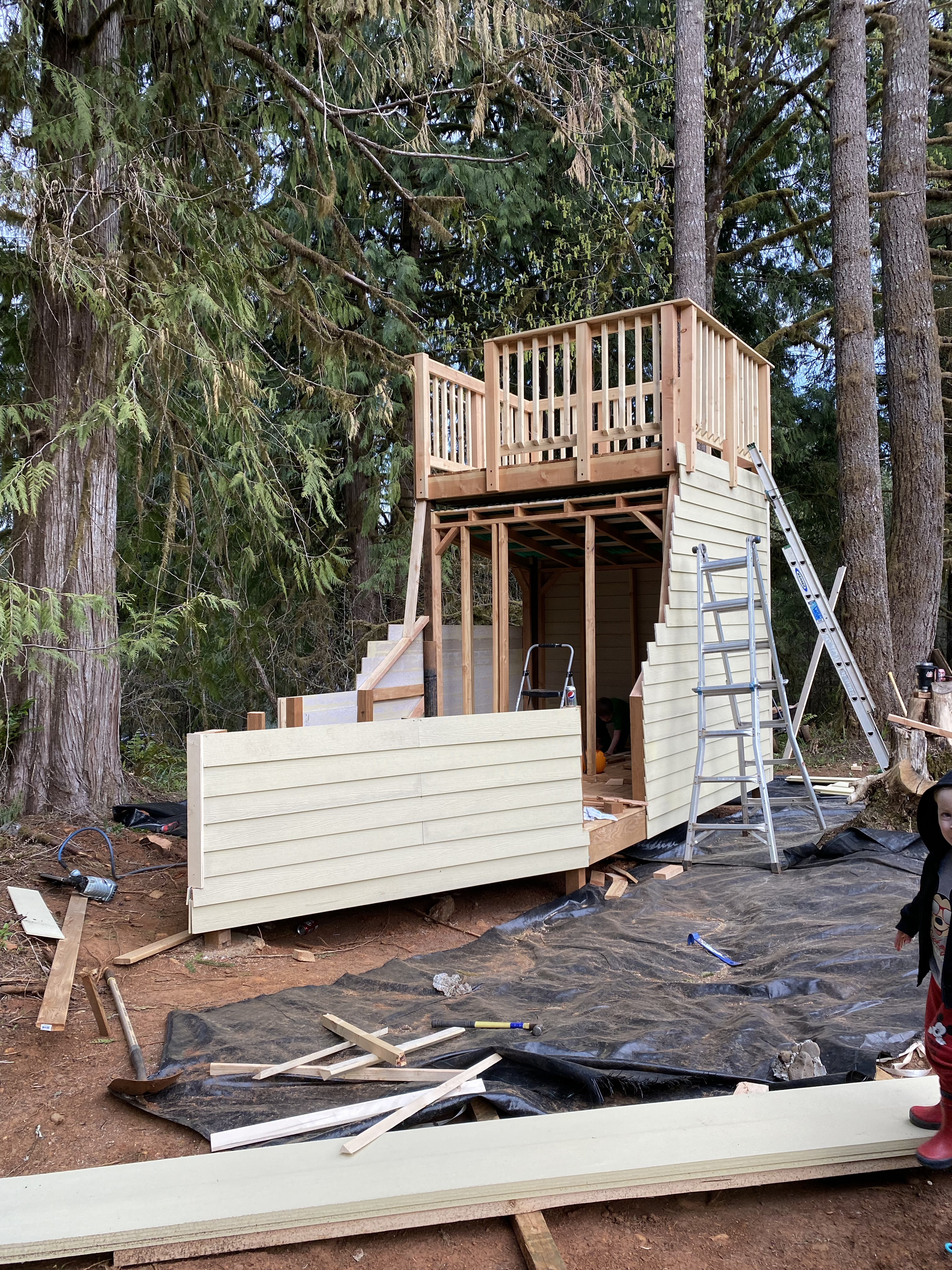
7. We decided to use siding on the outside of the ship. Our hope is that it will withstand the weather well. And here you can see what I meant by the cabin roof line being “invisible”. You can’t tell it has a slant from the outside of the ship, but still get the benefit of water running off that roof and out the back of the ship. Liam really loved helping with this project!

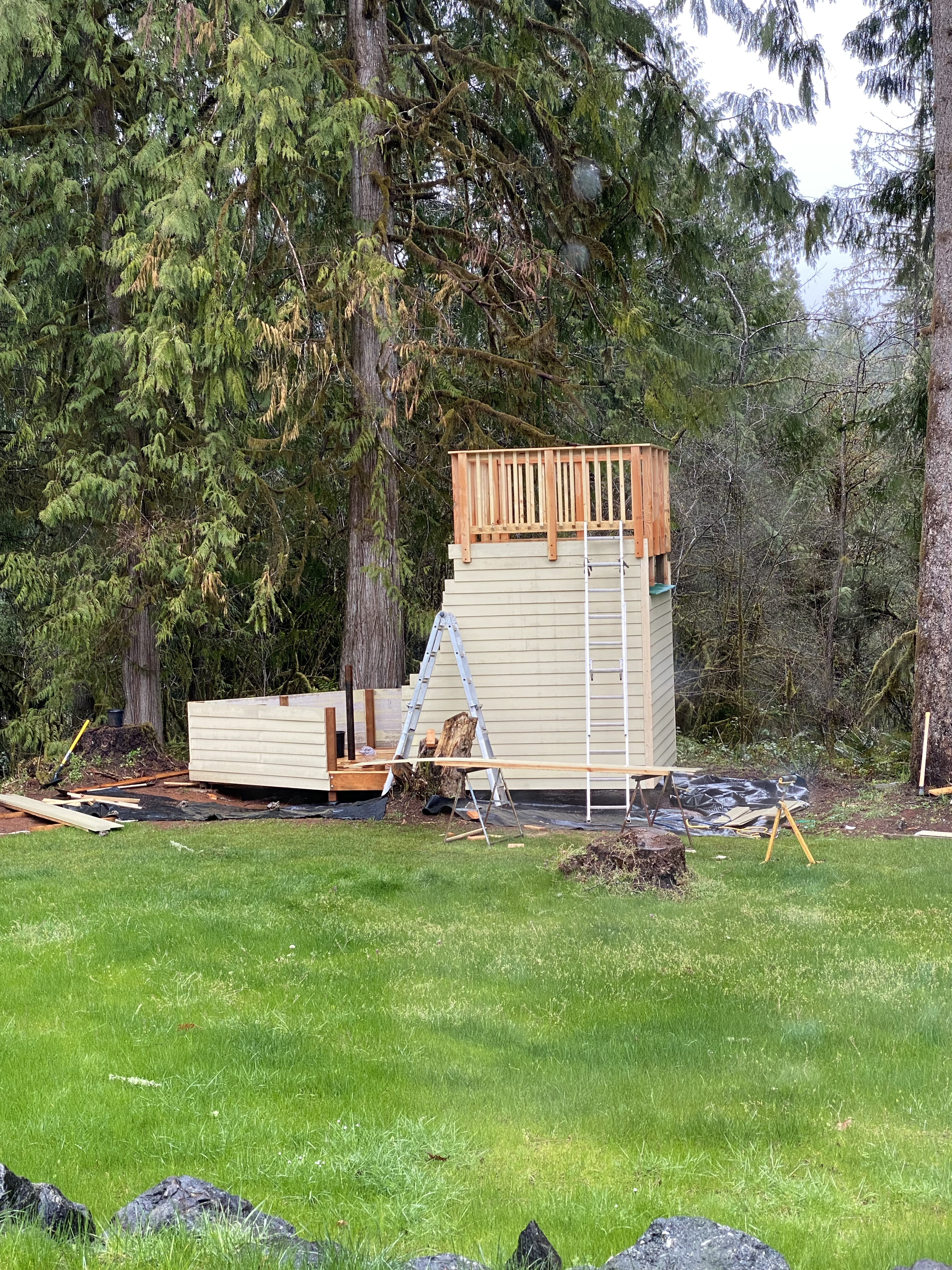
8. You can see we also added a transition between the two-story level of the ship and the front of the ship with some plywood, and by extending the siding. Aesthetics are important! We also added some wood chips to even things out around the ship.

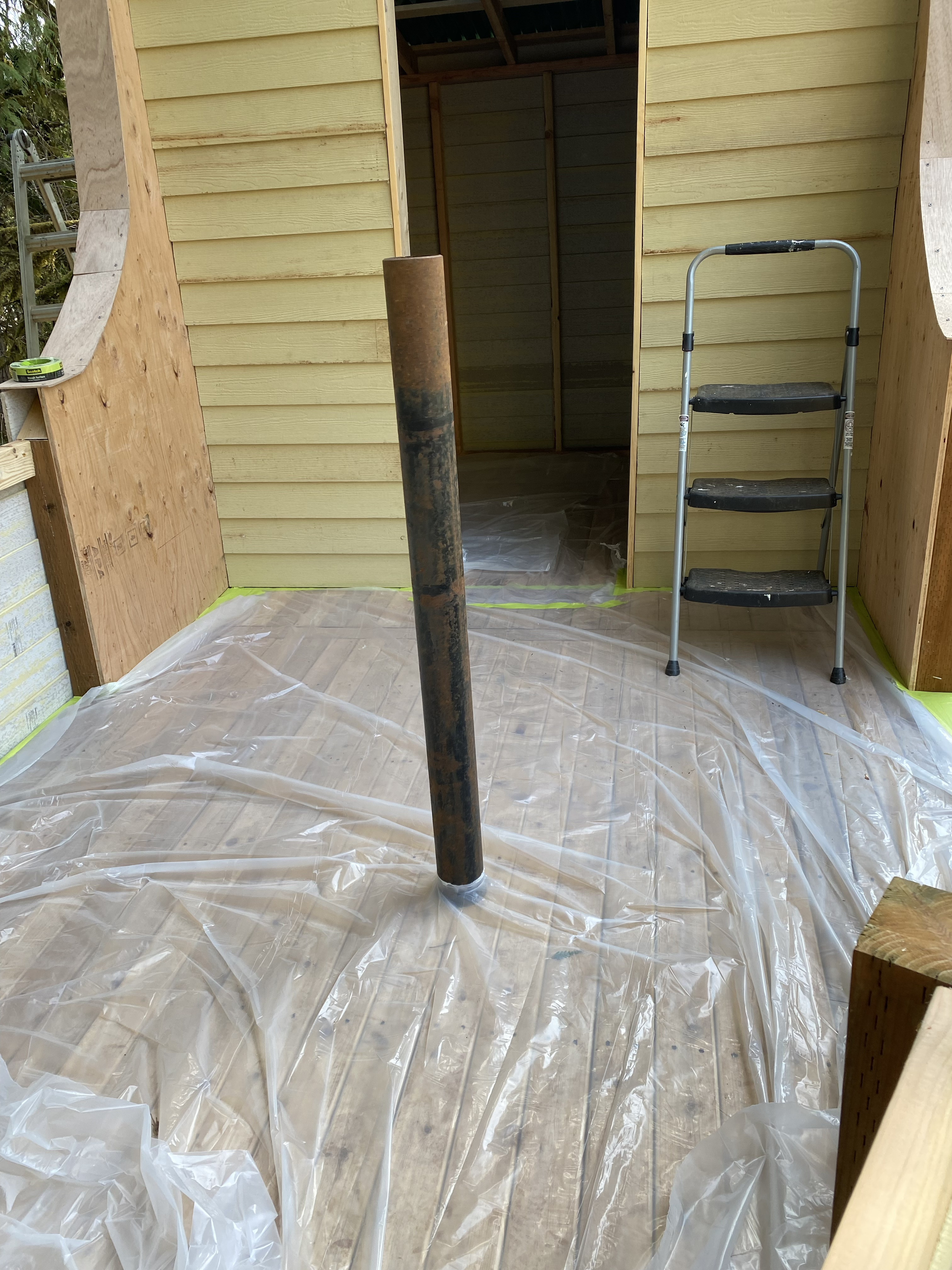
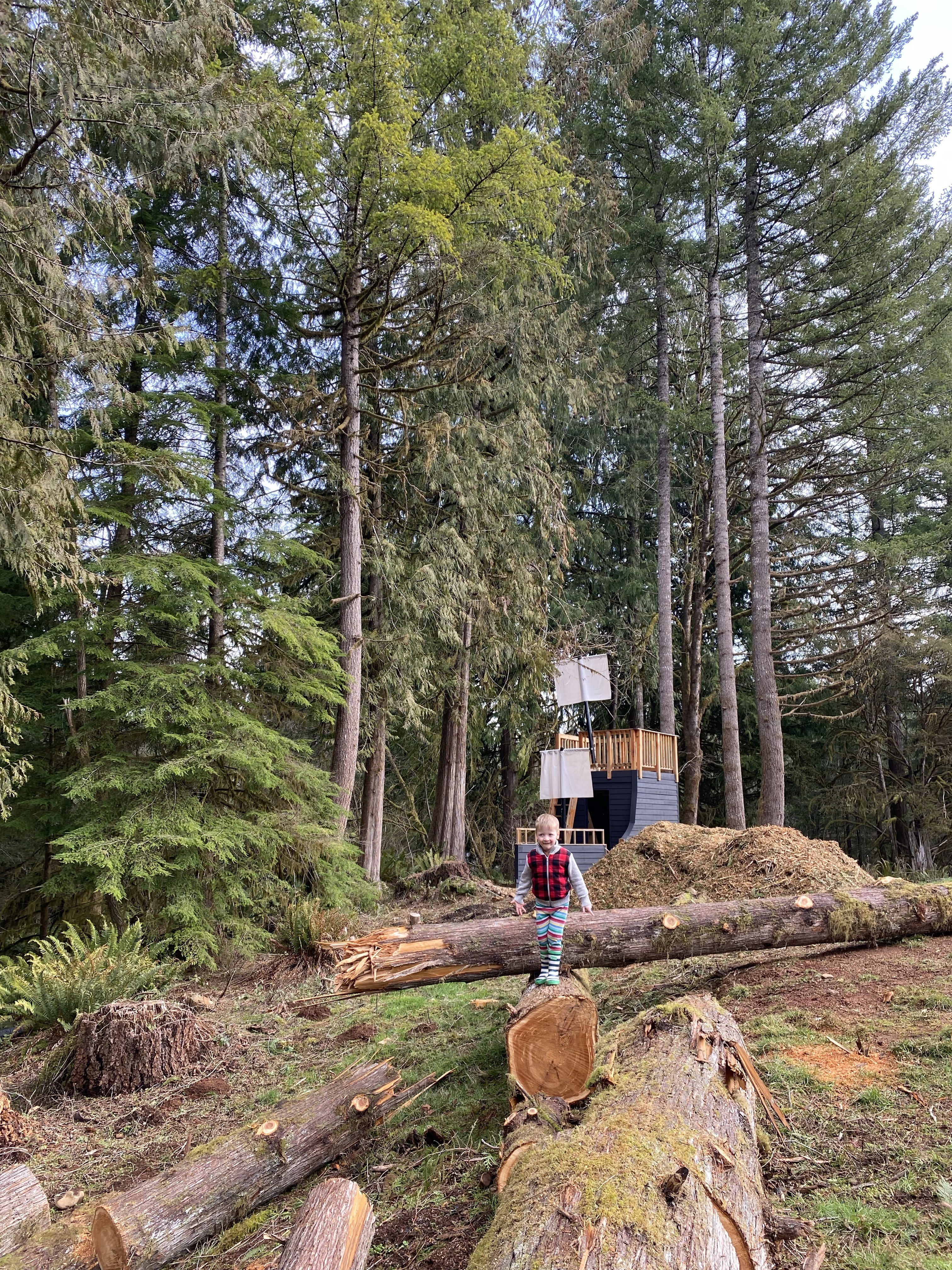
9. This is funny, often, the land gives exactly what you need. During the initial excavation of our property, we found this old post with a big chunk of concrete still attached. Unfortunately, it did not get removed with the other construction garbage. I had told Ryan we needed to take it to the dump or get rid of it somehow, I didn’t want a collection of random junk piling up around the property. A friend of ours joked it would still be around in 20 years…I did not find this idea funny. Well, the post sat and sat and sat because it was too heavy to get into a car to remove. But then, when we needed a way to mount a mast, by golly, we repurposed that post. We dug a big hole under the deck of the ship, and muscled it in. It gave us a sturdy place to mount a spray-painted PVC mast onto the ship. See, the land gives and yes, it will still be around in 20 years. Richard was right.

Total side note: It was a CHORE to get it muscled into place. To this day I’m still not sure how Ryan and I moved it on our own. Really Ryan gets the credit!

10. Next up, paint. No self-respecting pirate ship would be anything but black. (Also, it just so happens to coordinate with our black and white house, imagine that!). So I sprayed SW Tricorn Black on all of the siding. We did opt to leave some of the wood unpainted, loving that two-tone look.

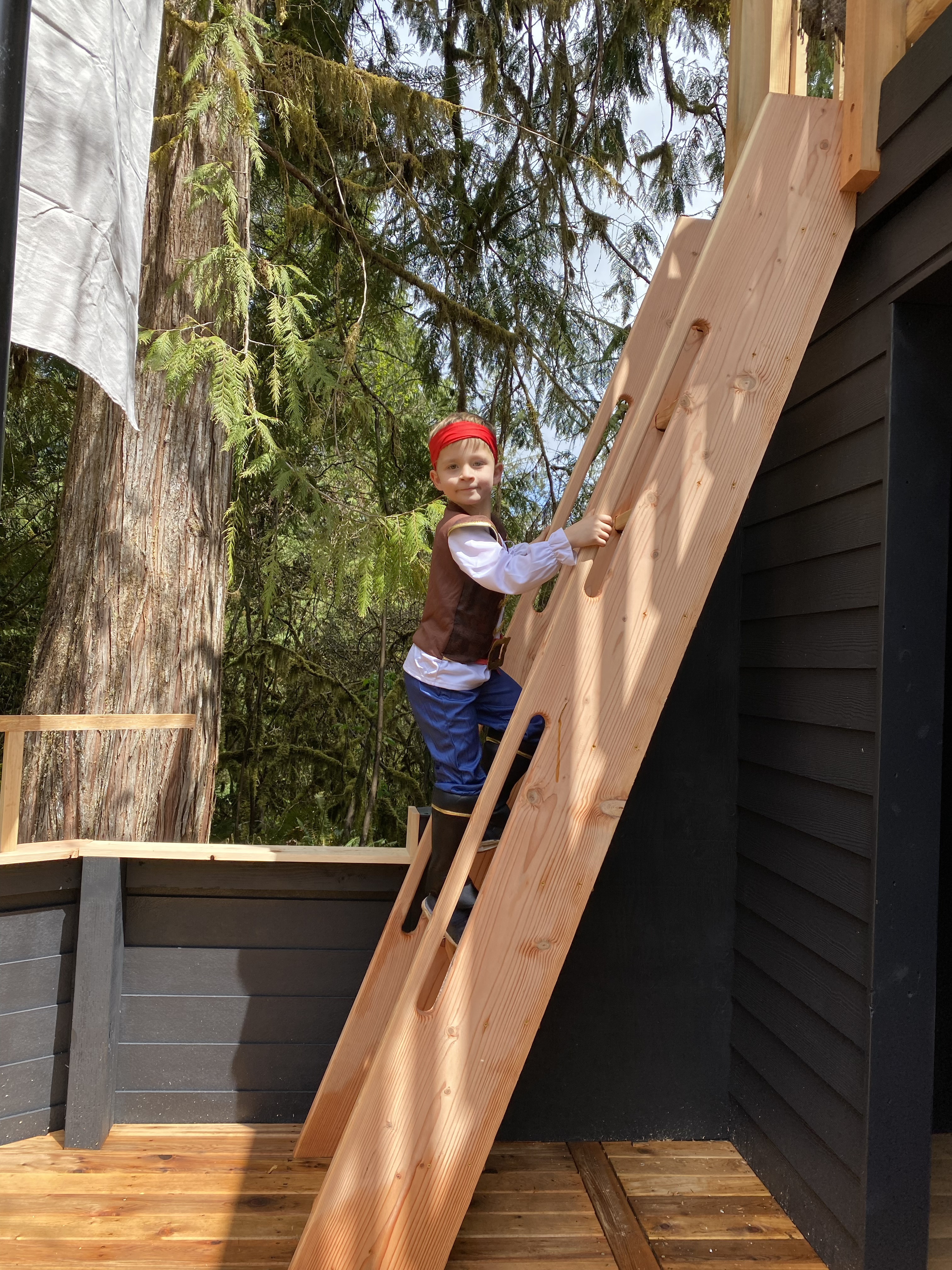
11. Finally, we got down to the decorative features. More railings on the front of the ship, a second PVC mast on the upper deck. Sails out of inexpensive drop cloths. Very cool ladder with hand holds for safety and small children. Love what Ryan created there! Ship’s wheel, pirate flags, and we were ready for the party!

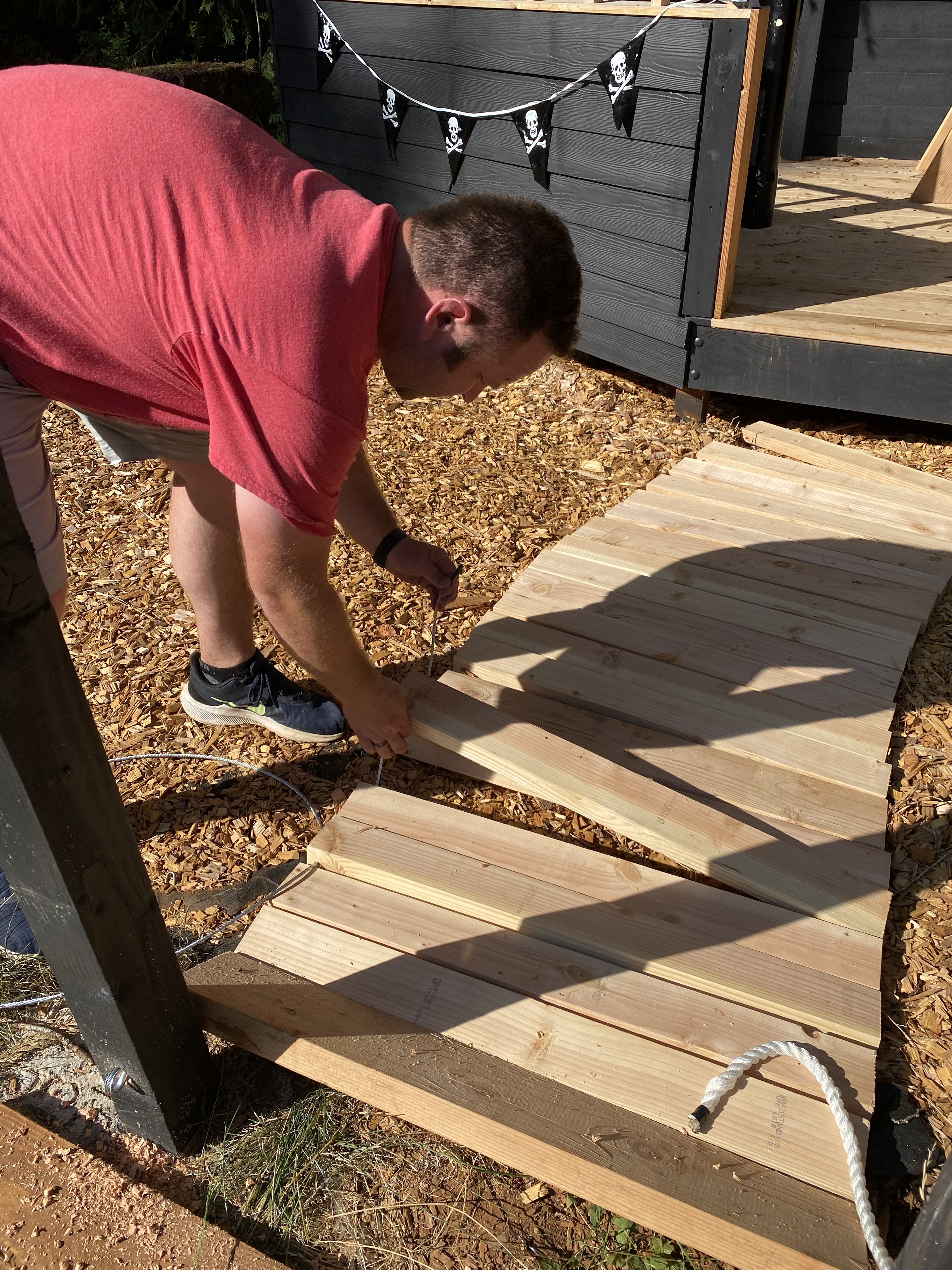
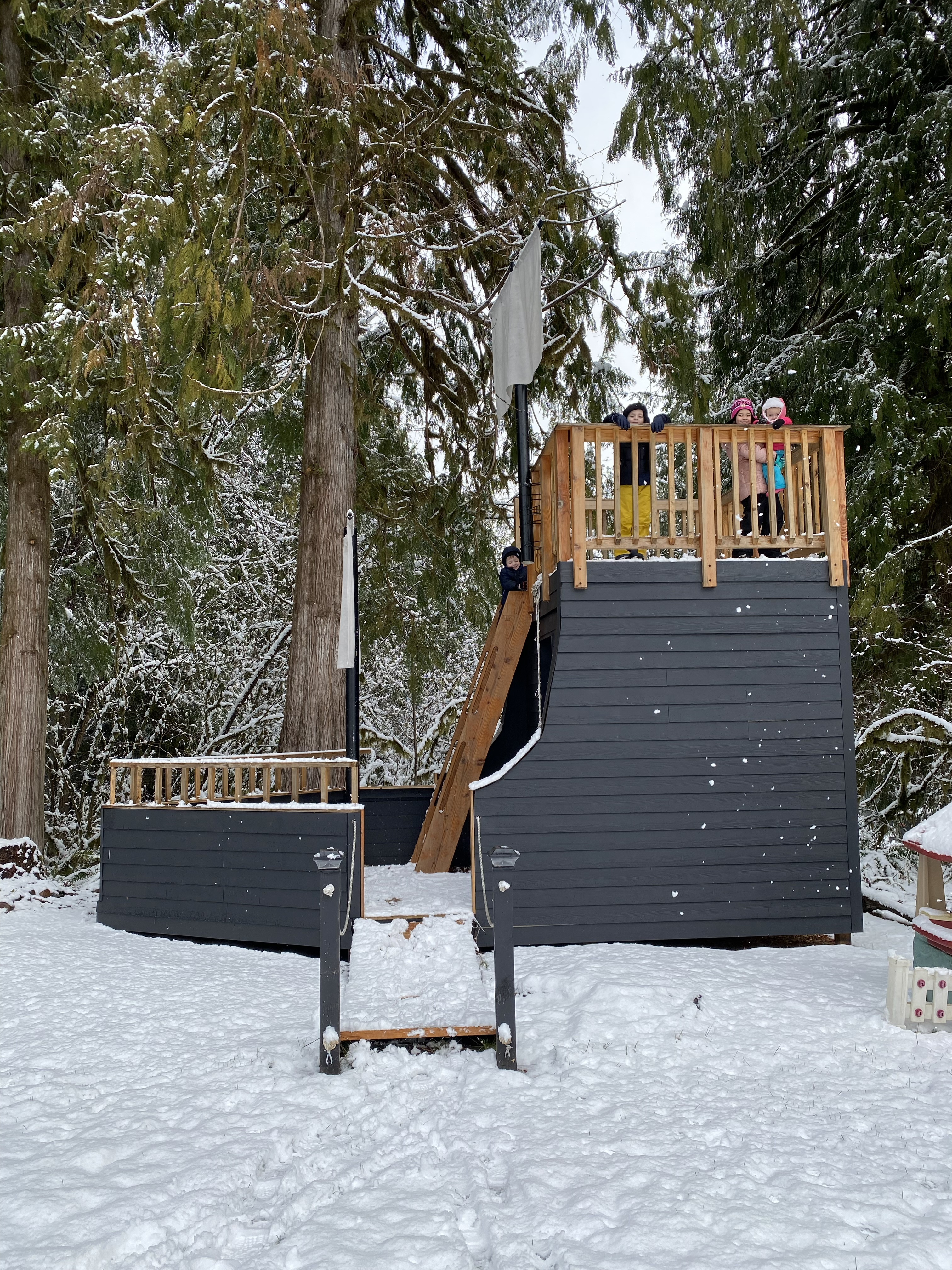
12. We later added the posts and rope bridge entrance. Also, some solar lights and the ship’s name on the stern. We have plans for a door on the cabin. But again, no project is ever, ever truly finished. (See every other post on my blog.)

This was an ambitious project for us. We had never done anything of this scale and we completely made up our own design. It was amazing how well it came together and how well Ryan and I worked together in each stage. Not because we don’t work well together (we do), but because at each step our vision really was so in sync. (And yes, we also listened to NSYNC while building this ship, I love me some 90s boy band music during a project.) This was also the project where I got over my fear of the chop saw and the pneumatic nail gun, which was amazing on its own. Our hope is that this ship will bring years of fun and imagination and delight for our kids.

Yo ho, yo ho, a pirate’s life for me!

xo,
-h

DIY Raised-Bed Garden

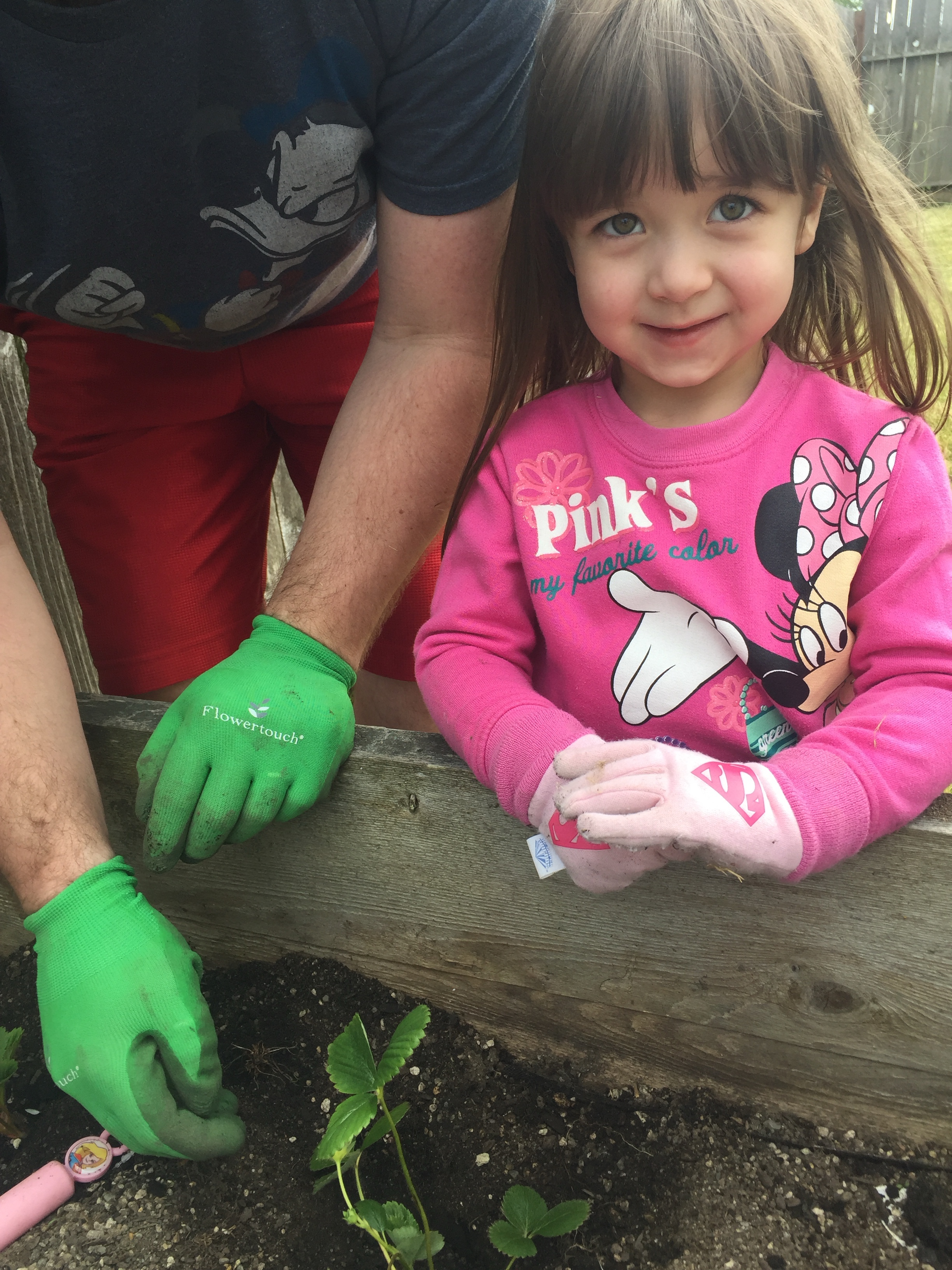
Did you know that there was a time when I had zero interest in gardening? Zero interest. When Kyrie was 3 or 4 years old Ryan decided to plant some strawberries in the backyard thinking it would be fun for the kids. I remember telling him I really didn’t want to start a garden. So he could do what he wanted but I had plenty on my plate and would not be contributing to the gardening thing. I was a bit grumpy about it if I’m being completely honest. Ryan will corroborate this story.

Then the strawberries started growing. And we got our very first one. It was completely delightful to see these beautiful sweet fruits growing. We were hooked, kids and parents alike. Yes, plural on parents. Uh-oh.

Then we added tomatoes.

Then raspberries.

Some cucumbers.

Then we moved to the Lost Wood.

Like so many other things, this is all entirely Ryan’s fault (in the best way), because now we had so much more space for a garden. So much more space! And suddenly, I am all in on gardening. All in!

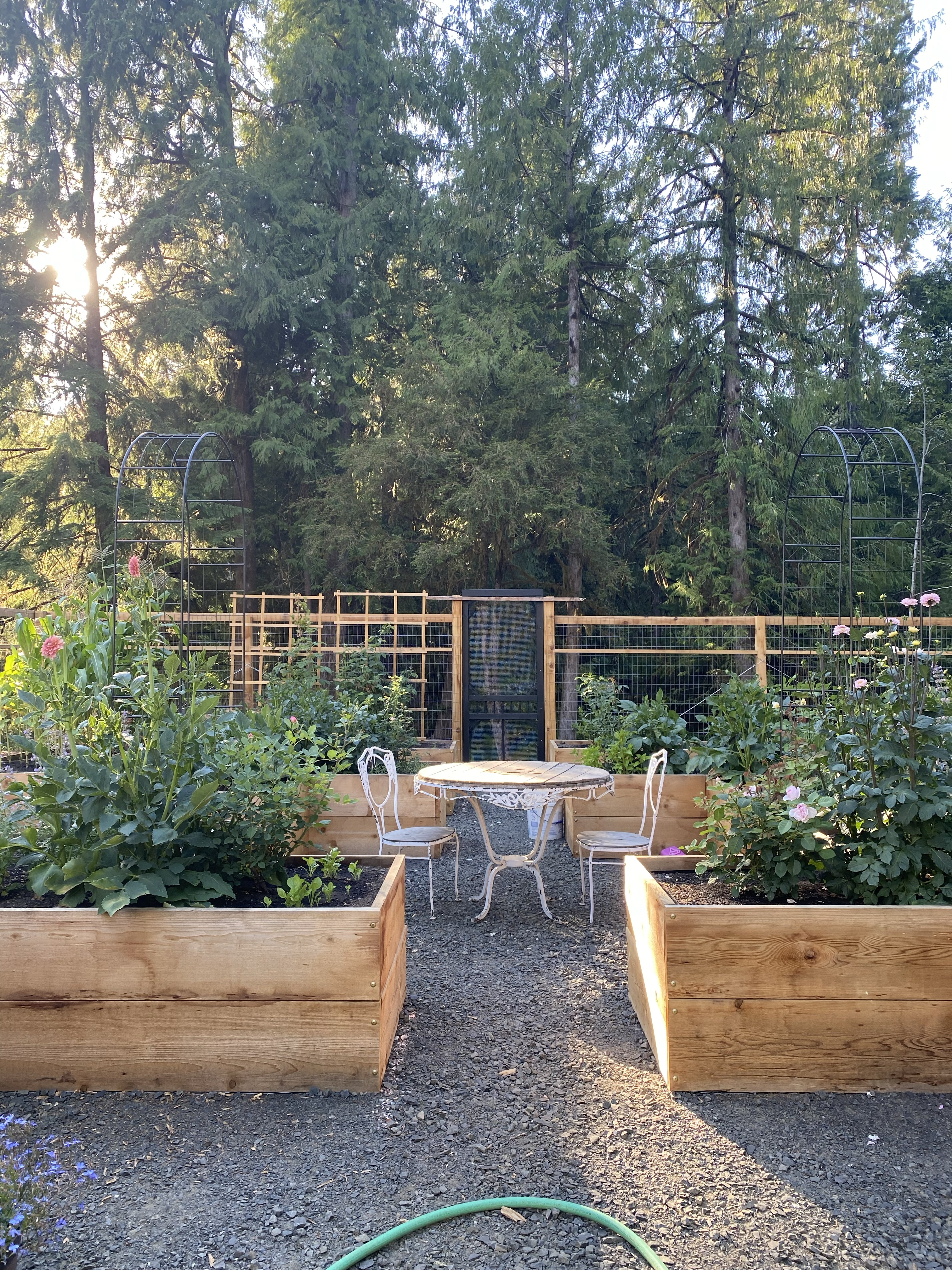
We started by picking a location to put the garden, we needed some sort of flat-ish space (our lot is very sloped and full of trees), we needed to be able to fence it (the deer), and we needed optimal light (again, so many trees). After much consideration, we found a perfect spot basically in the front yard. Don’t worry, when you live in the country you can put your garden in the front yard and no one blinks. Promise. So much better than 5 abandoned vehicles.

Thus begins the start of a project that I thought would be pretty simple, but as always, this is the start of a giant snowball of a project. We called Ryan’s dad, Greg, to give us some advice on how to best prep the area for the garden. We were thinking we’d flatten out an area a bit and build 5 or 6 simple Wilco raised bed kits. Ryan’s dad evaluated the area and quickly determined we needed to take out some old cedar trees that were dead and dying.

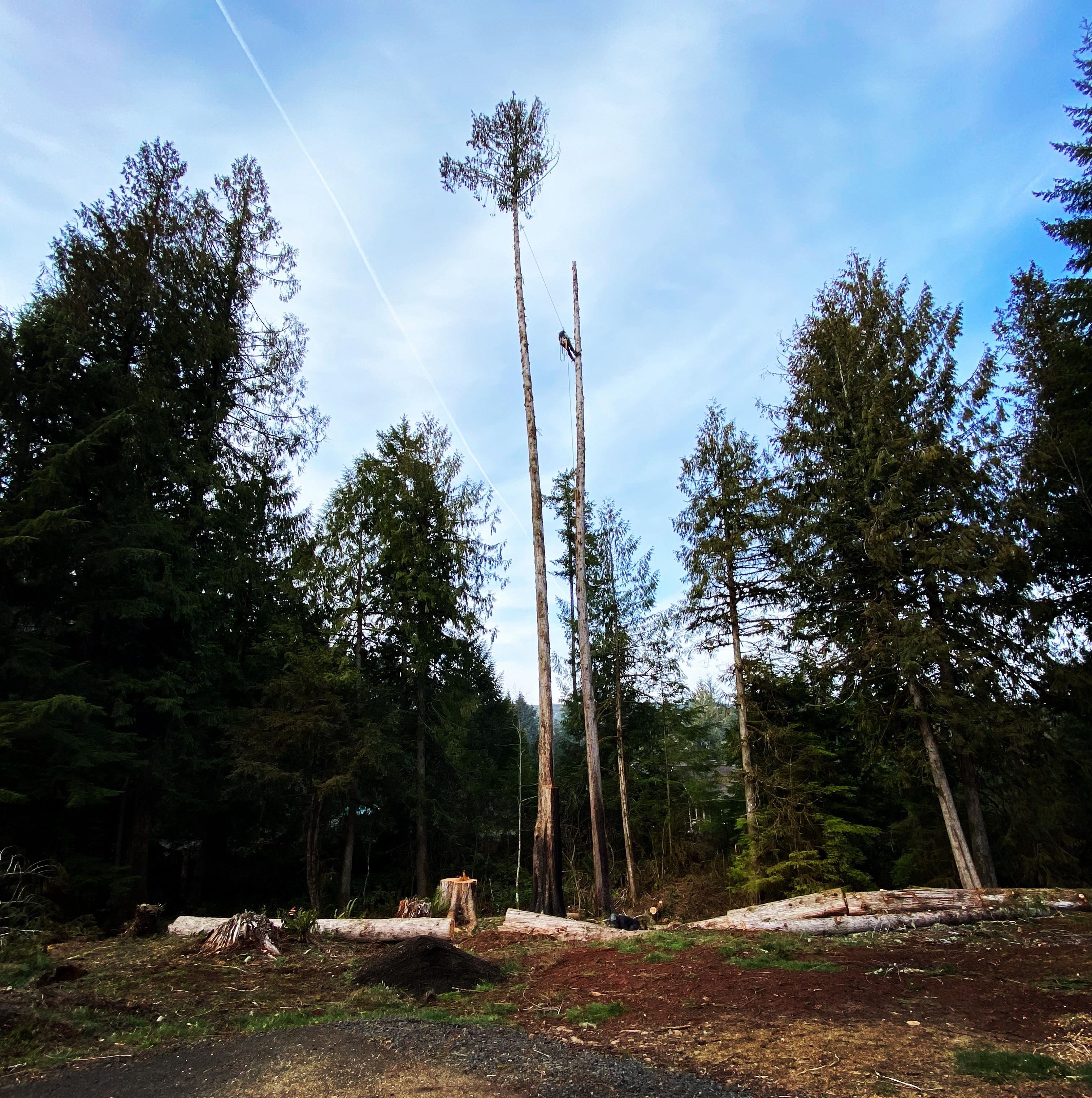
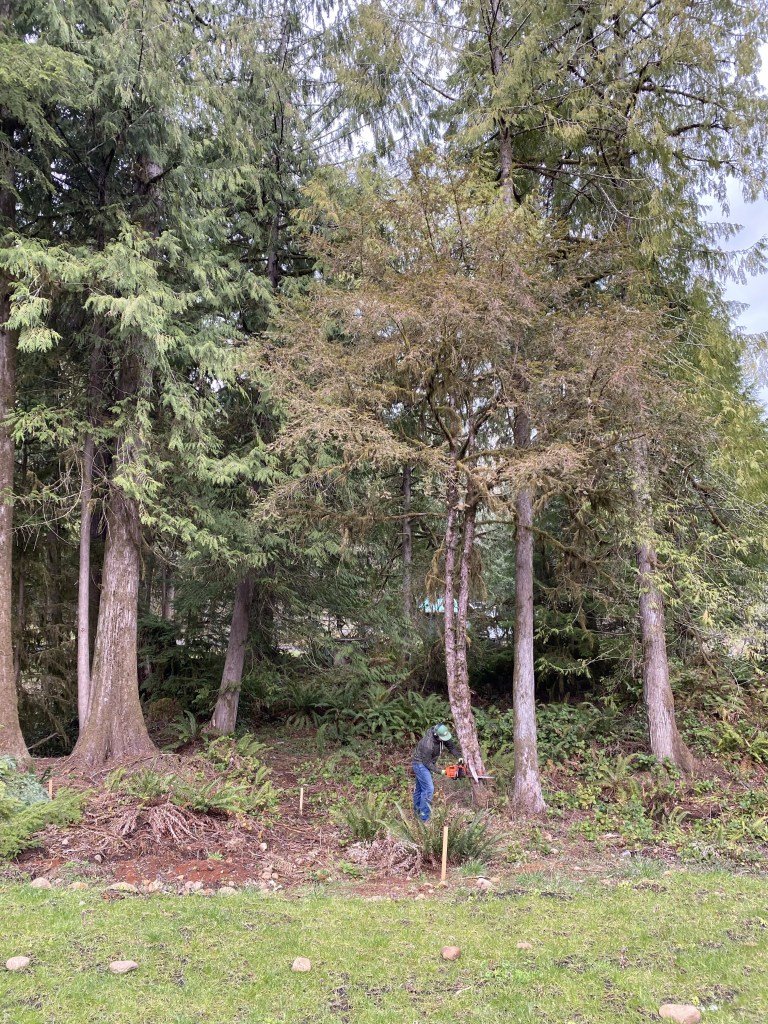
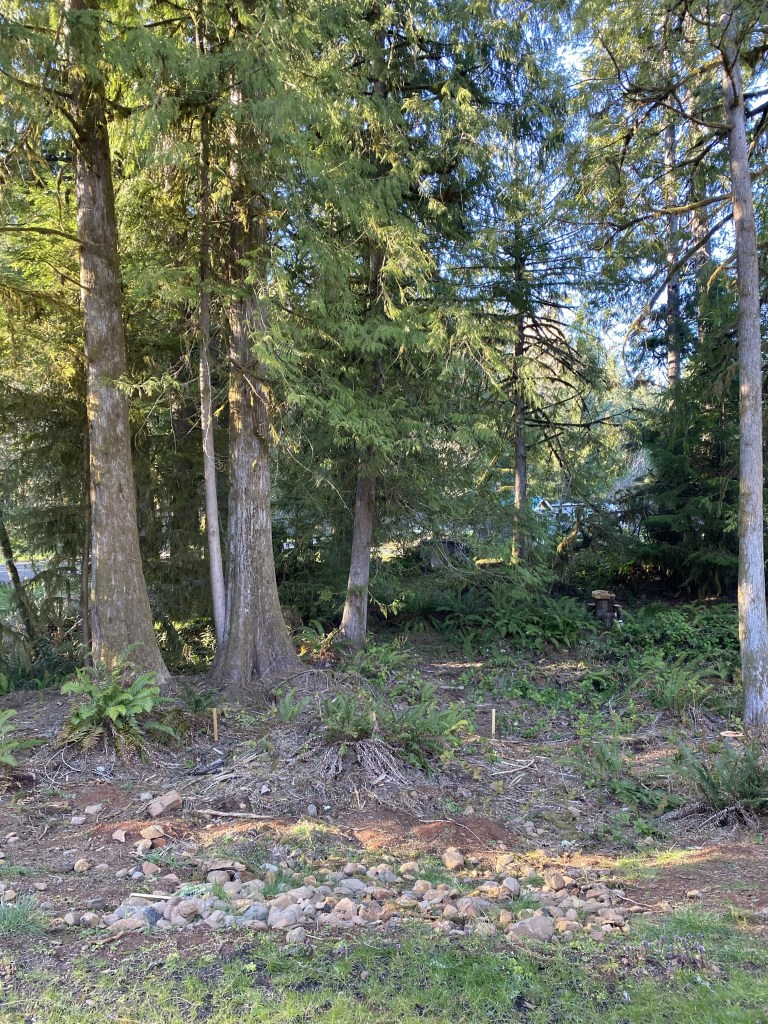
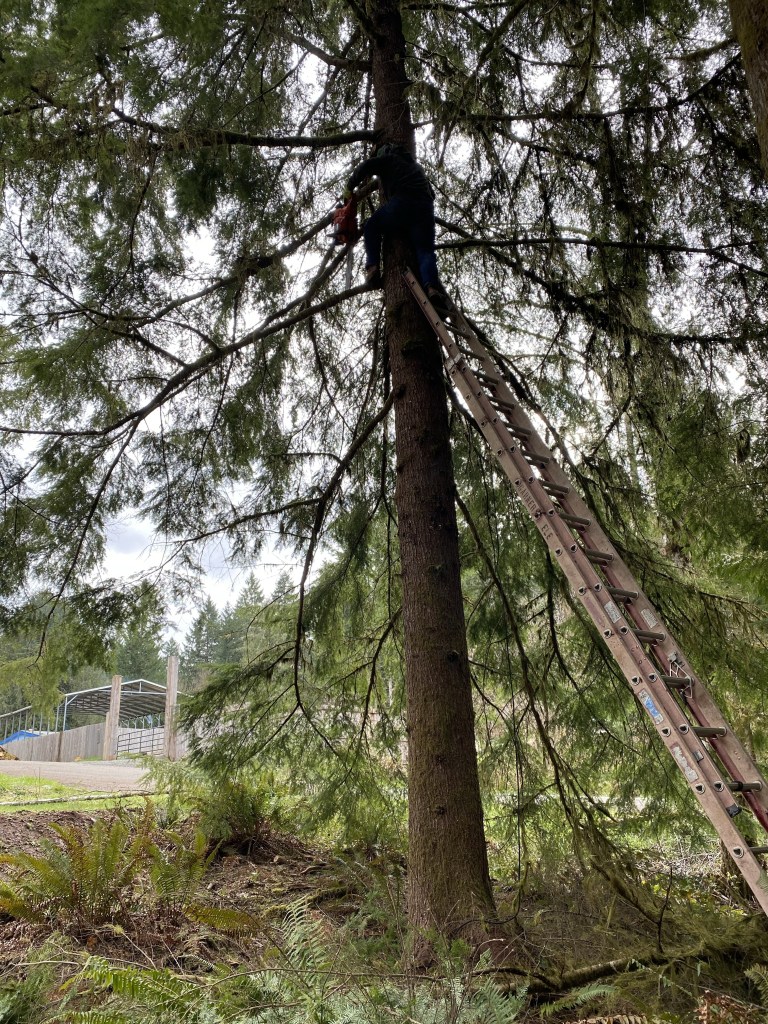
As much as we hated to admit it, the trees were looking rough (and they were partially burned, which is a whole different story). The last thing we wanted to do was build a whole garden and have a tree fall on it. So I called a couple of tree companies for quotes. The “simple” project just got a bigger price tag.

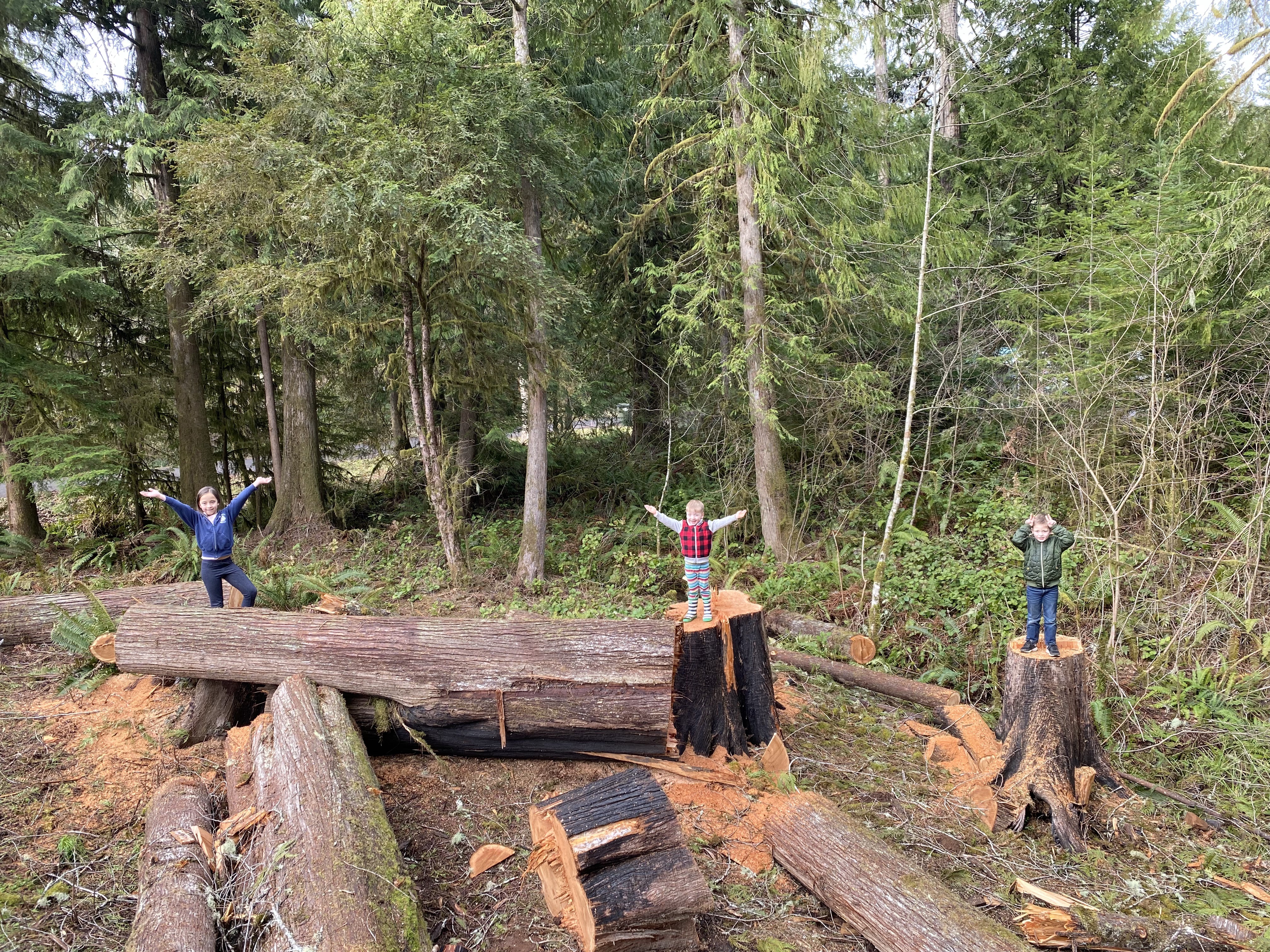
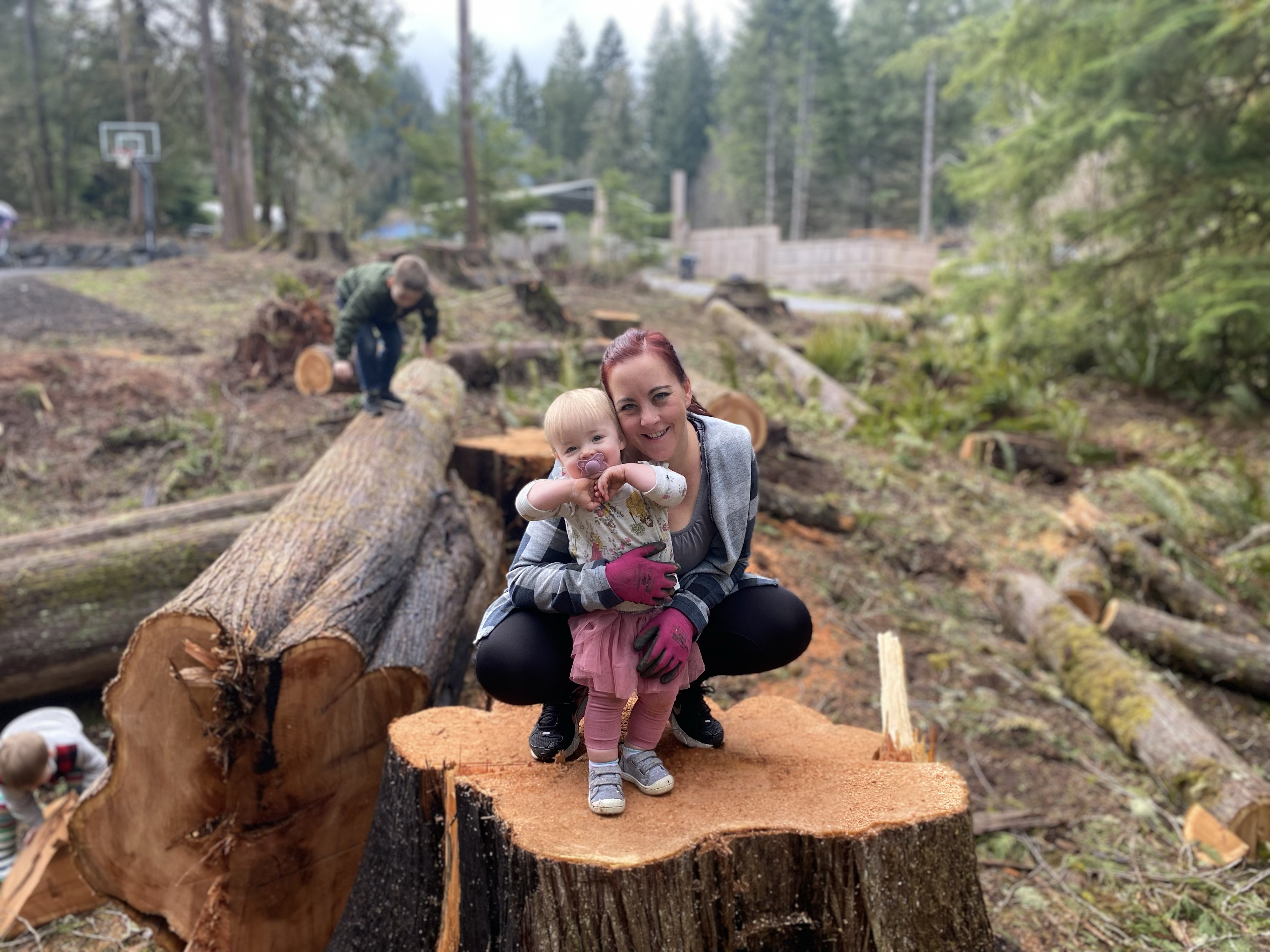
We had about three large cedars removed and a couple smaller ones. At this point, we had unwittingly made a mess of the front yard and as a bonus, a ninja obstacle course for the kids. In great news, our neighbor offered to pay us for the logs. We were excited, it would offset the cost of having the trees cut down and get them out of the yard.

And the snowball begins.

Enter Ryan’s dad (again). When he heard we were going to sell the logs, he insisted we talk to his friend who has a portable mill. At this point, I was a tad frustrated. I just wanted to ditch the logs and make my simple kit garden. Priorities people! The friend came to evaluate the logs and told us we had some tremendous value on our hands — the trees were Western Red Cedar which was (is?) in high demand in the lumber world. And oh, by the way, were we planning to build our raised beds?

Side note: My friend Adrienne has a gorgeous raised bed garden. One I could only ever dream of having. She incidentally has taught me most of what I know about gardening! The amazingness of her dream garden started to enter my mind at this point.

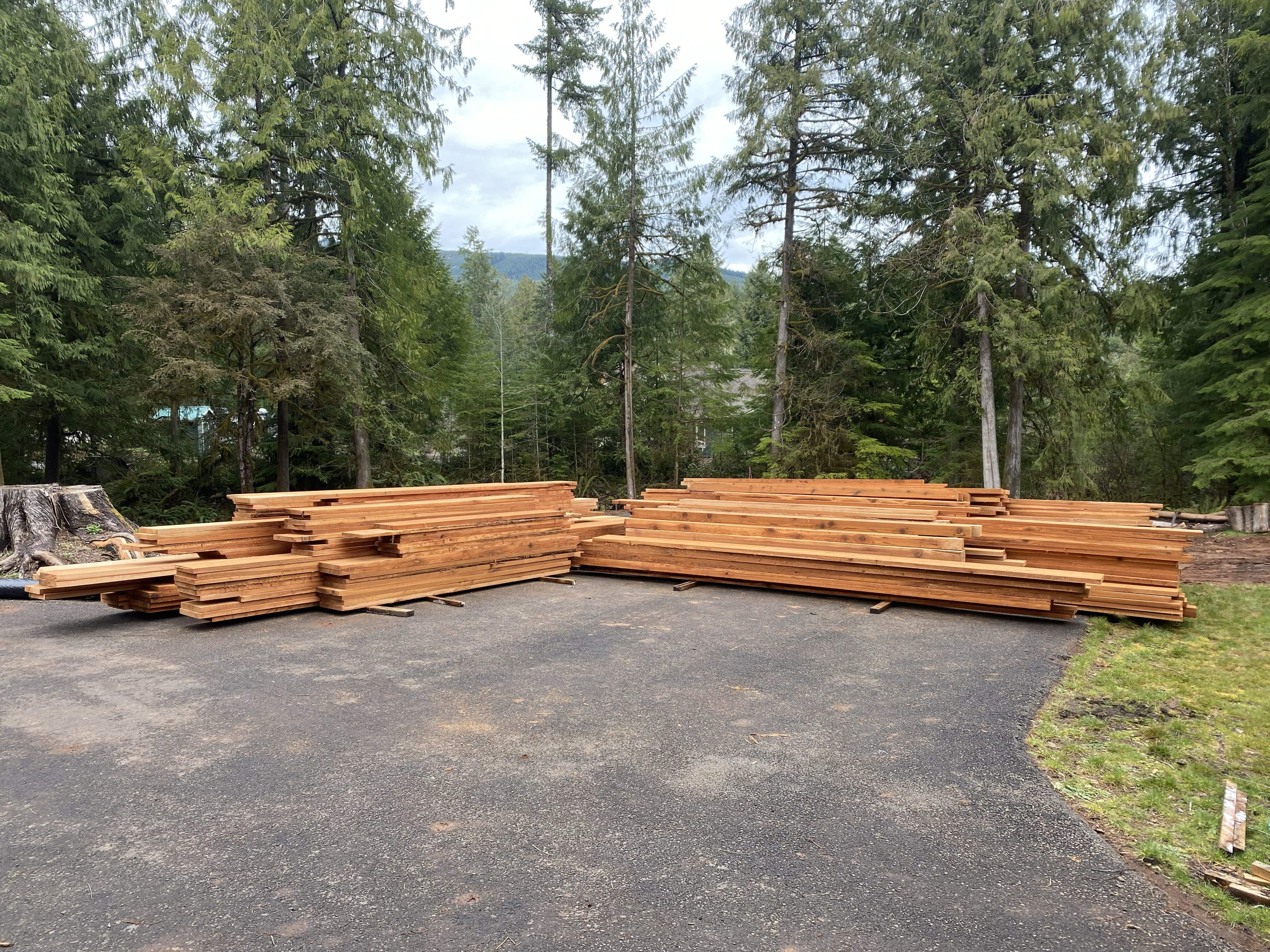
After countless discussions and pricing and thinking and contemplating, we decided instead of making money and having someone take the logs, we would pay to have the wood milled for our purposes. Oh, and by the way, there isn’t just enough wood for the raised bed garden and corresponding fencing, but we can also get enough wood custom-milled to build an arbor for the entrance to the garden and a pergola for our back patio and still have some to spare. Believe it or not, we ended up with over 4 times the the cost of the project in custom-milled wood. Also, super green and sustainable because our wood would stay on our property and be repurposed to grow things!

The snowball is very real, but we are also super thankful for Greg’s insight on this one. We just had to get the giant logs transported about 30 miles south to the mill (cheaper than actually transporting the mill to our property). See how the project gets infinitely more complicated? Ryan, Greg, and his brother spent a couple of weekends making that happen.

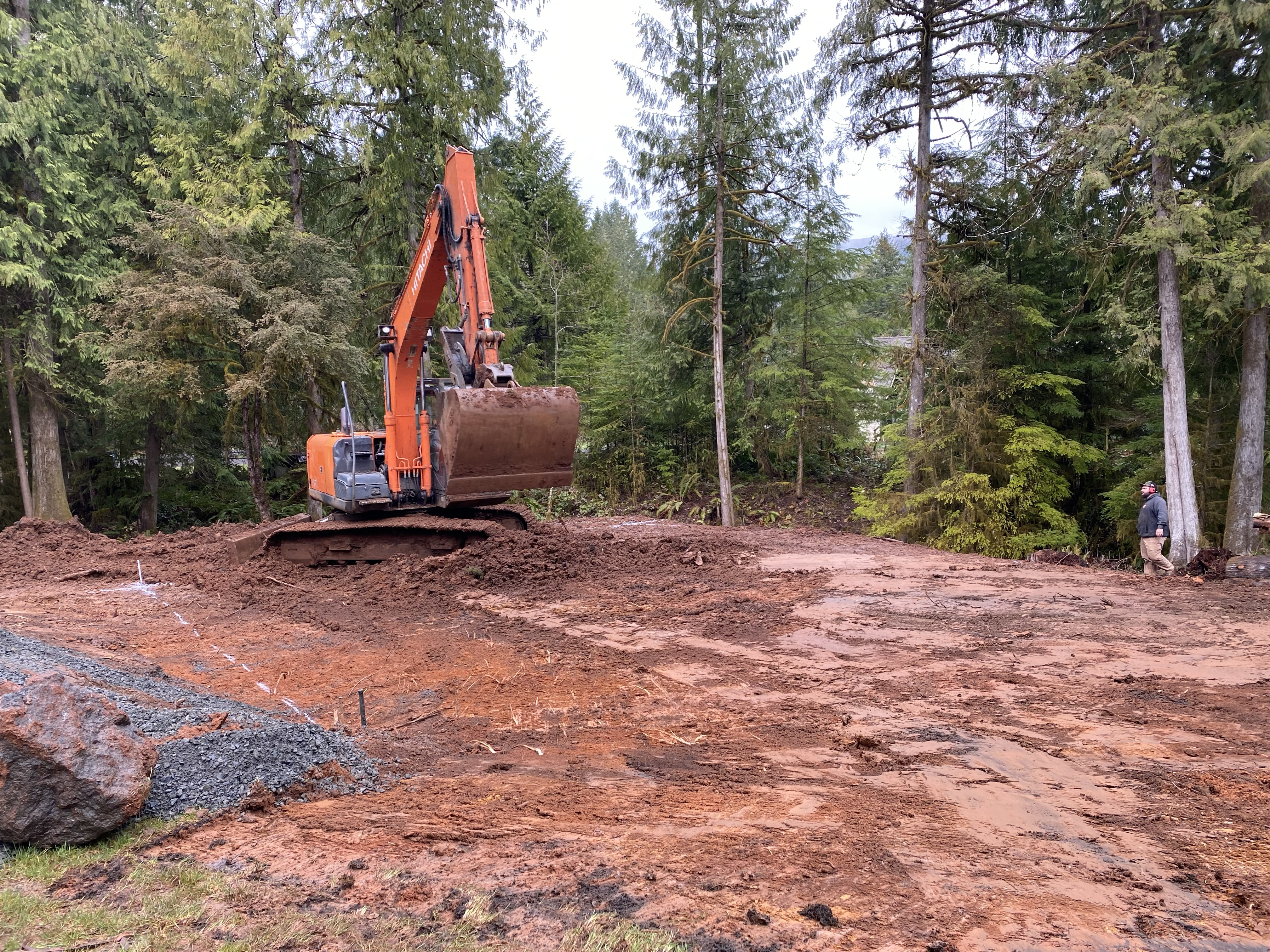
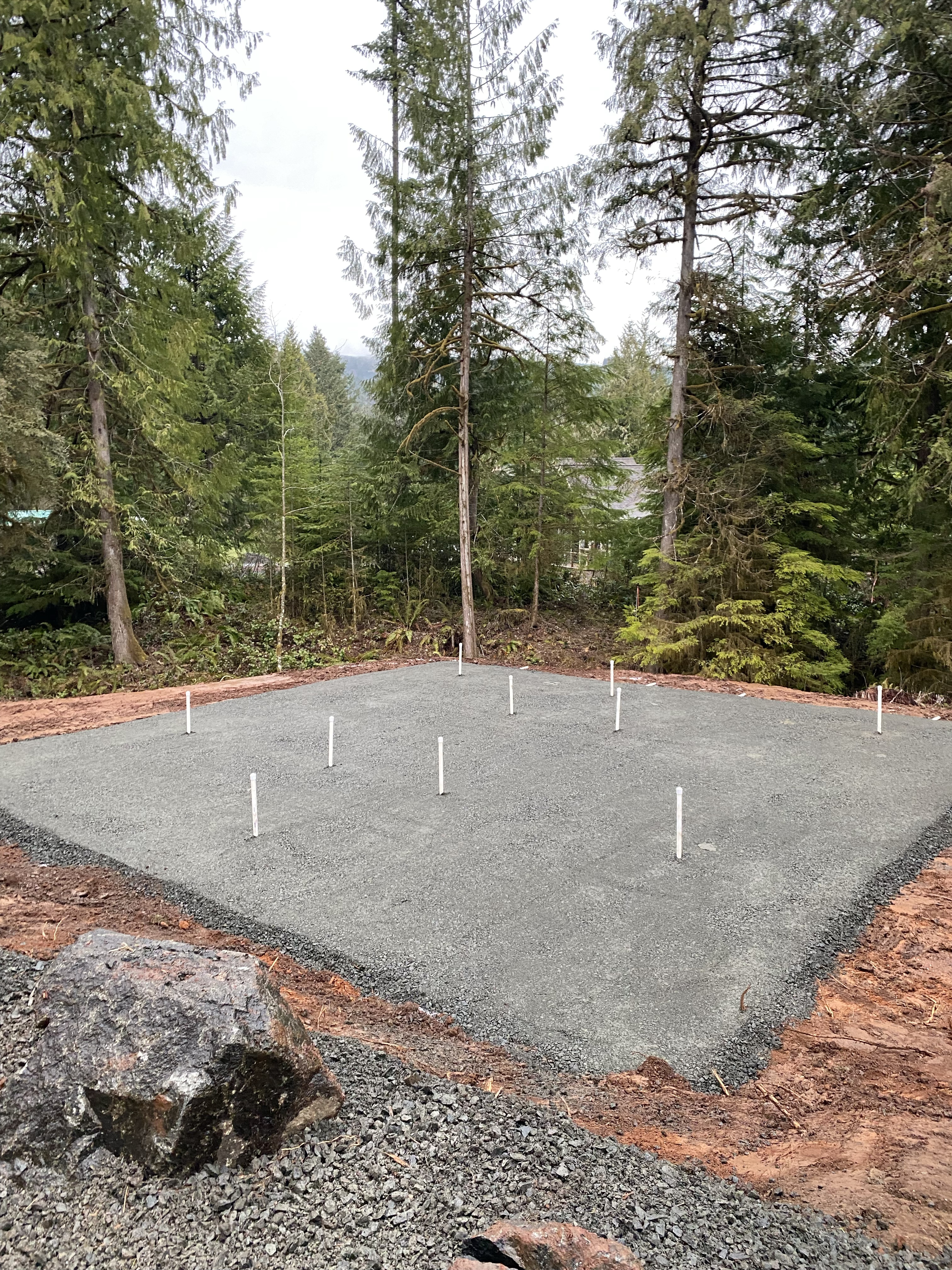
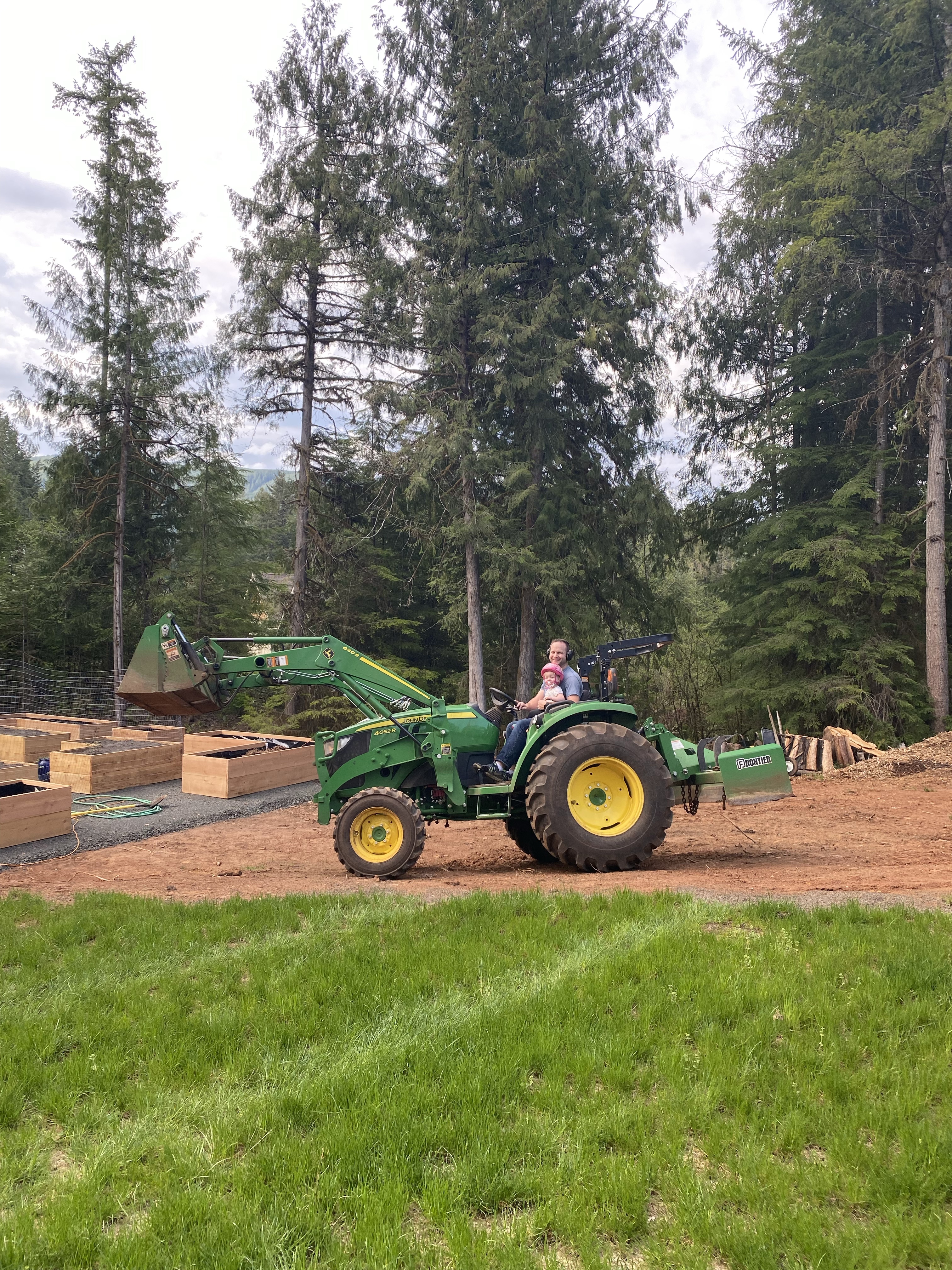
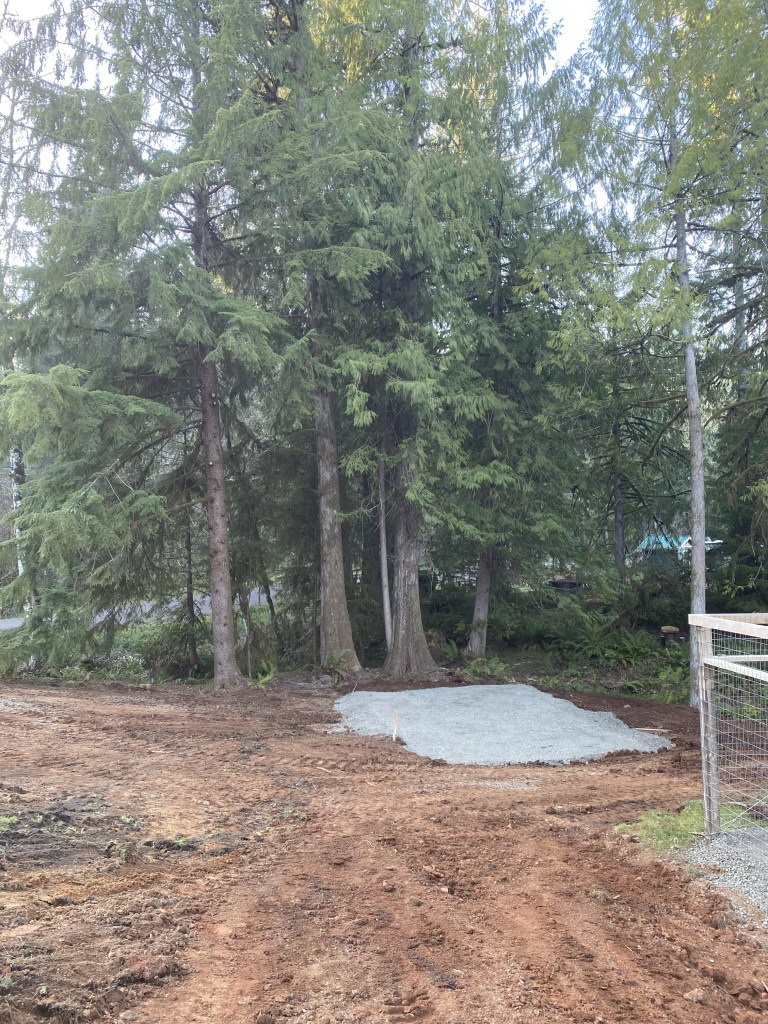
Meanwhilst, as the wood was being milled, we hired an excavator to remove the remaining giant stumps, and level and prep the garden area. This ended up having a hefty price tag as well. Anyone who tells you gardening saves money is not being truthful. Ever heard of the $300 tomato? Well, we were in way deeper than $300 per tomato. But we went ahead and had the excavator put in the gravel pad and run irrigation lines as well. They did a beautiful job!


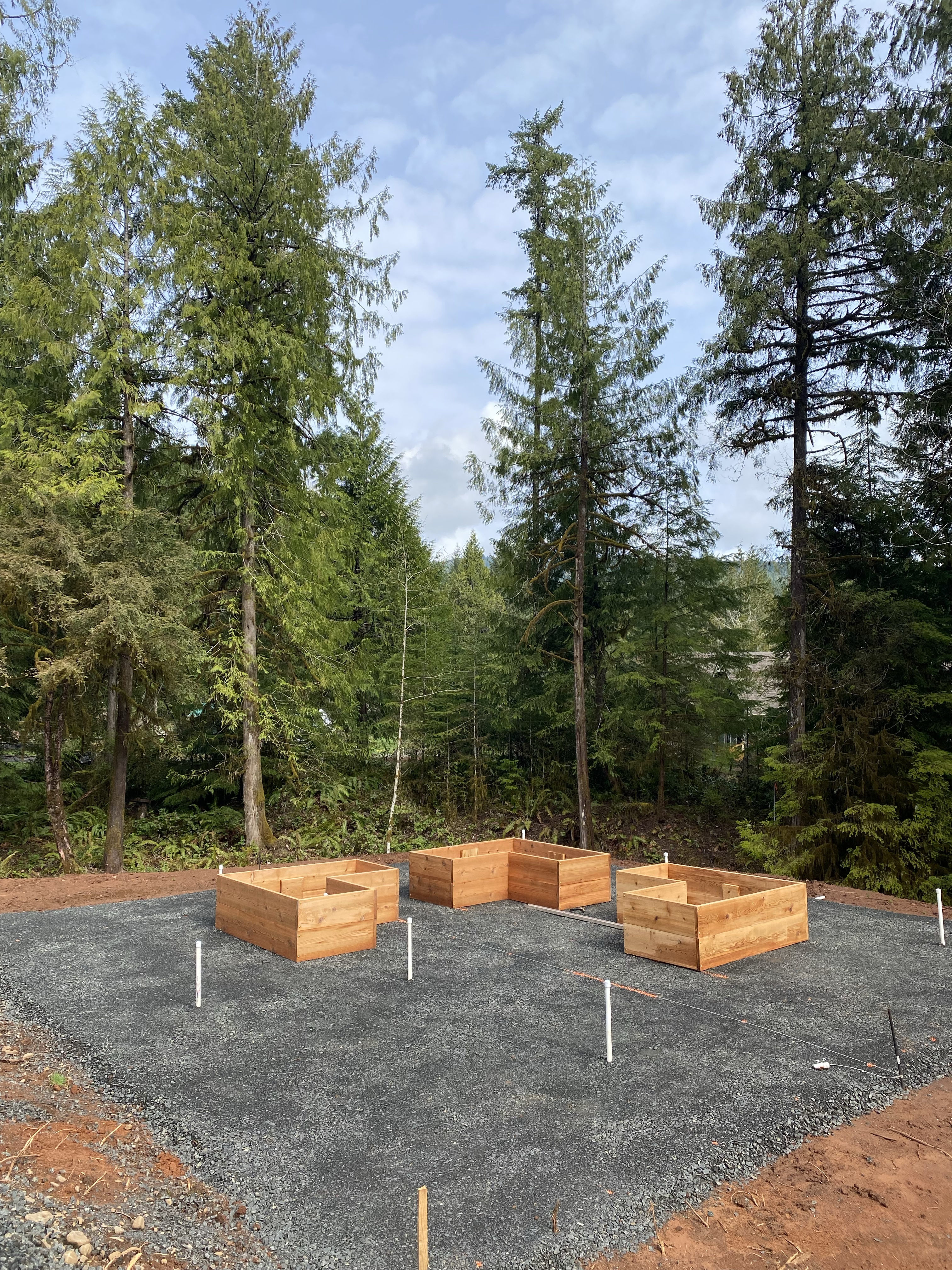
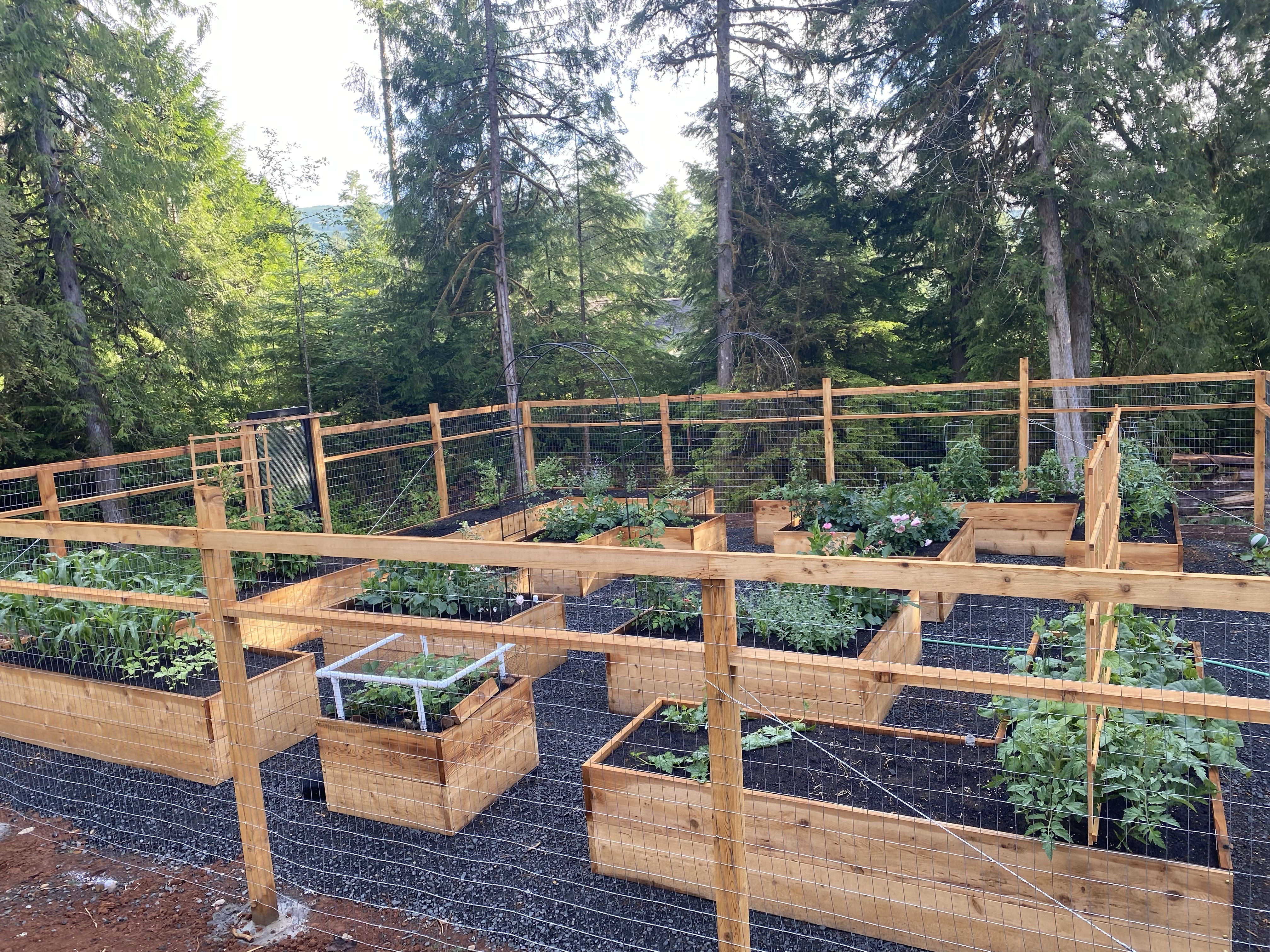
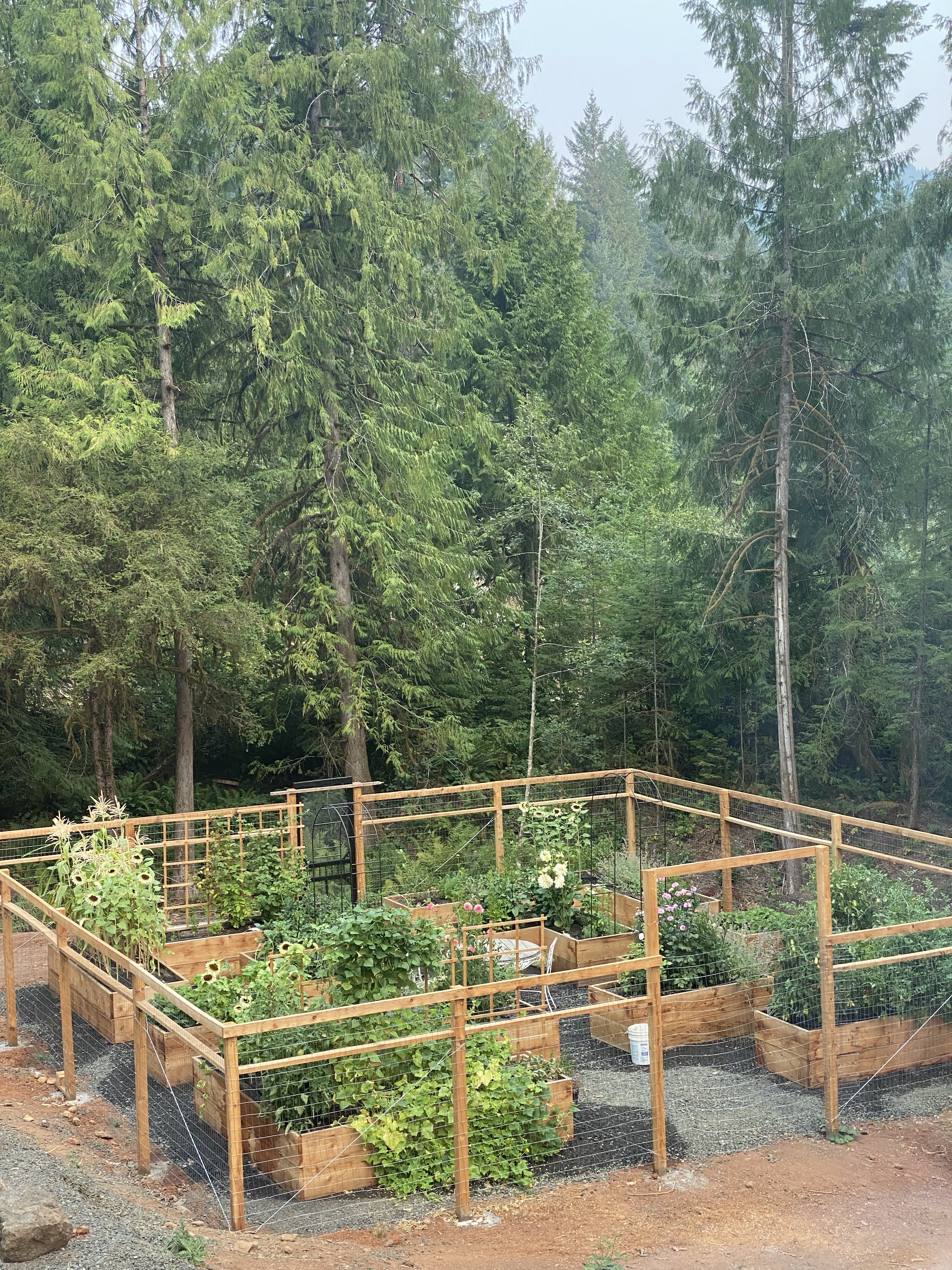
Because the area was so sloped and undulating to begin with (and covered in giant logs), we weren’t sure how much space we would end up with. But we ended up with a 33′ x 33′ area for the garden. And here’s a look at my plan (each square represents 3′ x 3′) and the gray areas represent the raised beds:

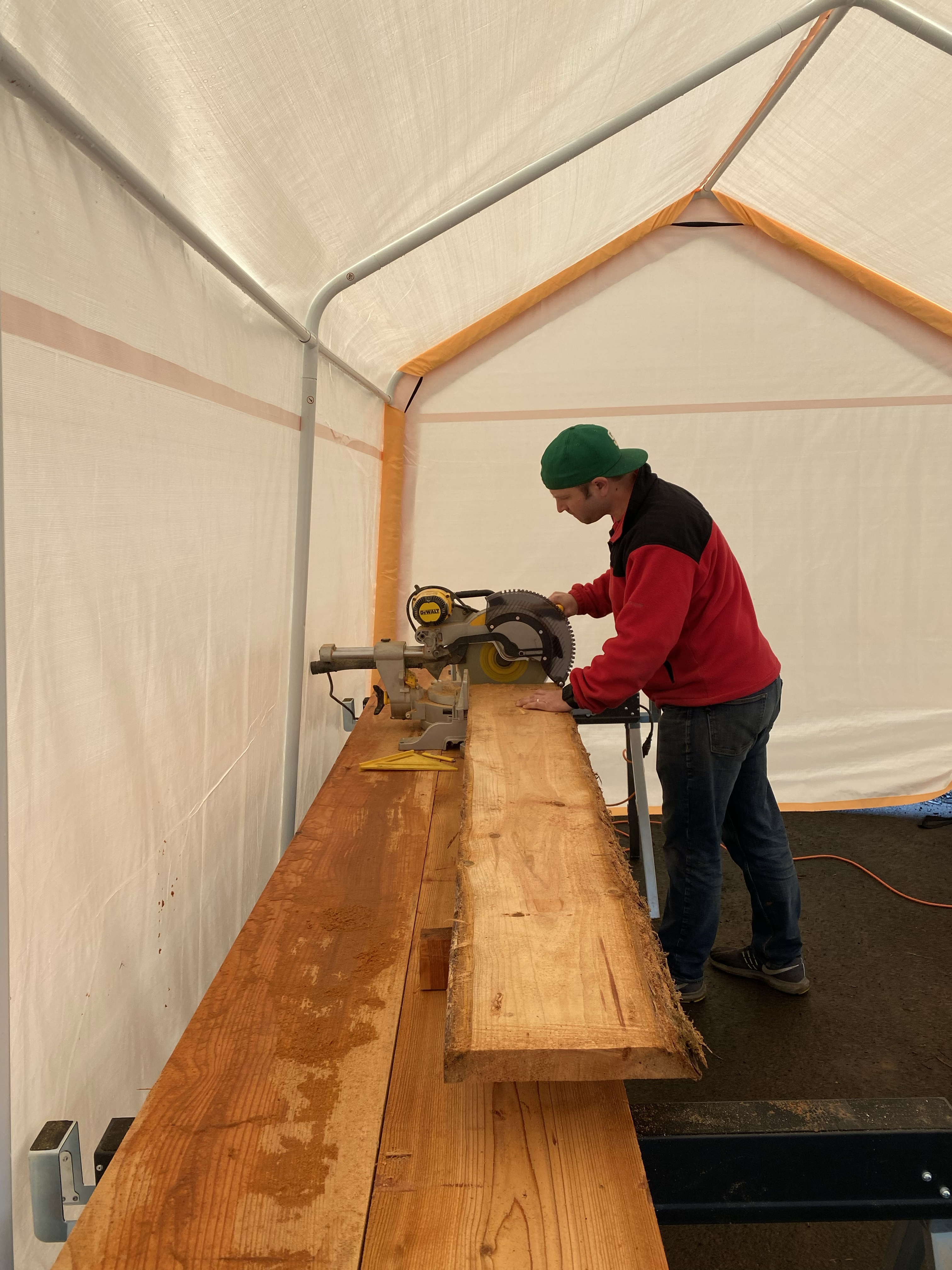
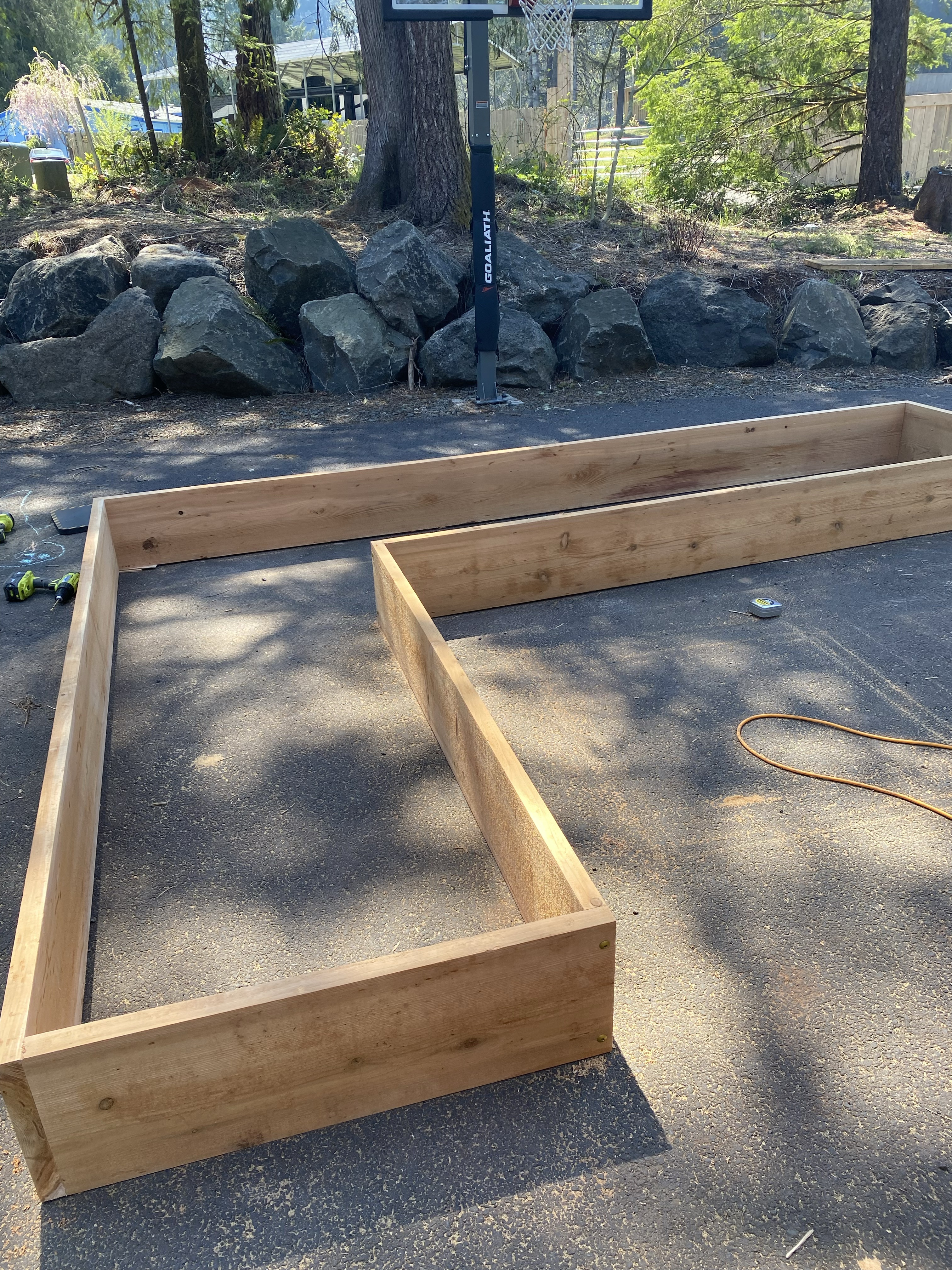
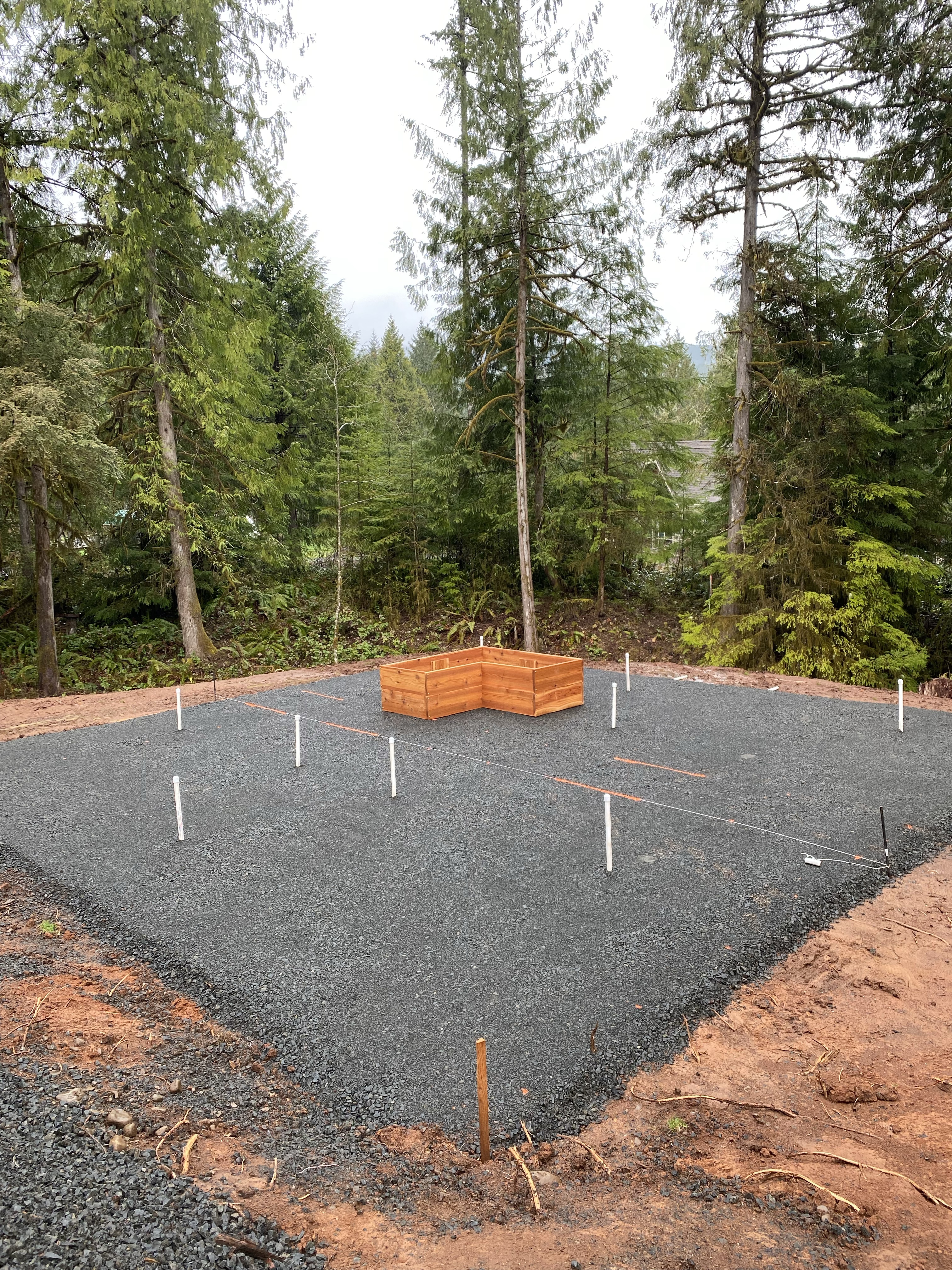
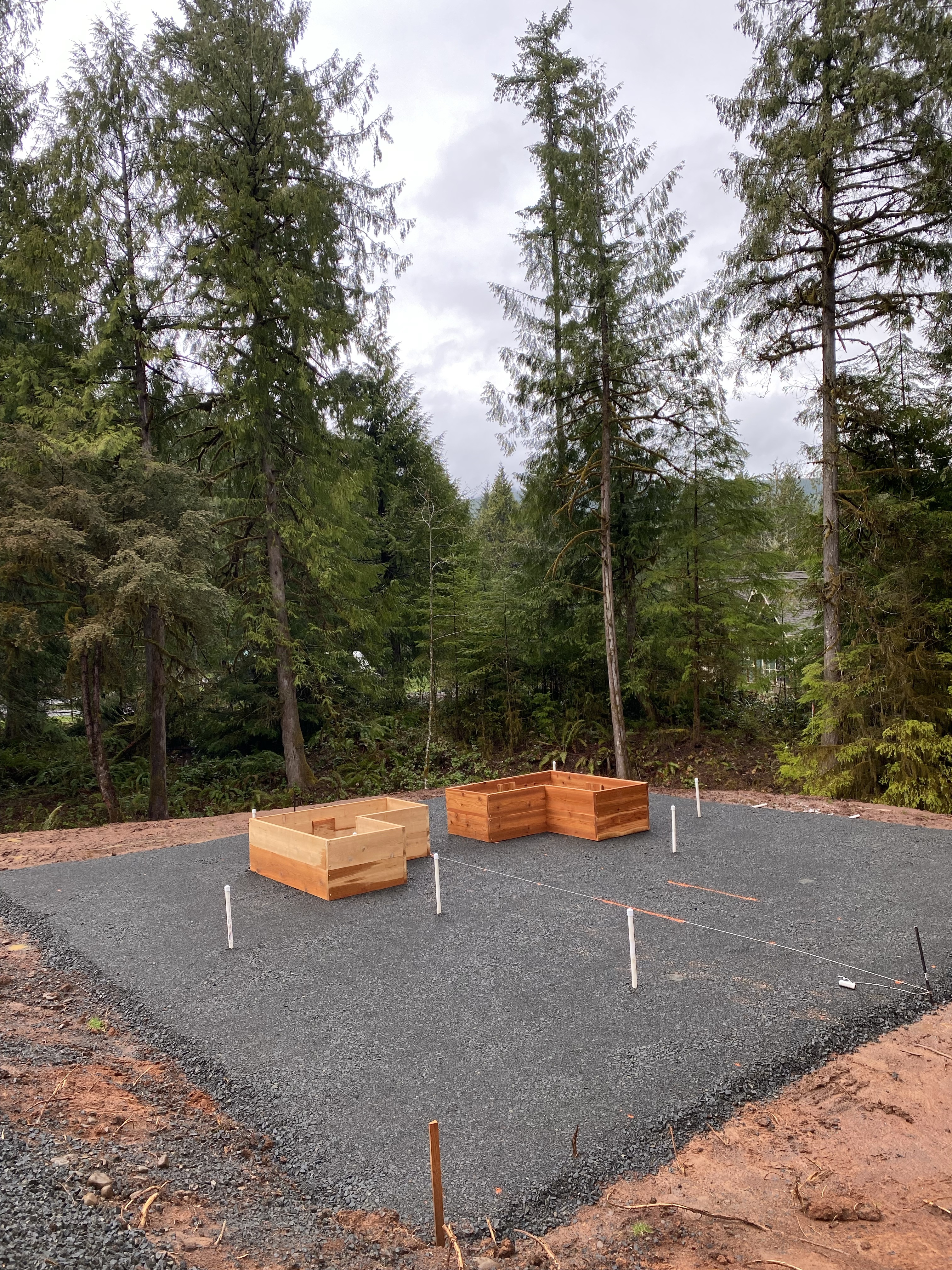
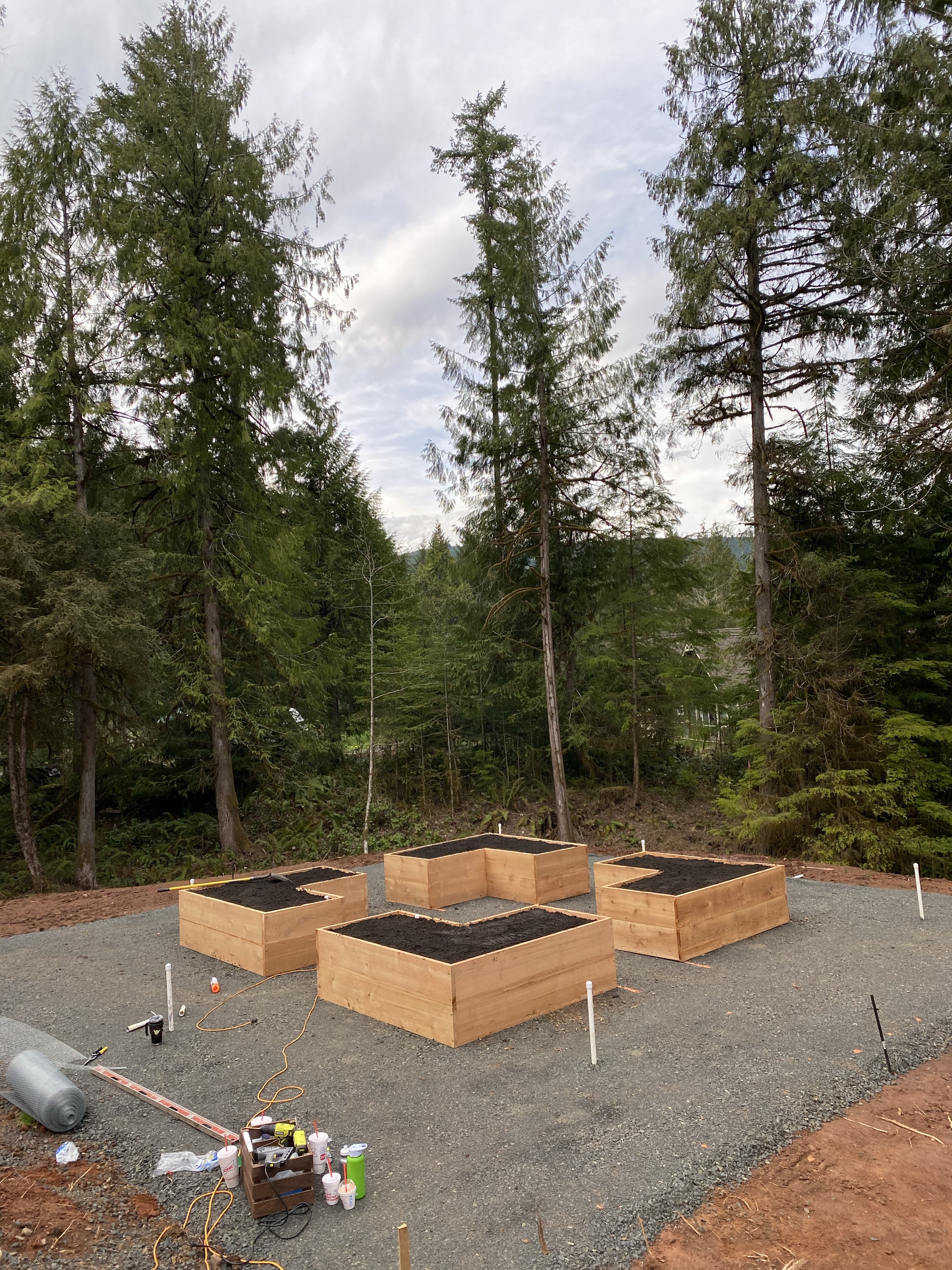
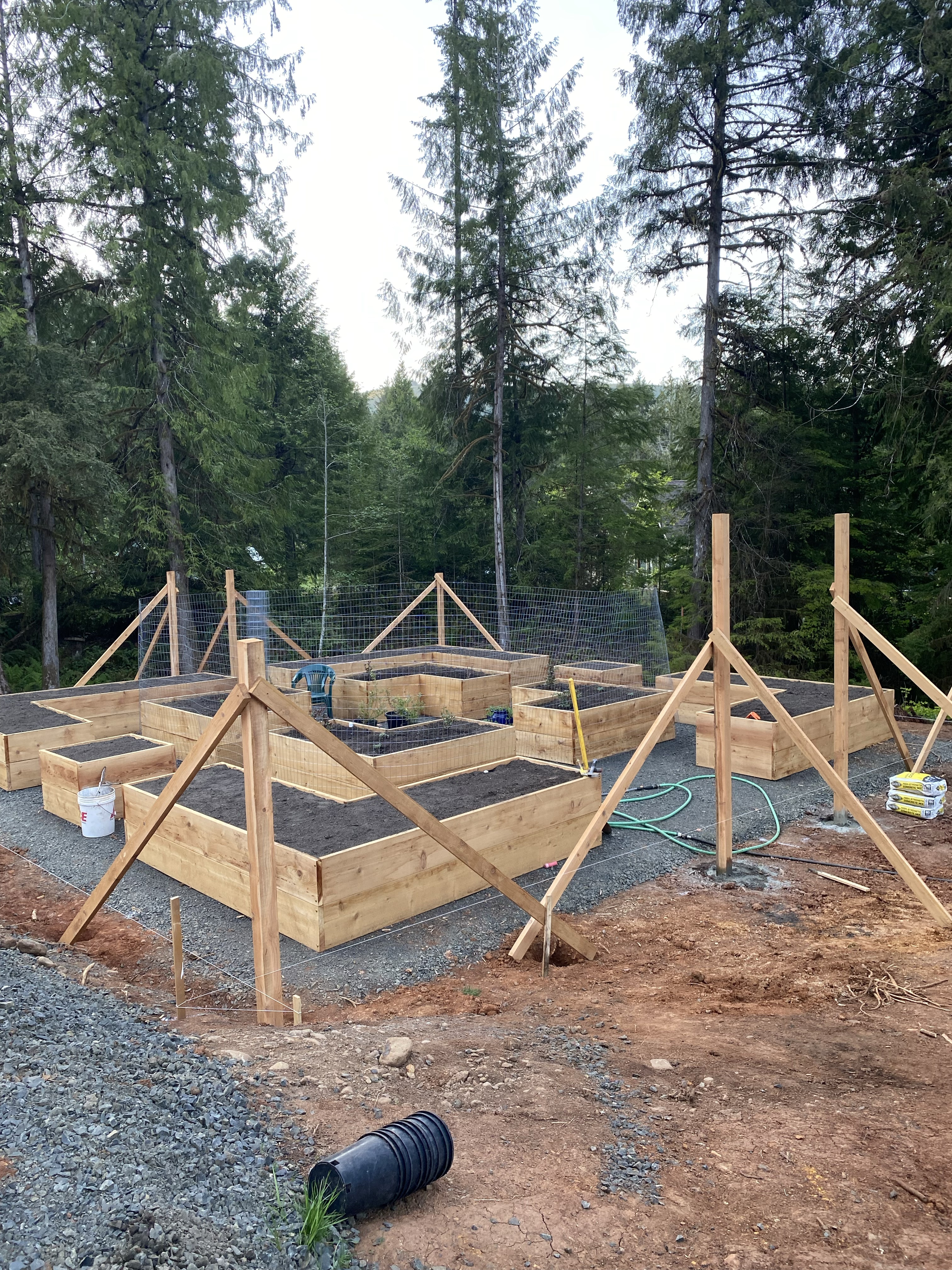
Once the milled wood was delivered, sorted, and stored, we started building the beds with two rows of 2′ x 12′ cedar boards. We added wire at the bottom of the beds to keep out pests like gophers. And lined them with black plastic to try to slow down future decay within the beds. We used stakes and string lines to get everything lined up just perfectly.

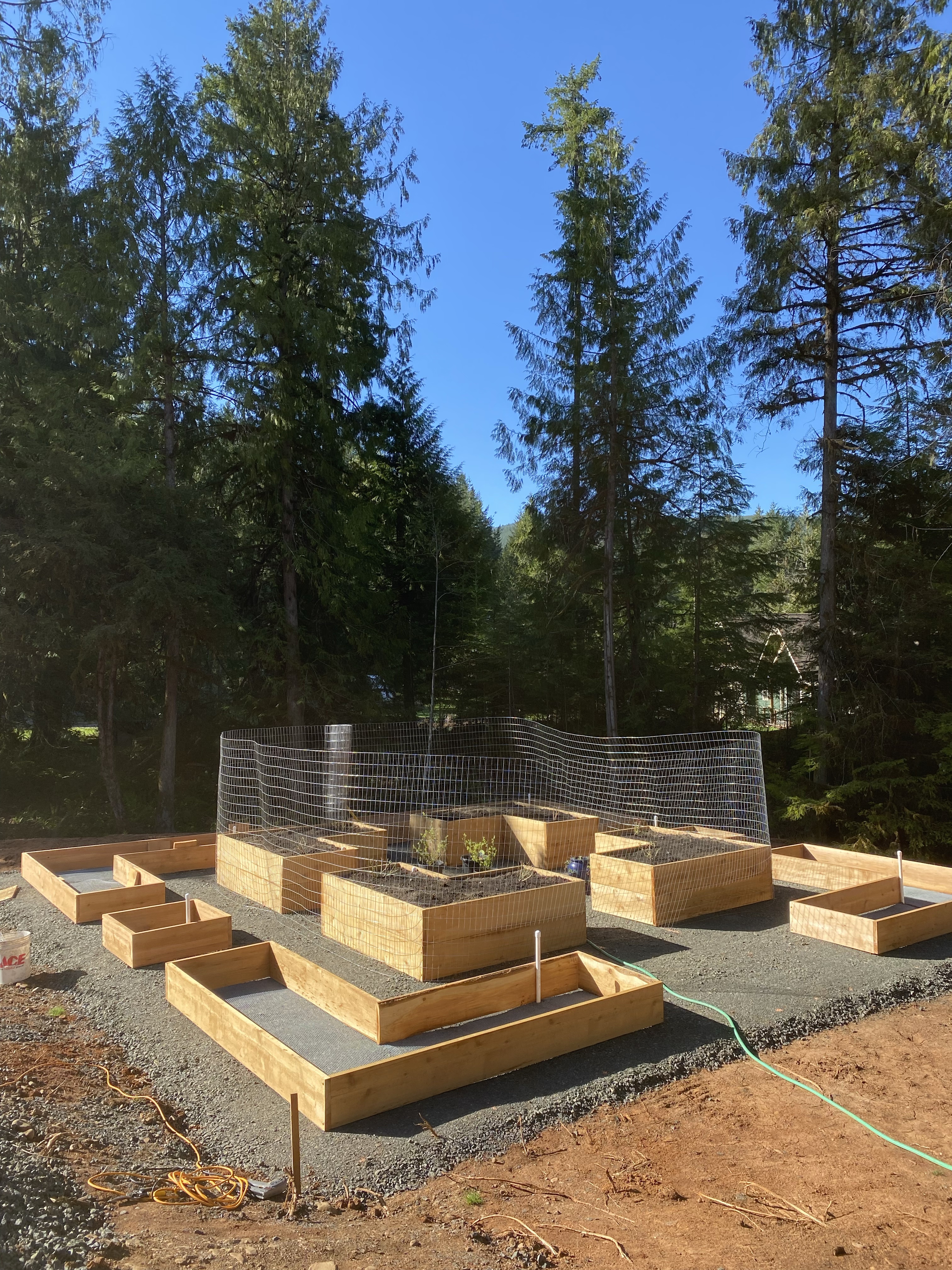
Soil and fencing came next. We partially filled the beds with wood chips from the logging process, then added good soil on top. The fence ended up being a LOT more difficult than we anticipated but so very necessary with the bold deer we have out here. We did end up staining the fencing the following summer.

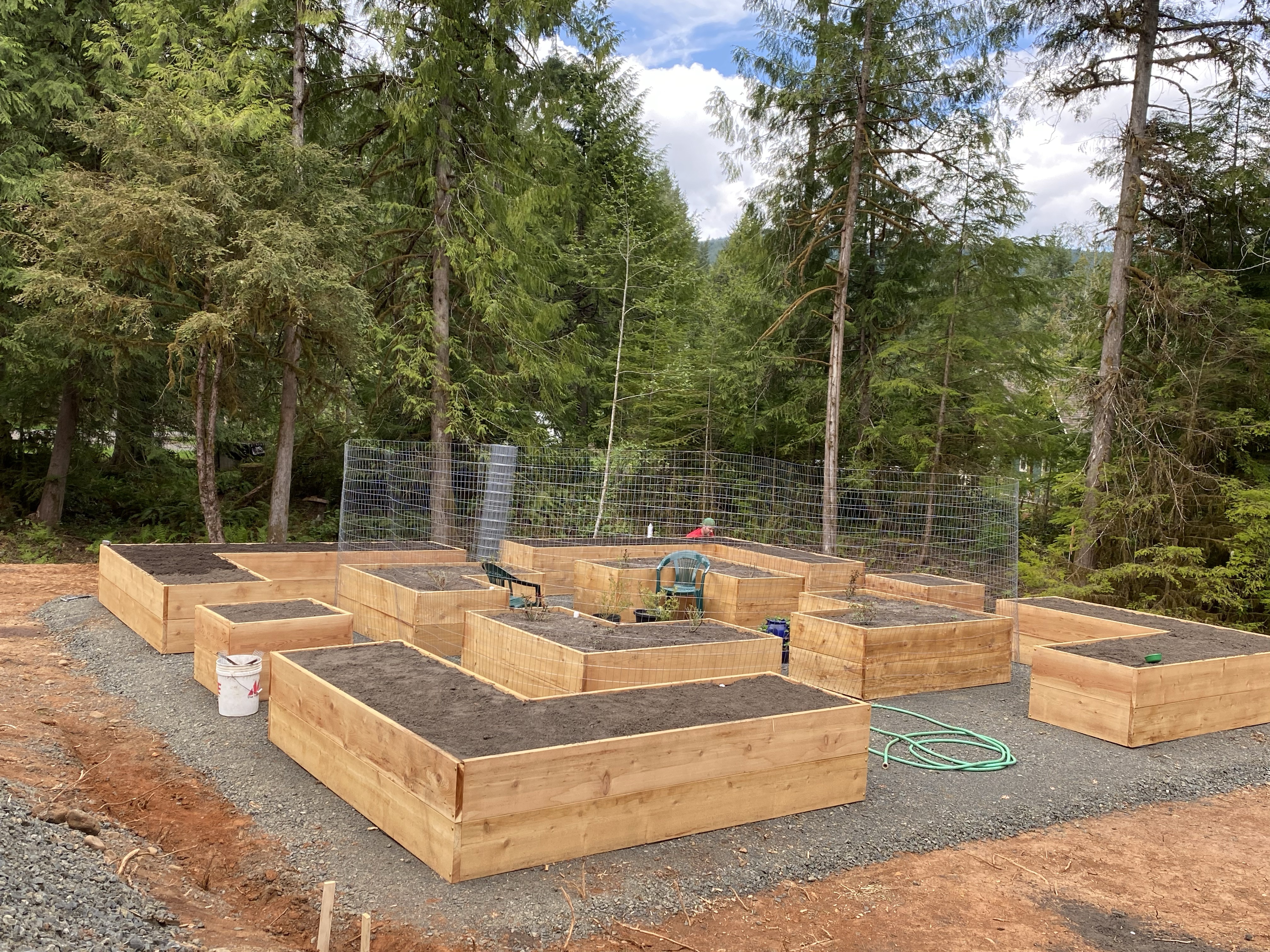
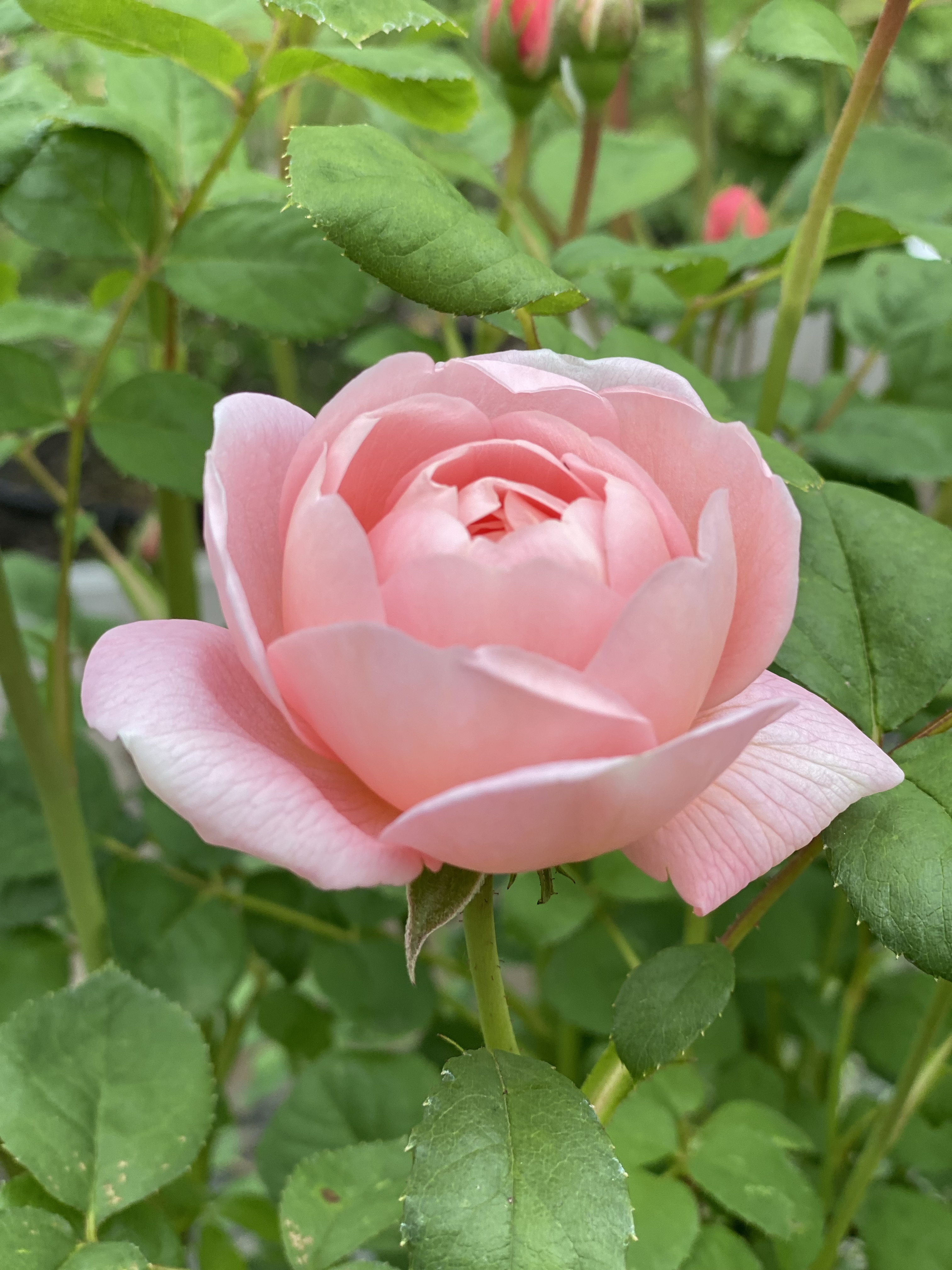
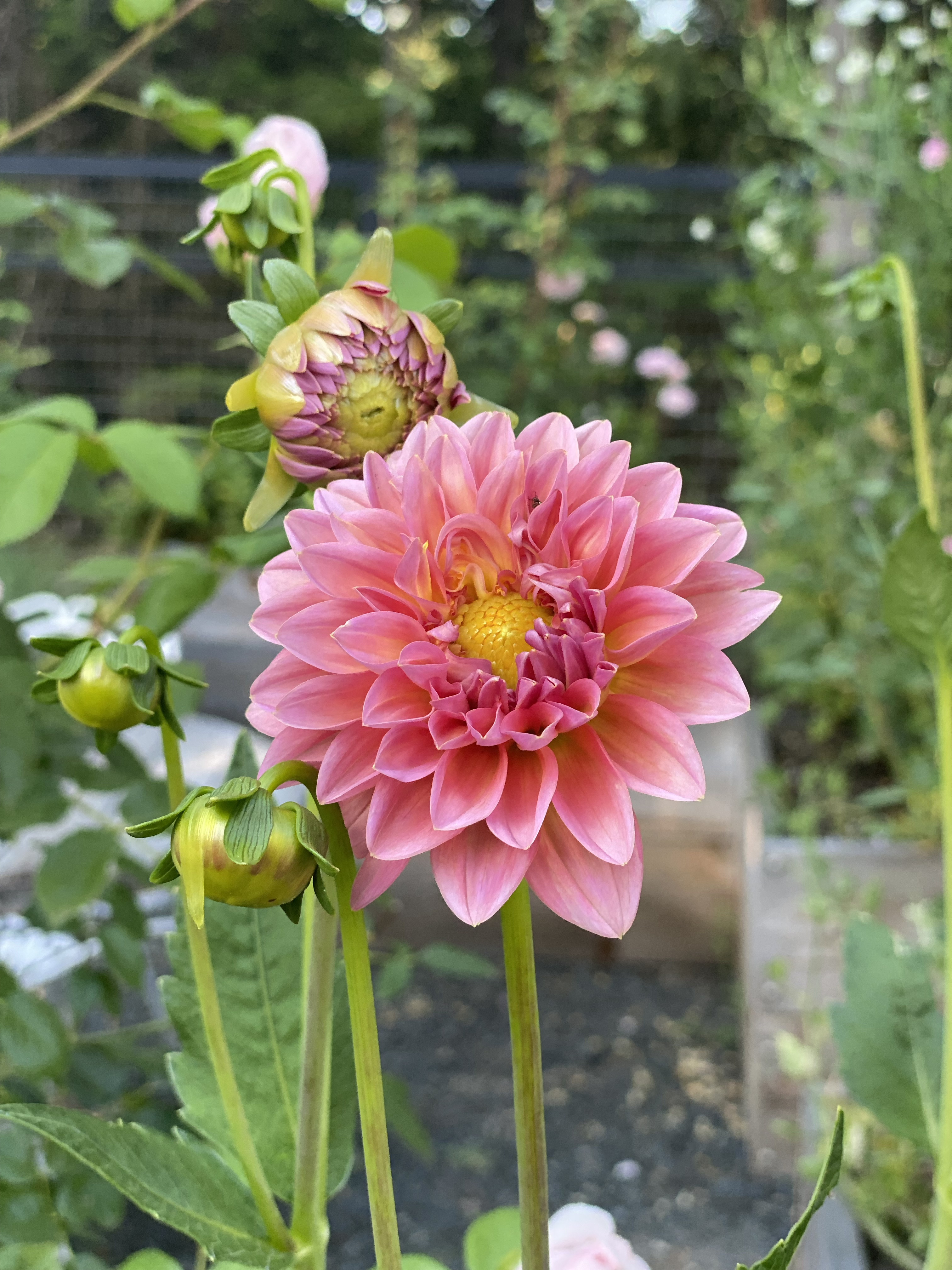
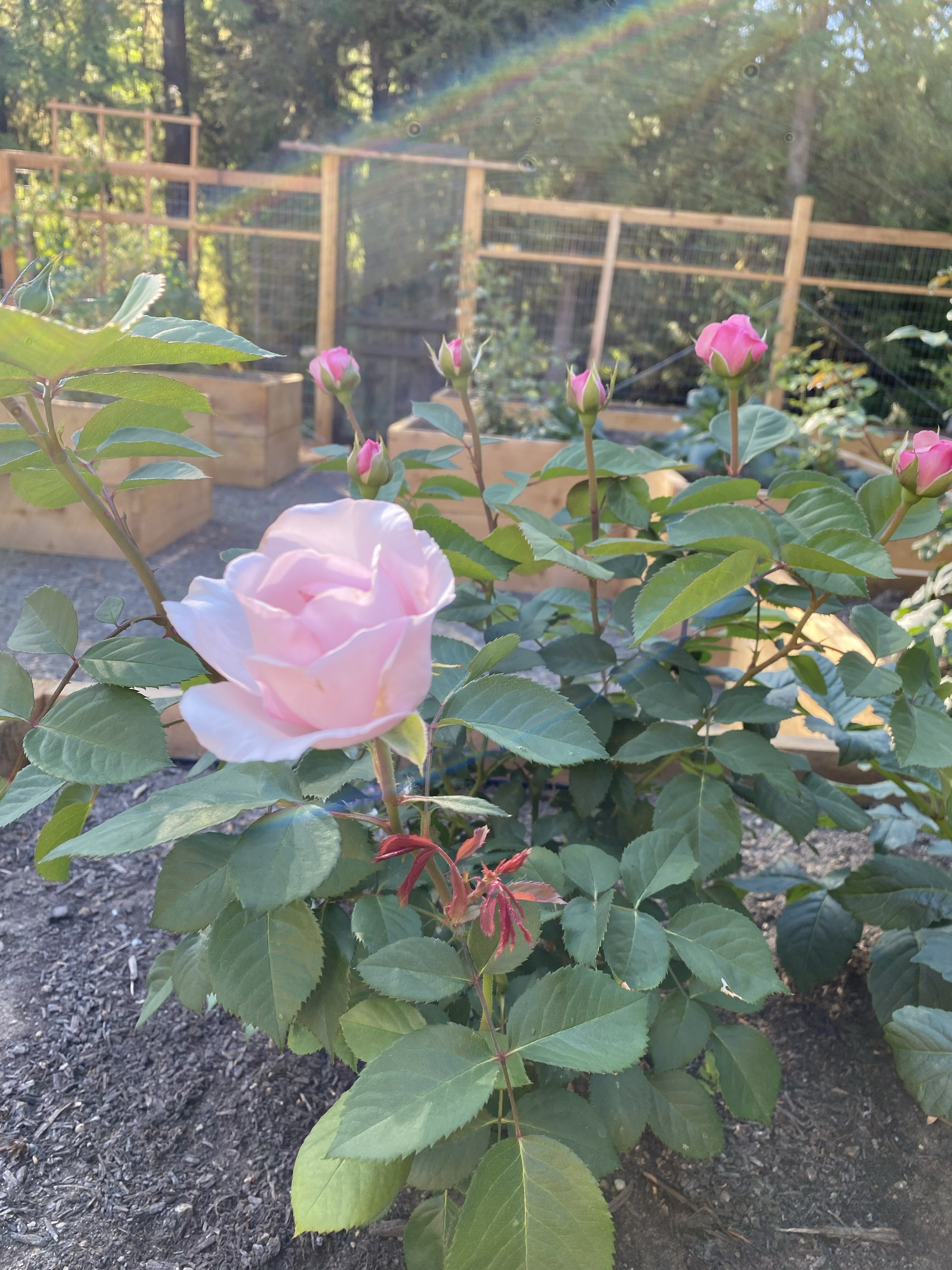
Finally, I had the chance to start planting! I started with David Austin bare root roses in the center of the garden. I planted so many gorgeous varieties including Queen of Sweden, Olivia Rose Austin, Bascobel (my favorite), Lichfield Angel, Charlotte (obviously), Desdemona, and The Generous Gardener. I have since also added Princess Alexandra of Kent and The Alnwick Rose. I also planted dahlia tubers including Wizard of Oz, Cafe Au Lait, Breakout, Thomas Edison, Moor Place, Sweet Nathalie, and Linda’s Baby. All gorgeous! The outer beds were planted with various fruits and veggies.

I can’t even explain the sheer joy when the first rose started blooming. It was the culmination of a giant project and the magic of gardening. How does a dried-out stick turn into something as magical as a fragrant, delicate rose? Gardening has become a bit like parenthood in many ways for me. It’s a beautiful reminder of the miracle of life, God’s creativity on display, and they just delight me (kids and plants).

The garden came together beautifully. It was a huge project that we enjoyed and that the entire family will enjoy for years to come. The kids love picking strawberries and Kyrie is a verified plant lady already. Our dying trees gave back to new life, new miracles, new delights. Now I spend summers visiting and tending to my plants, marveling at each bloom, each harvest.

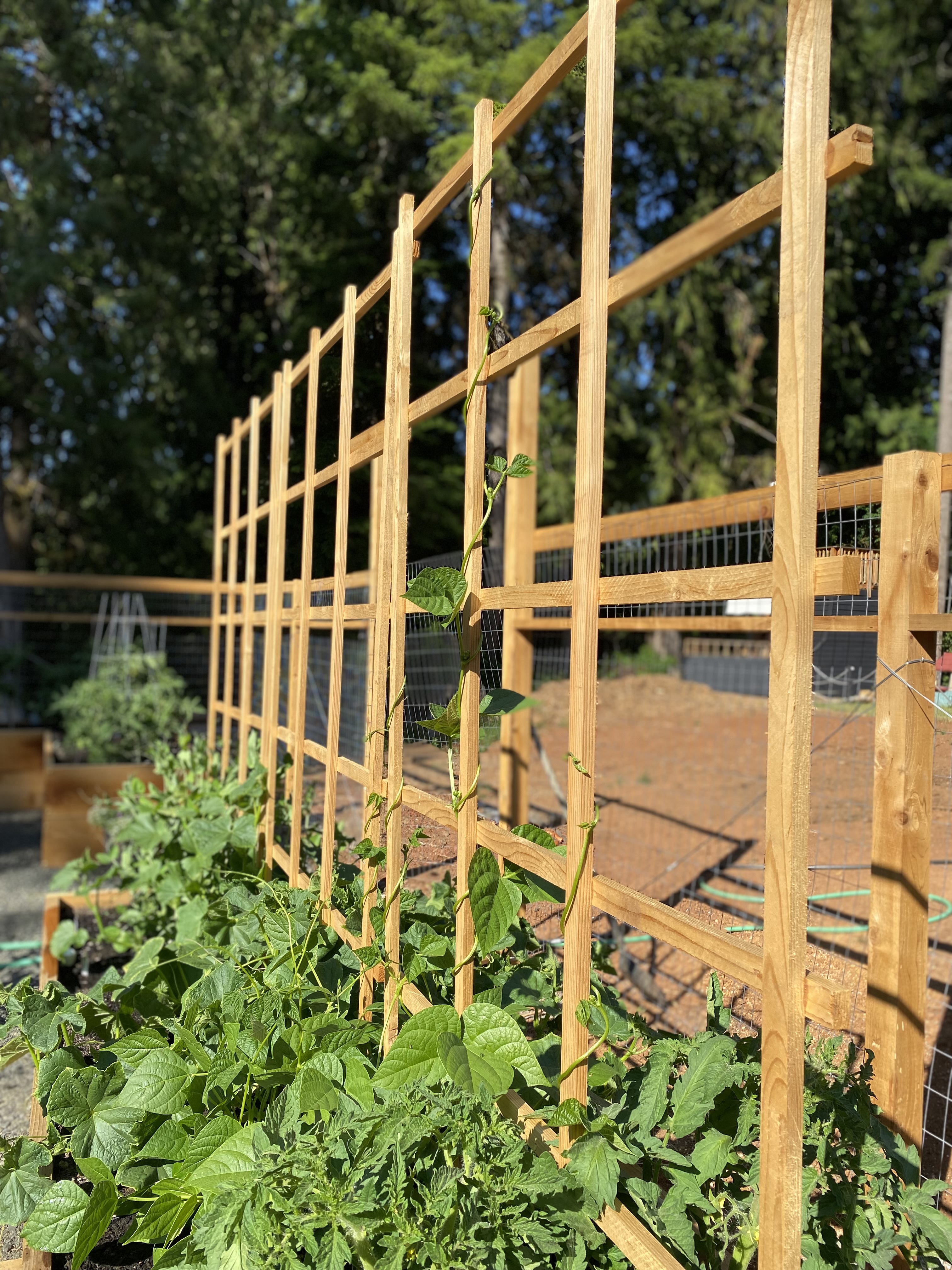
It hit me one evening as I was picking green beans for dinner, how novel it felt to be able to walk outside and gather part of our meal. Novel and so very satisfying. I started those green beans from tiny seeds! It also occurred to me that Ryan’s grandmother (an avid gardener) would have laughed at me for that thought. For so long gardening was an essential part of life, not a hobby. Amazing how quickly things change just within a couple of generations. I’ve enjoyed getting back to some of these basics out here in the Lost Wood Garden.

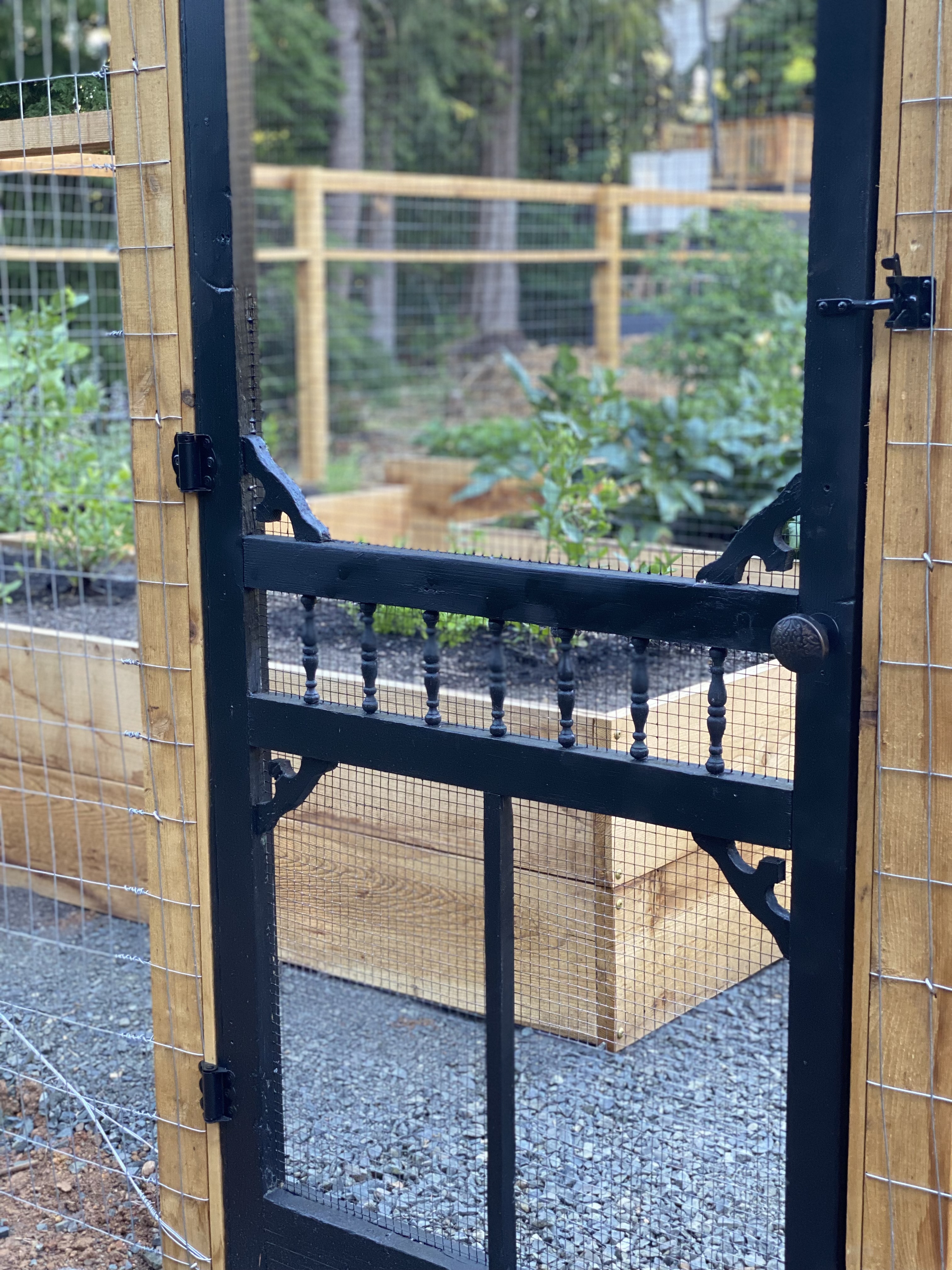
We put an antique screen door on the back entrance and plan to build an arbor entrance on the front. But that’s another project for another day!

XO,

—h

P.S. This all led to the building of our Not-Green Greenhouse, you can read about that here.

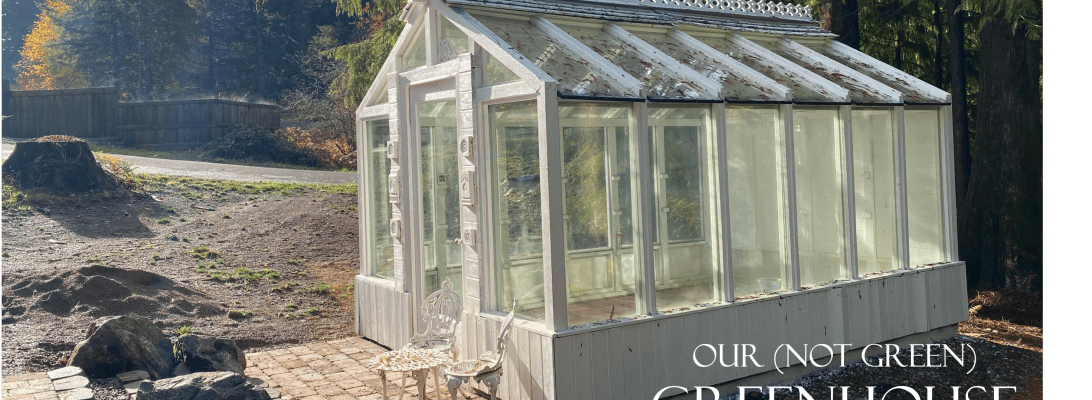
The Green’s (Not-Green) Greenhouse

Can normalize how long home projects really take? If you follow influencers on social media like I do, they are finishing projects in mere days or at least that’s how it’s presented. I find myself feeling like I’m not doing enough, moving fast enough, not hustling enough, basically not enough. I know it isn’t true, I know it, but it can feel overwhelming at times. Projects just do not get done in mere days. Try months and months and months.

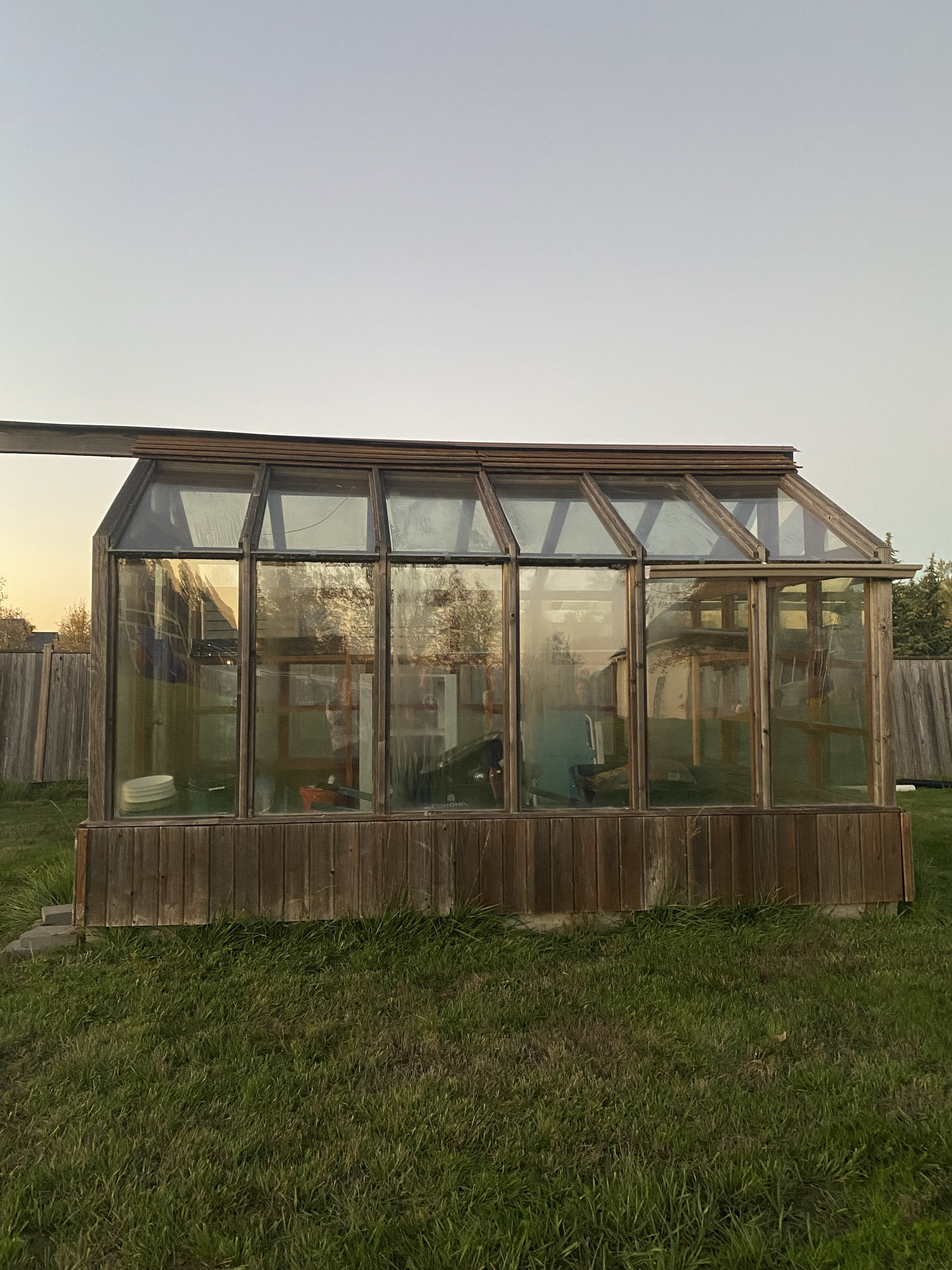
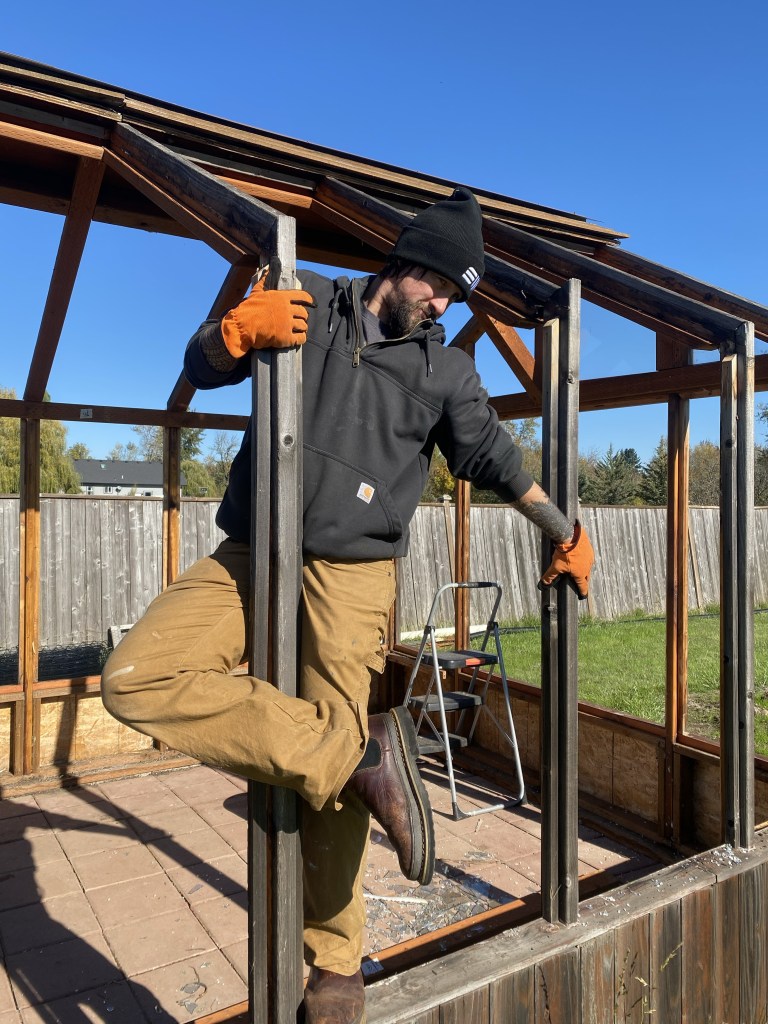
Last October Ryan was chatting with a friend and coworker, Steve, who mentioned he was planning to demo an old greenhouse on their property. Ryan, who really is the best husband a girl could ask for, immediately started asking more questions. It turns out the greenhouse itself was in great shape, but the foundation was starting to crumble and Steve and his wife didn’t need a greenhouse. If we were interested, we disassemble it and the greenhouse would be ours.

We decided to go look at the greenhouse to see if it would work for our purposes and be worth the work. Ryan was driving and I was gazing out the passenger side of the car, I saw a greenhouse in the distance. I remember thinking, “Wow, that is such a cool greenhouse, too bad that isn’t the one we are going to see. I would love to have a greenhouse like that.” Then Ryan pulled into a driveway. The very driveway with the very cool greenhouse.

Yes, the foundation was crumbling. Yes, there was some siding falling off. Yes, there might be a rotting section or two. But overall the greenhouse was solid with real glass panes! It was going to be some work to disassemble, transport 30 miles, and reassemble, but this was the kind of greenhouse that a girl dreams about. Can you see the potential?

So here we go!

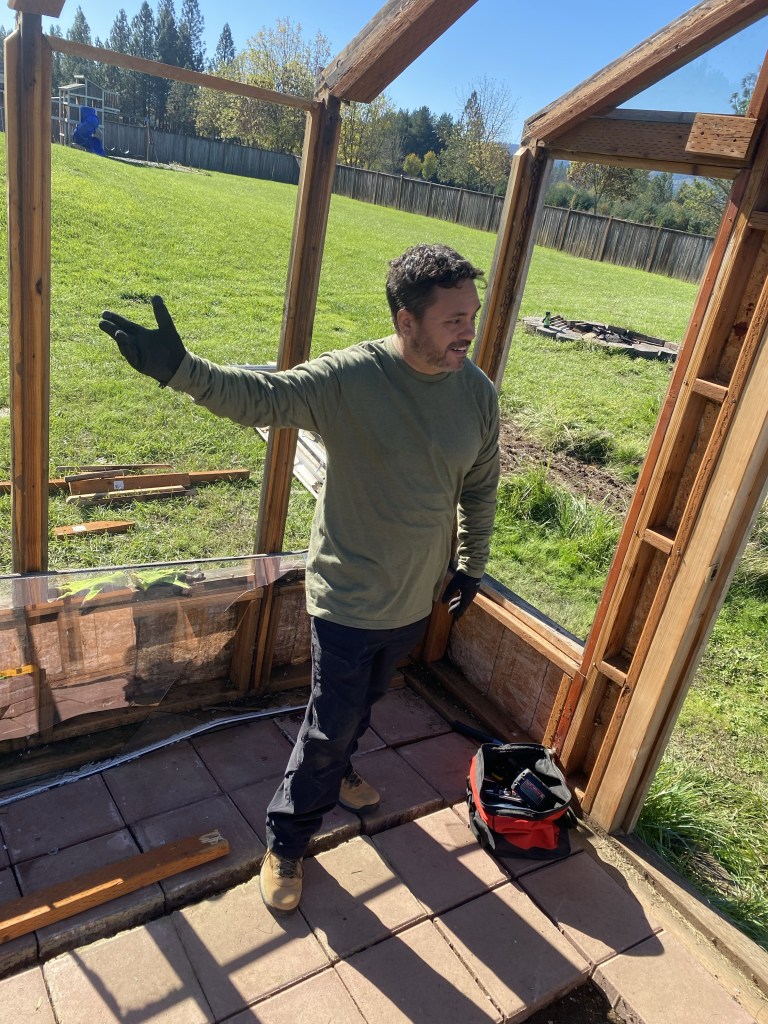
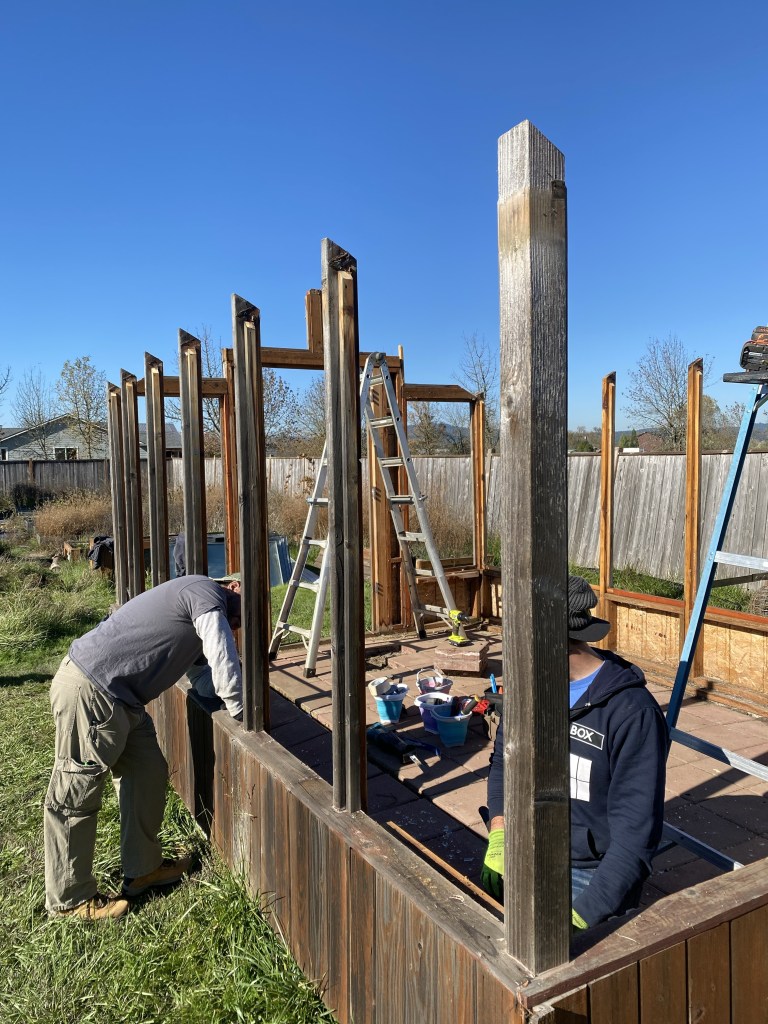
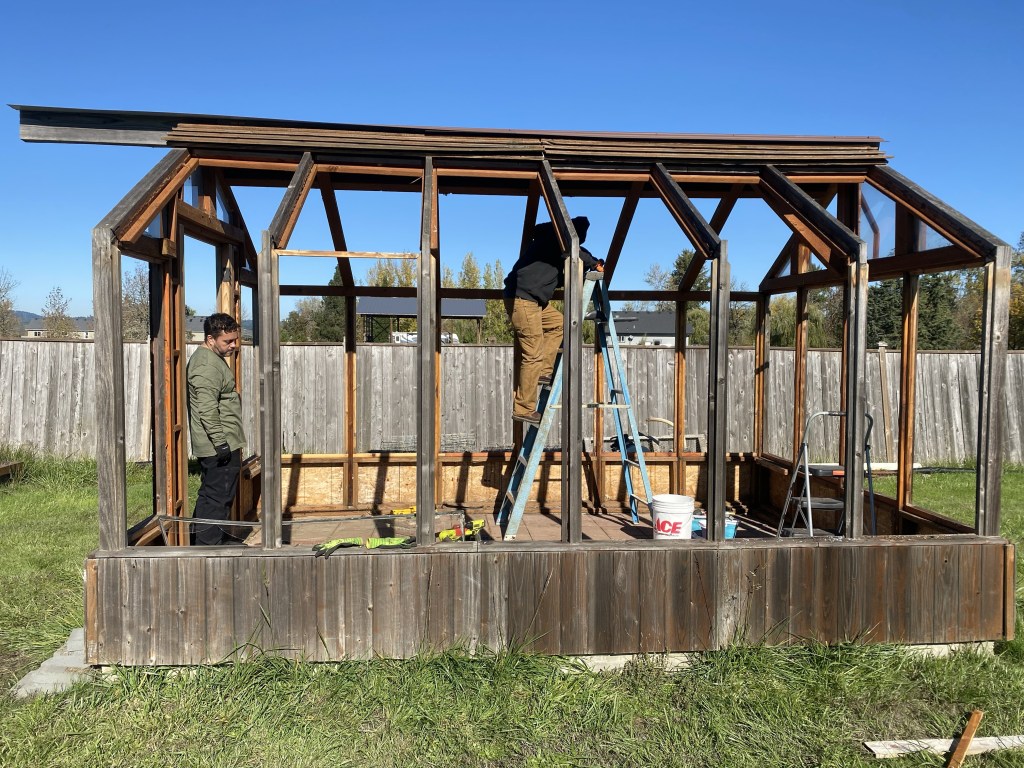
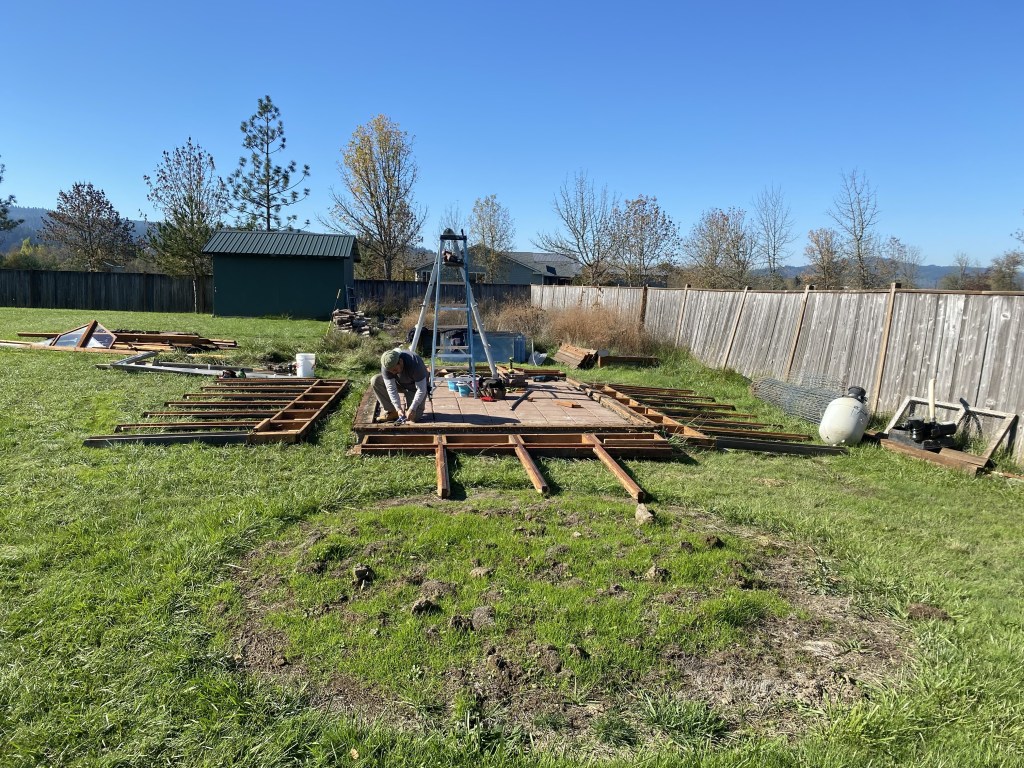
OCTOBER 2023: Ryan, my brother, and a few friends spent several weekends carefully disassembling the greenhouse and transporting it to our house in pieces. The glass panes were particularly tricky to get out and not break. A few broke.

NOVEMBER 2023: no progress

DECEMBER 2023: no progress

JANUARY 2024: Discussions began on where we were going to put the greenhouse. If you aren’t familiar with our property, while lovely, it is not flat. Anywhere. It is a series of slopes that don’t always make sense. And, for a greenhouse that wants sunshine, we have an inordinate amount of shade.

FEBRUARY 2024: Discussions continue. I reached out to an excavation company to see what it might take to level the two areas under consideration.

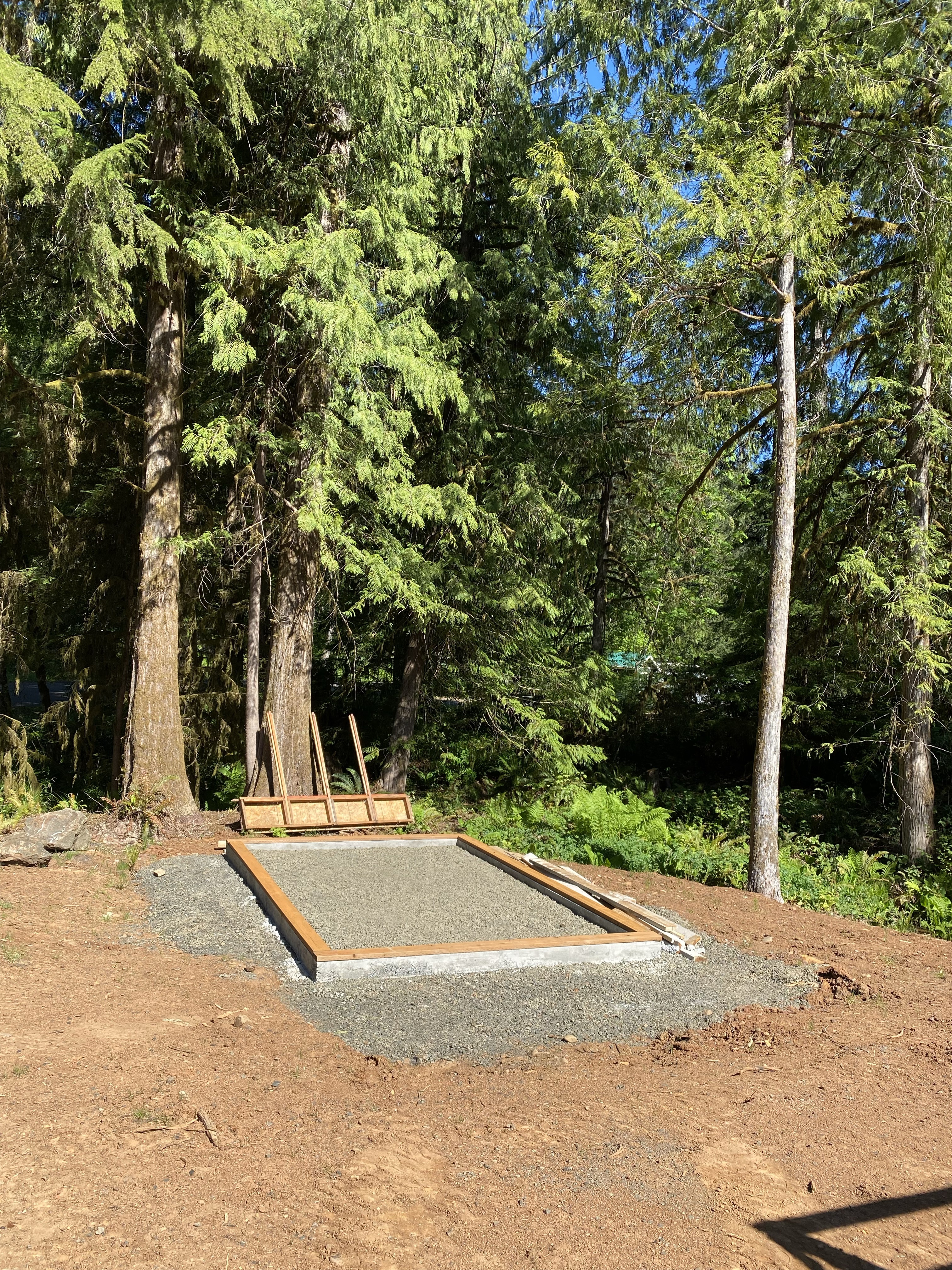
MARCH 2024: Greenhouse site chosen based on the amount of work it would take and amount of sunshine it would receive. Tree branch trimming commences. And don’t kill me, a few smaller trees needed to be removed to give the greenhouse as much sunshine as possible. Site excavation is completed and gravel pad created.


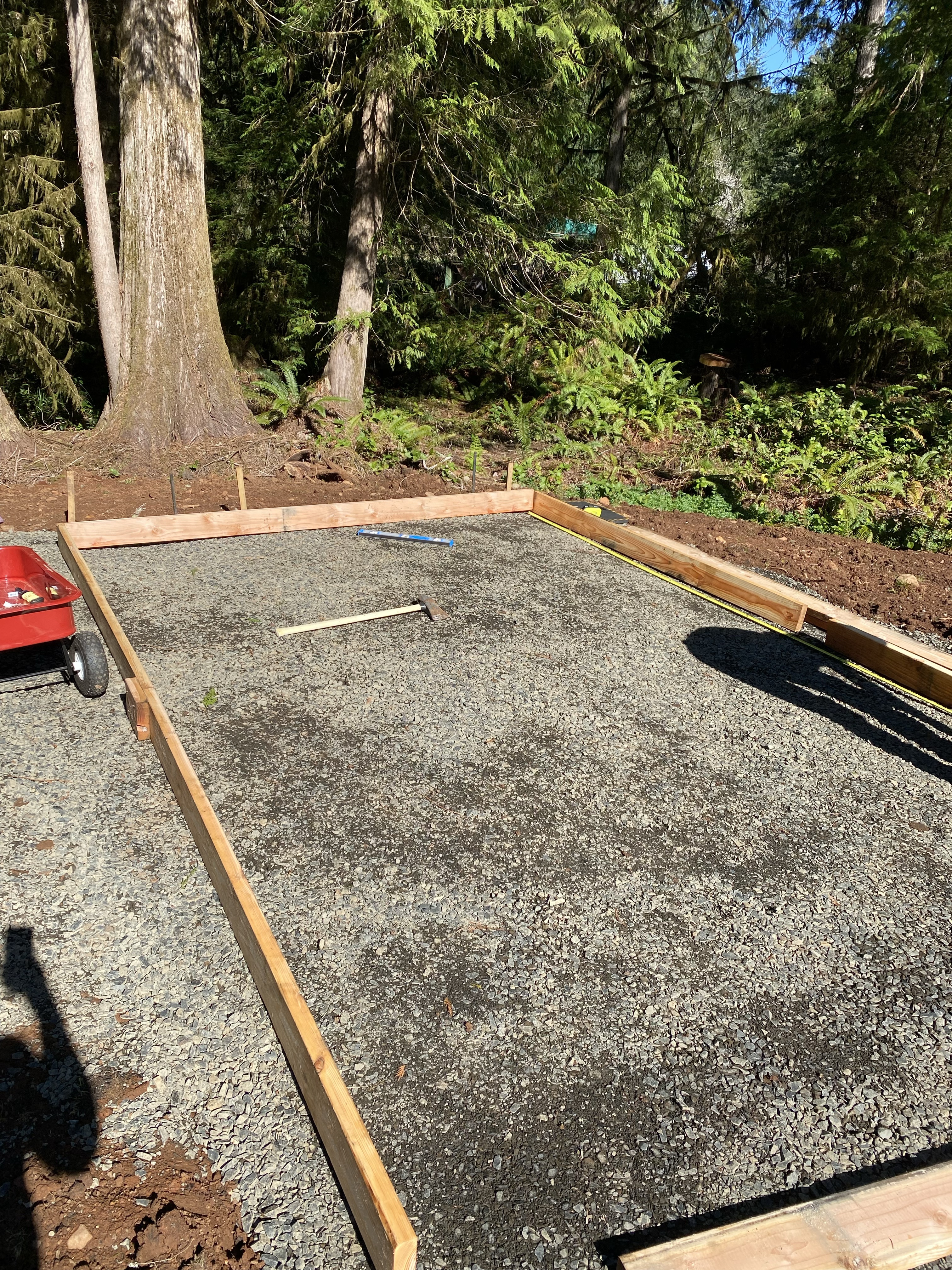
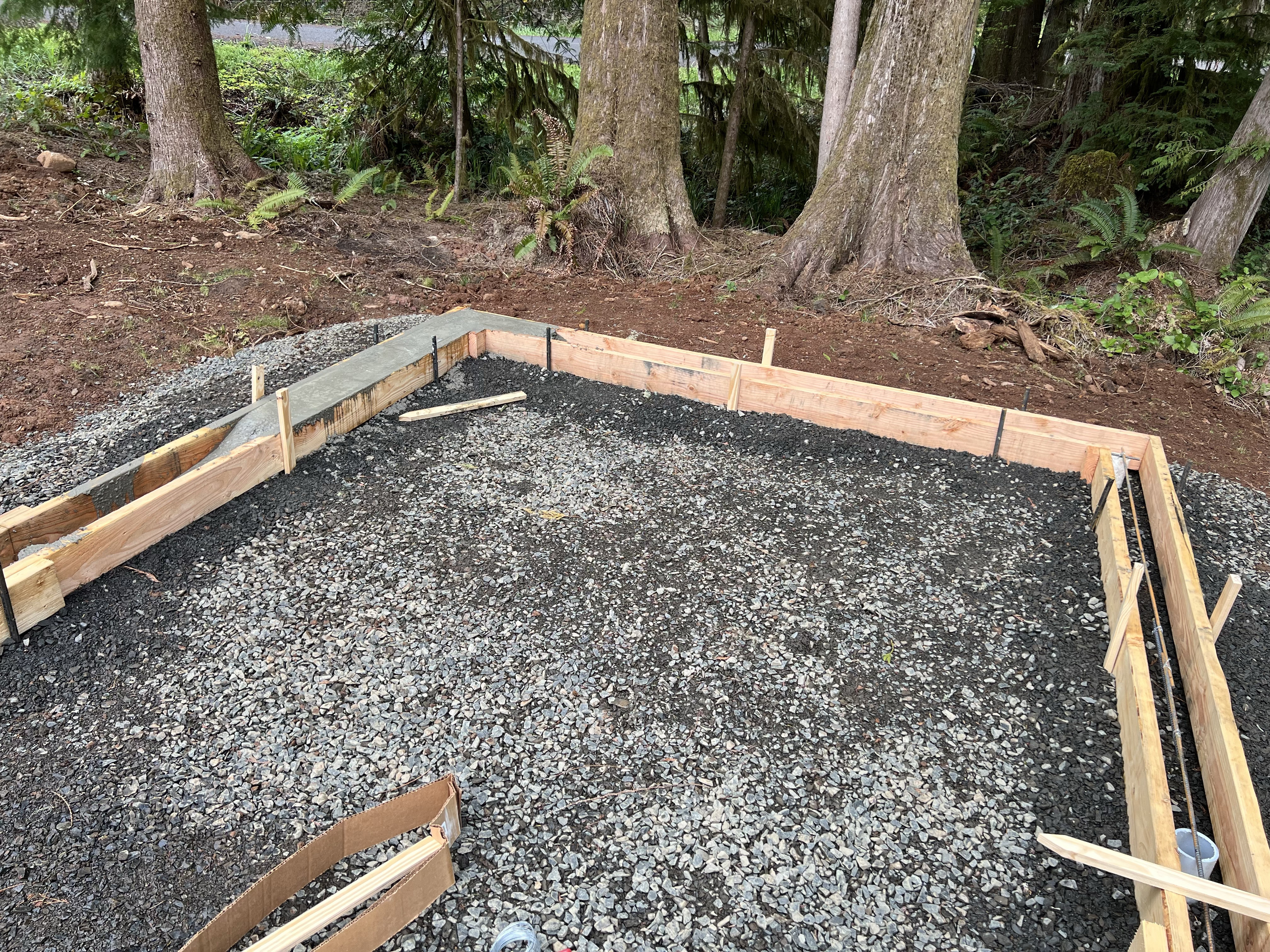
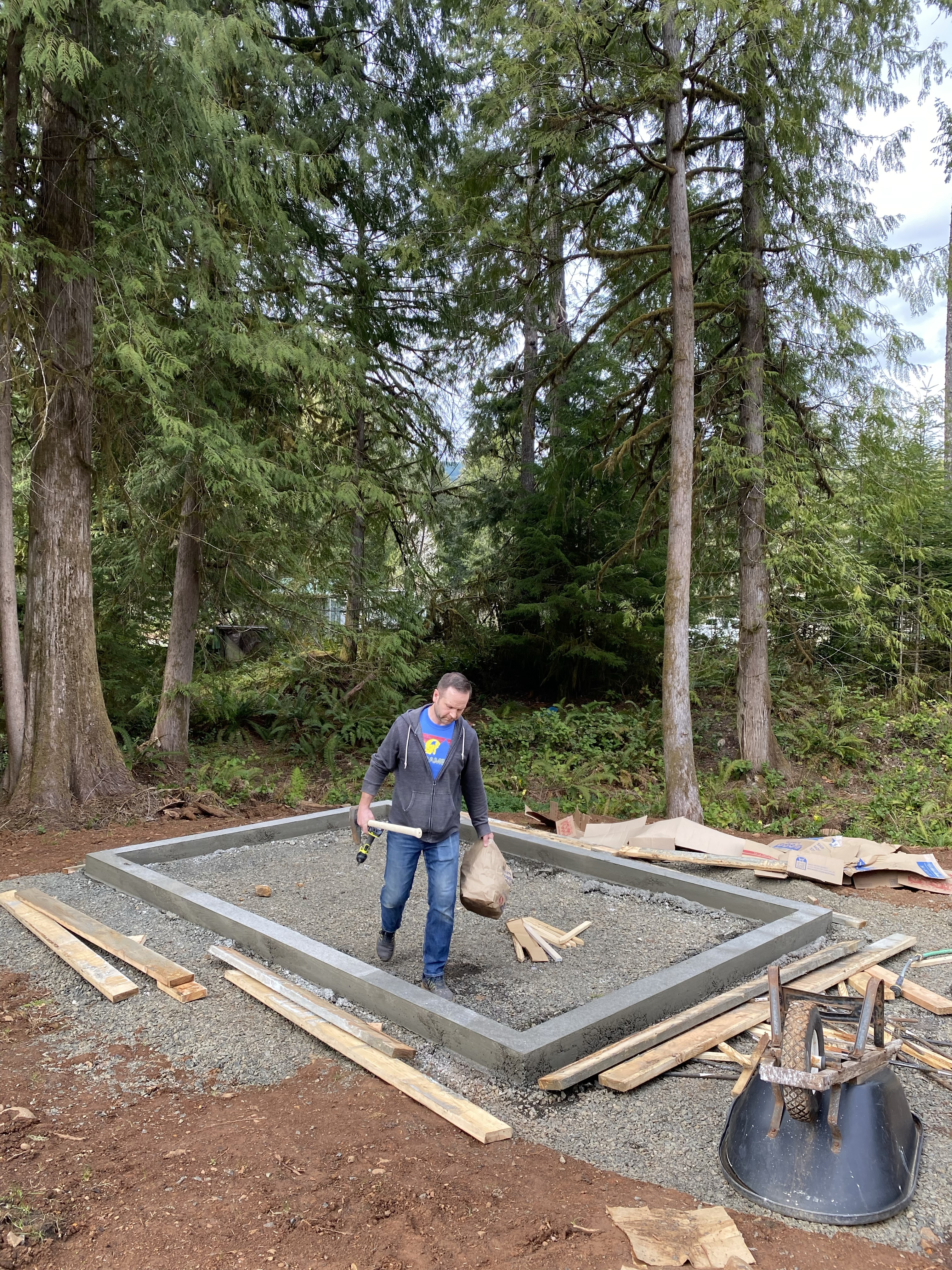
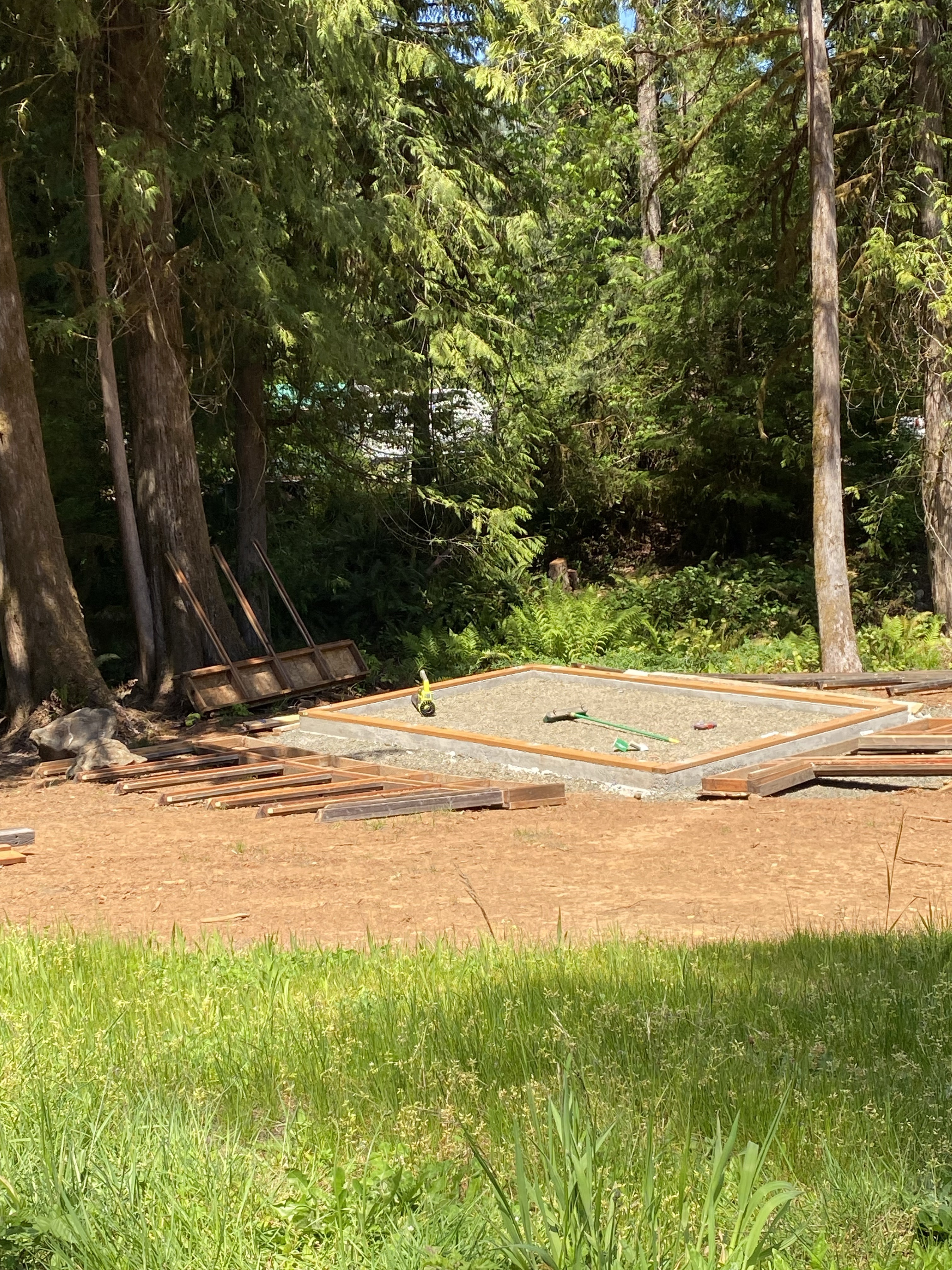
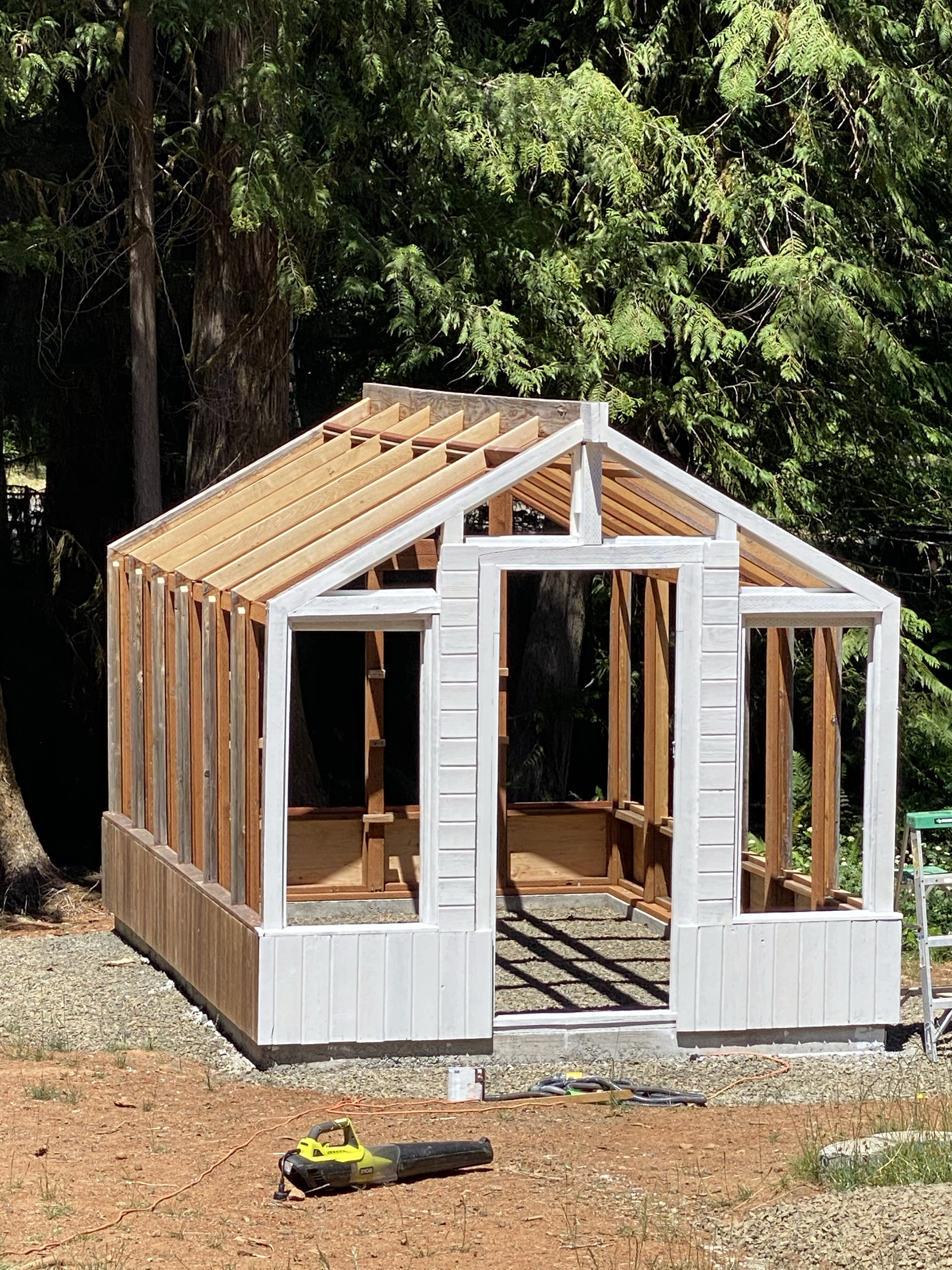
APRIL 2024: We built forms for the foundation. Poured the foundation. In a hilarious calculation error, we thought 3 bags of concrete would be enough for the foundation. That doesn’t even make logical sense, but we started the project confidently thinking we had enough. You can see below how much the three bags accomplished, one corner. My engineer brother, Bryan, especially loves this part of the story. We had to do a very quick run to the local hardware store to get like 20+ more bags. But those three bags were gonna do it. Ha!

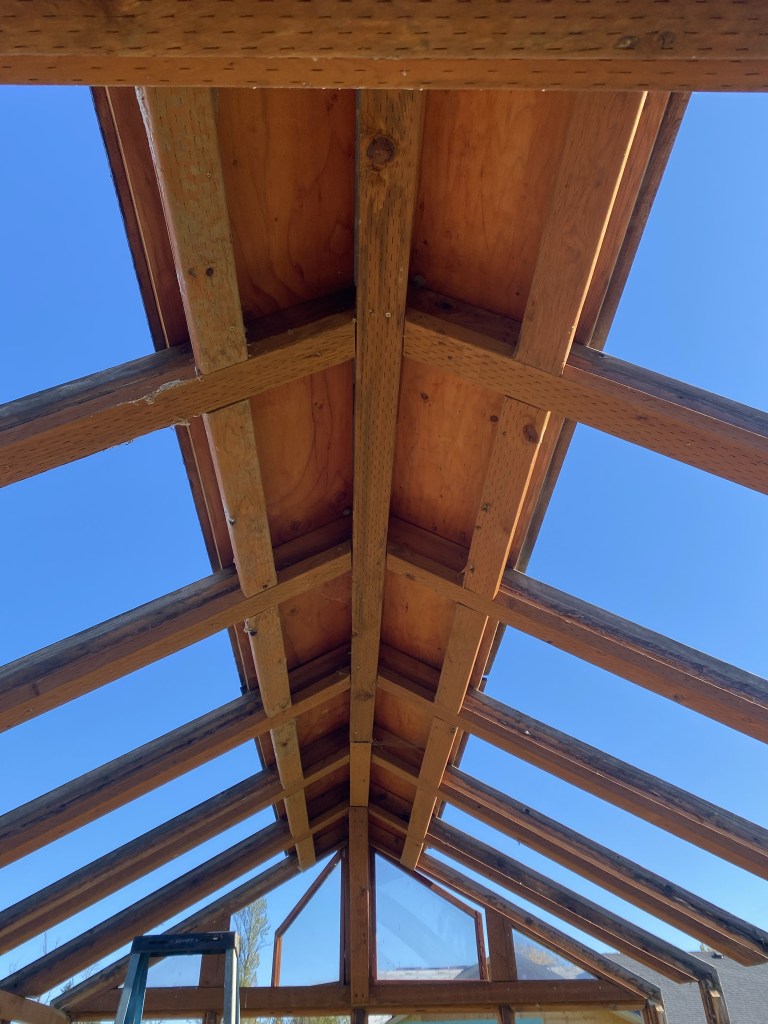
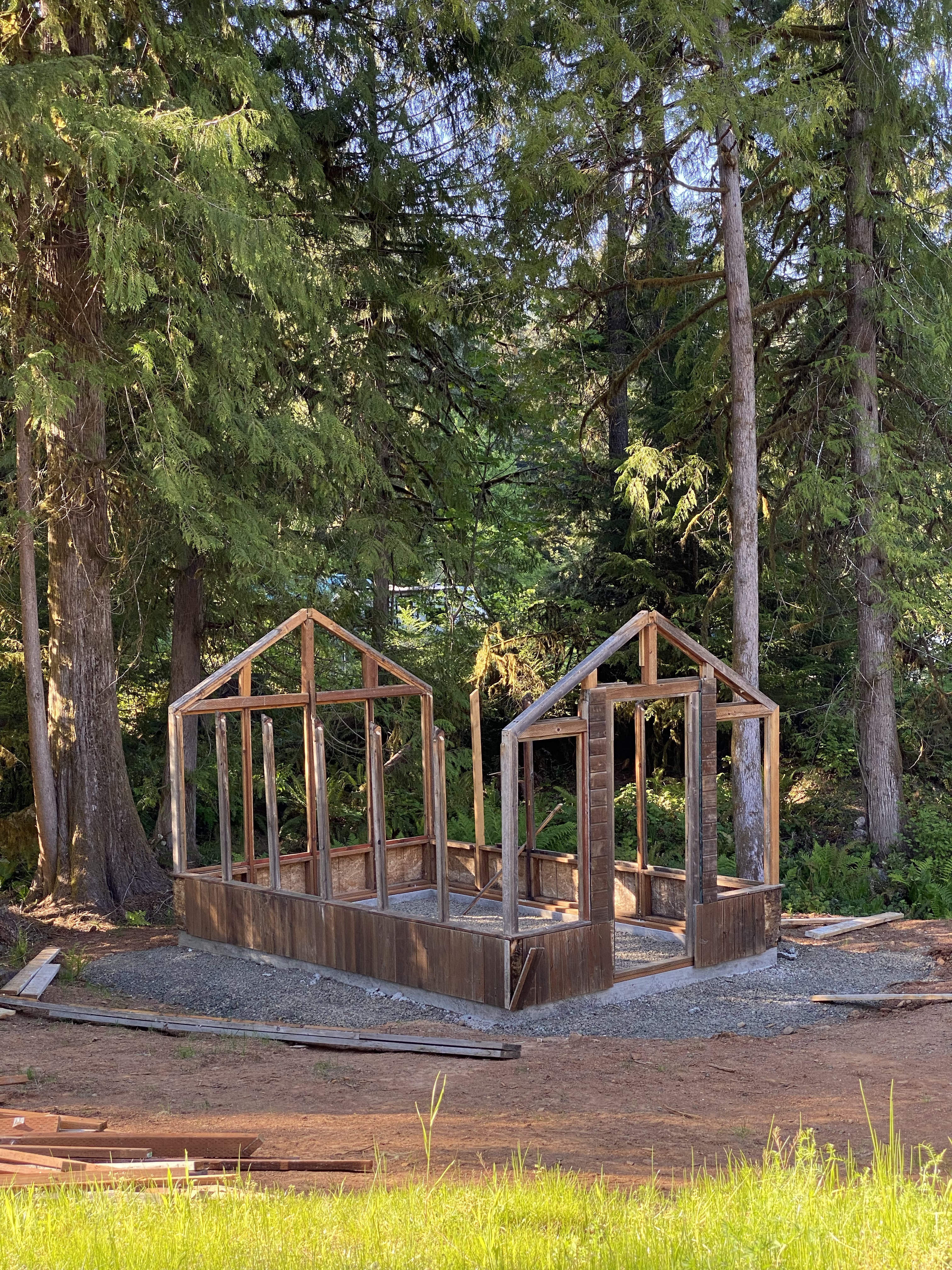
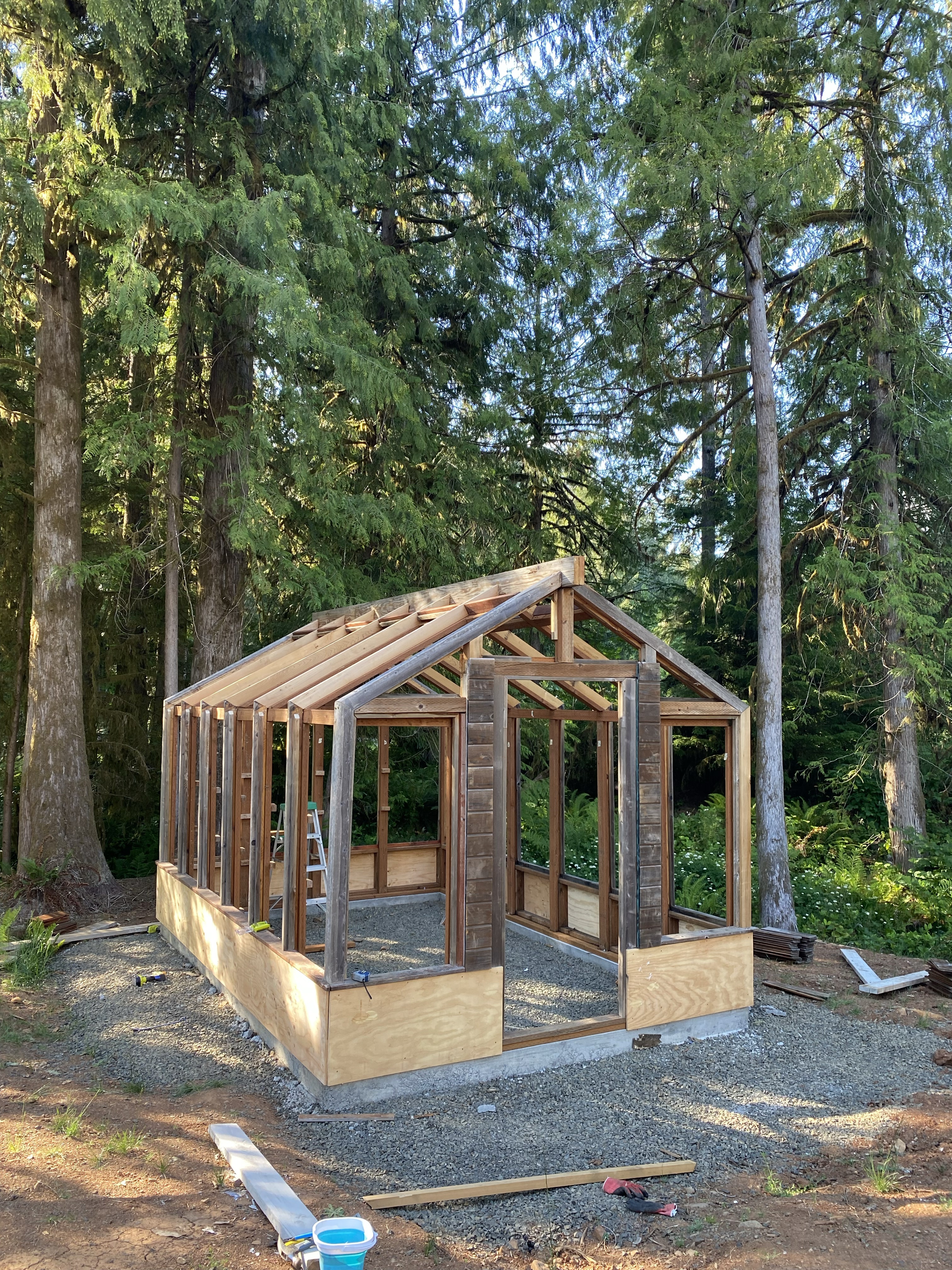
MAY 2024: Mud sills are installed on the foundation. It’s cute to think that at this point, I still thought we would have this project done during the spring. Cute. We started putting up the walls, this was a very exciting step! We also got the giant center beam installed (big thank you to Bryan in the extra short shorts) and the roof rafters set. We did have to replace a good number of the rafters, luckily we still have lumber from the cedar we milled for the garden (read all about the garden here).

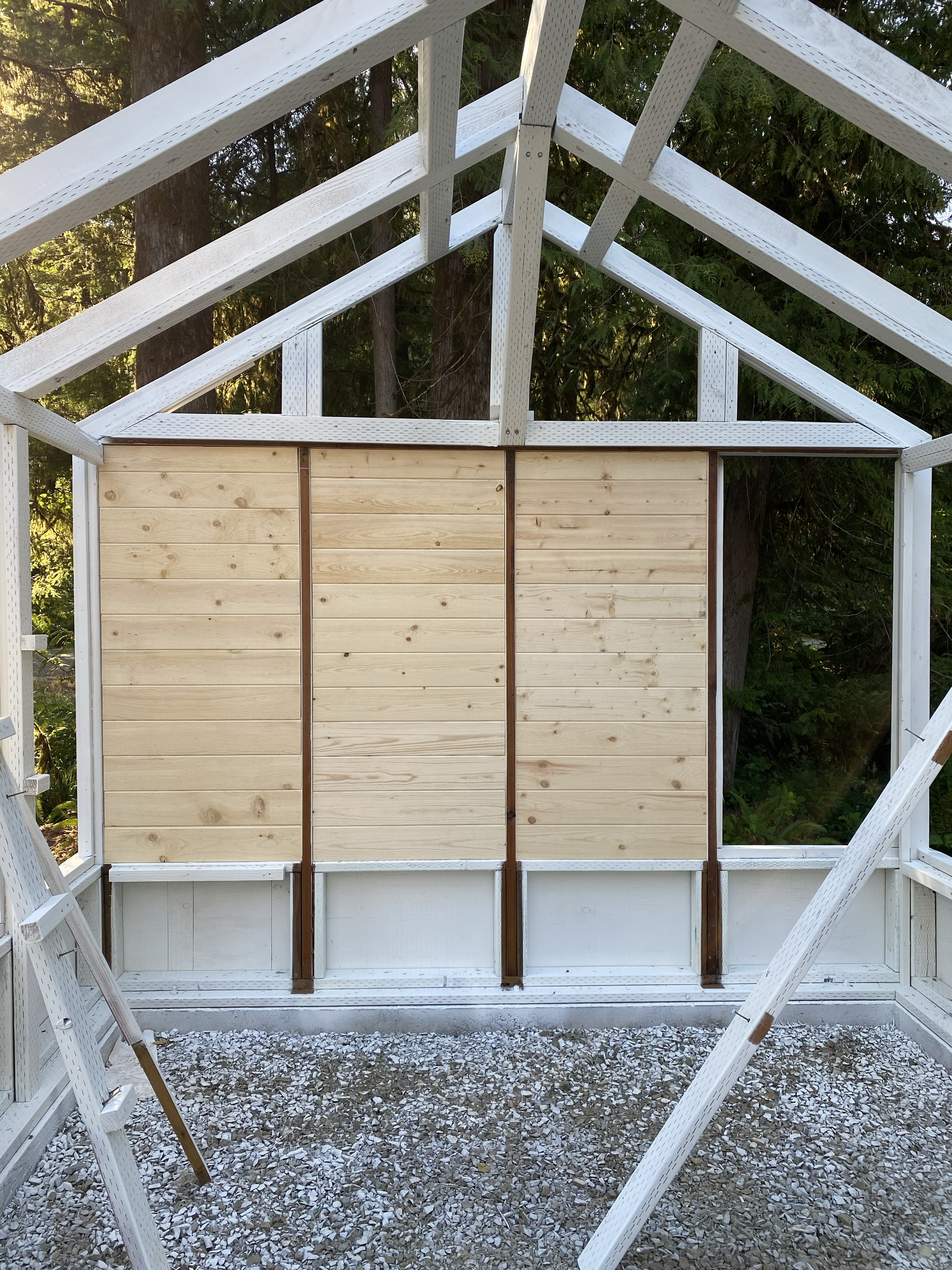
JUNE 2024: Replaced plywood on the walls, and installed/replaced siding on the exterior.

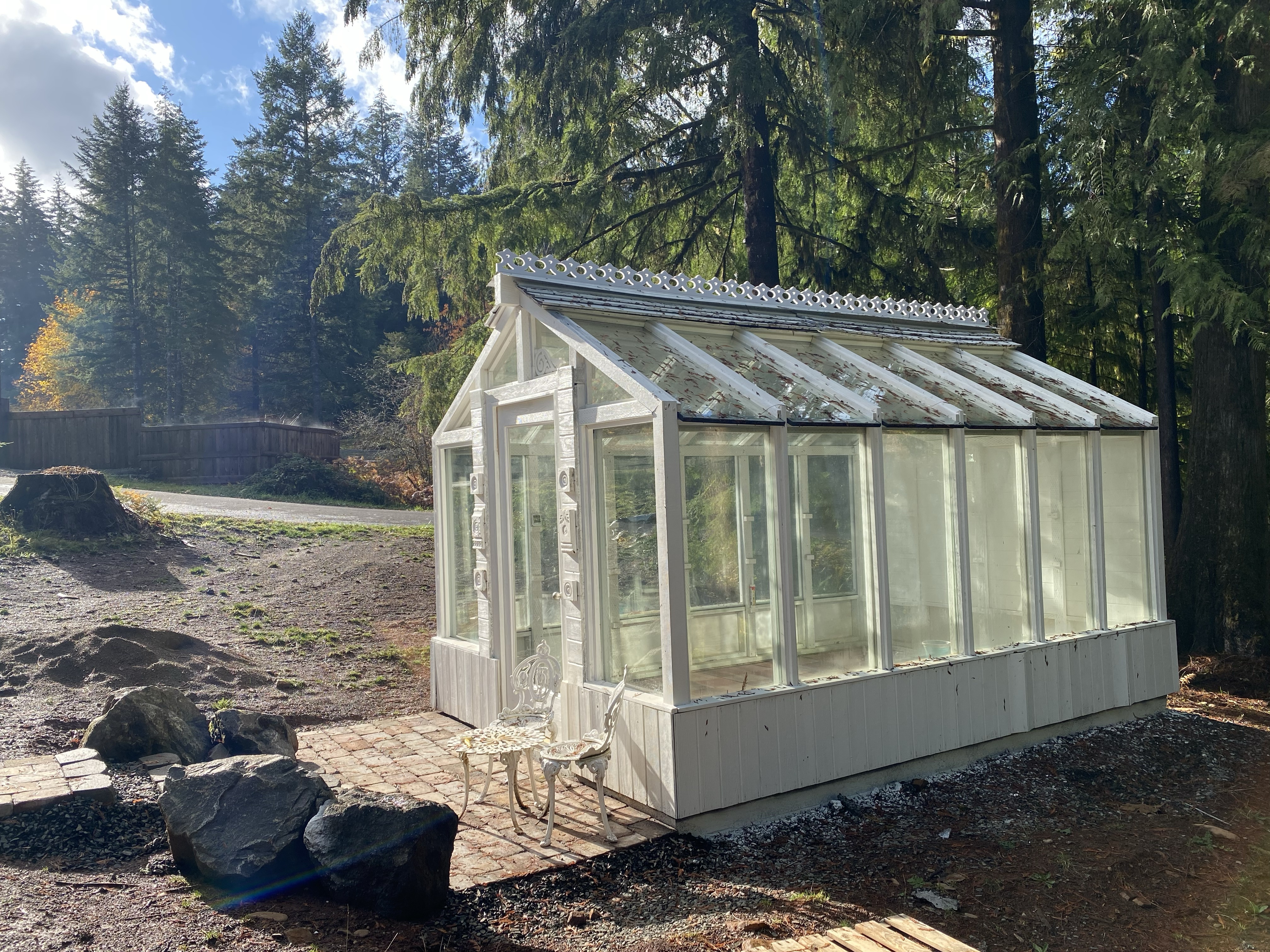
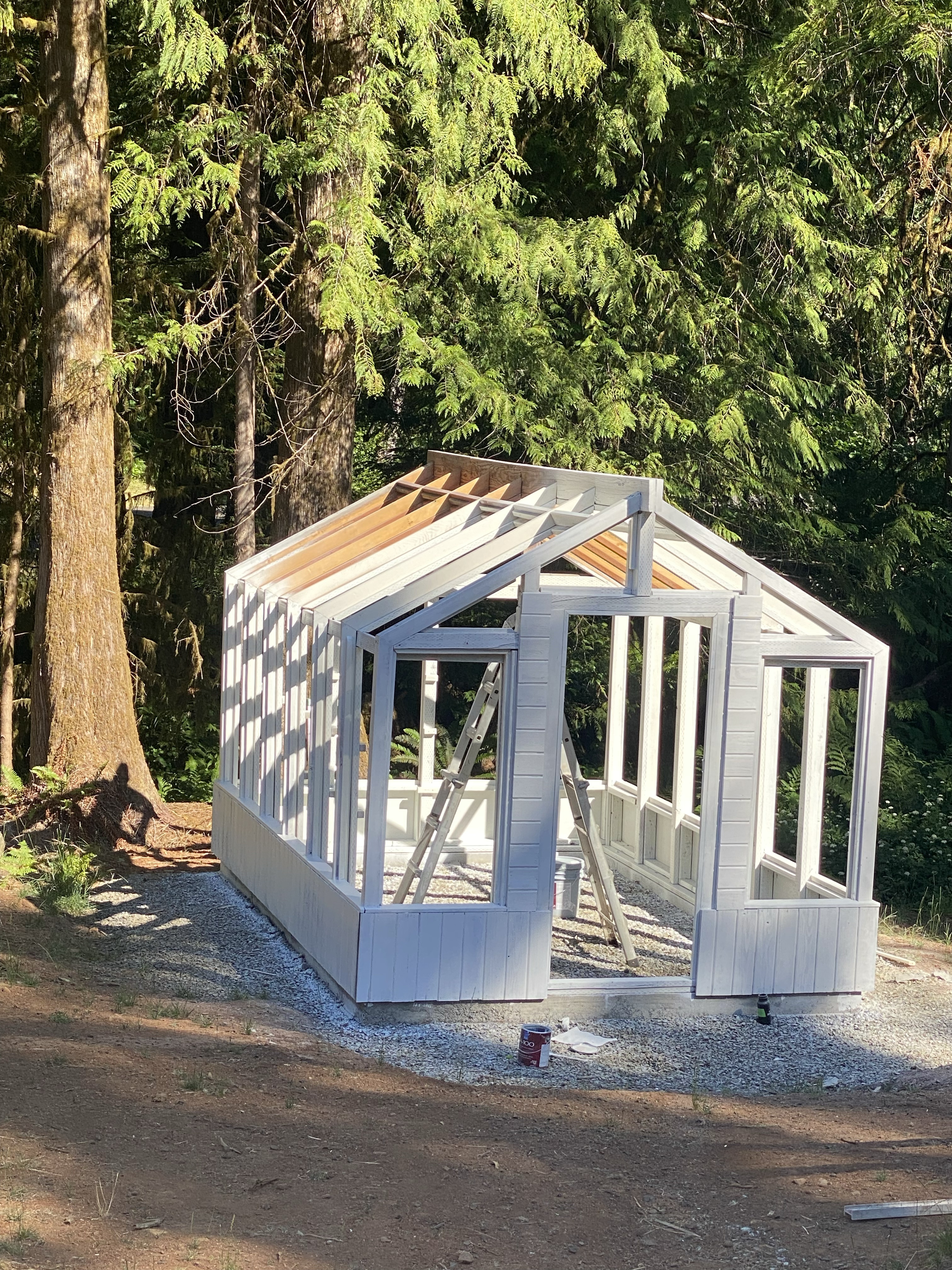
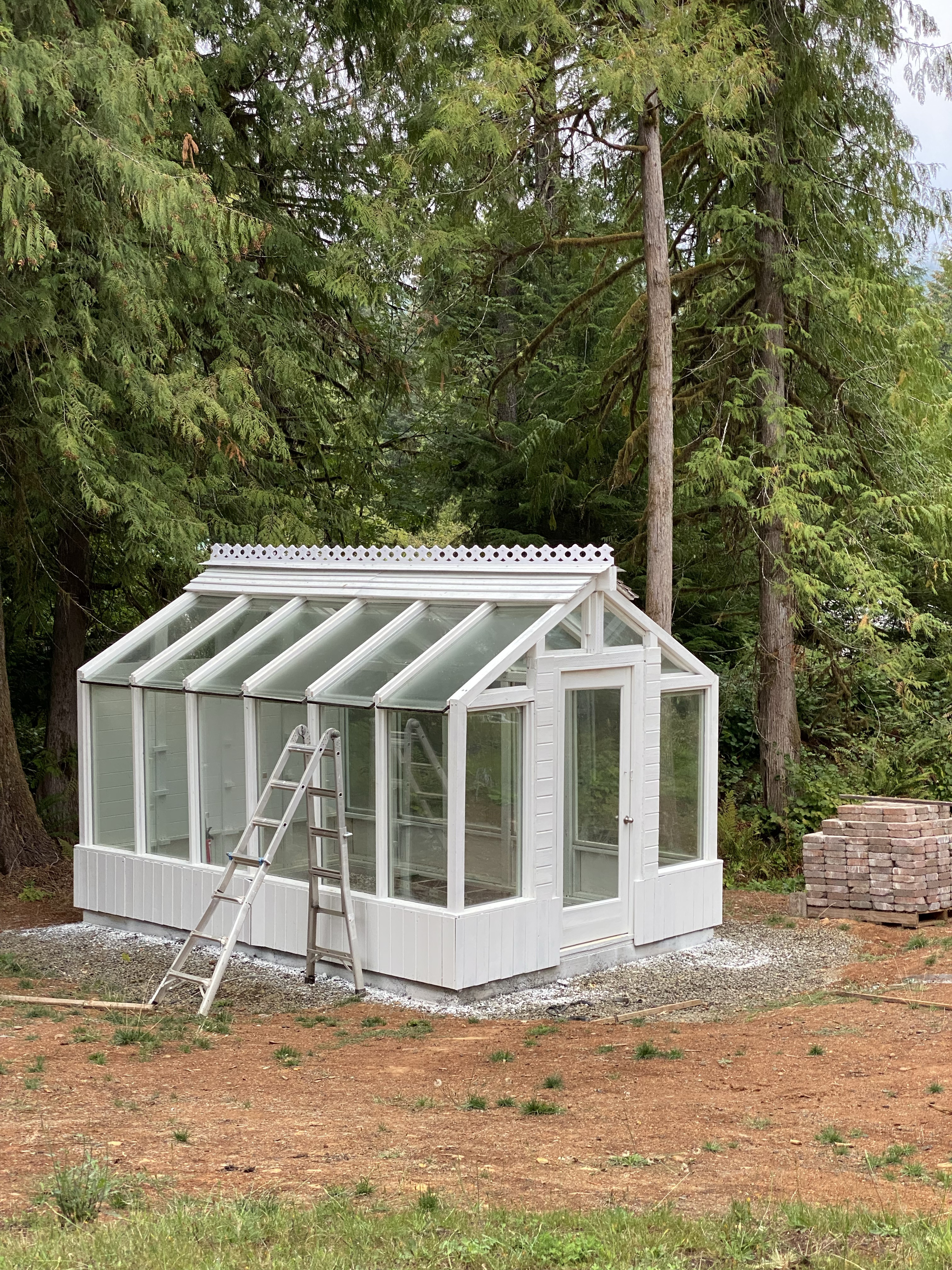
JULY 2024: Painting begins. Oh, my, goodness. So much paint. I decided to spray it, which in retrospect probably wasn’t the best plan because the greenhouse doesn’t really have walls. The kids were not sure why the greenhouse would be white, it’s called a greenhouse. But I assured them it was the right call. Classic greenhouse look, I promise. I used SW Pure White, the same color on the exterior of our house. We also installed siding on the back of the greenhouse, for two reasons. Reason one, several of the glass panes did get damaged during transport thus we were short. Reason two, the back side of the greenhouse faces a wooded area and wouldn’t get sun anyway. Win/win.

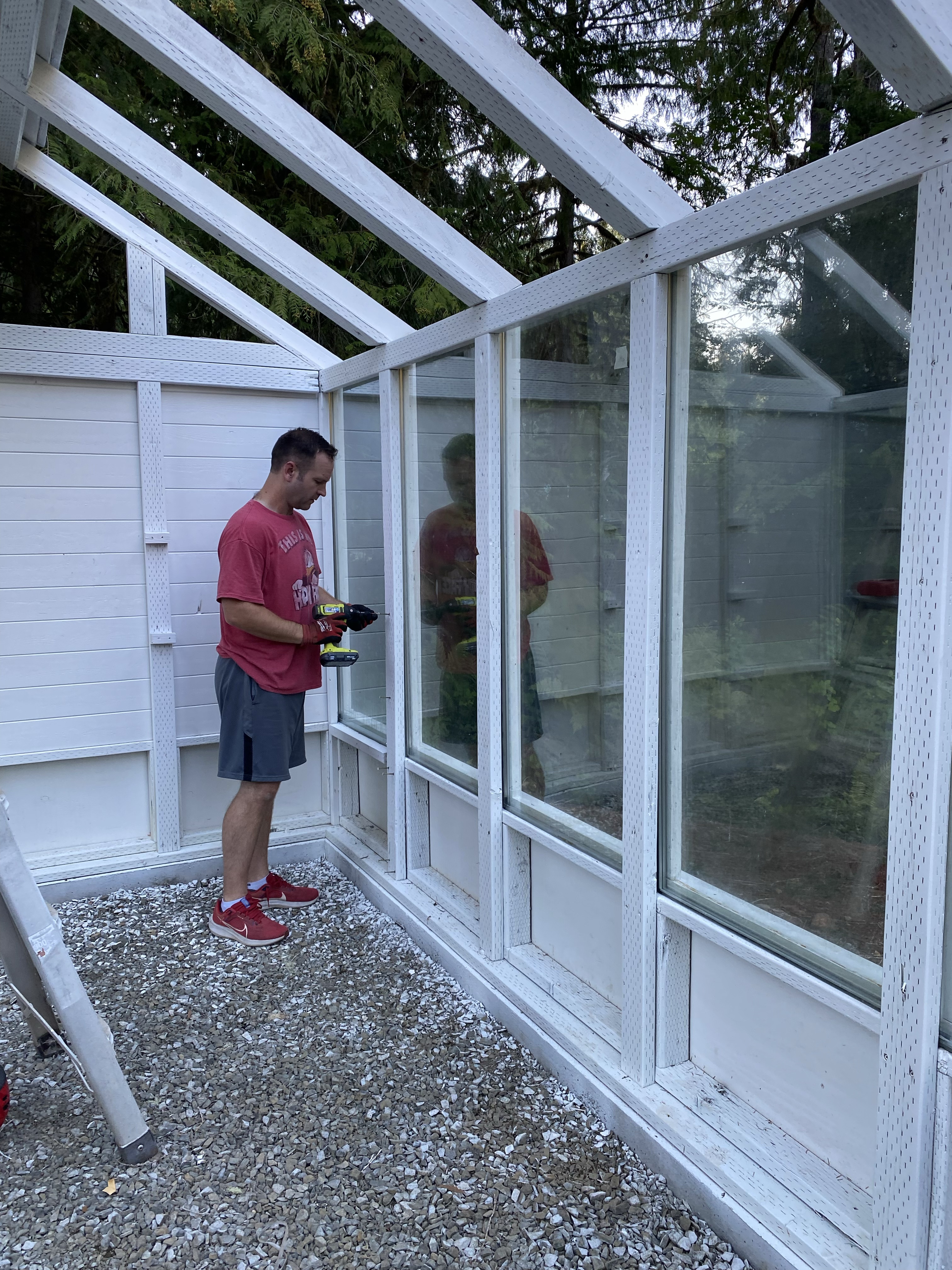
AUGUST 2024: Finished painting. Finally. Added roofing pieces. Started installing the glass panels. I’m not going to lie, we put this off as much as possible. They are tremendously heavy and I think Ryan and I were both very worried about breaking any more panes. But we worked on it as we could — prep, install, and secure.


SEPTEMBER 2024: The upcoming change in the weather put us in high gear for completing the project. As I like to say, “It’s go time!” We decided to add some charm to the greenhouse with a Victorian-inspired ridge piece. This one is made of PVC, should withstand the weather, and not yellow or fade. It really made the vision for the greenhouse come together. The white makes perfect sense now, yes? Finished installing all the roof panes (even more tricky). Ryan did a LOT of caulking seams.

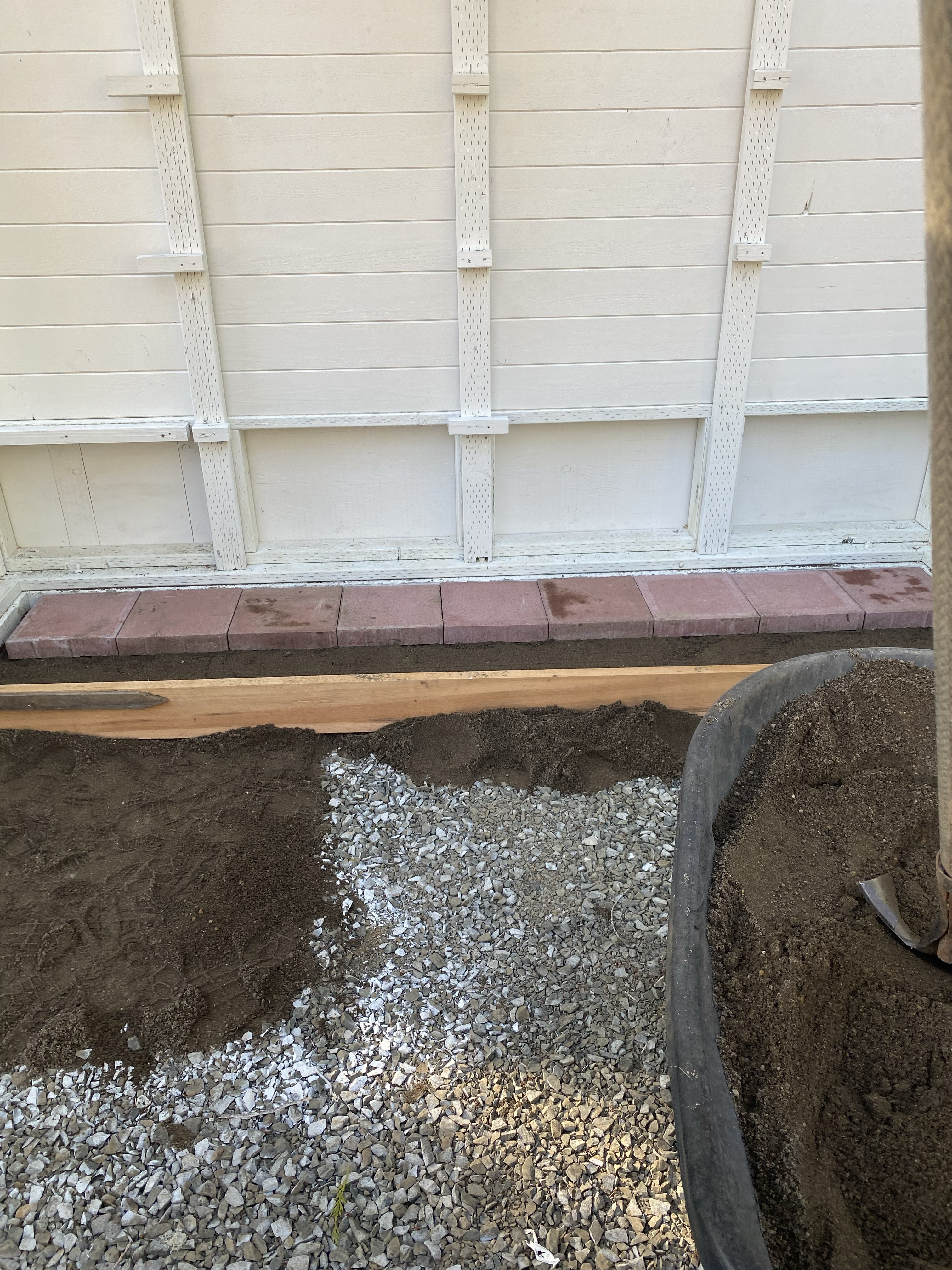
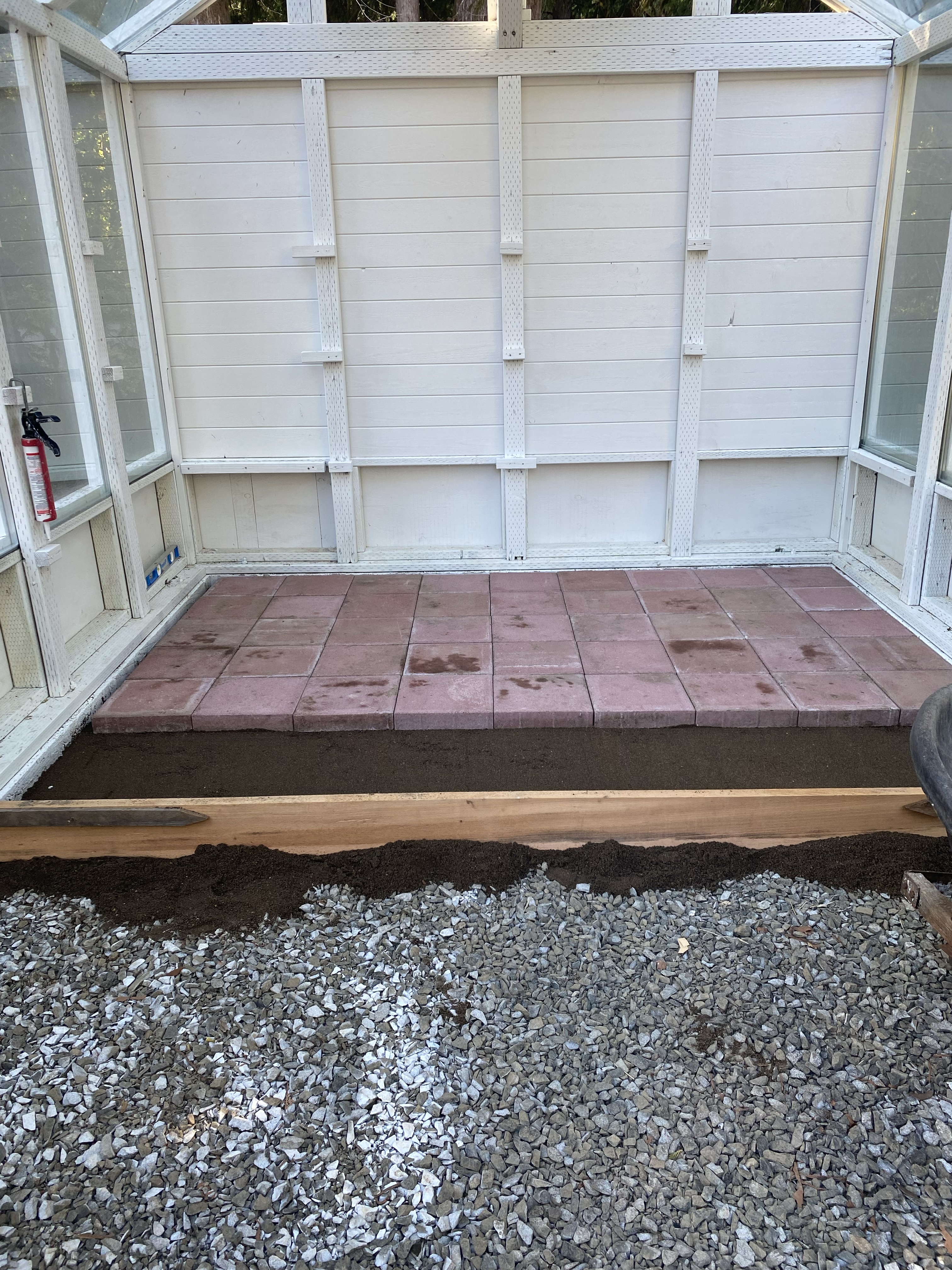
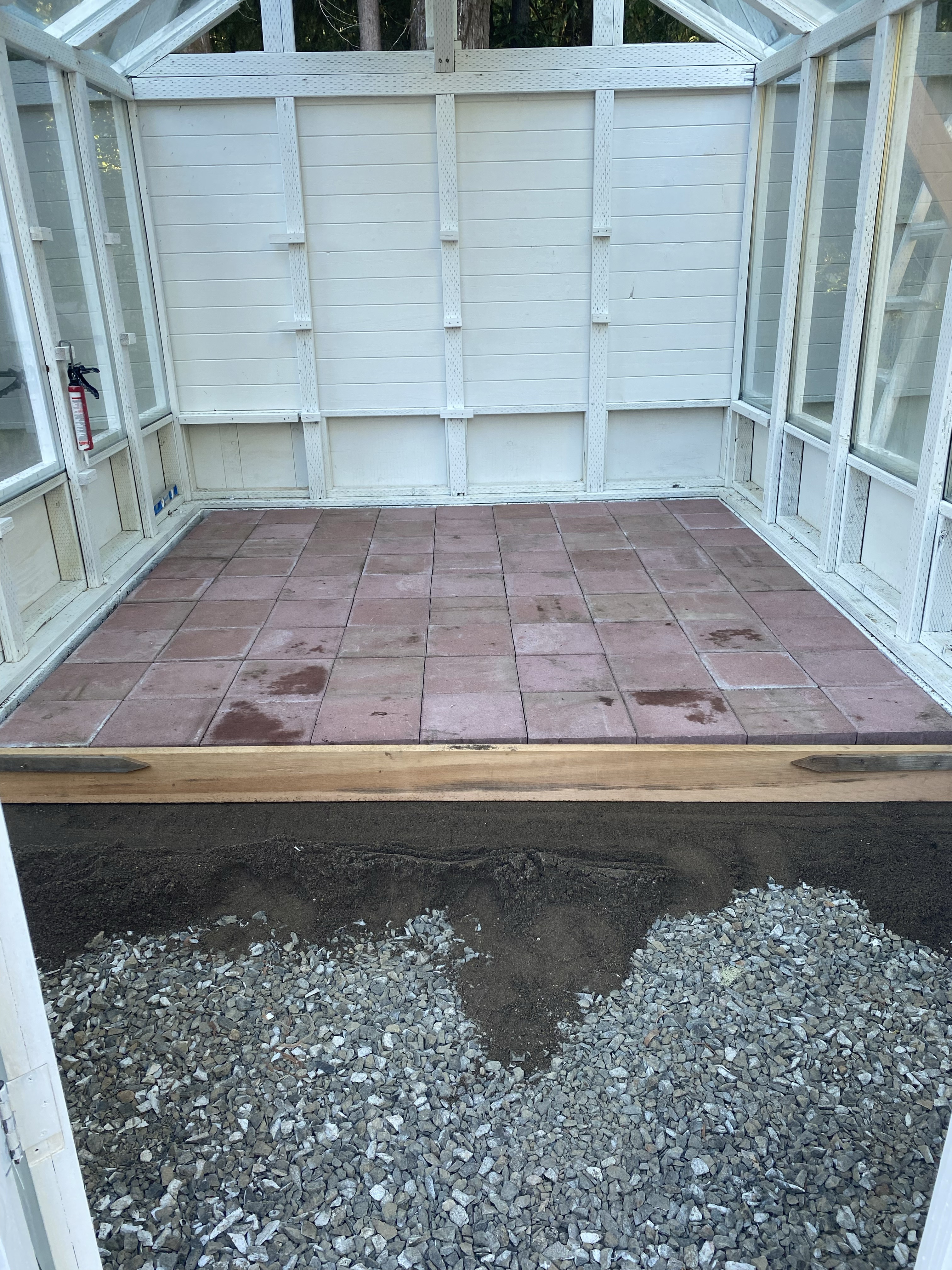
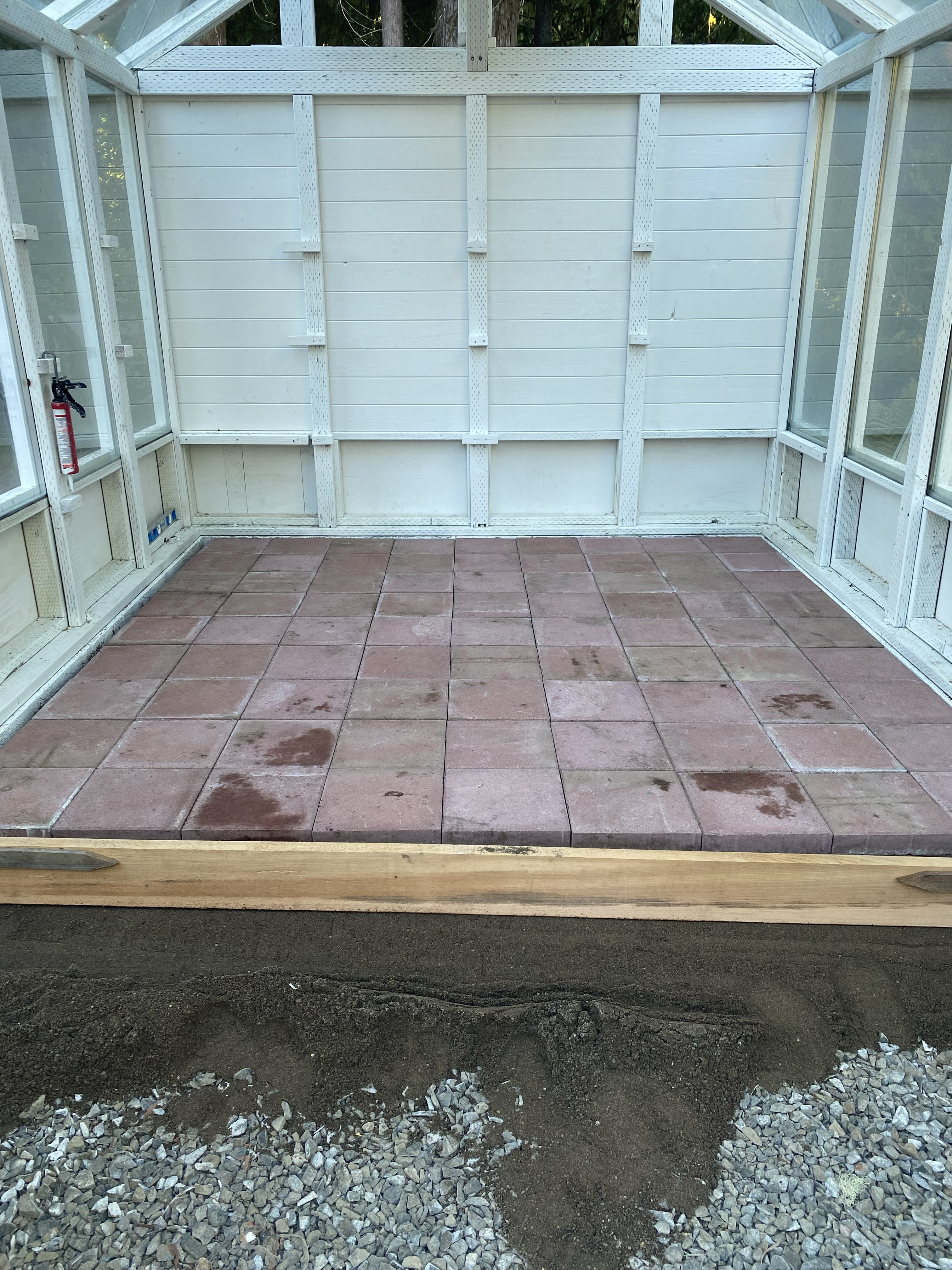
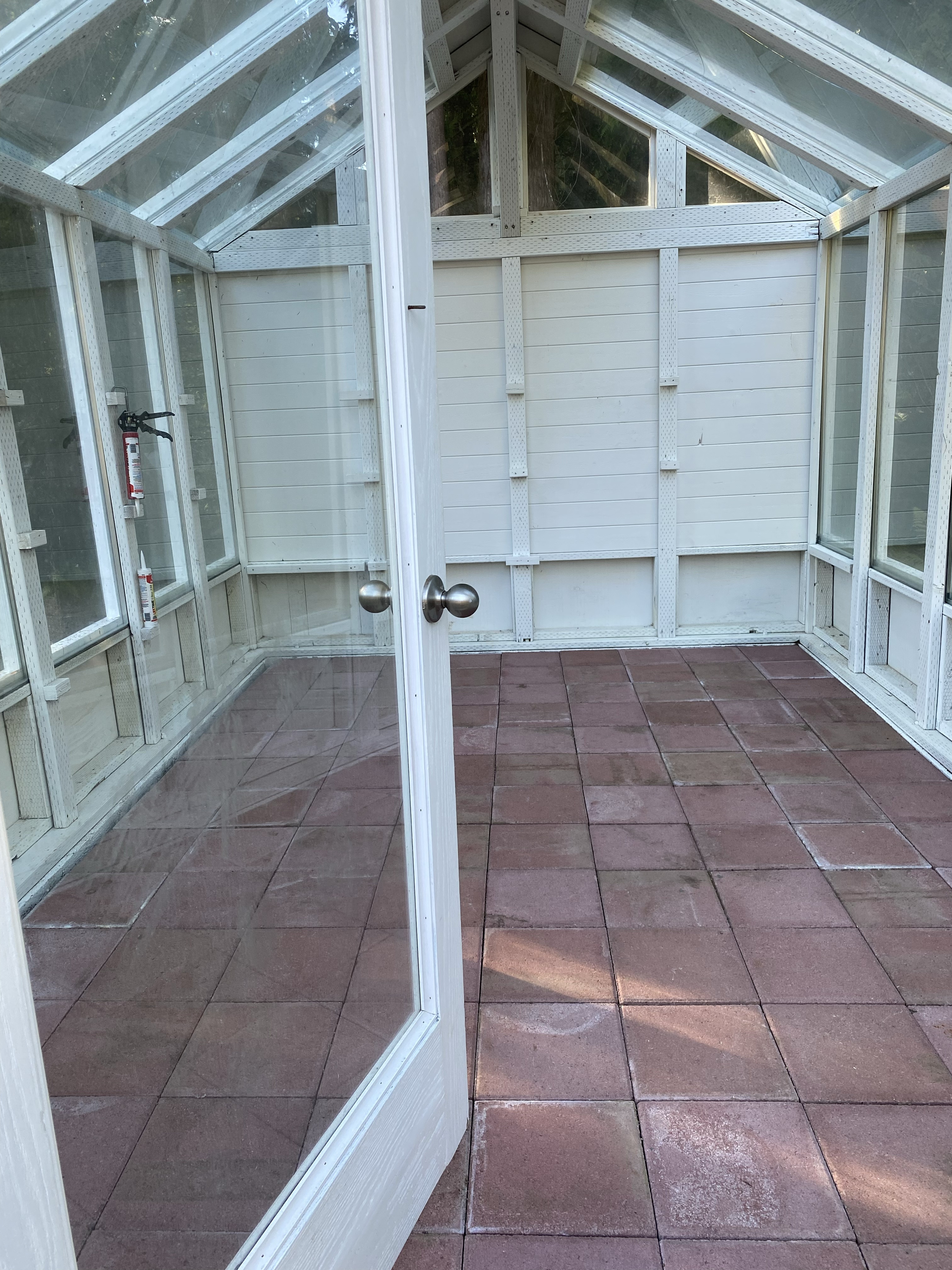
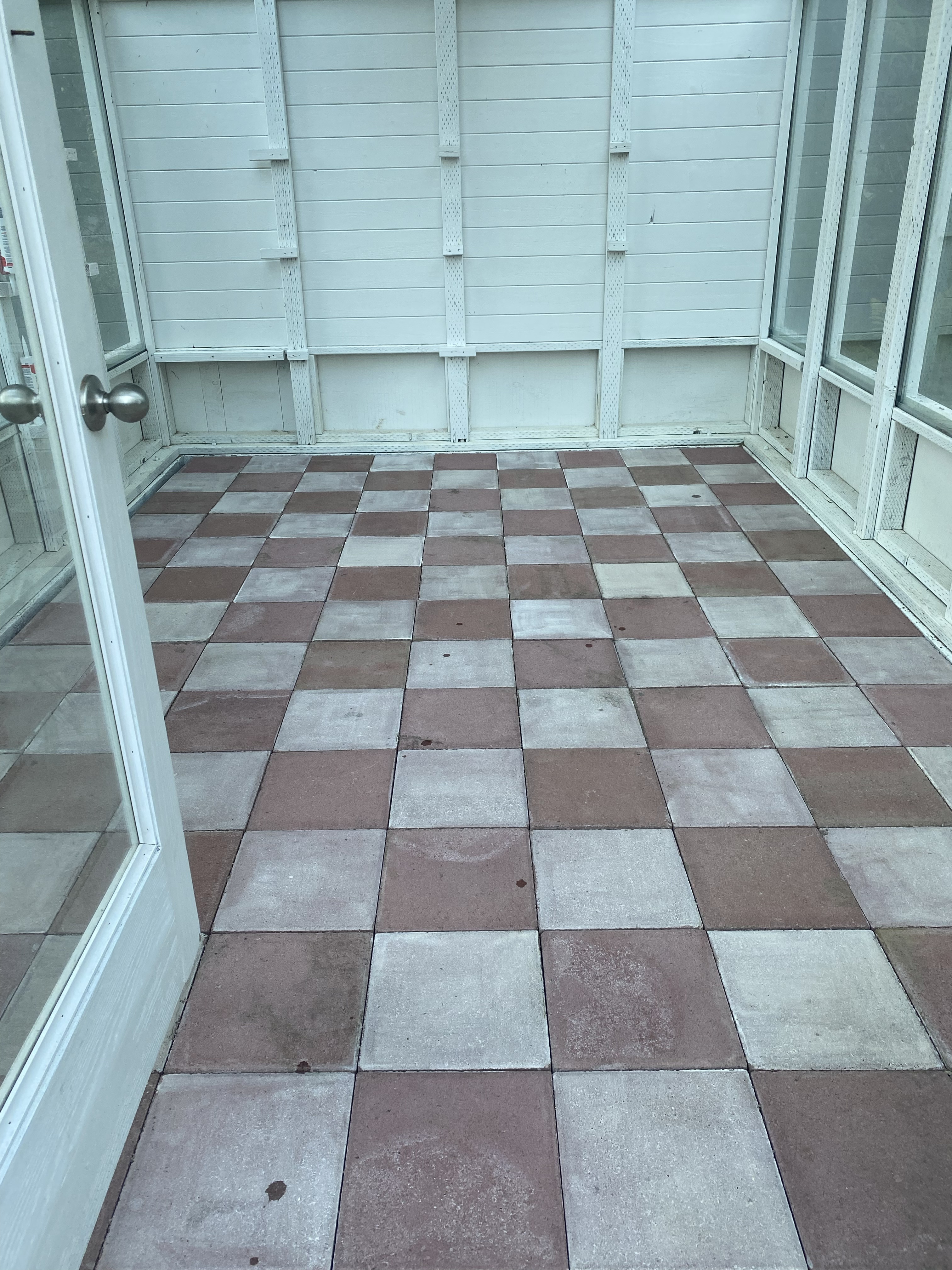
We also started installing the brick floor inside the greenhouse — gravel, sand, screen, and place. This was fun, the three oldest kids helped create an assembly line for brick delivery. We got that floor installed in record time. Pizza after to celebrate.

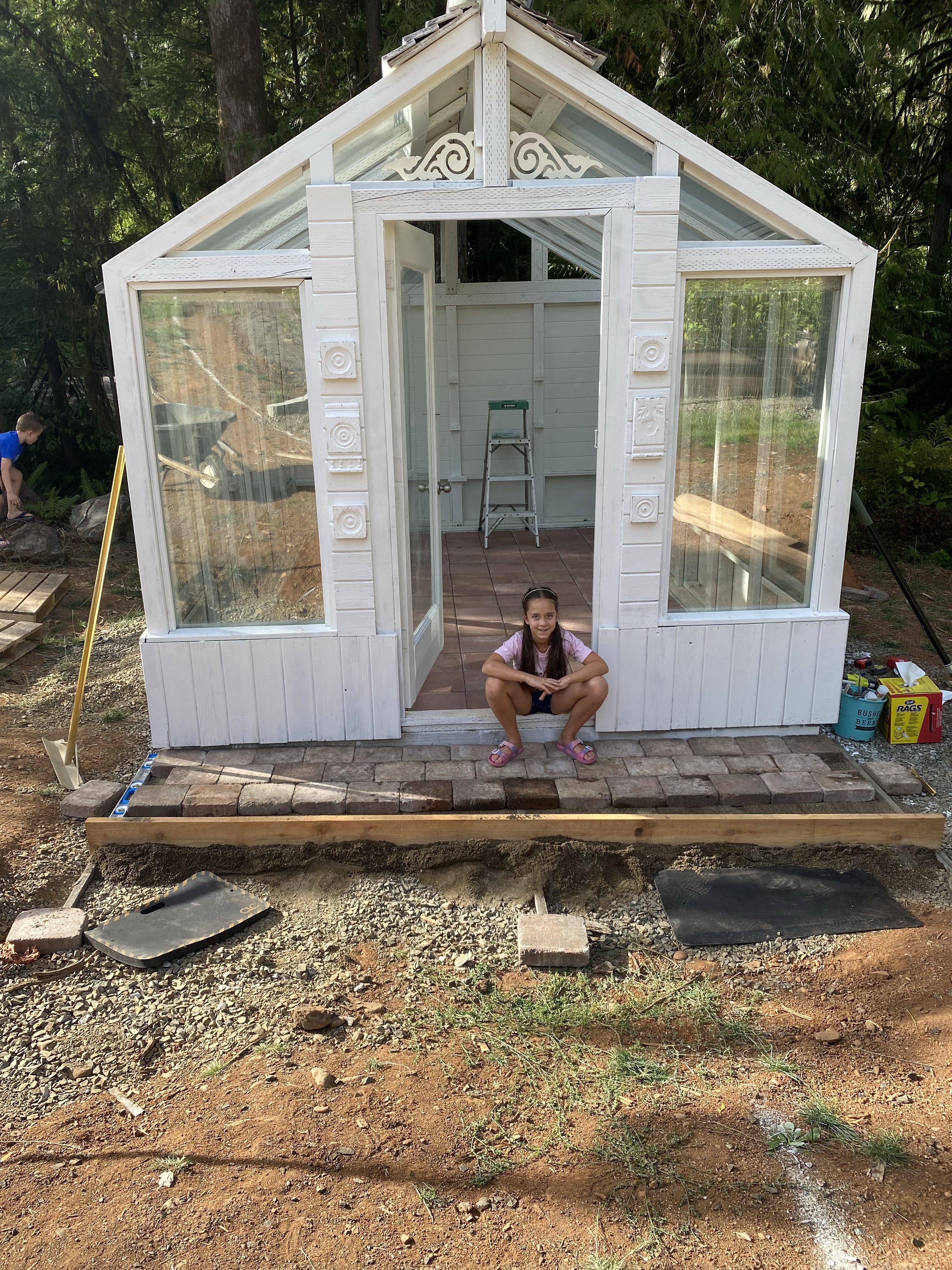
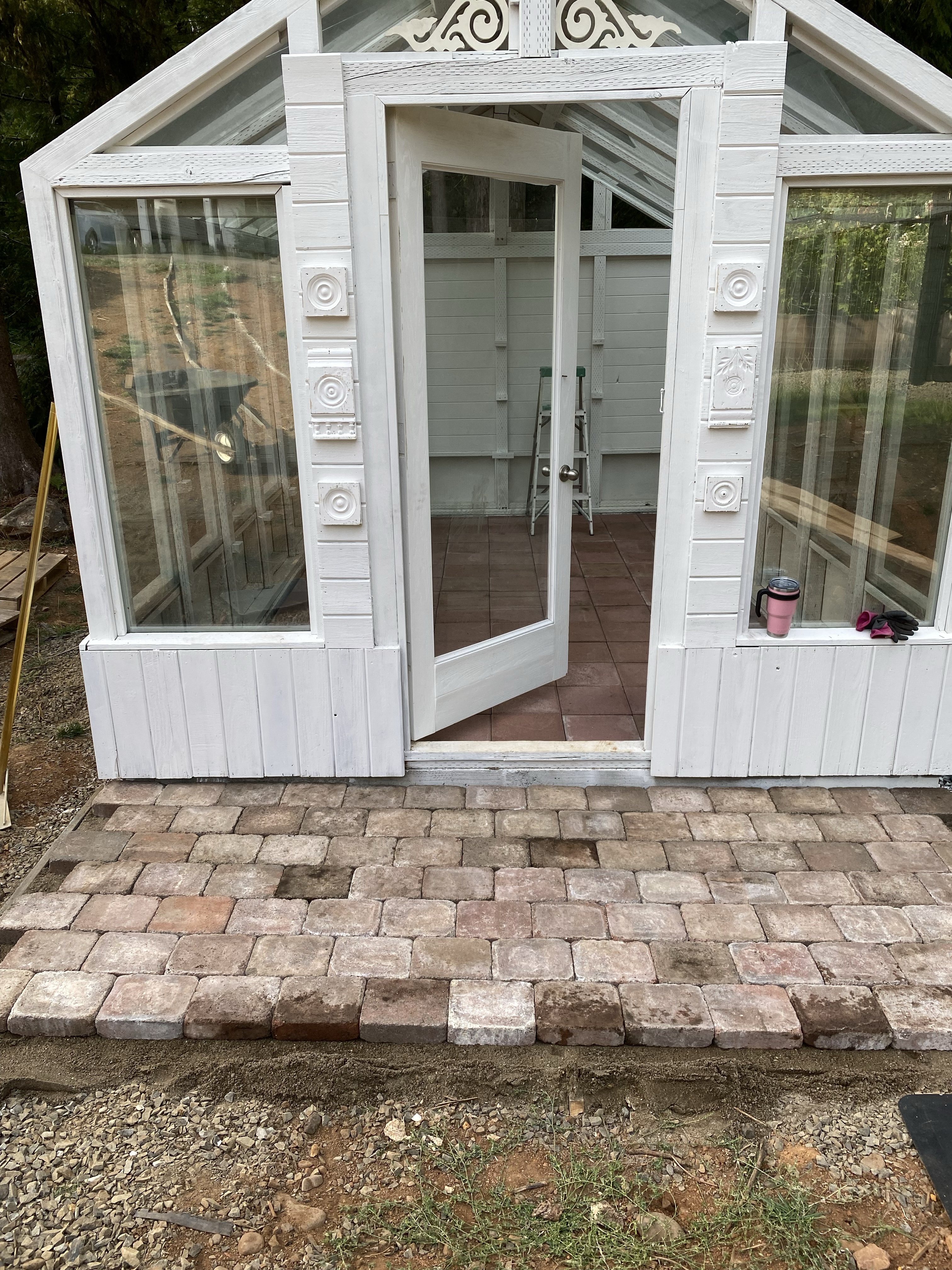
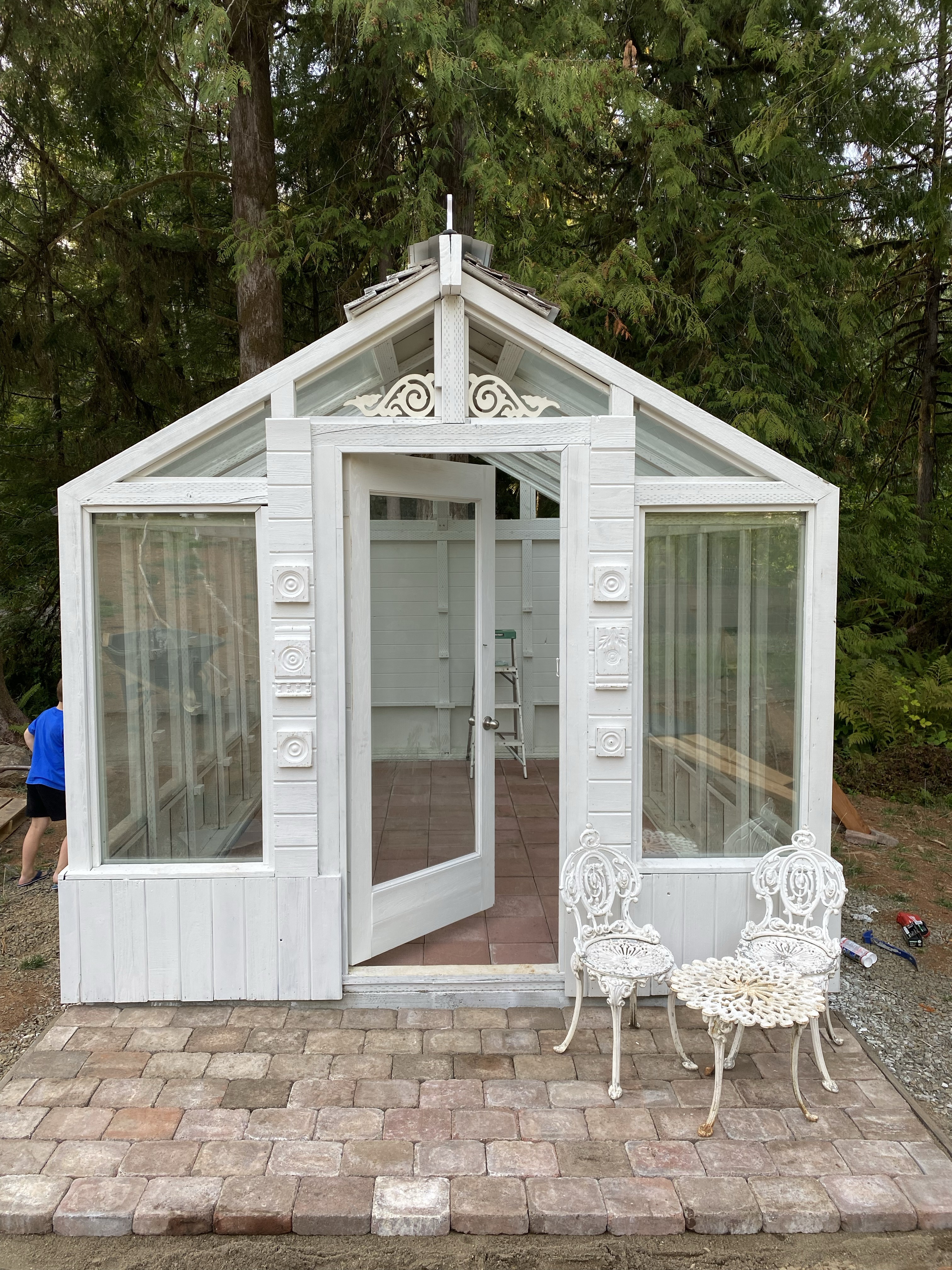
While we were on a roll, we also decided to add a small brick patio at the front of the greenhouse (thanks to the gift of some pavers from a friend). Cue the assembly line. I found an adorable Victorian patio set to add to the front and various antique trim pieces I’ve collected over the years. Getting so very close.

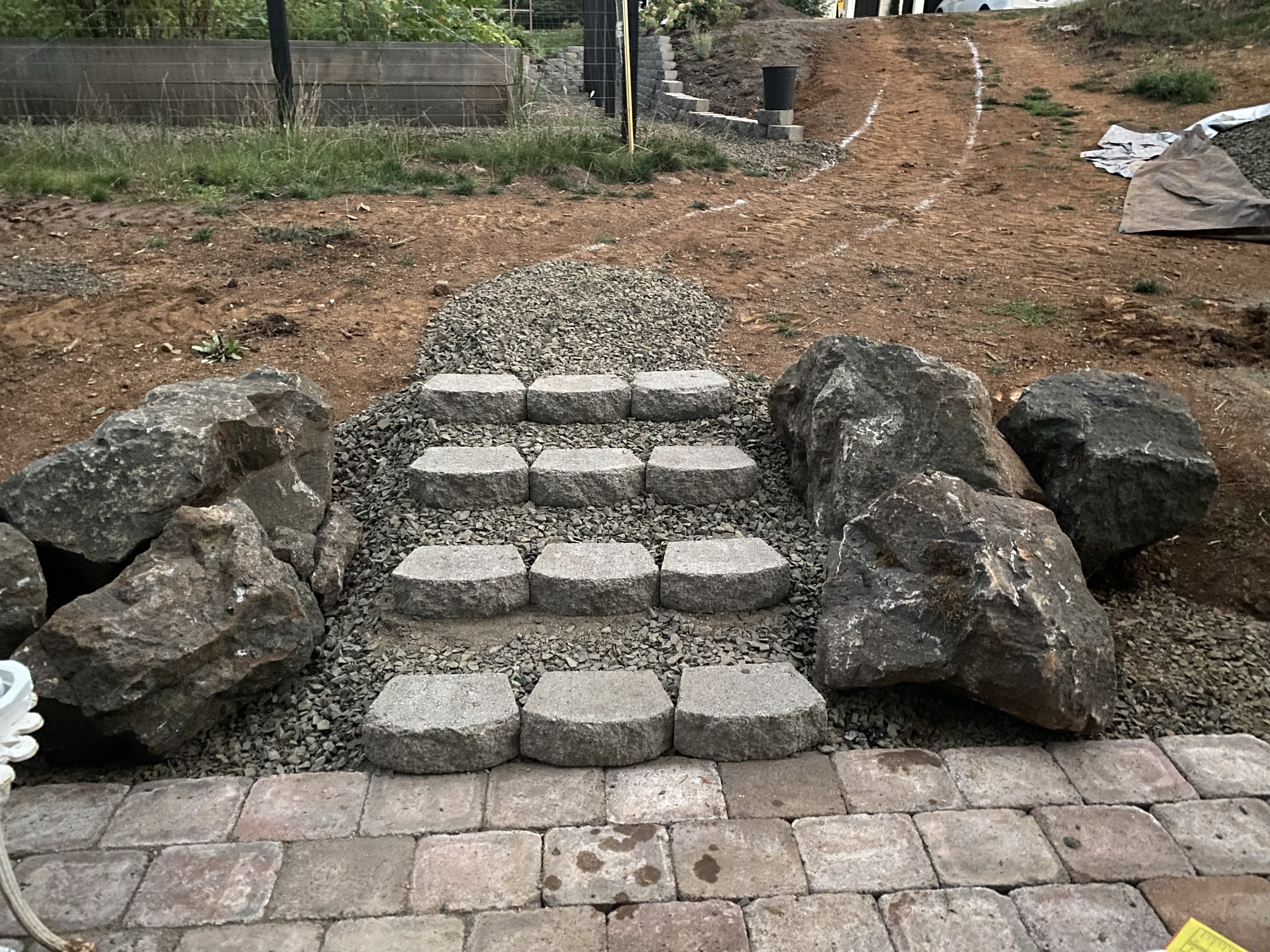
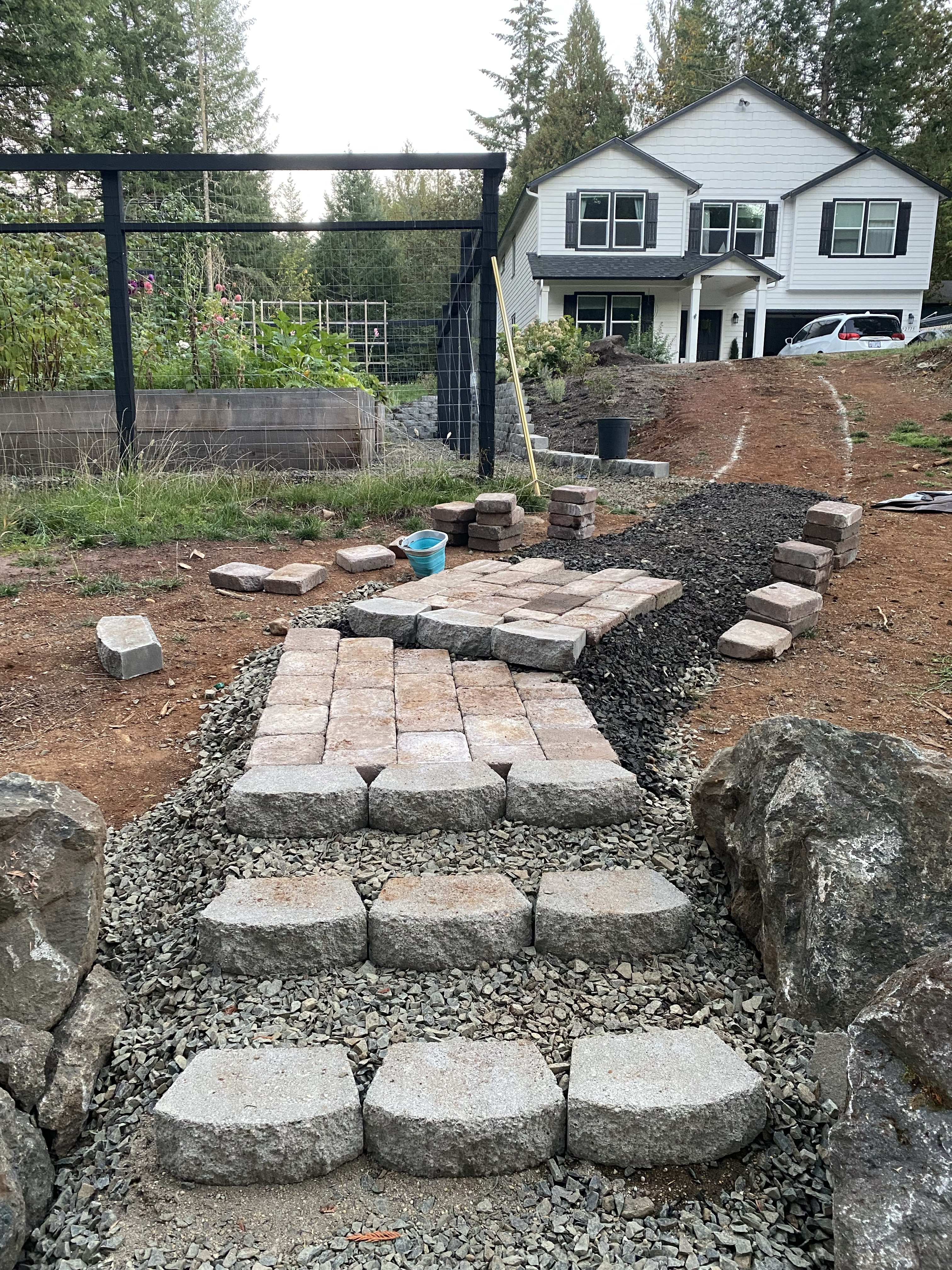
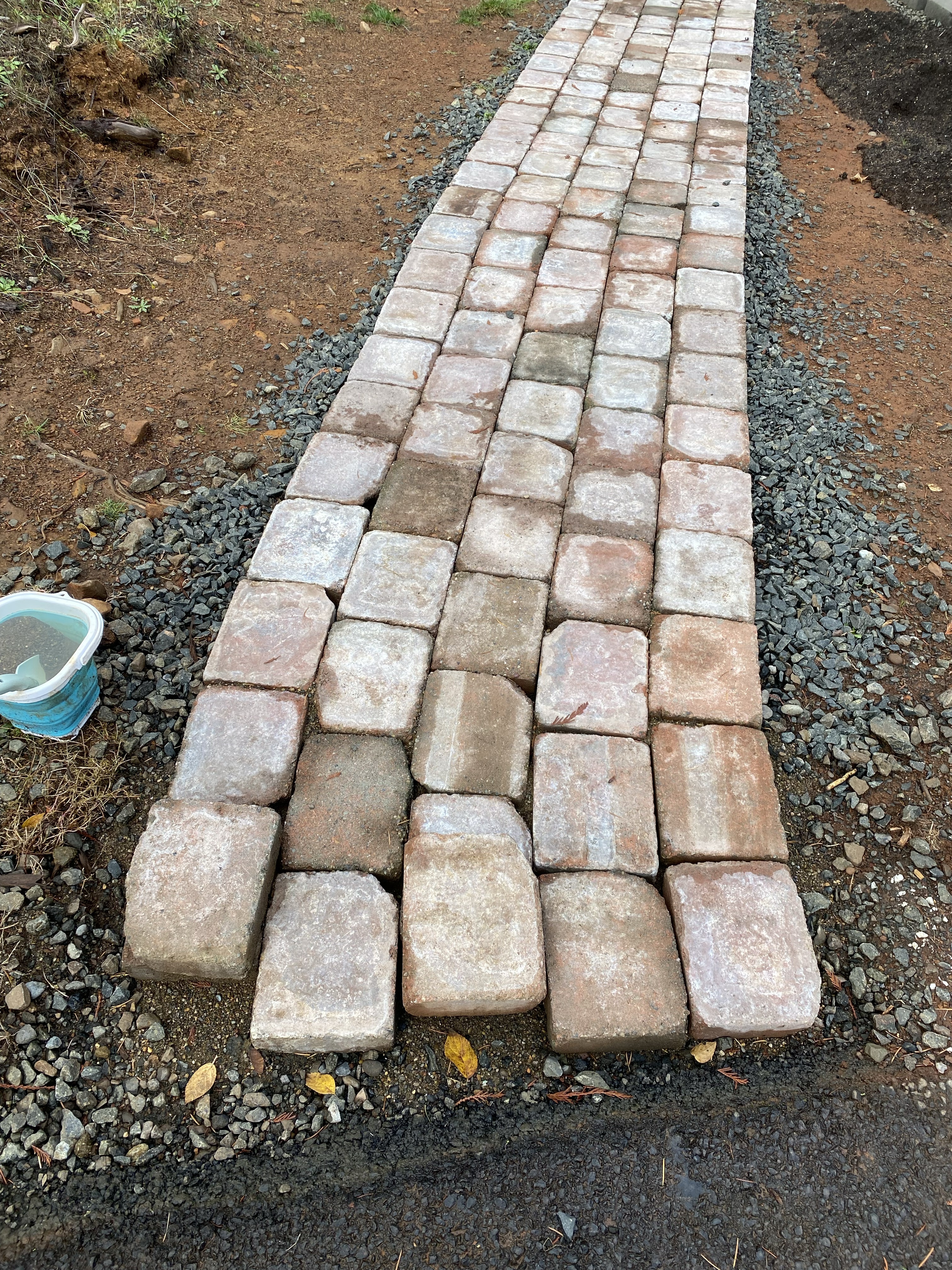
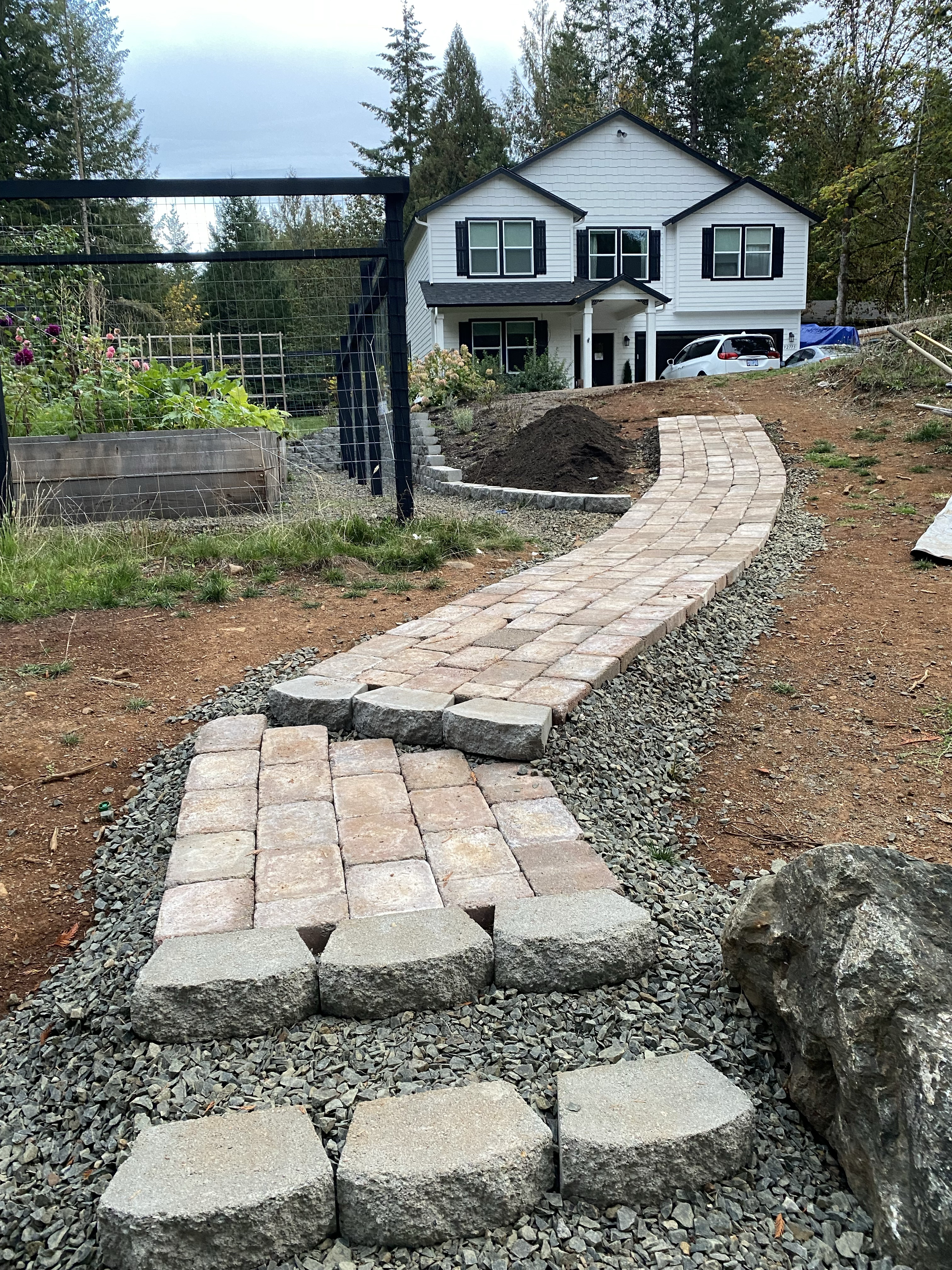
Then because of all the slope…steps, and boulders, and a path from the driveway down to the greenhouse to tie everything together.

OCTOBER 2024:
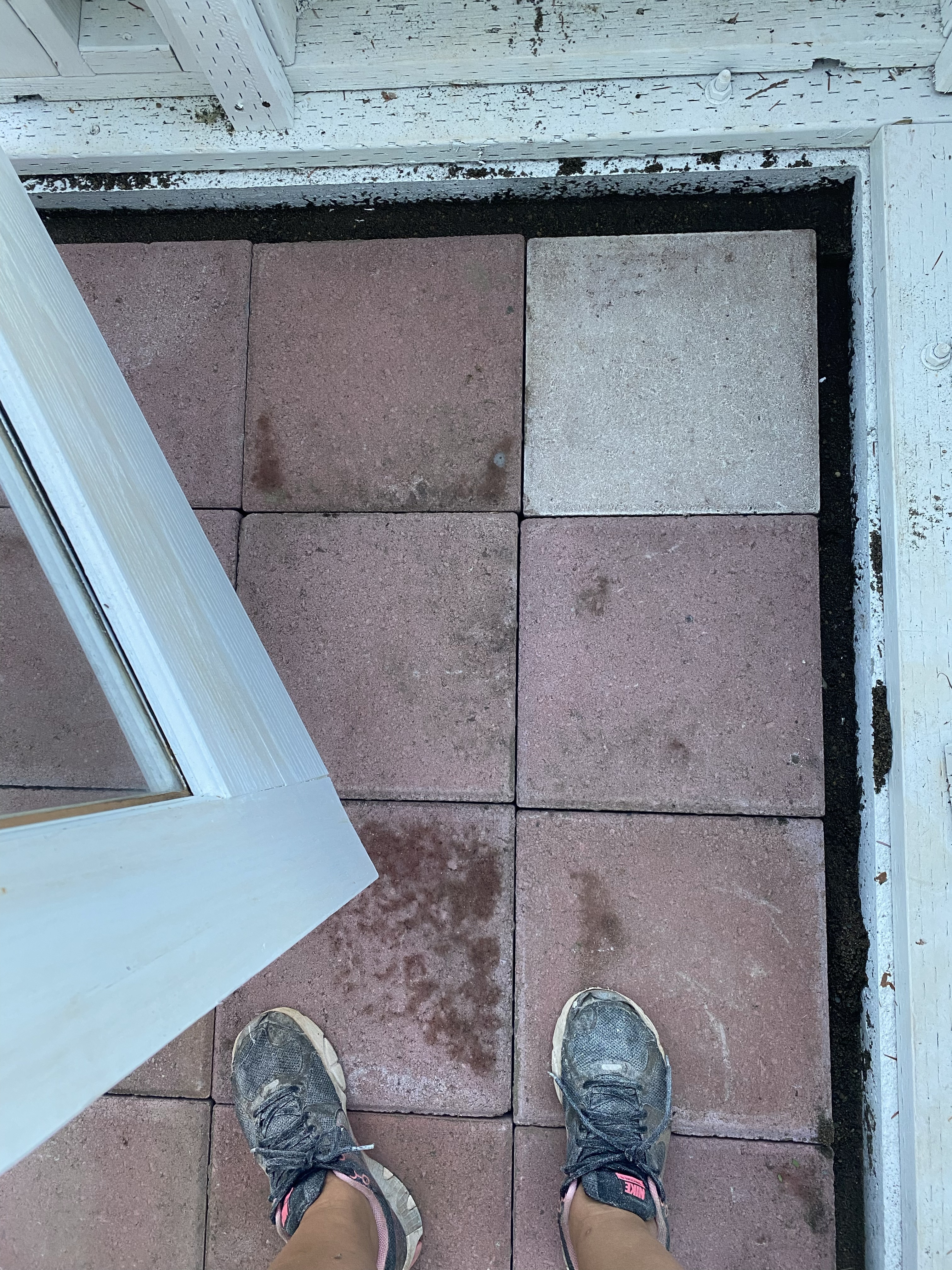
I decided to lime wash the floor in the greenhouse to create a checkerboard pattern. I didn’t love the all-red bricks since we have so much gray stone on the property and thought it would add another delightful surprise to the greenhouse’s charm. Literally garden lime, water, paintbrush.

NOVEMBER 2024: Now officially over a year since we started this project, I am nearly done with the 45-foot pathway, just need to place the final row of pavers.


The greenhouse is just about done too, we still have a bit of caulking and some shelving to install inside. But truthfully, are these projects ever truly, totally done? So when you see photos of our charming, not-green greenhouse, know it wasn’t done over a weekend or two, but over a year. Let’s normalize real-life and real-project timelines, agreed?

XO,

–h

5 Simple Steps to a Furniture Refresh

Maybe you’ve had a moment like this…you are at a garage sale, thrift sale, thrift shop…. and you find a piece of furniture that is a bit worn, maybe a bit sad, but interesting and the price is just right.

I love these moments, it’s the thrill of the hunt, looking for forgotten treasures full of history and purpose. There’s potential there, possibilities.

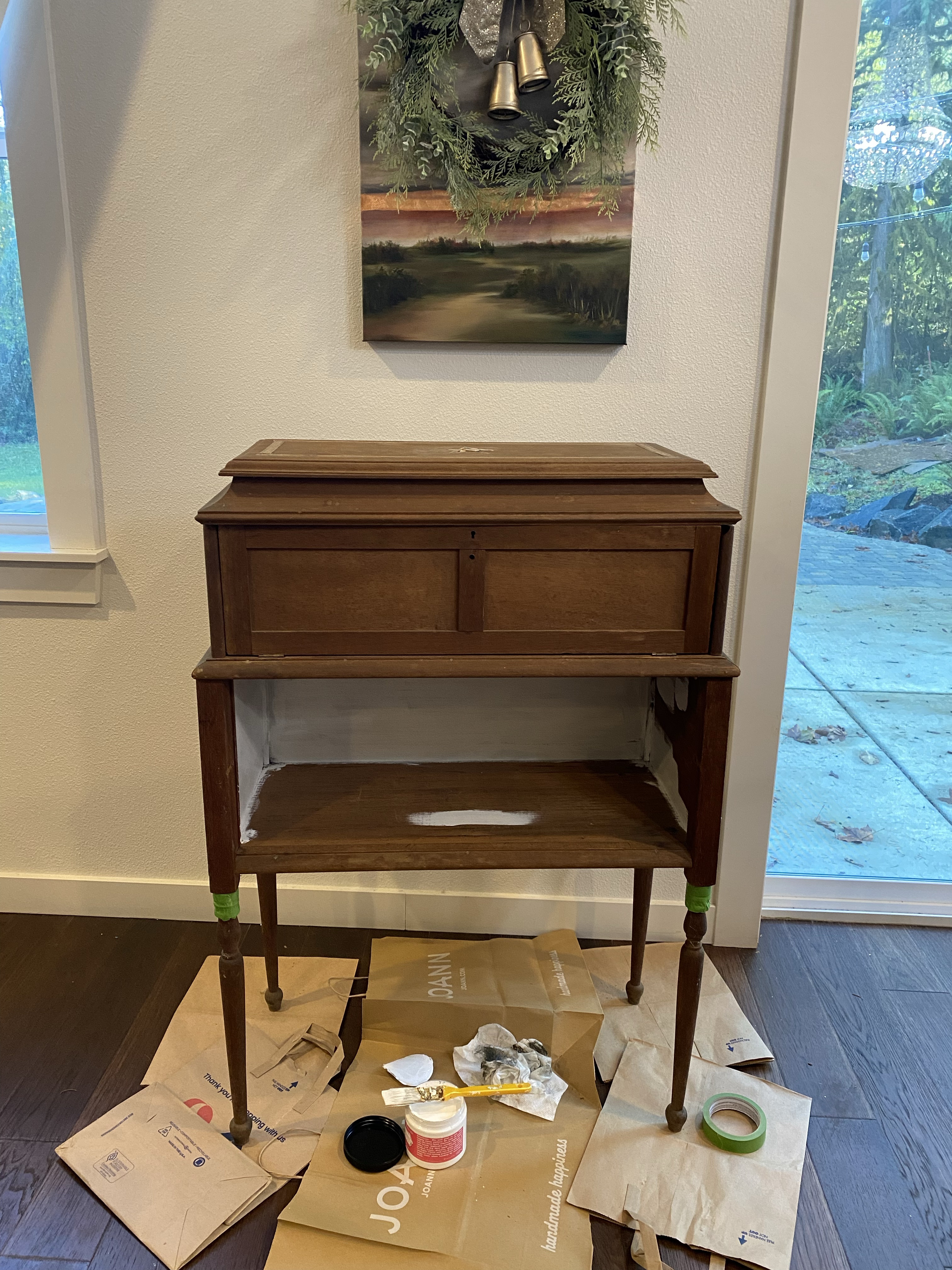
That’s how I felt when I spotted this beauty at an estate sale. Far from perfect, pretty dusty, but full of possibilities!

(You can see, I nearly forgot the before. 😬)

5 Simple Steps for the perfect refresh:

1. Clean. Get every bit of dirt and dust off. You may even want to sand or strip portions. This cabinet was pretty rough to begin with but I was ok with the overall color of the wood.

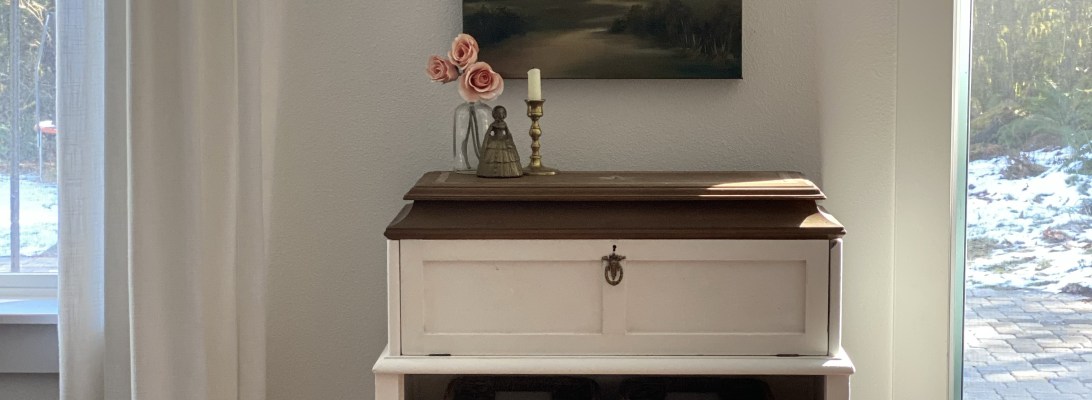
2. Prep. I decided I wanted to paint part of the cabinet (Is it a cabinet? I’m not entirely sure what it is). I’m really into the two-toned look. You get to keep some of the warmth of the wood but also add your own style and custom color to the piece. I taped off the parts I didn’t want to paint.

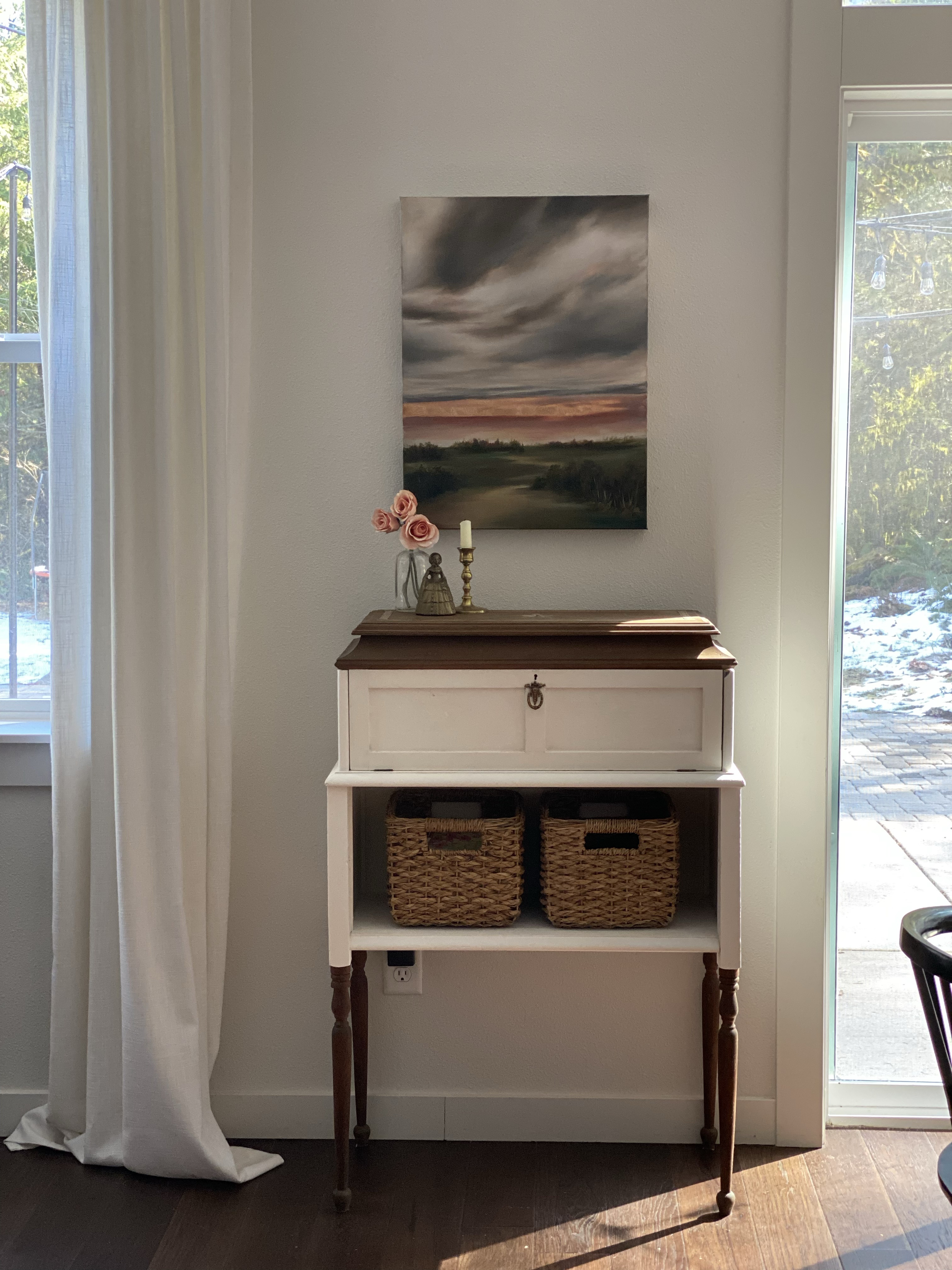
3. Paint. I love chalk paint, it gives a lovely matte finish and is super easy to work with. I used Shabby Paint’s Snow White for this piece. And then their Sheer Armor finishing product.

4. Embellish. This piece had some great hardware that had seen better days. I used Rub n’ Buff Antique Gold to refresh the color and bring out the interesting details.

5. Style. The missing door was the perfect opportunity to add a couple of baskets in the opening. Great for organization and some added texture. A few other antiques, a beautiful painting (this one is by Jenny Highsmith, JennyHighsmith.com), and some faux flowers complete the look.

Not bad for a piece of furniture I picked up for $30 that I don’t actually know what it is.

XO,

-h

10 Tips for Building a Cardboard Pirate Ship

Finally posting this… four months later.

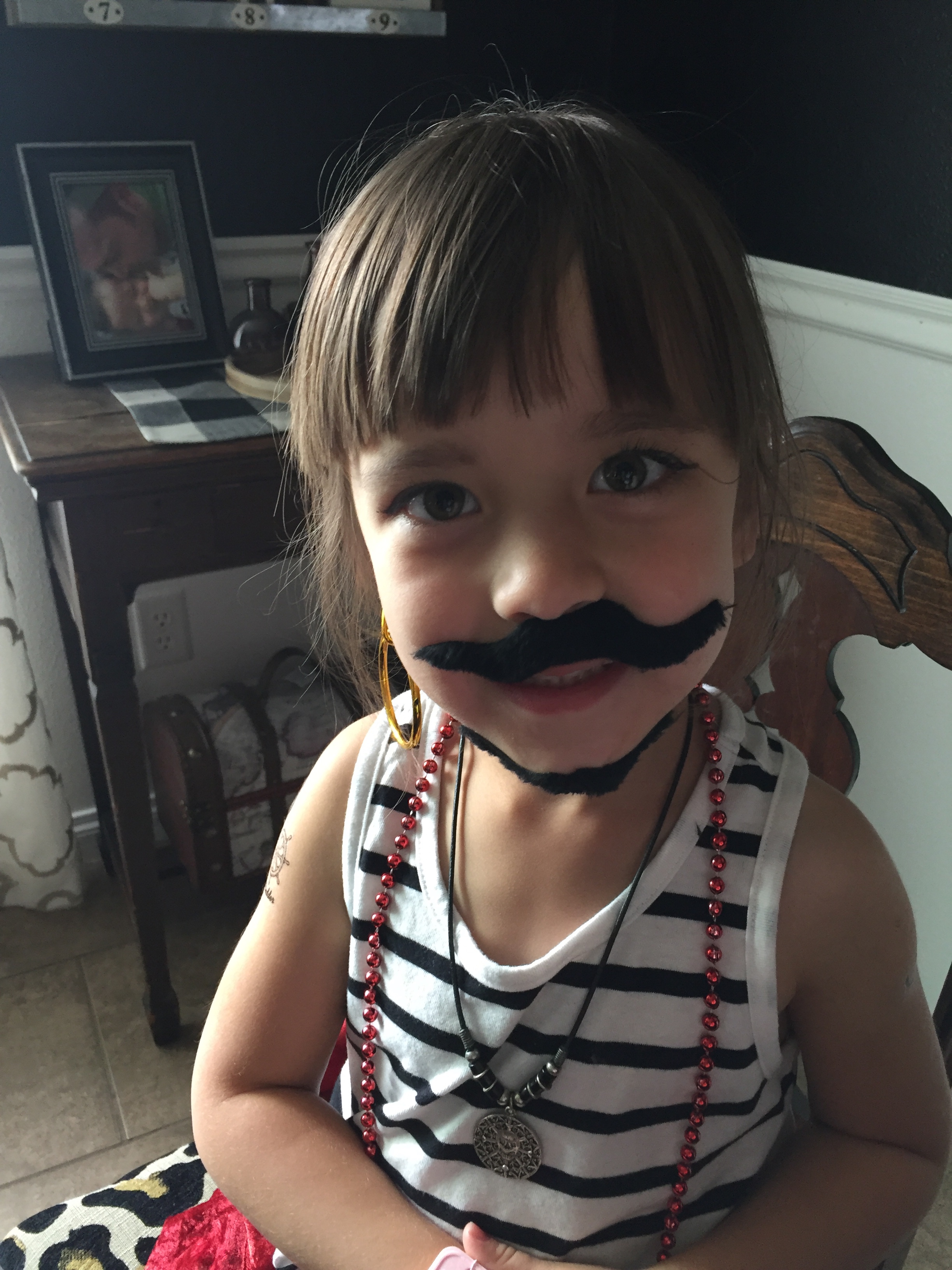
Liam’s first birthday was upon us. His theme had to be nautical, his middle name is Saylor after all. So pirates, of course!

Yo ho, yo ho, a pirate birthday party!

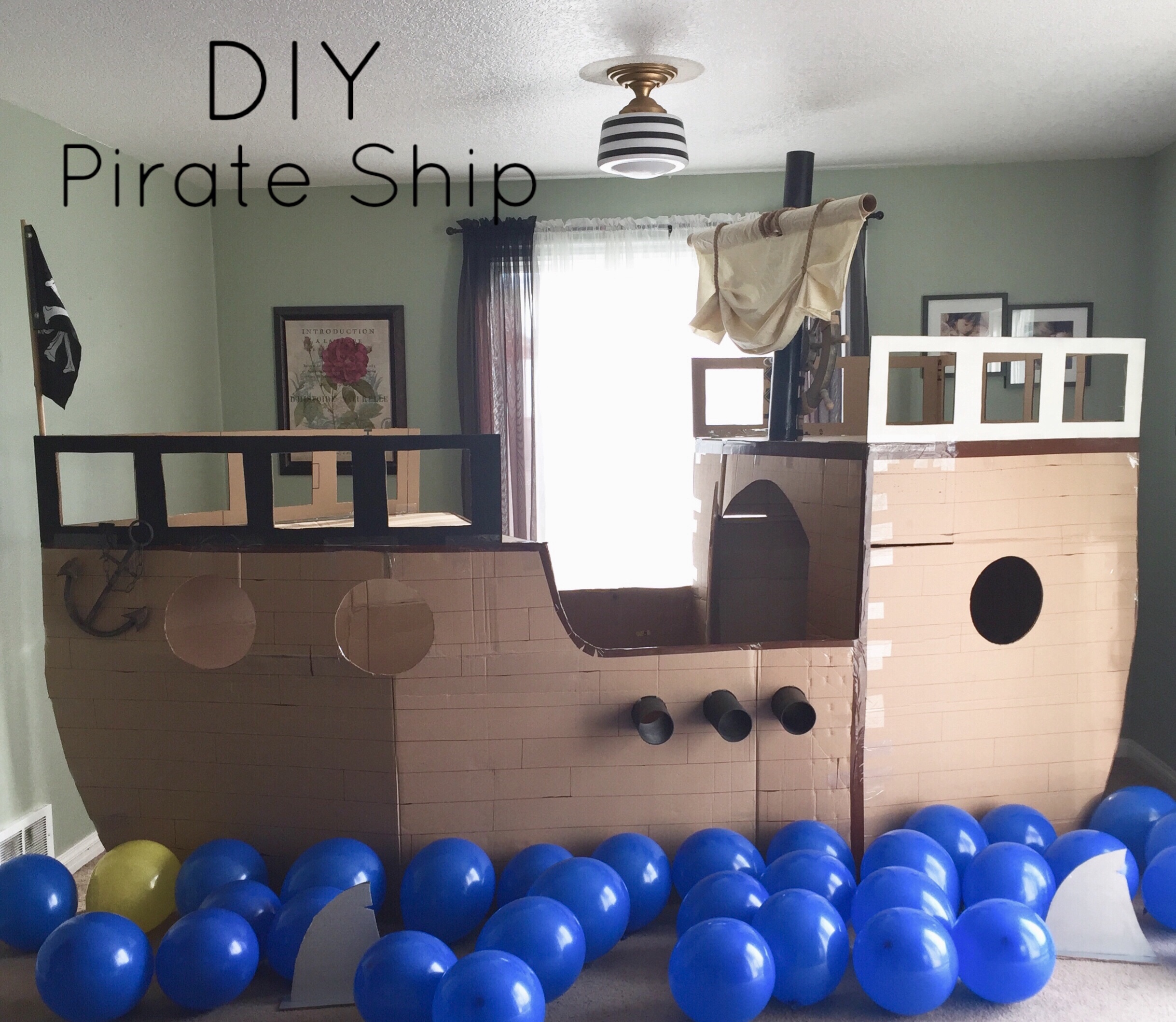
A quick Pinterest search yielded all these creative people who made giant cardboard pirate ships, so we decided we needed one too, obviously!

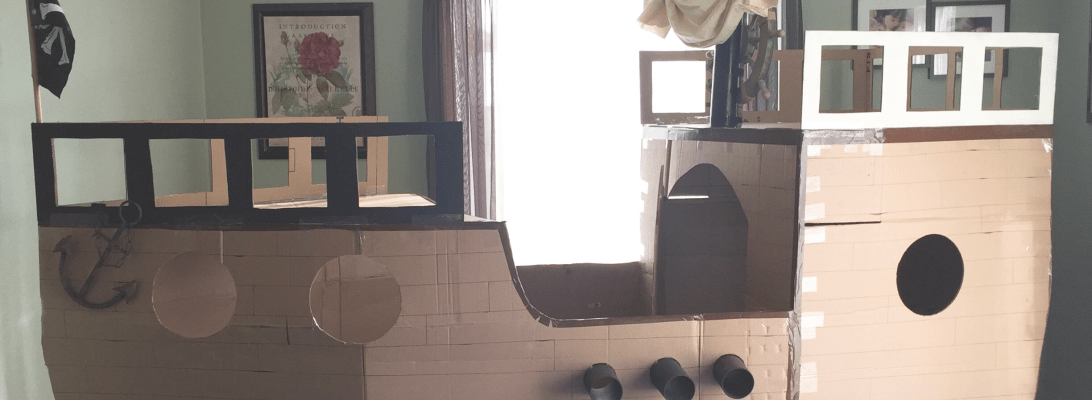
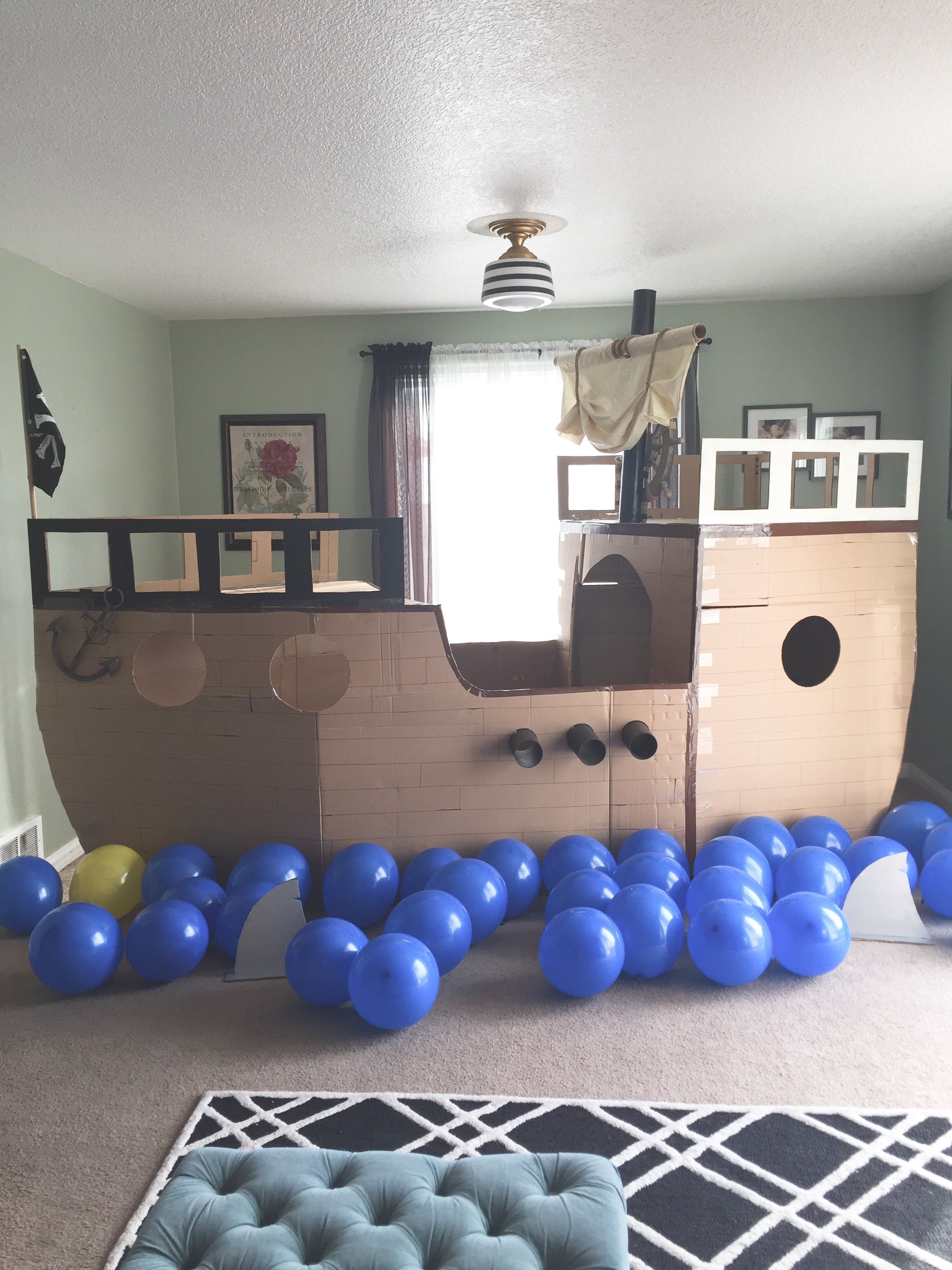
Ryan joined in and was able to get some very big pieces of cardboard from work, a few sketches and a scale model later, and we had our design. About a week of building, and here’s the final ship!

Here are my top 10 tips for making your own!

1. Have a plan! Cutting that kind of cardboard is very difficult, you don’t want to have to redo pieces. Sketch and then try out your design. We made some significant improvements between our sketch, model, and the final ship.

2. Gather the right tools. We used box knives, sharpies, packing tape and duct tape (for decoration), and a yard stick. Remember extra blades for your knife, you’ll need them.

3. Let the pieces of cardboard be your guide. We discovered right away how hard it is to cut the cardboard, so we let the pieces we had help decide the final size of the ship. For example, rather than cutting a foot off the length, we just embraced that extra foot.

4. Work as a team. This project would have been too difficult to tackle on my own. A second brain, pair of hands, and muscles really came in handy.

5. Packing tape is your friend. The duct tape was fun to decorate with, but the packing tape was the true hero in keeping things together. We often taped both sides of a seam to help reinforce the ship.

6. Build on site. We had planned to build the ship in the garage and then transfer to the house on the day of the party. Boy, we would have been sorry. Think through the finished size and build accordingly.

7. Make sure to add supports across the ship. Our plan had both a cabin and a front deck. These were not only super fun for the kids, but they added necessary support to the ship. Support and style, right?!! The kids LOVED the cabin.

8. Decorate. When we started I thought we’d keep the decor pretty simple. Ha ha, that doesn’t sound like me at all.

  • Like I mentioned, we used the brown duct tape to decorate with. I also added it to the exposed edges for safety.
  • I used the yard stick and brown sharpies to create a planking effect. Mistakes became imperfections in the wood adding to the authenticity of the ship. 😉
  • Cardboard tubes and black spray paint made cannons, a mast, and a boom.
  • I made the sail from some inexpensive muslin and rope.
  • We added a wooden captain’s wheel and anchor as well.
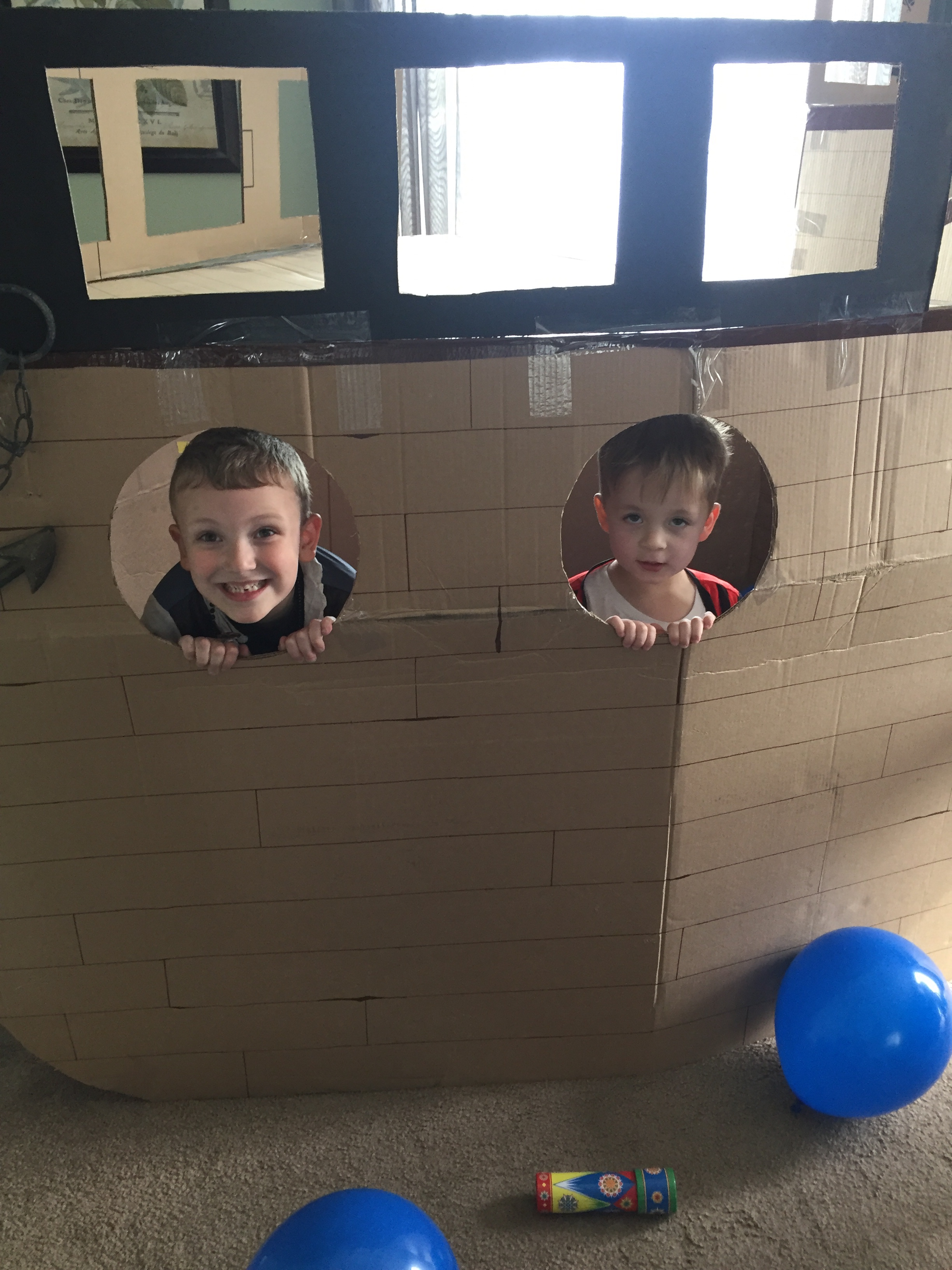
  • We traced dinner plates for the portholes, and I had the kids stand next to the ship to determine a good height they could peak through.
  • We made a crawl-through door on the stern of the ship. Liam was particularly fond of this feature.
  • A pirate flag on the bow completed the look. Argh!

9. Embellish. As if all the previous items weren’t enough, we blew up blue balloons to look like water. And I cut out shark fins to place in the water (more cardboard, yes more, and some silver paint). The kids even made up a fun game of trying to sink the ship with all the balloons.

10. Enjoy! We made the ship big enough that adults could get in there too. Ryan and I both enjoyed crawling in and playing in the ship. The kids loved it even more when we were all pirates together. Yo ho, yo ho, a pirate’s life for me!

Good luck, and just for fun, here’s a few more party ideas and a cute pic of the birthday boy as well.

XO,

-h

P.S. If you want to read about the pirate ship play structure we made years later, here’s that link!

Marvel’s Black Widow Inspired Infinity Scarf

A big Marvel movie releases and there isn’t any Black Widow clothing or accessories to be found. How can that be? She quite literally kicks butt, but doesn’t warrant merchandise?

What’s a girl to do? Since I don’t want to make, much less wear a black leather jumpsuit (shocked, I know), I thought I could make a screen-printed infinity scarf with a subtle (or not so subtle) nod to this super heroine.

Materials:
Black knit fabric (cut to 16″ x 75″)
Thread
Red fabric paint (I used Martha Stewart Tartan Red)
Mod Podge
Embroidery hoop
Nylon
Small paint brush
Credit card or gift card

DIY:
1. Ok, it seems like a lot going on, but it is pretty simple, I promise. I started by sketching out the design I wanted to print. I looked for some references online and created my own “black widow” symbol.

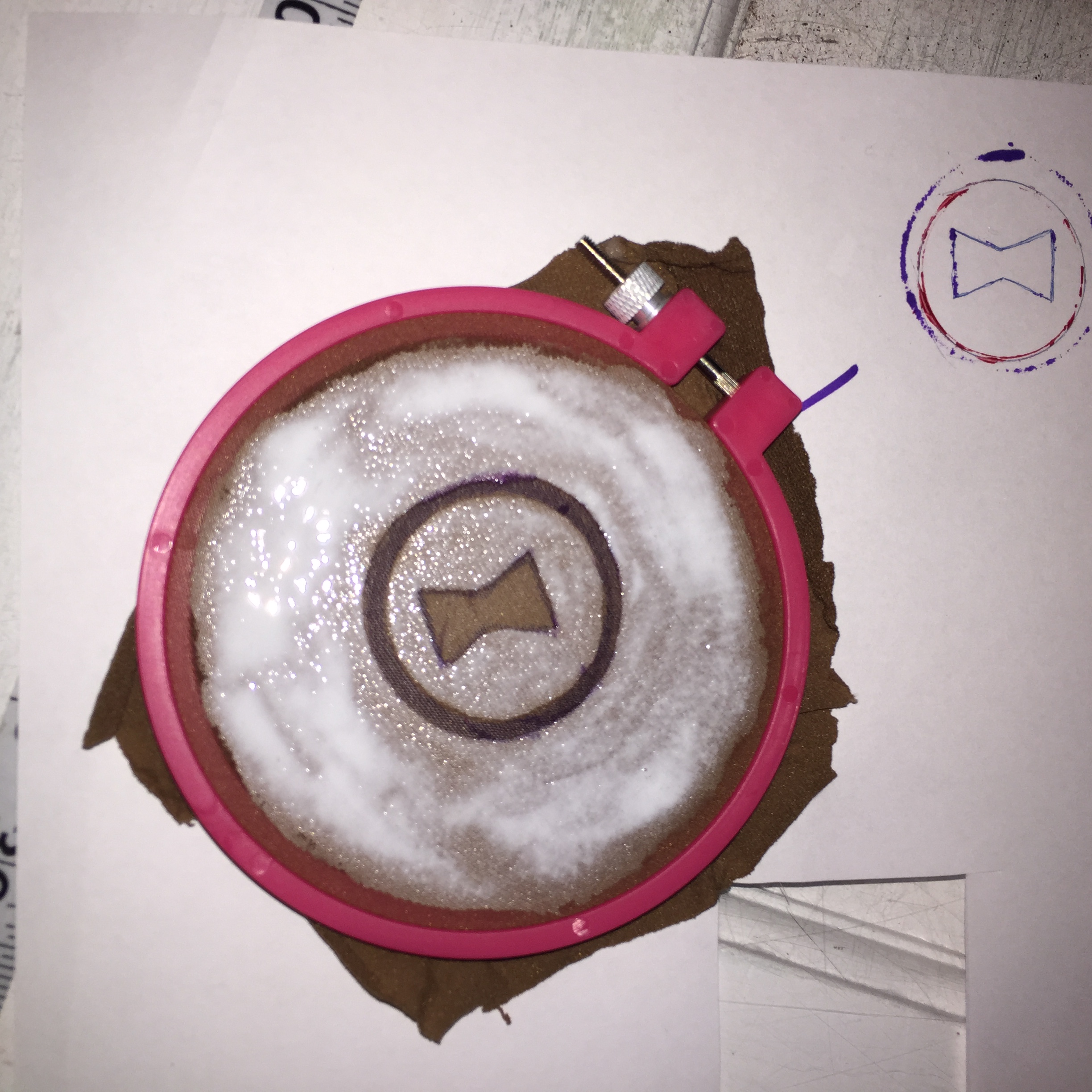
2. I found a great blog post on how to screen print using Mod Podge, check it out here. I’ll also give a brief explanation. Stretch your nylon tightly across the embroidery hoop. Then place it face down on your design and trace it with a pen (I used a Sharpie). Once you transfer the design, take your Mod Podge and carefully paint it on the parts of the “negative space” on the nylon. Basically what you DON’T want to show paint. Take your time, this is important. Two coats.

Black Widow Scarf Screen Print logo

3. Next, I cut out my fabric to 16″ x 75″, I wanted a nice long infinity scarf. You might want to measure your favorite scarf to find the perfect size for you!

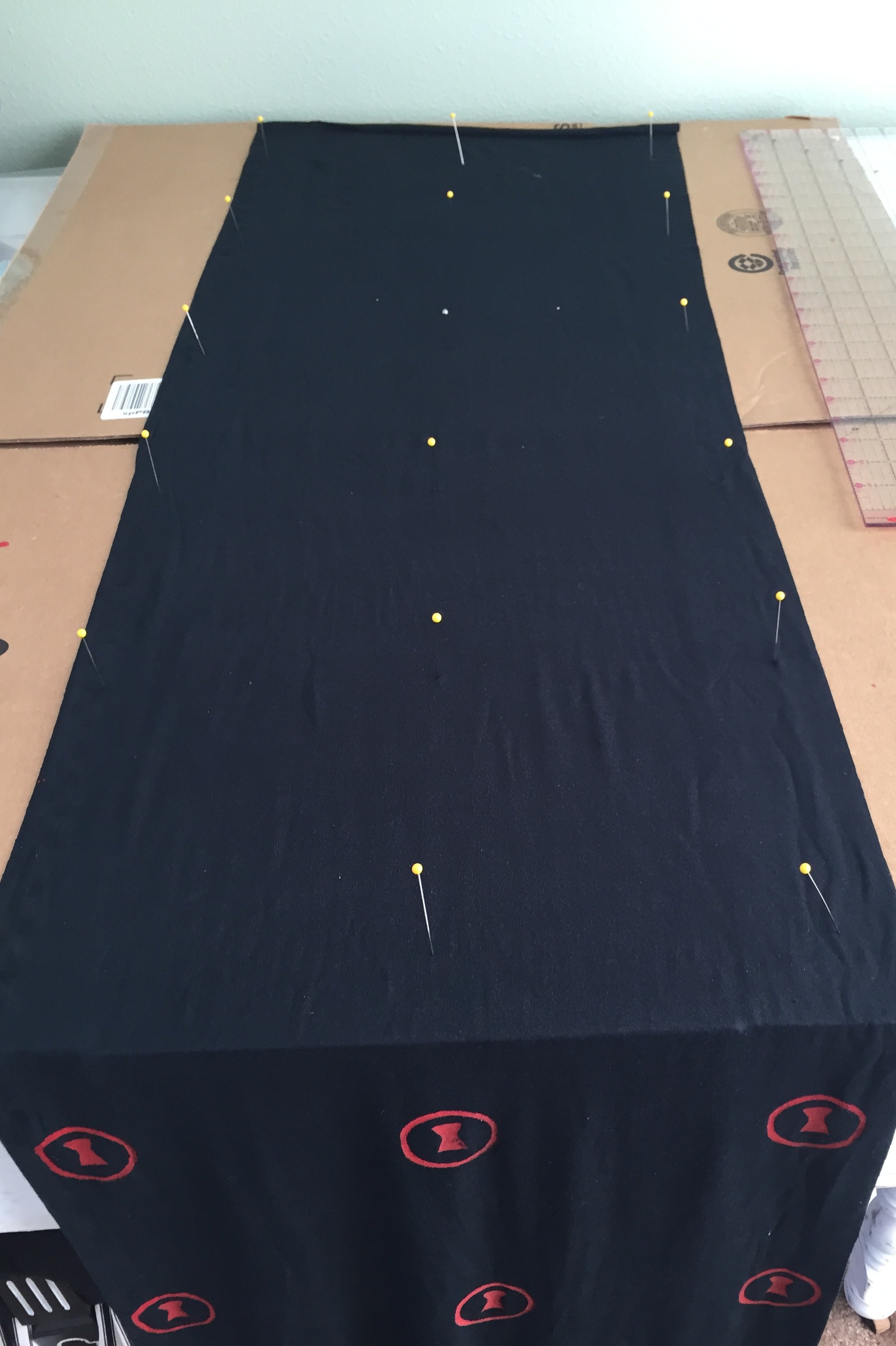
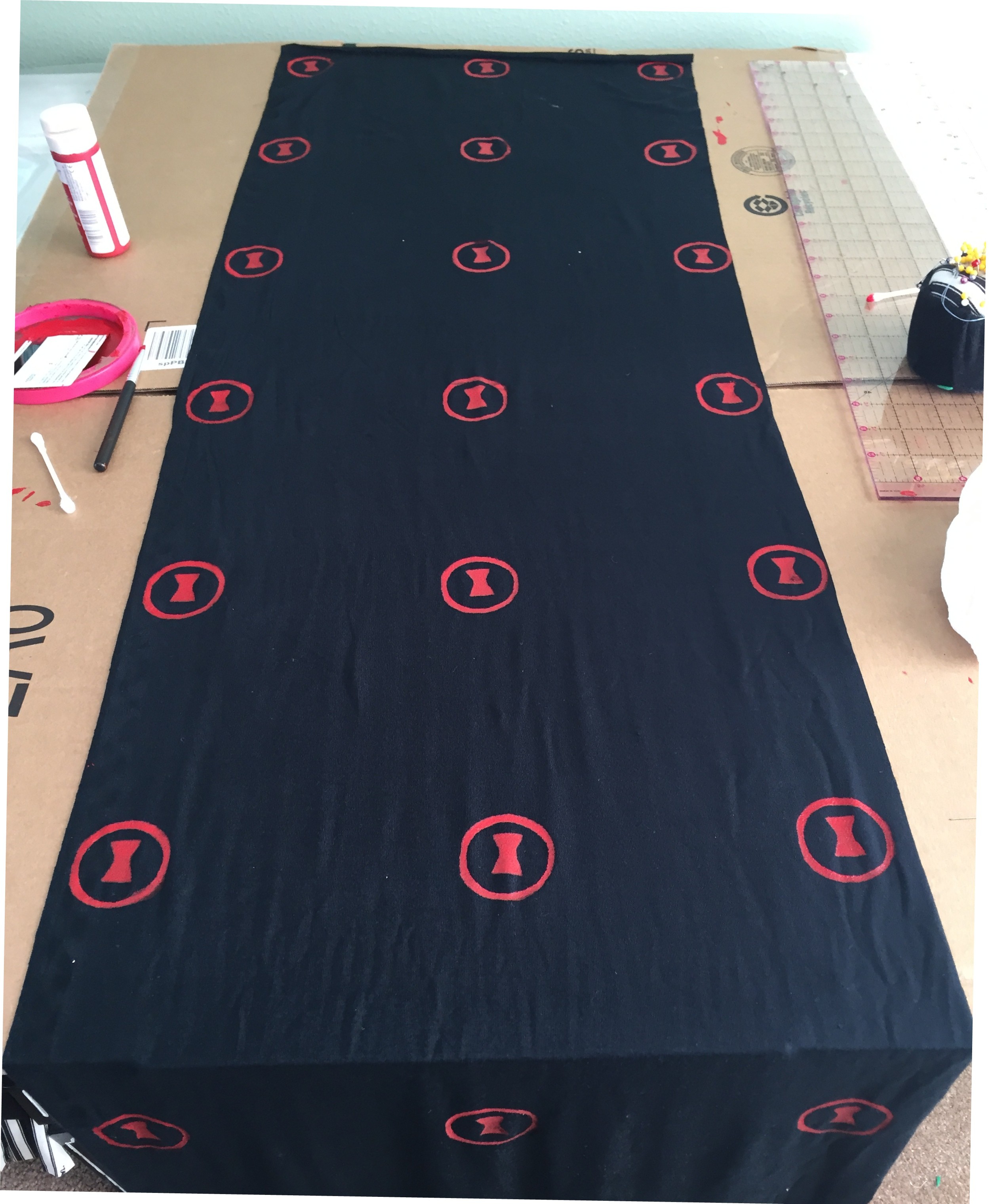
4. I laid out my fabric on a piece of cardboard and pinned it down securely. I then decided how I wanted my pattern to repeat and put pins in those locations. This image should demonstrate this step…
Black Widow Scarf Screen printing in progress

5. Now it’s time to screen print. A little frightening, I know. But truly, it was easier than I thought it would be. With the nylon face down against the fabric, squirt some red paint onto the nylon, then use a credit card, gift card, piece of cardboard, etc. to swipe the paint evenly across the nylon. You might swipe a couple different directions to make sure there is even coverage. Then carefully lift your hoop/printer. Make sure to hold down the fabric when you do so, this will save you some smears.

5. Repeat, repeat, repeat! Between prints, be sure to check the surface of the nylon (the side that goes against the fabric), if any paint has leaked out, wipe it up to keep your printing crisp. As you go, don’t worry if a few of the repeats aren’t perfect. This is a draped scarf so likely you won’t see the imperfect ones. Also, I like the idea of this looking a little vintage, hence the screen printing, so embrace those imperfections!!
Black Widow Scarf Screen Printing

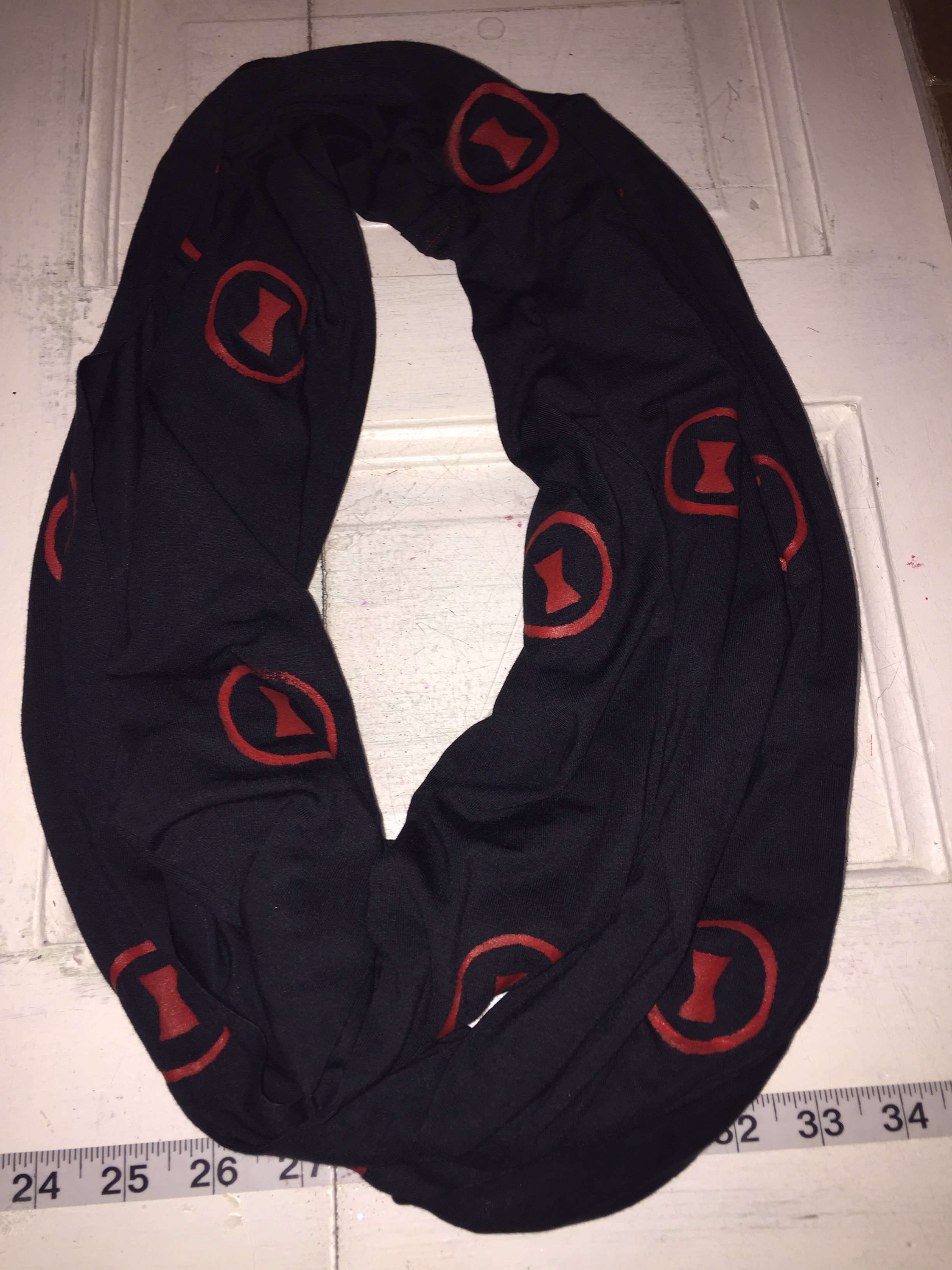
6. Once you have printed the entire scarf, allow it to dry completely before sewing. Seems obvious, but if you get excited like me, you might forget. 🙂 I chose a fabric that I didn’t have to hem, so all that left is to sew the ends together. For a neat finish, a flat-felled seem is a good choice, but can be difficult to execute on knits. So I’ll tell you my cheater way to do it…basically a french seam sewed down. So, wrong sides together, seam then trim. Then flip it around and sew with right sides together so the original seam and trimmed seam allowance is inside. You now have a finished “flap.” Pin the flap down to one side and top stitch. Quite tidy and worth the extra 5 minutes.
Black Widow Scarf finished on table Rockin the Black Widow Scarf

Now all that’s left is to pair your brand new scarf with some killer boots and an attitude to match!

–h

P.S. As I was working on this scarf, I cut right through my “self-healing” mat. Exploring my own super-human strength apparently! 😉
Black Widow Infinity Scarf DIY

Can’t get enough of Marvel or the Avengers? Check-out my Captain America quilt, Part I and Part II!

Braided Headband DIY

Spring is definitely in the air! It makes me think of fresh flowers, sunshine, sandals, and headbands! Ok, so that last one might just be me, but I was inspired to try making a fun new one this week!

This is a great DIY because you don’t have to sew a stitch! Yay!

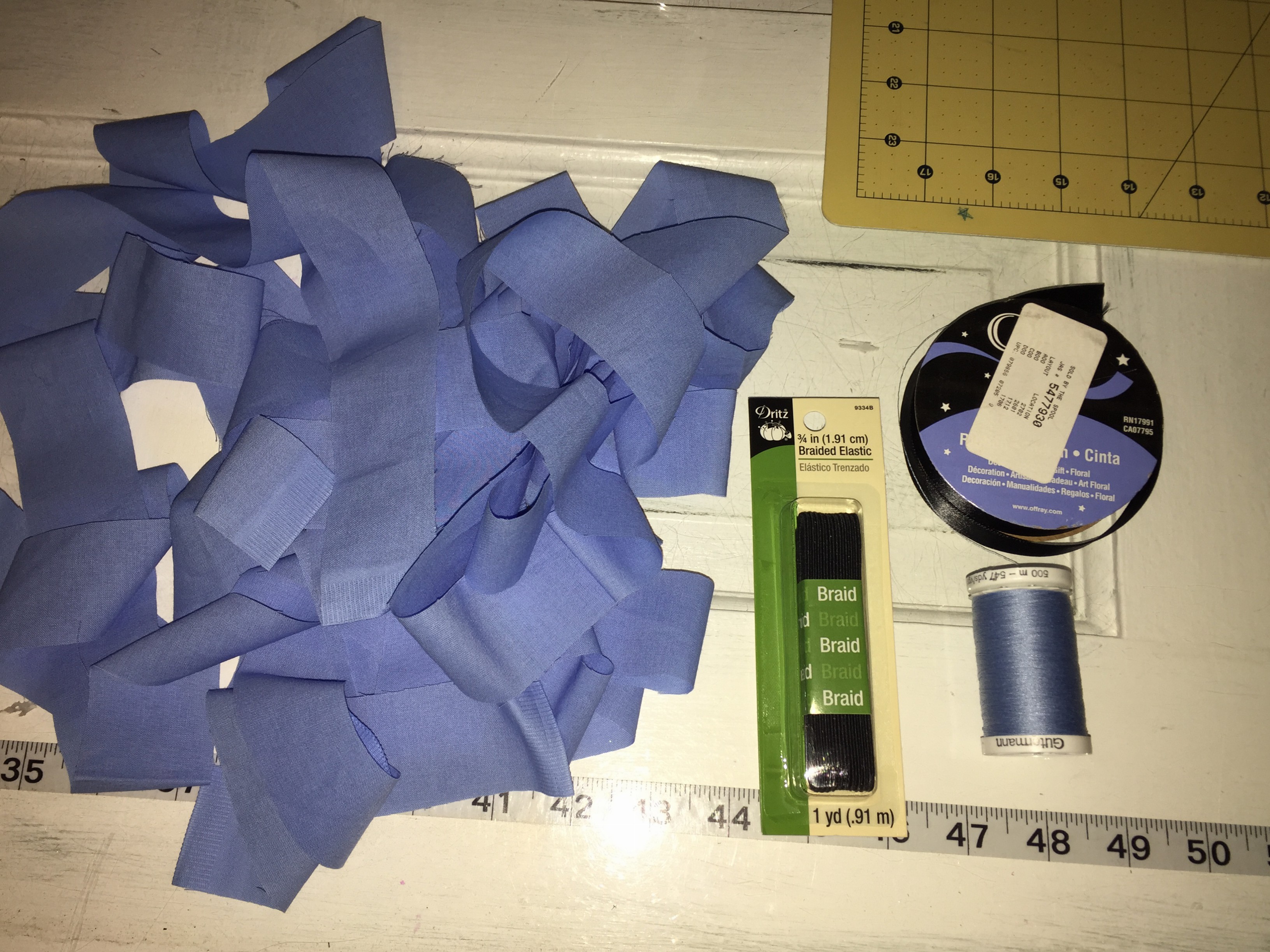
Materials:
Fun cotton fabric
Elastic – I used 3/4″ because that’s what I had, but 1/2″ would be better
Ribbon
Thread
Hot glue & gun
Braided Headband Materials

Let’s Get Started:

  1. Cut your fabric into strips, I did 1.5″ by 55″ for an adult-sized headband. I think I might go just a little thinner next time…1.25″.
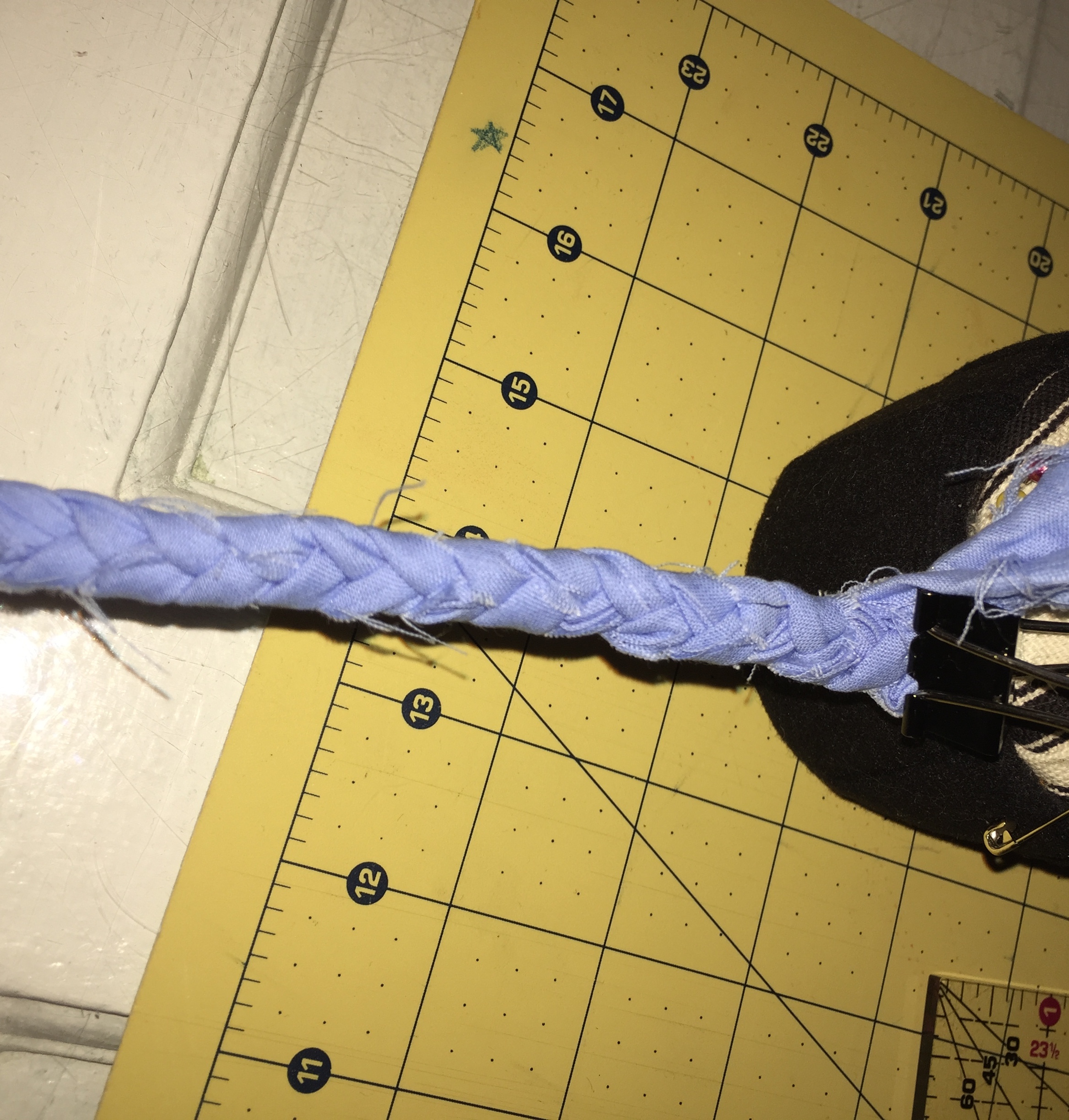
  2. Secure one end, and start braiding. I enlisted Ryan’s help to hold one end since it gets so long.
    You might notice some fraying on the fabric, but that was the look I was going for. If it bothers you, fold in the sides carefully as you go.
  3. I used binder clips to hold the ends in place once I was finished braiding.
    Braided Headband 2
  4. Use thread to tie off the ends, just loop around a few times and you should be good. Trim thread and excess fabric.
  5. Fold your braided piece in half, then try it on your head. Whatever gap remaining determines the length of your elastic.

    **TIP: Don’t cut the elastic too short. Have you ever have the problem of a headband falling of the back of you head? The secret is that you want the headband to be secure, but the elastic shouldn’t be working hard at all.

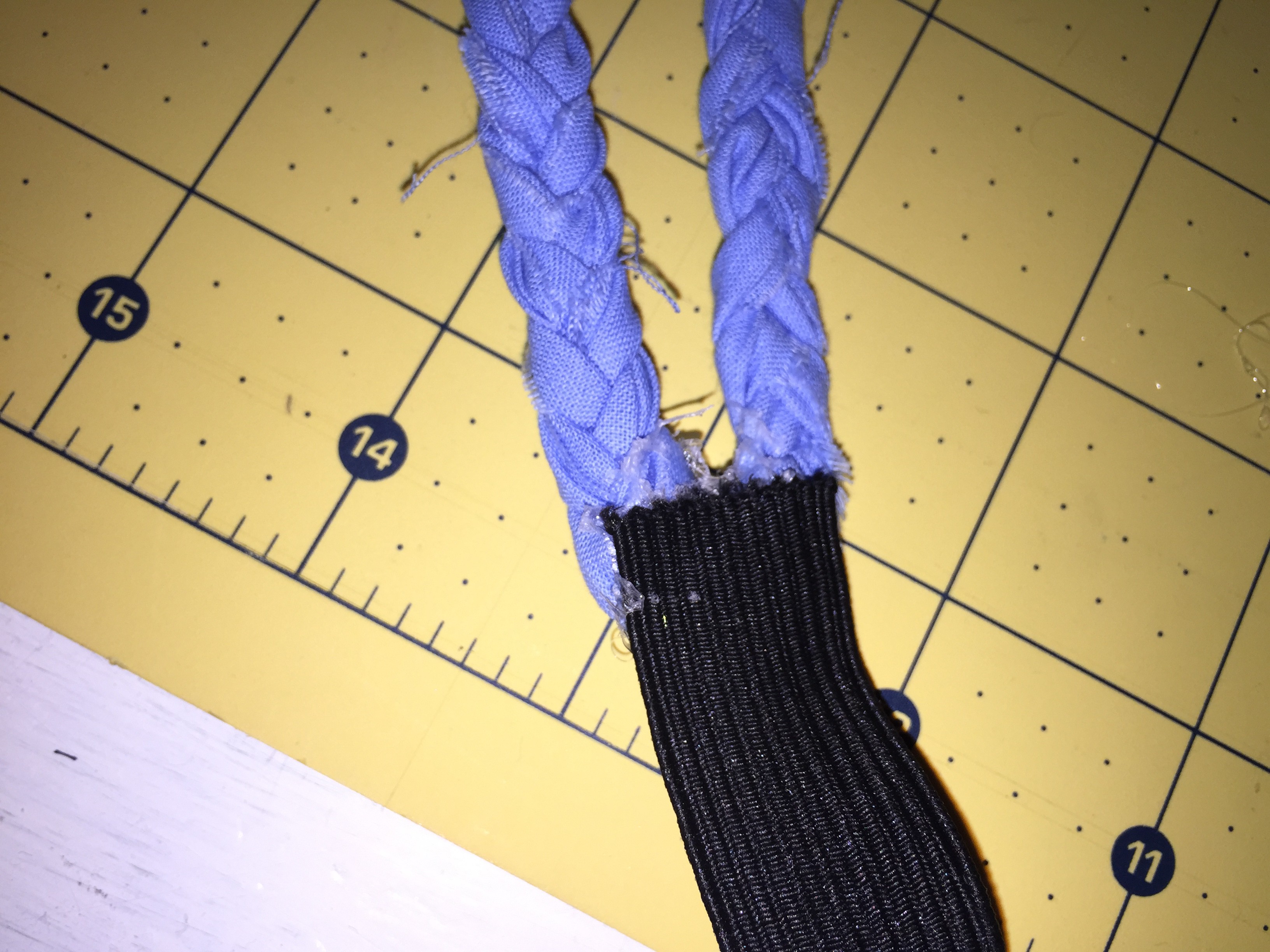
  6. Hot glue the ends of your headband to your elastic. I overlapped by about 1/2″.
    Braided Headband 5    Braided Headband 3

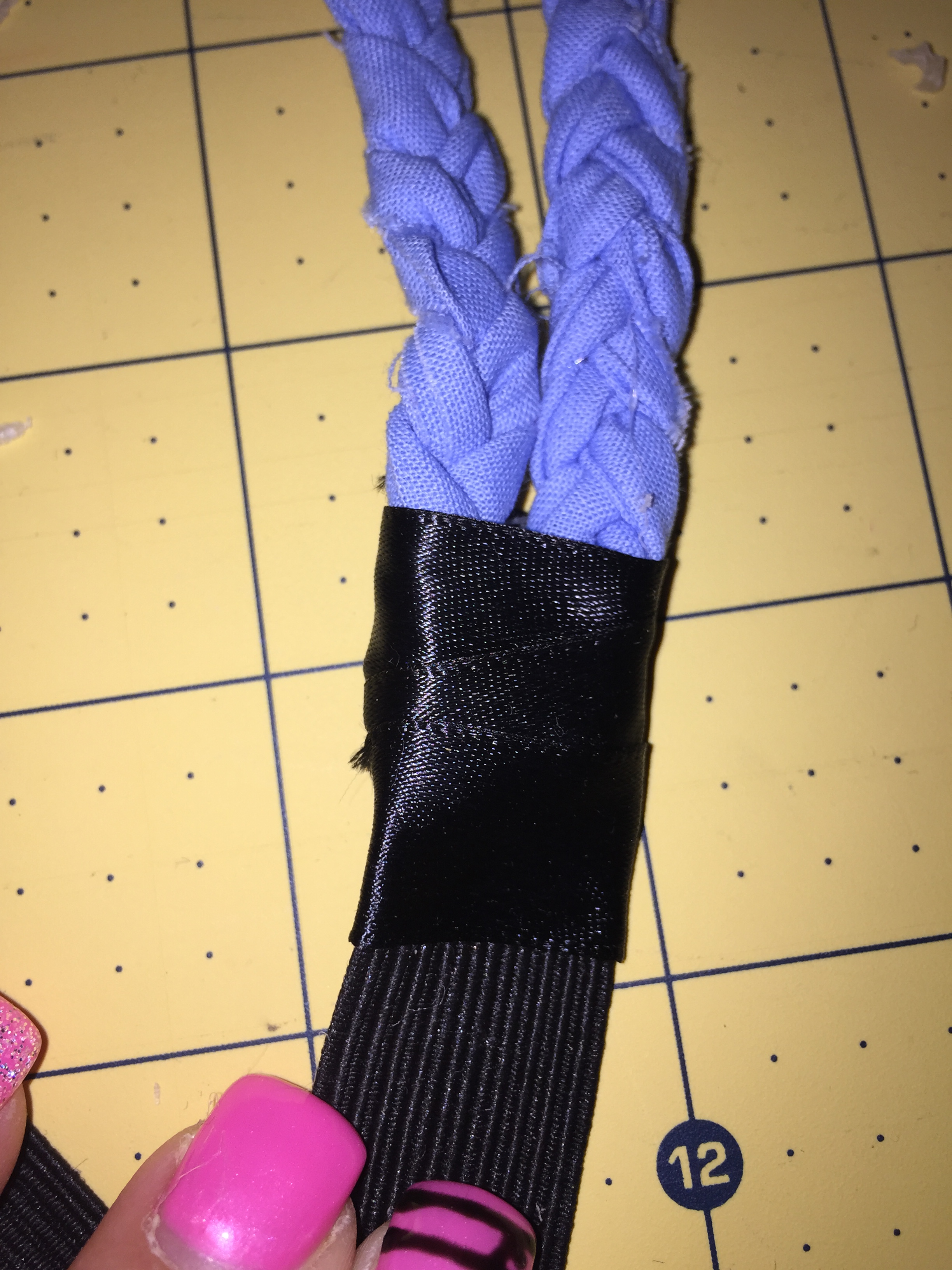
  7. Wrap your ribbon around the place the headband and elastic connect. The intent here is to make this look nice. You won’t be able to see it when you have the headband on, but why not make it look pretty! Then hot glue together.
    Braided Headband 4

  8. Plan your spring outfit accordingly!
    Braided Headband Finished 2 DIY Braided Headband

–h